

Oura is experimenting with electrical haptics for future smart rings
Oura is experimenting with a very different way of giving smart ring users notifications. A newly published patent describes passing tiny electrical currents through the finger to create haptic sensations instead of relying on the usual vibration motor.

That could give a future Oura ring a way to get your attention while keeping the minimalist approach that has defined the product so far. More interestingly, Oura thinks the system could create several different sensations rather than simply producing the equivalent of a buzz.
A smart ring that electrically taps your finger
The patent, titled “Electrical stimulation for haptic feedback“, places several electrodes around the inside of the ring, with circuitry generating a controlled electrical current between selected electrodes and through the wearer’s finger.
This is not supposed to work like an electric shock. Oura describes carefully controlled pulse sequences where frequency, duration, current and other parameters can be adjusted to create different sensations.
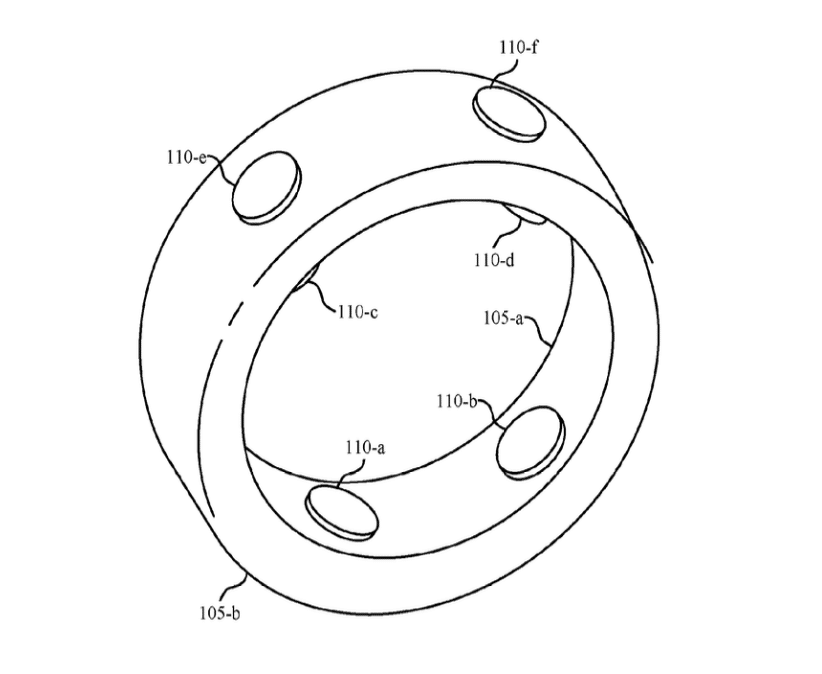
Things get more unusual when the patent discusses nerve placement. Depending on which electrodes are used, the electrical path could intersect a nerve in the finger, meaning the wearer might feel the sensation farther along the finger or even at the fingertip rather than directly underneath the ring.
Oura also discusses “biomimetic” stimulation patterns. In plain English, that means adjusting the pulses so they feel more like familiar sensations such as pressure or touch instead of an unnatural electrical sensation.
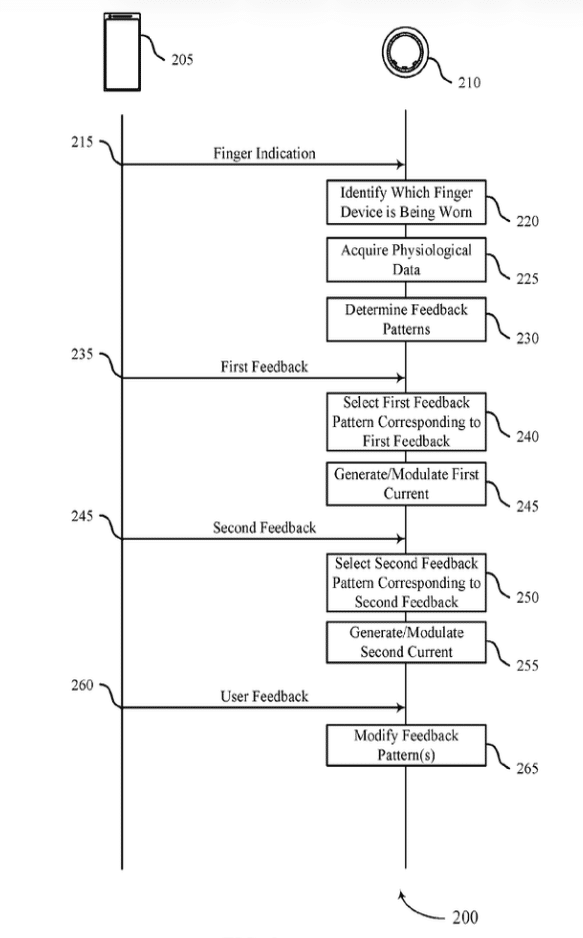
The strength and pattern could also be personalised. The ring could run test patterns, ask for feedback and then adjust the stimulation according to what the wearer finds comfortable and noticeable.
This solves an interesting Oura problem
The idea is particularly relevant because Oura has traditionally avoided putting a vibration motor inside its rings. That simplicity has advantages, but it also means the ring cannot currently tap your finger when an alert arrives.
That difference has become more obvious as competing smart rings add haptics. The RingConn Gen 3, for example, includes vibration alerts, while Oura Ring 5 still goes without them.
Electrical stimulation gives Oura a different route. It could potentially provide discreet notifications without adopting exactly the same hardware approach as competitors.
The patent mentions health and wellbeing notifications, battery information and device settings as examples of information that could be communicated. Different electrical patterns could represent different alerts, so the wearer might eventually learn to distinguish them without looking at a phone.
There is also some clever adaptation built into the concept. Oura proposes determining which finger the ring is being worn on and selecting the electrode pair most likely to produce the desired sensation on that finger.
Oura is clearly thinking beyond passive tracking
The patent fits an interesting wider direction for smart rings. These devices have traditionally collected information quietly and then handed everything over to a smartphone app, but adding haptic output would turn the ring into a two-way interface.
Oura could use that for simple notifications, but health applications are potentially more interesting. A ring that detects a physiological change could theoretically alert the wearer directly instead of waiting for them to open the app.
The filing claims priority from February 4, 2025 and was published internationally on August 13, 2026. The international search report also cites earlier work relevant to several of the claims, which is a reason not to treat the application as a finished Oura technology.
Even so, this is one of the more interesting Oura patents we have seen recently. Instead of simply finding another health metric to calculate, Oura is looking at changing what a smart ring can actually do on your finger.
Don’t miss the latest from Gadgets & Wearables
Subscribe to our monthly newsletter and check out our YouTube channel.
You can also follow Gadgets & Wearables on Google News and add us as a preferred source in Google Search.

