

Fitbit founders return to wearables with Luffu Link
The guys who started Fitbit are back in the game. This time with Luffu Link, a screenless health band designed less around workouts and more around keeping families connected.
A fitness tracker with a different purpose
It has only been six months since James Park and Eric Friedman announced their new company called Luffu. But they already have their first piece of hardware ready to go.
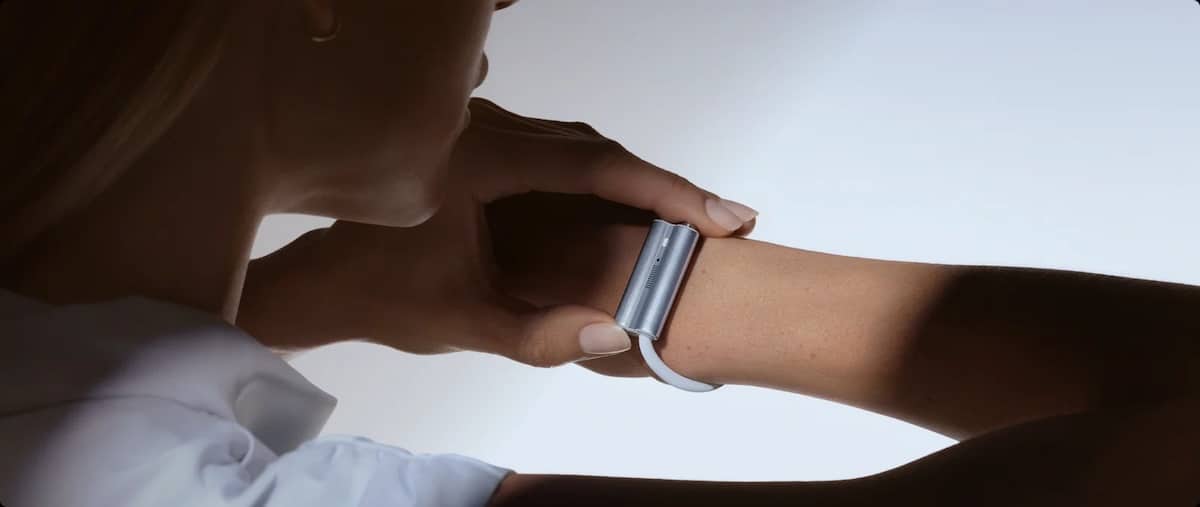
So what is it exactly? Well, it looks a bit like another screenless fitness tracker, and there is definitely some of that going on here, but that is only part of the story.
It tracks the usual stuff you would expect. Steps, activity, sleep, heart rate and HRV are all covered, and battery life is up to five days.
There is no screen at all. You basically wear it, let it collect data and get on with your day, rather than constantly checking another little display on your wrist.
It is also water resistant to 50 metres, and you get GPS, Bluetooth and 4G LTE-M built in. The LTE bit is probably where Link starts to become more interesting. It does not need your phone sitting nearby to stay connected, and Luffu is including the cellular service rather than making you sort out another mobile plan.
That also means it can share your location with selected family members. You can probably see where Luffu is going with this, especially if the person wearing it is an older parent or someone you want to be able to check in on occasionally.
There is a button on the band as well, and it does quite a lot. Press it and you can leave a quick voice note about something like taking medication, feeling unwell, eating a meal or just about anything else you want to log.
Those notes then end up in the Luffu app alongside the rest of your health information. The company is also using AI to organise all of that data and try to make some sense of it over time.
The button also doubles as a way of letting people know you are okay. A double press can send a quick check-in to family members, while the help function can send selected contacts your location along with a voice message.
It is worth pointing out that this is not an emergency services button. Pressing it will not call 911, so think of it more as a quick way of reaching family or someone you trust when you need them.

Who is it for?
This is really aimed at families, not people chasing better workout stats. The obvious example is an older parent who still lives independently, but where the rest of the family would like a bit more visibility without constantly checking in.
That is basically the whole idea behind Luffu. Park and Friedman launched the company earlier this year around the idea of pulling health information into one place, learning what is normal for someone and then flagging when something starts to look different.
Link is the wearable that plugs into that. If someone’s activity suddenly drops, their sleep changes or they send a voice note saying they are feeling unwell, family members can potentially see all of that in the same place rather than trying to piece things together from phone calls and messages.
The screenless design makes a lot more sense when you look at it that way. This is not trying to be another smartwatch, and it is not really asking you to interact with it very much at all.

There is a subscription attached
There is one fairly big catch with that $249.99 price. Link is not something you buy once and then forget about, because you also need a Luffu Family Plan.
That costs $19.99 a month or $199.99 a year and covers up to four people. You can have several Link bands running under the same plan, and LTE data is included, so at least you are not also paying a mobile carrier on top.
Still, the subscription changes the whole value equation. After the first year, you are already looking at roughly $450 between the band and the annual plan, which makes this a very different purchase from a normal fitness tracker.
And you cannot actually get one everywhere yet. Luffu is launching Link in the US first, with shipping expected in early 2027, so this is still very much an early-stage product rather than something you can pick up next week.

Don’t miss the latest from Gadgets & Wearables
Subscribe to our monthly newsletter and check out our YouTube channel.
You can also follow Gadgets & Wearables on Google News and add us as a preferred source in Google Search.

