

Oura is exploring pressure-based alerts for future smart rings
Oura is working on a new way for a smart ring to get your attention without squeezing a conventional vibration motor inside. A newly published patent describes a tiny pressure system that could physically press against your finger for notifications, health alerts and other feedback.
And this one is a bit different. Only a couple of weeks ago, we covered another Oura patent that uses tiny electrical currents to create haptic sensations. This latest idea takes a much more mechanical approach.
The inside of the ring would actually move
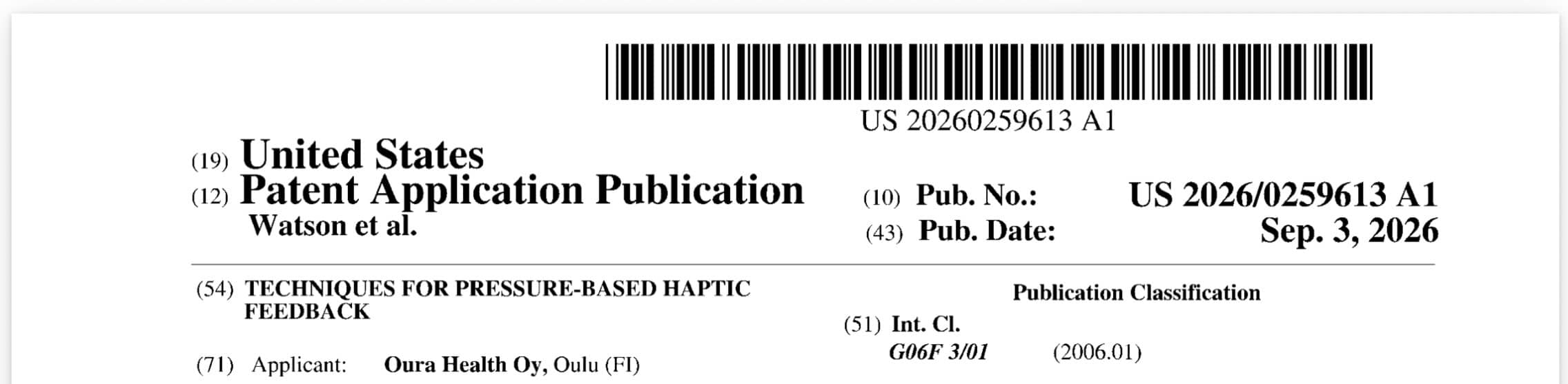
The filing, US 2026/0259613 A1 , describes what Oura calls “pressure-based haptic feedback”. The basic idea is to place a flexible pad on the inside of the ring, with magnets and small coils sitting underneath it.
Send current through the coils and the magnetic field moves the magnet. That movement pushes the flexible pad towards the wearer’s finger, creating a small pressure sensation. Change the way the coils are driven and the ring could produce different strengths, durations and patterns of pressure.
So instead of feeling a normal buzz, you might feel a tap, a short press or a sequence of presses against your finger.
That makes quite a lot of sense for a smart ring. Space inside these devices is extremely limited, and a traditional vibration motor takes up room that could otherwise go towards the battery, sensors or electronics. Oura’s design effectively turns part of the inner ring structure into the haptic system.
The patent goes beyond generic notifications too. Oura describes different feedback patterns being associated with different events, including successful contactless payments, battery status and physiological information. It also discusses haptic feedback being triggered when a measured health value crosses a threshold.

The same system could check how well the ring fits
There is another interesting part buried in the filing. Oura says the magnet and coil arrangement could also work in the opposite direction.
If pressure from the finger moves the flexible pad and magnet, the coil can detect the resulting electrical change. In other words, the haptic mechanism could double as a pressure sensor rather than simply pushing against the finger.
That potentially gives Oura another way of determining how tightly the ring is sitting on the finger. The company specifically discusses using pressure measurements alongside physiological data and identifying situations where changes in fit could affect those readings.
This lines up with other Oura work aimed at detecting poor ring fit and weak skin contact. That earlier approach used optical techniques. Pressure sensing would give the ring another source of information about what is happening between its inner surface and your finger.
For smart rings, that is not a small detail. Optical heart rate and blood oxygen measurements depend heavily on good contact, and fingers change size throughout the day. A ring that can tell when its fit has changed could potentially judge some readings differently, warn the user or compensate for poor contact.
Oura is known for filing a lot of patents, some of which never make it into a real-world product. So don’t take this as a guarantee you will see the haptic feature built into Oura Ring 6.
Don’t miss the latest from Gadgets & Wearables
Subscribe to our monthly newsletter and check out our YouTube channel.
You can also follow Gadgets & Wearables on Google News and add us as a preferred source in Google Search.

