

Frontier Zone review: ECG training without the premium price

Quick verdict
The Frontier Zone feels like Fourth Frontier finally tidying up an idea that already worked well. The screen is gone, battery life is much better and the upfront price is lower. The important stuff is still here, though, including continuous ECG during exercise and the kind of heart data you simply do not get from a normal chest strap.
I reviewed the original Frontier X in 2022 and the Frontier X2 two years later. The Zone looks almost the same and uses the same basic design, which is no bad thing because it is comfortable and works well. I never found the little display especially useful, so I do not miss it. I just wish Fourth Frontier had used the opportunity to make the pod a little smaller.
The Zone 2 training has been one of my favourite parts. Instead of constantly looking at my watch, I could just react to the vibrations and speed up or slow down. After a while it becomes almost automatic, which is especially useful if, like me, you have a habit of gradually turning an easy run into something much harder.
If all you want is accurate heart rate, this is probably more than you need. A normal chest strap will do that job for less money. The reason to buy the Zone is the extra layer of information, including continuous ECG, Cardiac Strain, Cardiac Rhythm, breathing data and the other insights Fourth Frontier builds around the signal.
Frontier Premium does muddy the value slightly because some of the more interesting features sit behind a subscription. Even so, the Zone is the Fourth Frontier device I would choose. It is simpler, easier to live with, lasts much longer between charges and costs less to get into, while still doing the unusual stuff that made the original devices interesting.
Frontier Zone currently sells for £199 on the Fourth Frontier website. Use code GNW10 at checkout for a 10% discount.
Jump to
Frontier X review: Design & hardware
If you have seen the Frontier X or X2, there are no surprises here. The Frontier Zone looks virtually identical. The pod is the same size and shape, the button is in the same place and it attaches to the elastic chest strap in exactly the same way. Even the section on the front where the display used to sit is still there. The difference is that it no longer lights up.
Personally, I think that was the right thing to remove. When I reviewed the original Frontier X, I found the display useful for checking things such as battery life and recording status, but not much else. By the time I tested the Frontier X2, I was questioning why it was there at all. Once the device is strapped across your chest, usually underneath a shirt, you cannot really see it while exercising anyway.
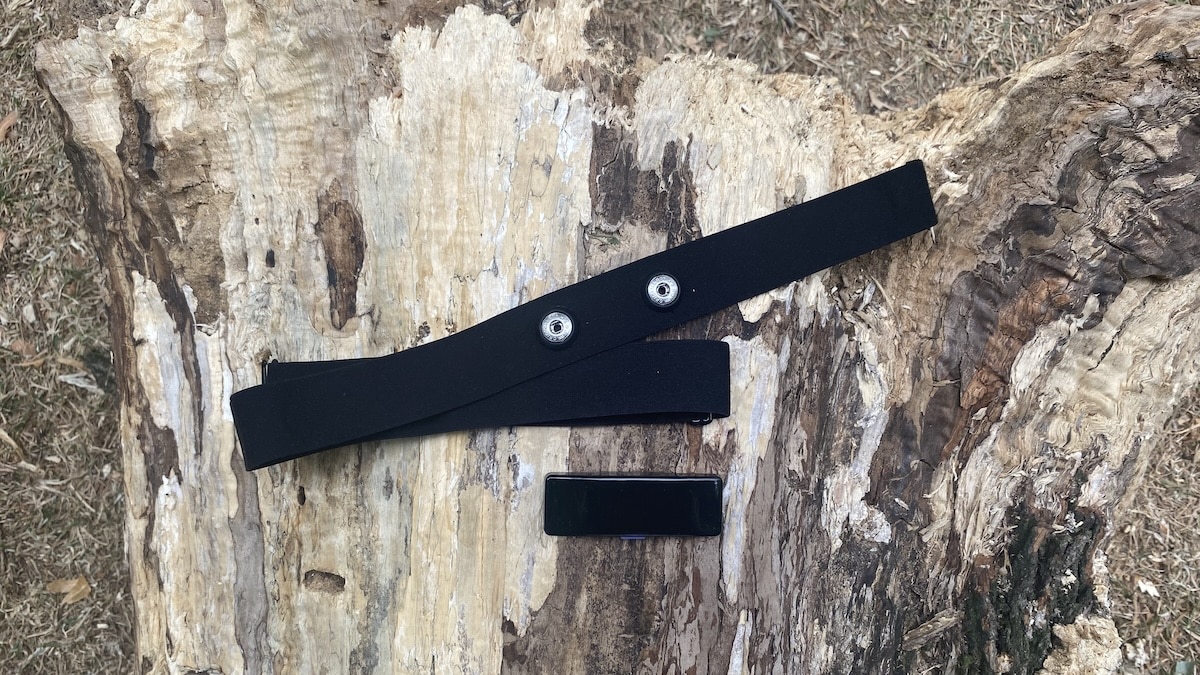
So the Zone keeps the same basic design but simplifies it. That works for me. I would much rather Fourth Frontier put the emphasis on battery life and the app than a tiny screen that I rarely looked at.
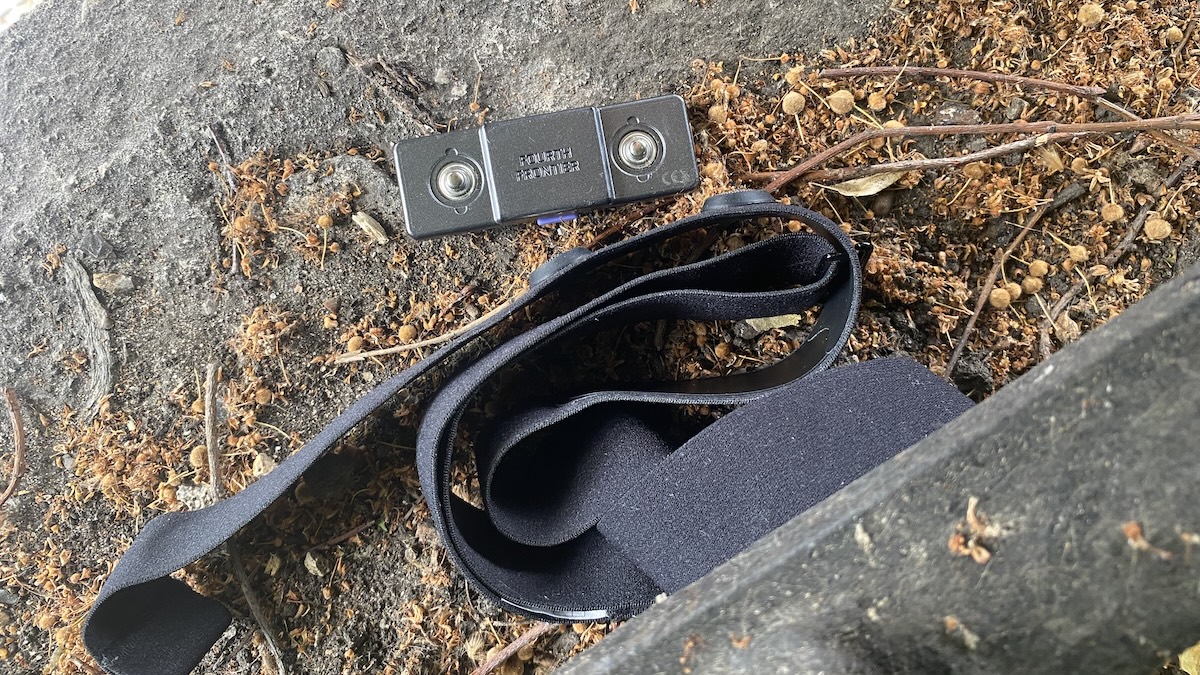
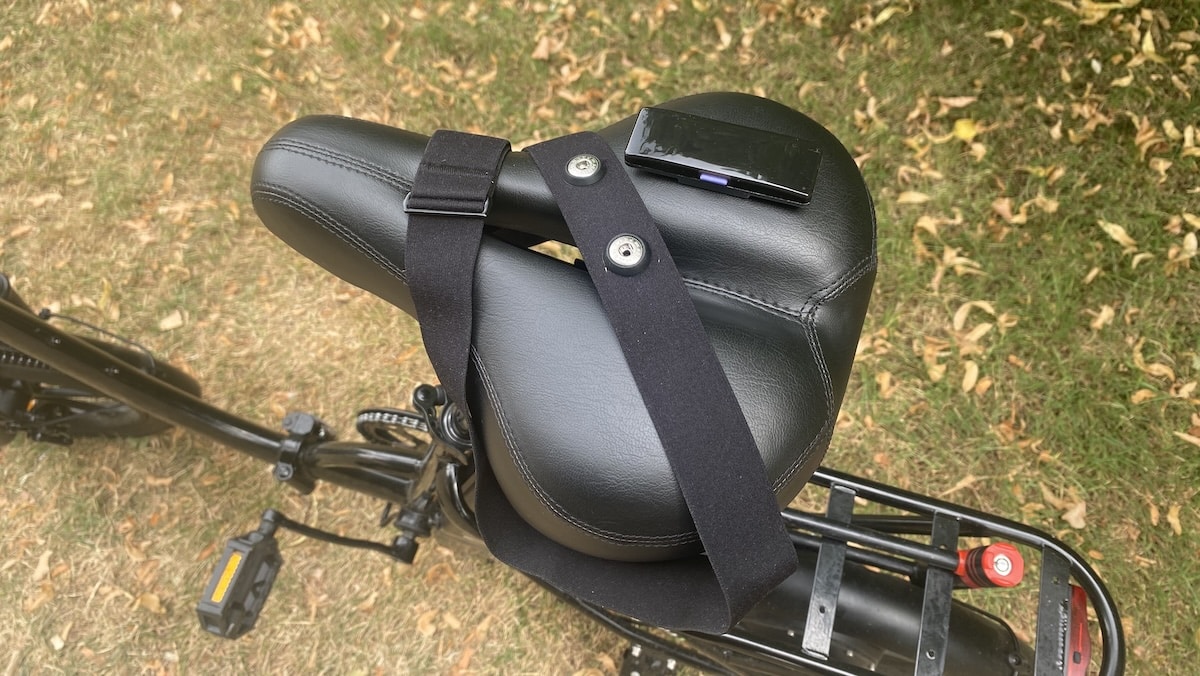
Wearing it is much like wearing any other heart rate chest strap. The pod snaps firmly onto the two connectors and the elastic band can be tightened or loosened to get the fit right. It needs to sit snugly around the chest for the electrodes to maintain good contact, but I have found the Zone very comfortable. Once I start running, I quickly forget it is there.
That was also one of the strengths of the earlier devices. The pod is a little bigger than what you get with a basic Polar or Garmin chest strap, but the difference feels much less significant when it is actually being worn. It does not bounce around, it’s lightweight and the strap keeps it firmly in position even when the pace picks up.
One thing to watch is the orientation of the pod. The button needs to face down when you are wearing it. It is easy enough once you know, but because the design is fairly symmetrical I can see someone getting this wrong at first.
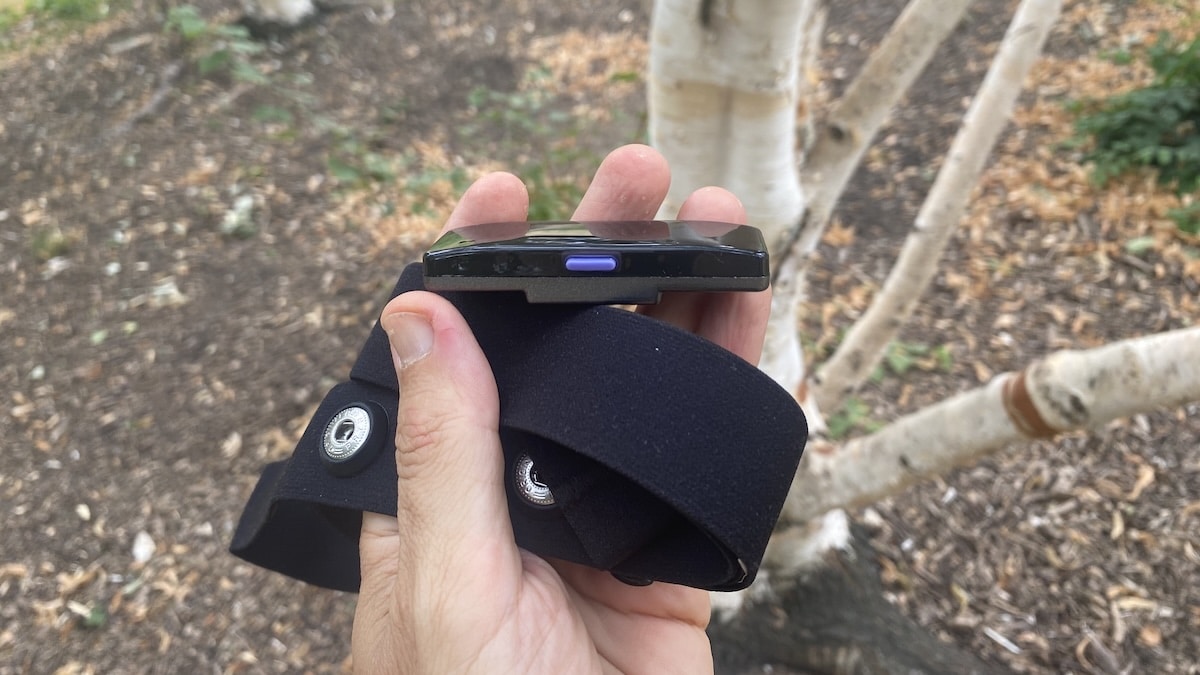
Build quality feels good. The casing is plastic and very functional looking, rather than something designed to win beauty contests, but it feels tough. My old Frontier devices have taken plenty of use over the years, and there is nothing about the Zone that makes me think this one will be any different.
Control is still handled by the single physical button on the underside. That keeps things simple. You can switch the device on, start and stop recordings and mark events without reaching for your phone. The button is perhaps not as responsive as I would like it to be, so you have to make sure to press hard. There are also LED indicators and vibration feedback to tell you what is happening.
Water resistance remains at IP67. That is more than enough for sweat, rain and everyday training, and Fourth Frontier also lists swimming among the activities the Zone can track. For swimming, the company recommends wearing it under something tight fitting to keep the pod firmly against the chest.
Overall, Fourth Frontier has mostly stuck with a design that already worked well. The Zone stays firmly in place, it is very comfortable to wear and the controls are simple enough to get used to quickly.
If I could change one thing, I would have liked Fourth Frontier to make the pod a little smaller now that the screen has gone. The current size is not a problem and I barely notice it once I start exercising, but a slightly more compact body would have made the redesign feel a bit more complete.
Frontier Zone vs Frontier X2 vs Frontier X technical specifications
On mobile, swipe left or right to view the full comparison. Specifications and software access can change through firmware, app updates and subscription changes.
Setup and everyday use
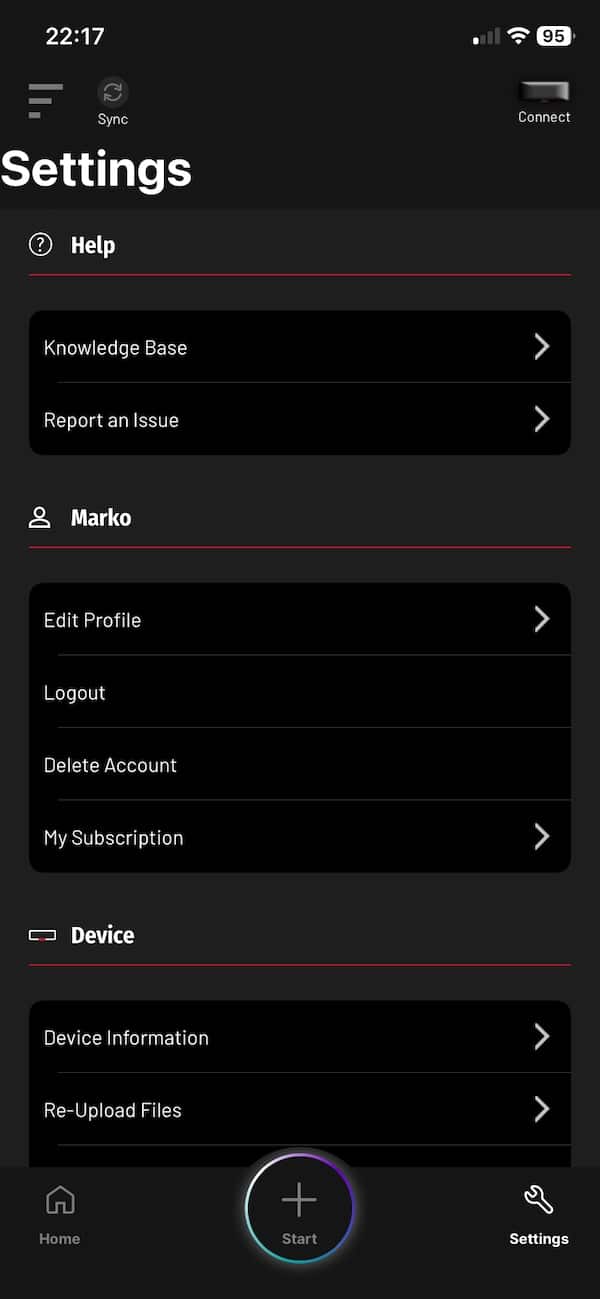
Getting started with the Frontier Zone is very easy. Pairing it with the Fourth Frontier app takes only a few minutes, and after that I have found daily use simple and seamless.
As before, there are several ways to use it. You can pair the Zone with the iOS or Android app and control your workouts from there, or leave the phone behind and let the device record everything to its onboard memory. Once you are finished, the session syncs back to the app.

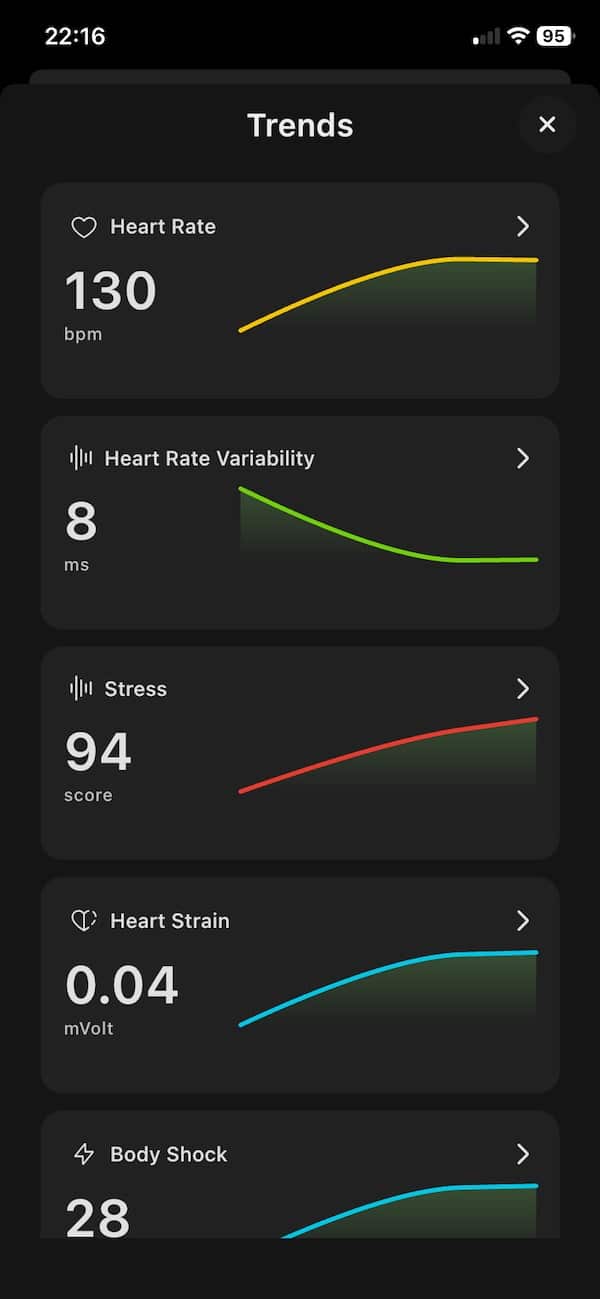
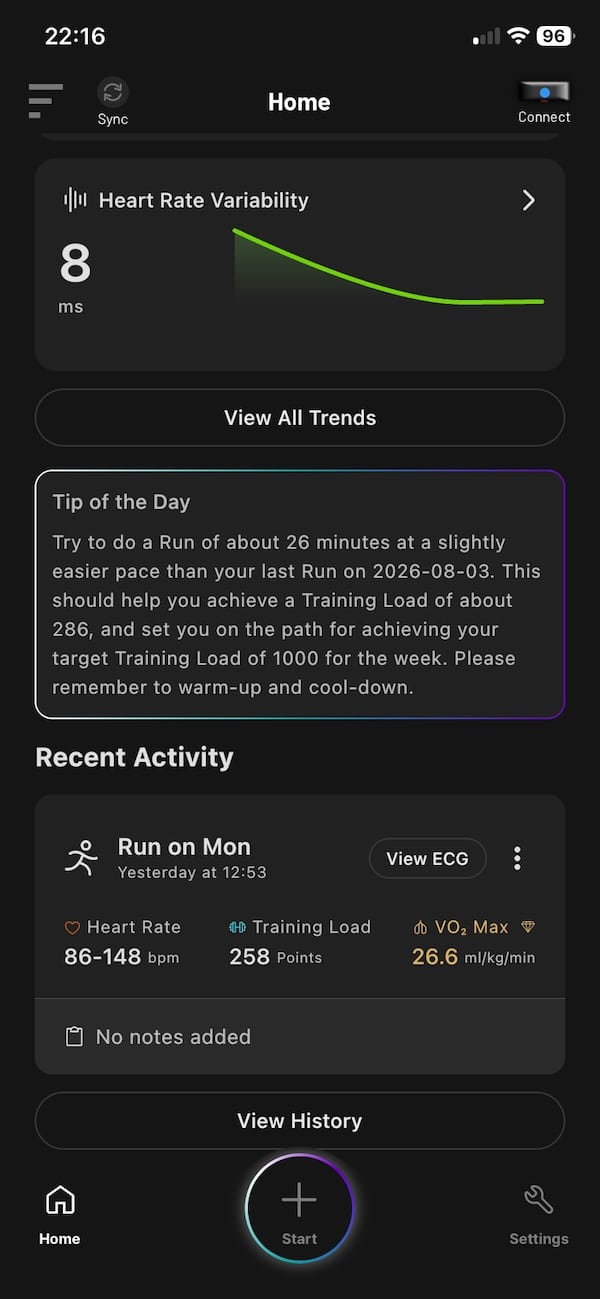
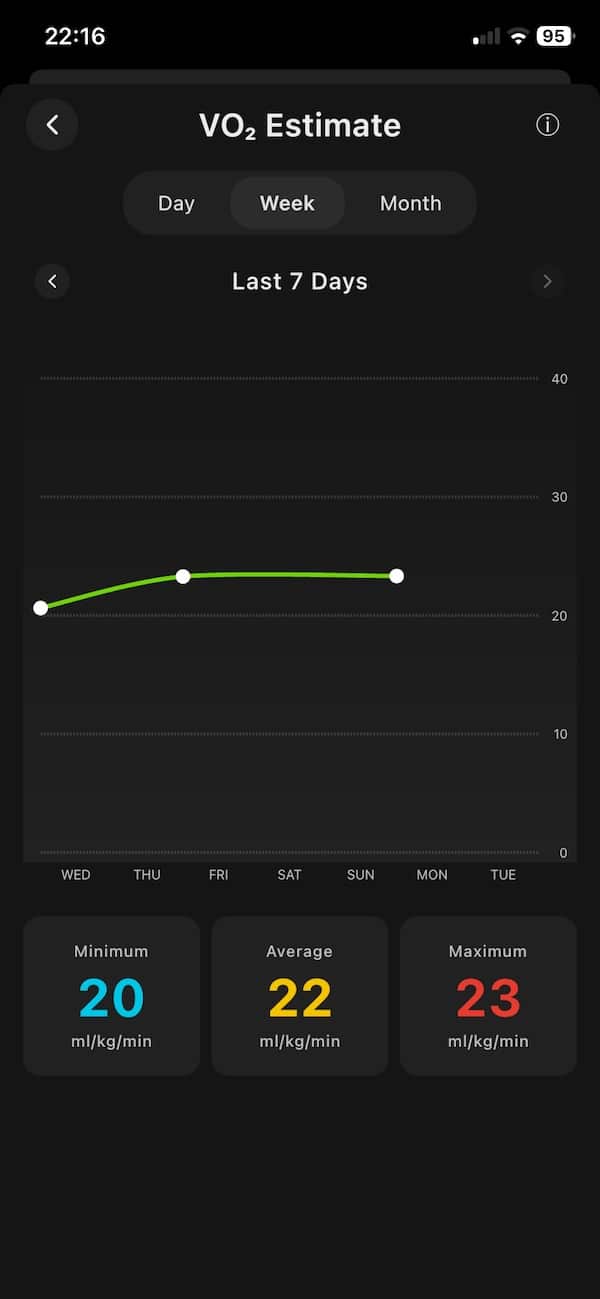
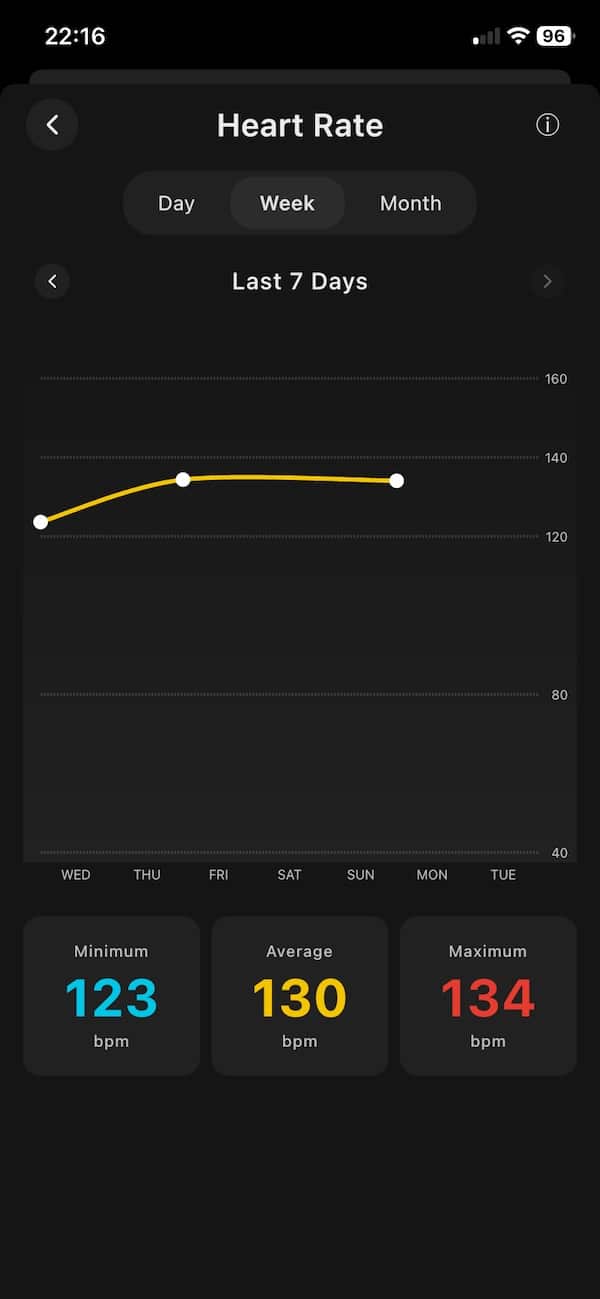
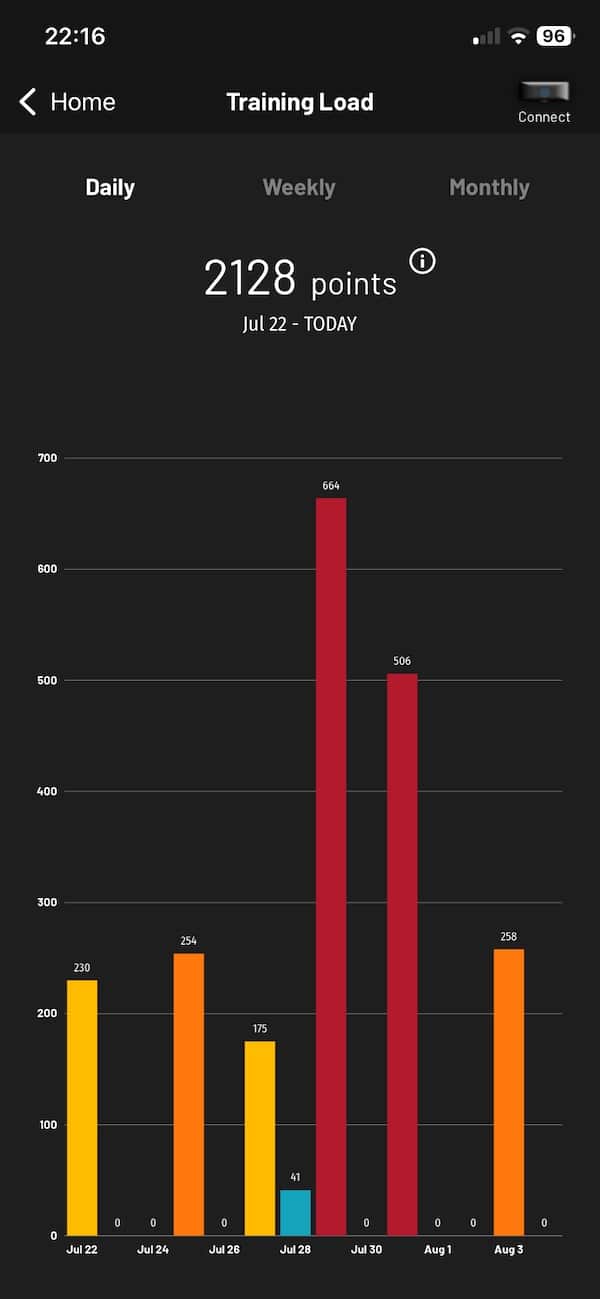
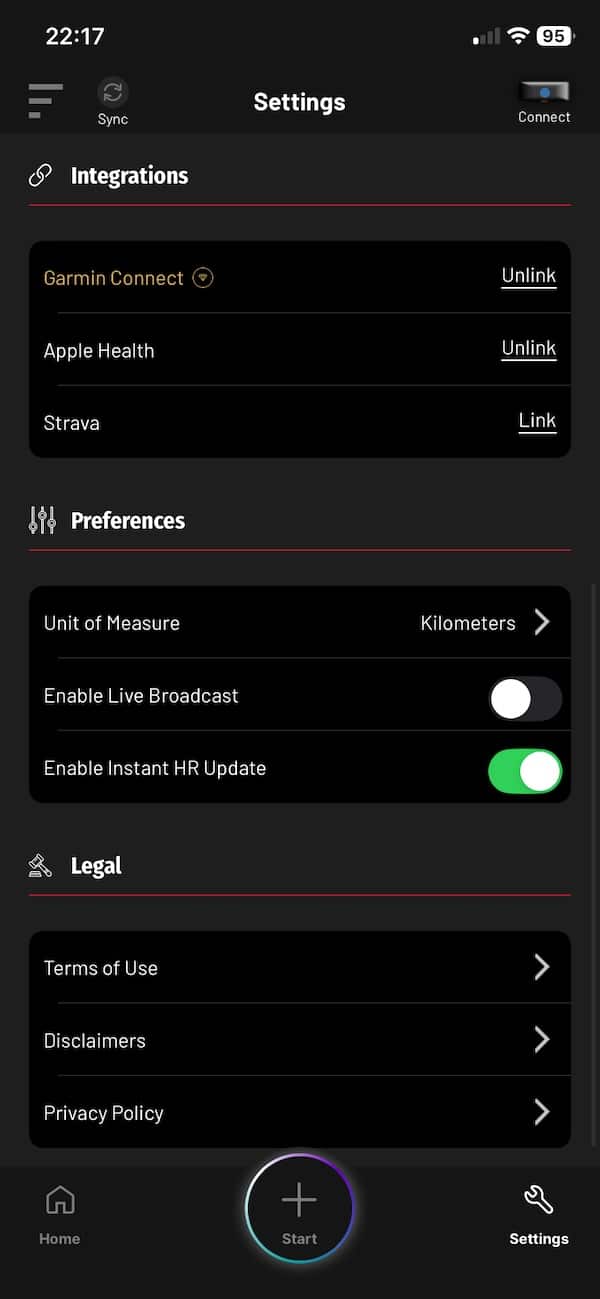
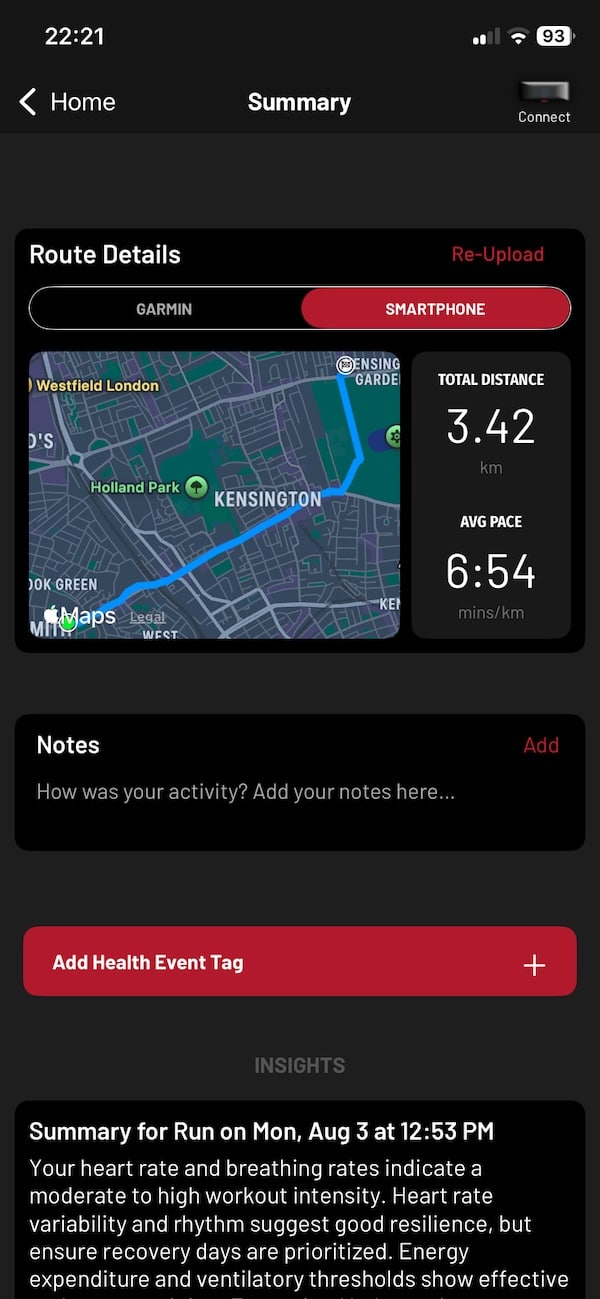
My favourite option remains using it as an external heart rate monitor. The Zone can broadcast heart rate over Bluetooth to compatible watches, bike computers and other fitness equipment, while continuing to record its own more detailed data in the background. This means you can see your heart rate on a Garmin or another device during the workout, then open the Fourth Frontier app afterwards for the ECG and other analysis.
You can connect the Zone to a smartphone and up to two other devices at the same time. That is probably more than most people will ever need, but it gives you plenty of flexibility if you use a watch alongside other training equipment.
There is still no ANT+ support, so everything runs through Bluetooth. That is unlikely to cause problems for most newer watches and fitness equipment, although ANT+ would still be useful for cyclists and anyone with older training gear.
Also there’s no built-in GPS. But the device can piggy back on a connected watch’s GPS, or use the smartphone signal.
Battery life
Battery life is one of the areas where the Frontier Zone has taken a proper step forward. Fourth Frontier rates it for up to 30 days with typical use, compared with around 14 days for the Frontier X2. It also says a full charge can last up to seven days if the device is recording continuously.
In the month or so of use, my experience has been excellent. The long runtime means charging is something I rarely have to think about, which is exactly what you want from a chest strap. You can use it for multiple workouts, throw it back in your sports bag and not immediately wonder whether there will be enough battery left for the next session.
Of course, getting anywhere near the quoted 30 days will depend on how often and how long you record. Someone using it for an hour a few times per week will see very different results from someone recording long endurance sessions every day. Even so, the improvement over the previous generation is noticeable.
The move to USB-C also makes charging less of a hassle when you eventually need to do it. For me, the combination of much longer runtime and a more convenient charging connection is one of the most useful hardware upgrades on the Zone.
How it compares with a normal chest strap
If all you want is accurate heart rate during exercise, there is no real reason to buy the Frontier Zone. A good Polar, Garmin or other chest strap will give you very accurate heart rate for considerably less money, and some also give you ANT+ alongside Bluetooth.
The Zone earns its higher price by doing something quite different. As I found with the original Frontier X and later the Frontier X2, the interesting part is not really heart rate at all.
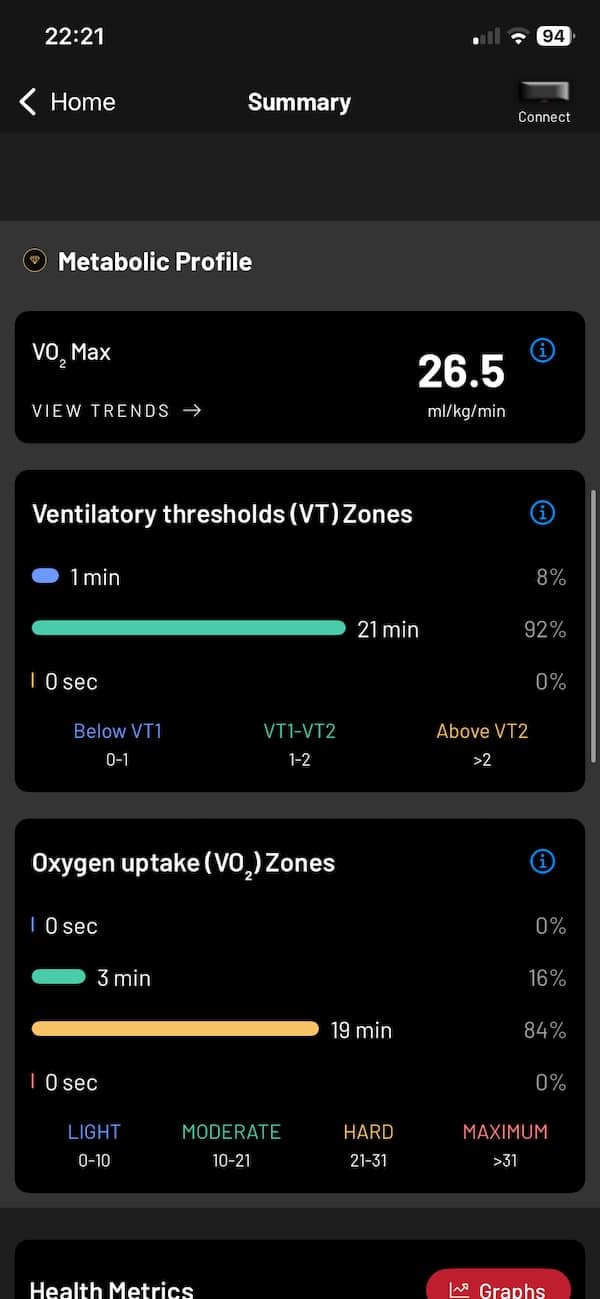
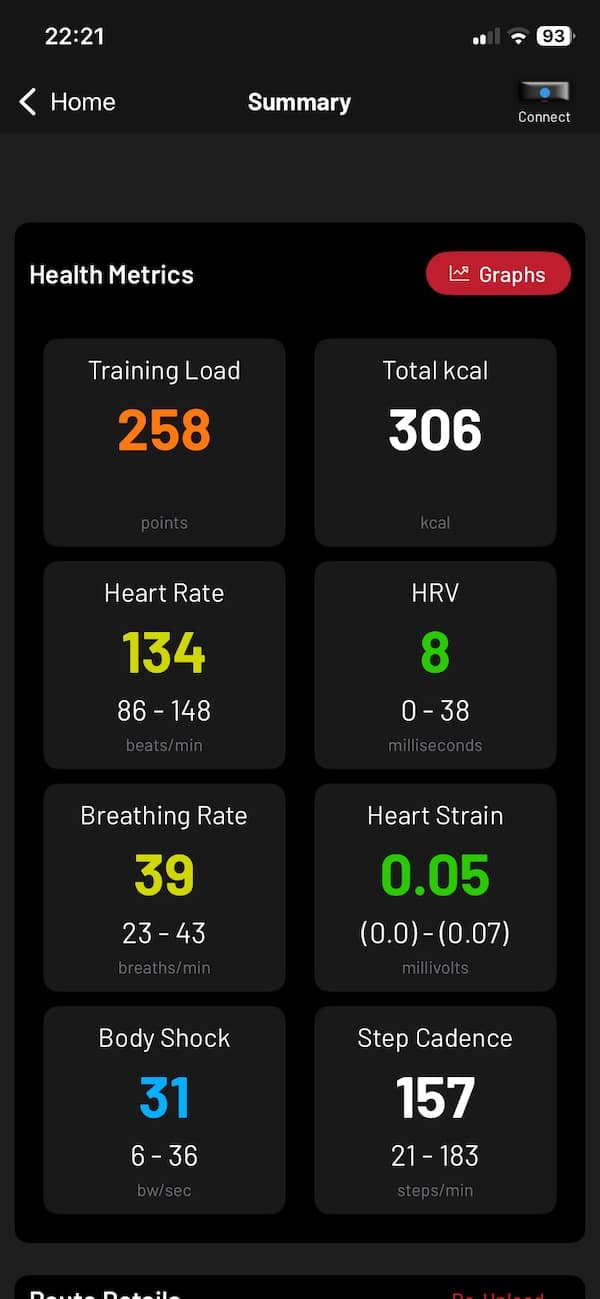
What makes the Zone unusual is that it continuously records your ECG while you exercise. From that signal, Fourth Frontier produces data you simply do not get from a normal chest strap. That includes Cardiac Strain, Cardiac Rhythm, breathing rate, HRV, Body Shock and Training Load.
Cardiac Strain is probably the standout. It looks at changes in the ST segment of your ECG during exercise and can alert you with a vibration when the reading crosses a threshold you have set. In other words, the Zone is looking at how your heart is responding to the workload, rather than simply telling you that it is beating at 160 bpm. That remains one of the most interesting things about Fourth Frontier’s approach.
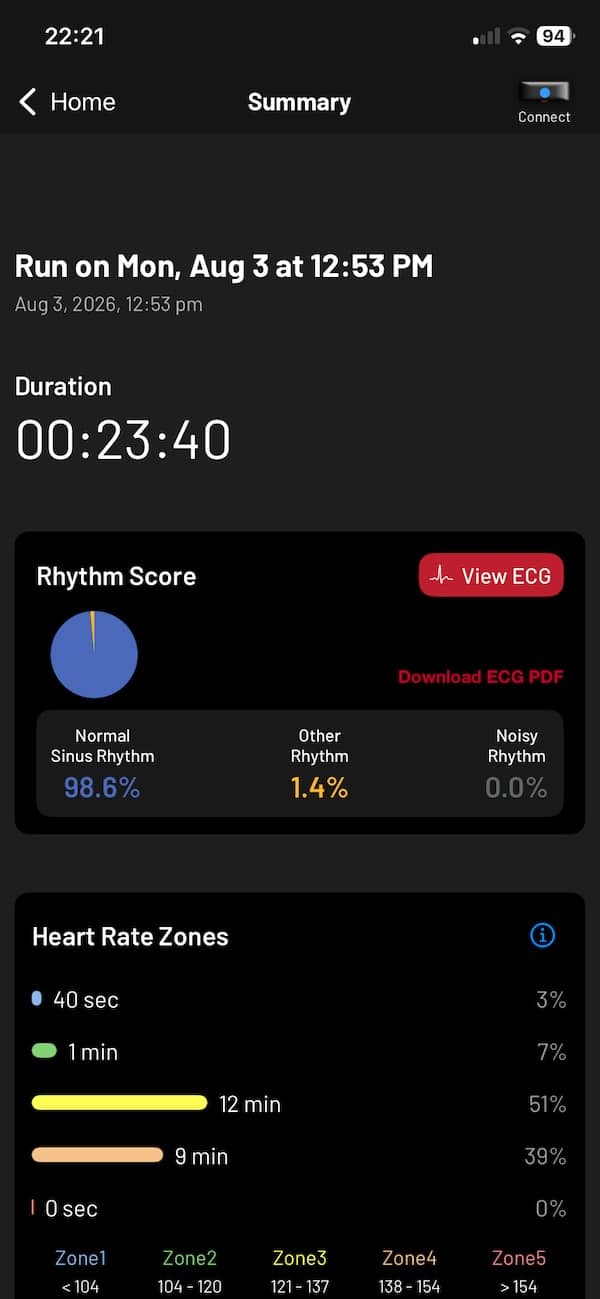
Cardiac Rhythm adds another layer. After a session, you can go through your ECG and see sections classified as normal sinus rhythm or other rhythm. If something catches your attention, you can zoom into the ECG trace and look at what was happening at that point in the workout.
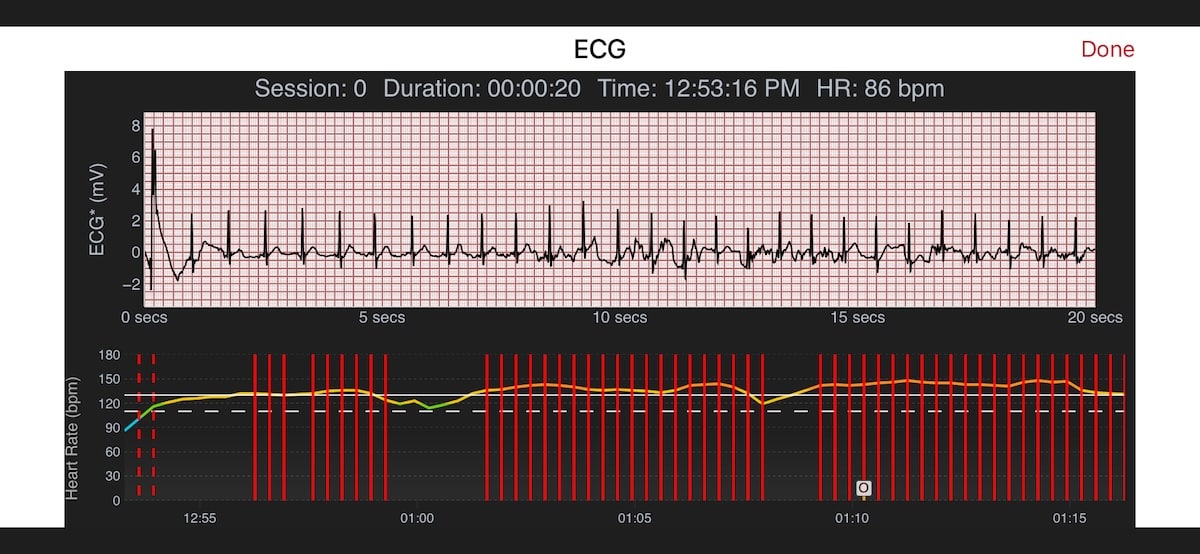
There is also a completely different way to use the Zone. You can start a long continuous ECG recording outside of exercise and capture up to 24 hours of data. If you feel something unusual during that period, pressing the button places a marker in the recording so you can find that moment later. ECG recordings can also be exported as PDFs, which makes them much easier to share with a doctor if there is something you want checked.
That is quite different from the ECG feature on most smartwatches. An Apple Watch, Garmin or Samsung watch typically asks you to sit still and deliberately take a short ECG reading. The Zone can simply keep recording in the background. If something happens unexpectedly, there is at least a chance it has already been captured rather than you trying to take a reading after the event has passed.

Body Shock is another metric I have always liked on Fourth Frontier devices. It measures the impact from each foot strike and plots how that changes during a run. If the numbers start climbing as you tire, it can be a useful indication that your form is beginning to deteriorate. Again, that is not something you are going to get from an ordinary heart rate strap.
That is really the buying decision. If you just want reliable heart rate on your Garmin, Polar or bike computer, save your money and buy a normal chest strap. If you want to dig much deeper into what is happening with your heart and body during exercise, the Zone offers a level of information that ordinary chest straps simply do not provide.
Other training insights and Zone 2
The clue is in the name. Fourth Frontier is putting much more emphasis on training zones with the Zone, and this is probably the biggest change in how the company is positioning the device.
This training feature is one of the things I have enjoyed most about using the Frontier Zone. You are not limited to Zone 2 either. The same system can be used to keep you within other training zones, but Zone 2 is where I found it particularly useful.
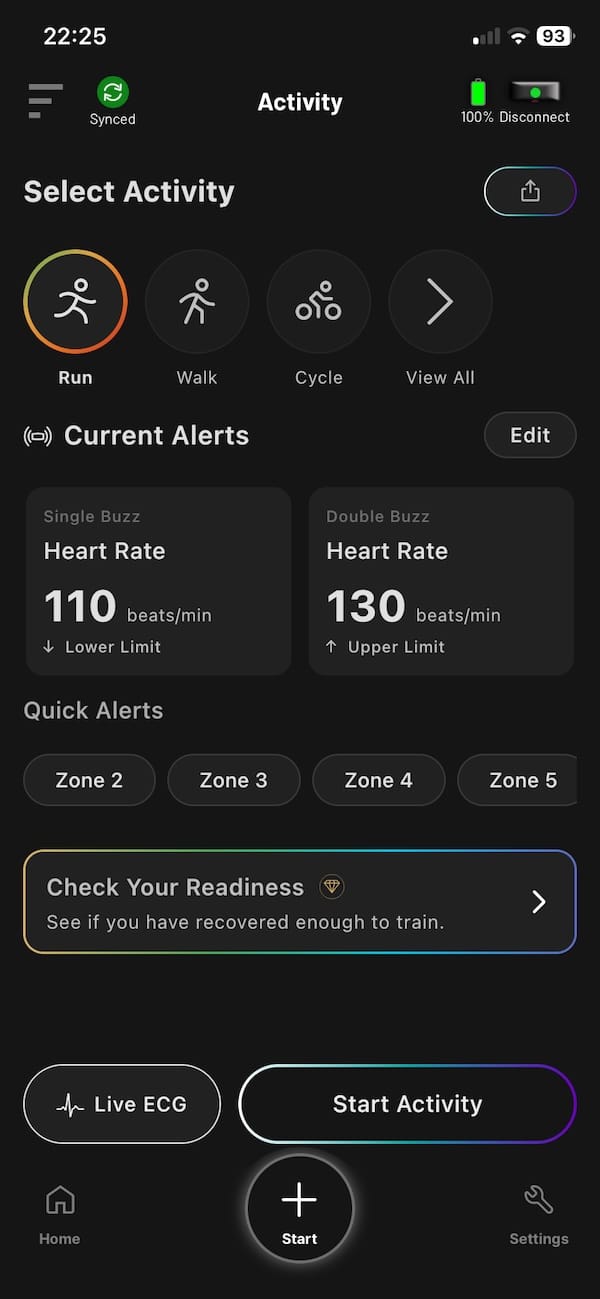
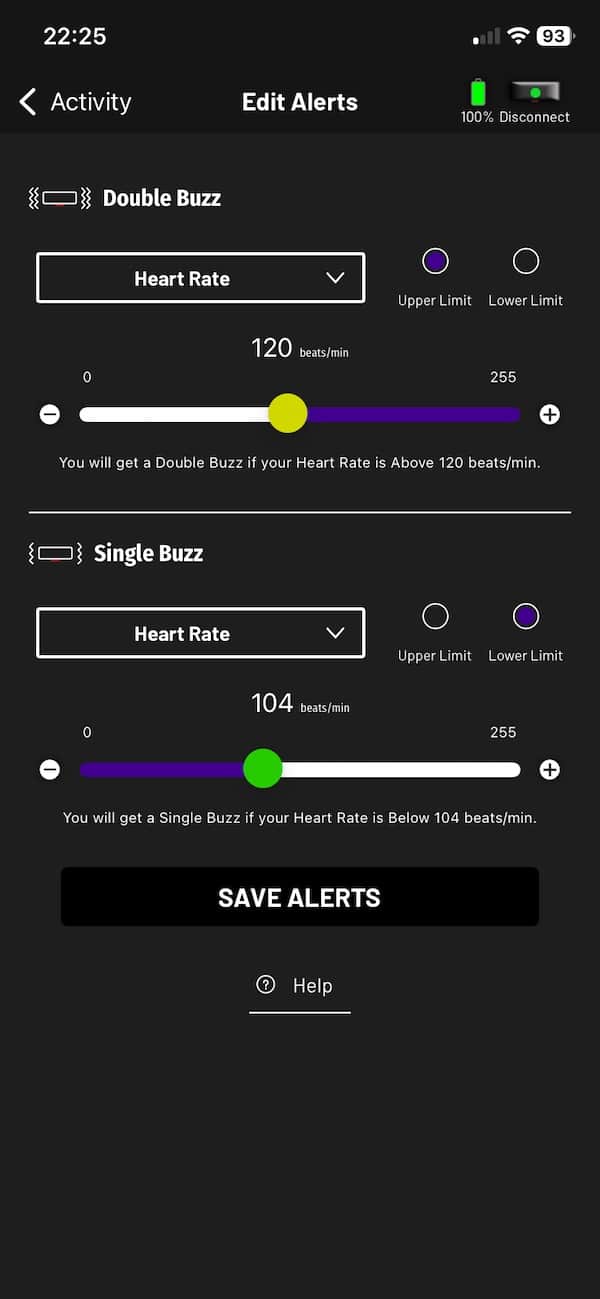
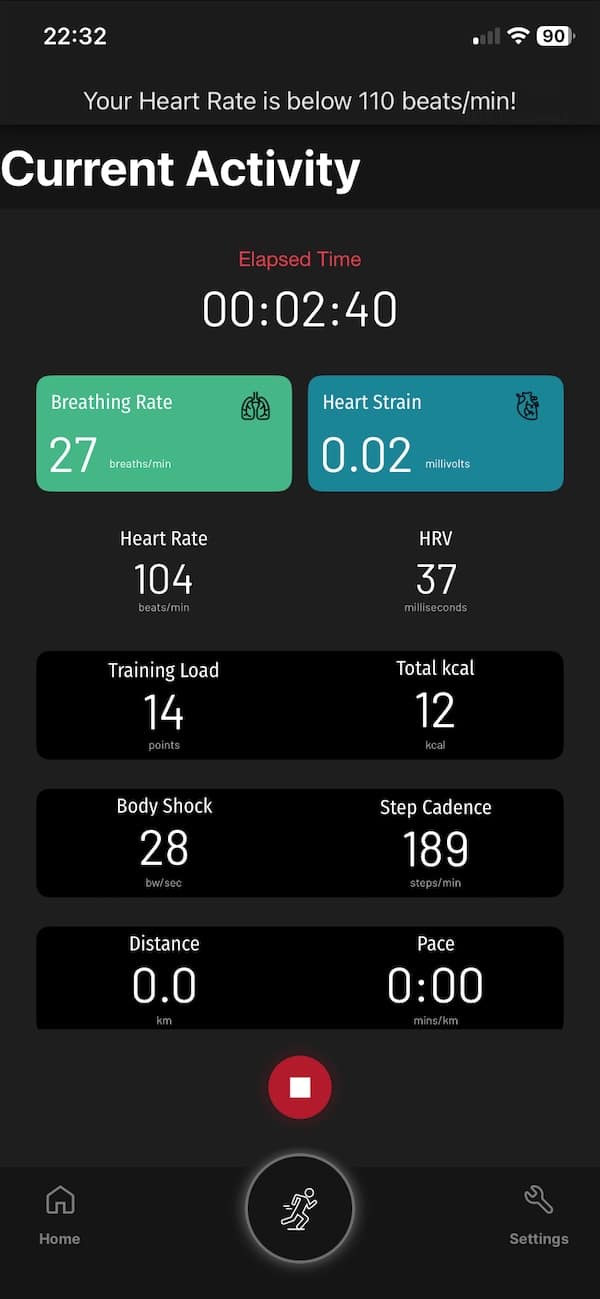
In my case, my Zone 2 range was roughly 119 to 131 bpm. If my heart rate dropped below 119, the device would give me an occasional vibration, roughly every 30 seconds or so, reminding me to pick up my running pace. If I went above 131 and crossed into Zone 3, I would get two vibrations instead.
It sounds simple, but it works surprisingly well. After a while you stop thinking about pace or constantly checking your watch. One vibration and I would instinctively speed up. Two vibrations and I would ease off. It becomes almost automatic.
That was particularly useful for me because I am not naturally very good at Zone 2 training. I tend to start slowly and then gradually push the pace until I am running harder than I intended. With the Zone, I could concentrate on the run rather than repeatedly looking at my wrist and trying to keep my heart rate inside a narrow range.
Fourth Frontier is also doing more here than simply taking a percentage of your maximum heart rate and calling it Zone 2. Heart rate can gradually drift upwards even when your actual effort has not changed much, particularly during long runs or rides.
With Frontier Premium, the company estimates VT1 and VT2, the first and second ventilatory thresholds, using breathing information collected during exercise. Those thresholds can then be used to create more personalised training zones.
Beyond that, there is another way to use the alerts. Instead of keeping you inside a training zone, you can set them to warn you about unusual cardiac strain or breathing rate.
Cardiac Strain is particularly interesting. Fourth Frontier bases this on changes in the ST segment of the ECG, which can be associated with the heart working under increased strain and, in some circumstances, reduced oxygen supply to the heart muscle. The Zone can vibrate when the reading moves beyond a threshold you have set, giving you a real-time warning to ease off rather than only discovering it afterwards in the app.

There are other training features too, including VO₂ Max, readiness and oxygen-uptake analysis through Frontier Premium. Those are useful additions, but for me the vibration-based zone guidance is much more interesting. Plenty of watches can estimate VO₂ Max. Far fewer can quietly keep you inside a training zone without forcing you to keep looking at a screen.
Heart rate and ECG accuracy
Heart rate accuracy was one of the strongest points of the previous Fourth Frontier devices, and my experience with the Zone has been much the same. I compared the device with Polar OH1 and found very little difference between the two. Maximum heart rate was usually identical or within 1 bpm, while the average on the Frontier tended to come out only 2 to 3 bpm lower over a 5K run.
That is not particularly surprising. Unlike the optical sensor on the back of a watch, the Zone measures the electrical activity of the heart directly from the chest, which tends to hold up much better when intensity changes quickly or there is a lot of movement.
That contact point is worth keeping in mind. As with most electrical chest straps, I find it best to slightly dampen the electrodes before putting the Zone on, particularly if I am starting an easy session where it might take a while to work up a sweat. So that’s something to keep in mind.
The more interesting part, though, is ECG accuracy. The Zone records a single-lead ECG from the chest and Fourth Frontier says the signal resembles the V5 position of a conventional 12-lead ECG. That is a very different setup from the short ECG spot checks you get from most watches, because the Zone can continue recording while you run, cycle, sleep or simply go about your day.
I cannot independently verify the ECG against hospital equipment, and I said the same thing in my earlier reviews. What I can say is that I have compared the traces with other ECG-capable devices I own and the waveforms have always looked convincing and consistent. More importantly, the signal remains usable while exercising, which is where wrist-based ECG devices are of little help because they generally require you to stop moving and touch the watch with your other hand.
There is some useful outside evidence here, although it needs to be put in context. A published study on home-based exercise for people with pulmonary hypertension used the original Frontier X to continuously monitor single-lead ECG, heart rate and respiratory rate during remotely supervised exercise. Another published case report described a young competitive runner whose episodes of rapid heart rhythm were captured using a Frontier X after conventional assessments had failed to catch them.
IIt is also worth noting what has not been established. A 2024 expert consensus statement in Sports Medicine discussed the Frontier X2 as a potentially useful sports ECG recorder but said the authors could not find published studies confirming the reliability of its ECG recordings at the time. So while Fourth Frontier has done validation work elsewhere in its product range, I would not describe the consumer Zone as a replacement for a clinical ECG or Holter monitor. Fourth Frontier itself sells the Zone as a health and fitness device rather than a diagnostic product.
For normal training, though, I have a lot of confidence in the heart rate data. And the real advantage remains the same as it was with the other Fourth Frontier device: accurate heart rate is only the starting point. The ability to record the underlying ECG continuously while exercising is what makes the Zone interesting.
Frontier Premium, the app, web dashboard
The Fourth Frontier app remains a comprehensive part of the experience. There is a large amount of information available after a workout, including detailed charts, alerts, ECG data and workout summaries. You can also compare sessions and get plain-English feedback on how the workout went.
For me, though, the web dashboard is still the better place to dig into the data.There is simply more room to work with, particularly when looking through ECG traces and detailed charts.
The dashboard also gives you tools such as zooming and the caliper, along with the Health Trends section that starts to become more useful once you have accumulated a few weeks of data. The phone app is great for quick checks, but if you enjoy digging into numbers, the web dashboard is where the Frontier platform really comes into its own.

The lower price of the Frontier Zone comes with an important catch. Fourth Frontier has moved some functionality that was included with the earlier devices behind its Frontier Premium subscription. In the US, this currently costs $14.99 per month or $119.99 per year, with a seven-day trial.
The basic Zone still gives you plenty without paying anything extra. Continuous ECG recording, heart rate, breathing rate, HRV, Training Load and Cardiac Strain are all there. So this is not a case where the hardware becomes severely limited if you decide not to subscribe.
Premium is where the newer training features come in. It adds VO₂ Max, Readiness Score, oxygen uptake analysis, VT1 and VT2 zones and sleep-stage analysis.
There is an important difference compared with the Frontier X2, though. Live ECG streaming, downloading and sharing ECG reports, and Garmin Connect integration were standard features on the X2. With the Frontier Zone, you need Premium to access them.
I am a little less enthusiastic about that part of the subscription. When I reviewed the original Frontier X, being able to share an ECG recording or have someone monitor it remotely was one of the more unusual features of the device. Garmin integration is also genuinely useful if, like me, you already do most of your training with a Garmin watch.
On the other hand, the Zone costs considerably less to buy than the earlier Frontier hardware, so there is a trade-off here. You can buy the device and use all the core heart-monitoring features without a subscription, then add Premium if you want the more advanced training and sharing features.
If continuous ECG is more than you need, a conventional chest strap will cost less. I’ve compared the main options in my guide to the best heart rate chest straps.
Don’t miss the latest from Gadgets & Wearables
Subscribe to our monthly newsletter and check out our YouTube channel.
You can also follow Gadgets & Wearables on Google News and add us as a preferred source in Google Search.

