

KardiaMobile 6L review: Six ECG leads in your pocket

I’ve been using the AliveCor KardiaMobile 6L for a few weeks now, and I really like how simple it is. It’s tiny, weighs next to nothing and can record a six-lead ECG in just 30 seconds. There’s no charging to worry about, setup takes very little time and taking a reading is easy. The hardware feels nicely made, too.
The six-lead recording is the main attraction here. You get more information than you would from a typical smartwatch ECG, which can be handy if you want to share readings with your cardiologist. Sure, it’s not quite as convenient as taking an ECG on your wrist, but getting six leads from something this small is pretty impressive.
The Kardia app is easy enough to use and covers all the basics. I particularly like that you can record and export ECGs without paying anything extra. There’s plenty more available through KardiaCare, but at $99 a year in the US or £79.99 in the UK, it’s not cheap. I do wish AliveCor included a few more features for free, particularly when it comes to exploring your ECG data.
All things considered, there’s a lot to like here. The KardiaMobile 6L does what it promises, it’s easy to carry around and I’ve had a good experience with it so far. The app has room for improvement, but that doesn’t take much away from what is a very handy little ECG monitor. If you want more detailed heart rhythm recordings than your smartwatch can provide, it’s well worth a look.
View on AliveCor’s website, AmazonJump to
Design and ease of use
I’ve been using the KardiaMobile 6L for the past few weeks, and this isn’t my first experience with AliveCor. I previously reviewed the KardiaMobile Card, the company’s credit card-sized ECG monitor. I’ve also followed its newer products, including the KardiaMobile 6L Max. So I was curious to see how the standard 6L would hold up in everyday use.
The first thing you notice is just how small and simple it is. We’re talking about a little plastic rectangle with two flat metal contacts on top and another one underneath. That’s pretty much the entire design. At just 24 grams, it barely weighs anything, and it’s small enough to slip into your pocket without noticing it’s there. You could probably even squeeze it into some wallets.
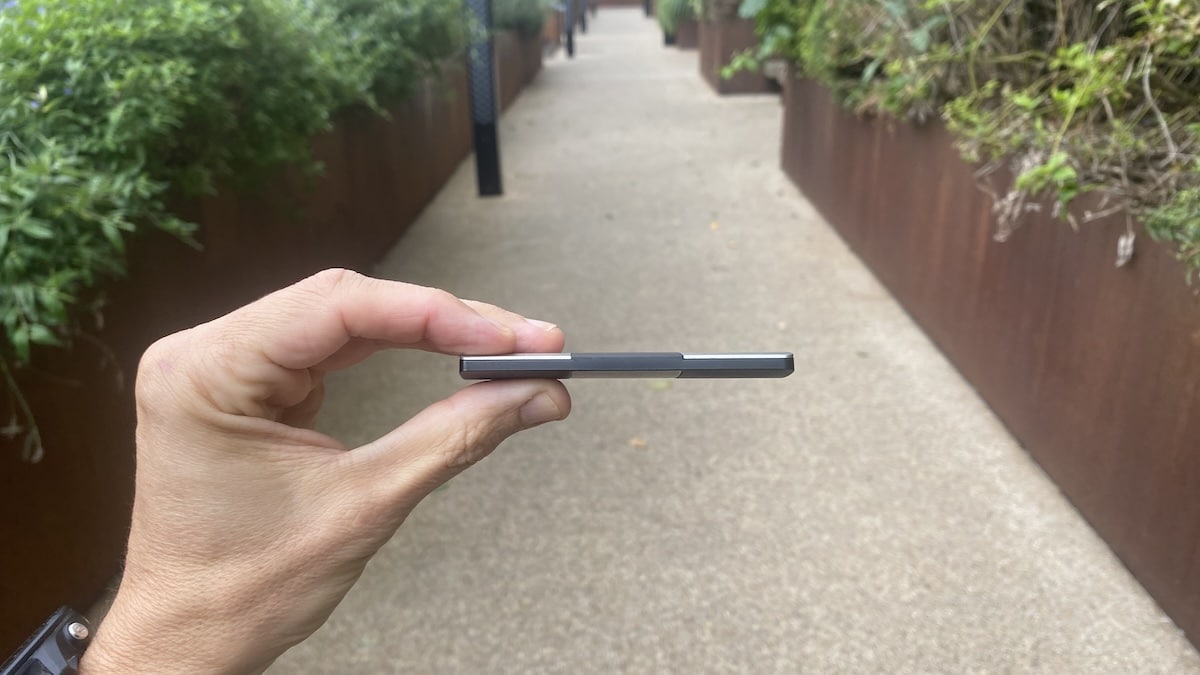
Despite its size, the whole thing feels sturdy and nicely put together. There are no buttons, no screen and not even a charging port. Instead, it runs on a small CR2016 battery that should last around a year before you need to replace it.
I actually prefer this arrangement for something like this. It’s not a device you’re going to use all day, so having to charge it would just be another thing to remember. And a replacement battery only costs a few dollars. You just need a small screwdriver to remove the two screws holding the bottom electrode in place. It’s a little fiddly, but you shouldn’t need to do it very often.
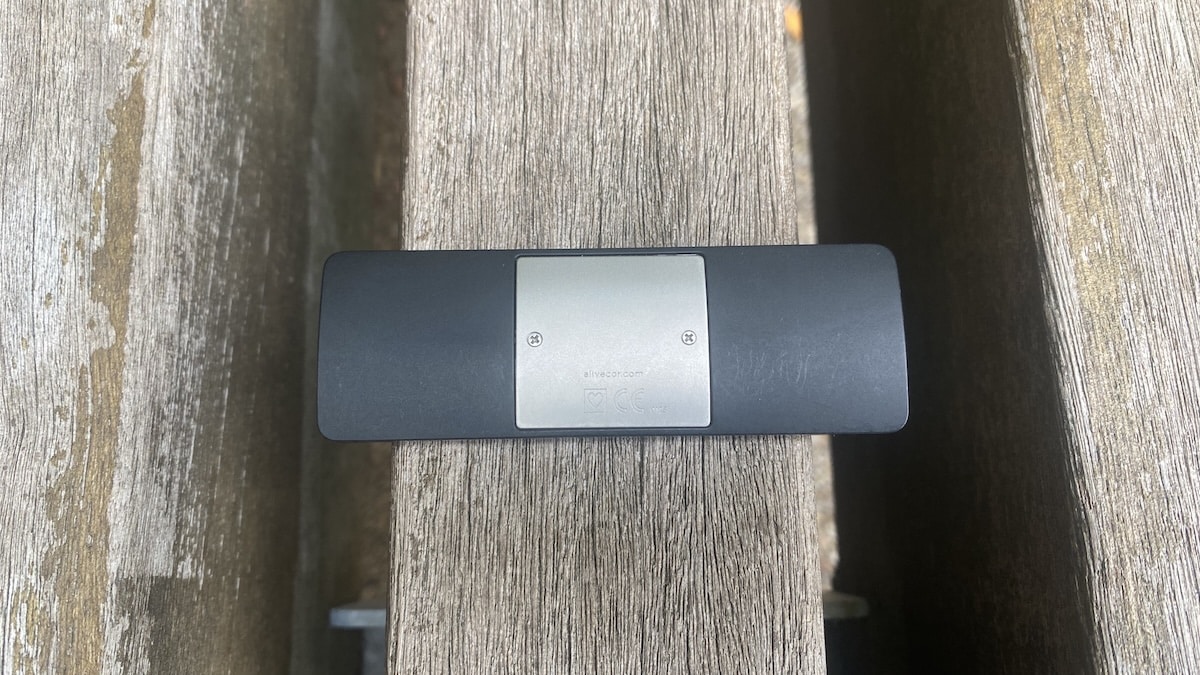
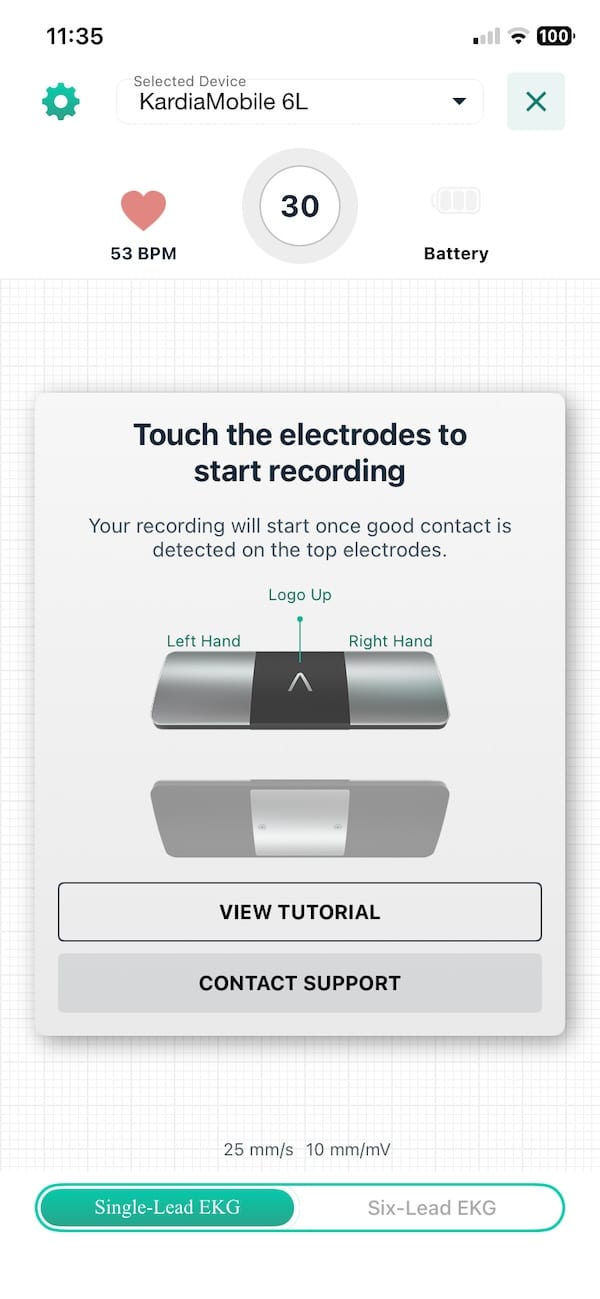
Getting started is also pretty painless. Download the Kardia app, create an account and follow the instructions to connect the device over Bluetooth. You don’t even need to turn it on. Just touch the two upper electrodes and it wakes up. The whole pairing process was straightforward in my testing, and the connection has been reliable.
One thing worth mentioning is that you need your phone every time you want to take a reading. So it’s not quite as convenient as using a smartwatch that’s already on your wrist. On the other hand, it’s a tiny device that does one specific job, and there really isn’t much to figure out once you’ve got the hang of positioning it.
ECG recording and performance
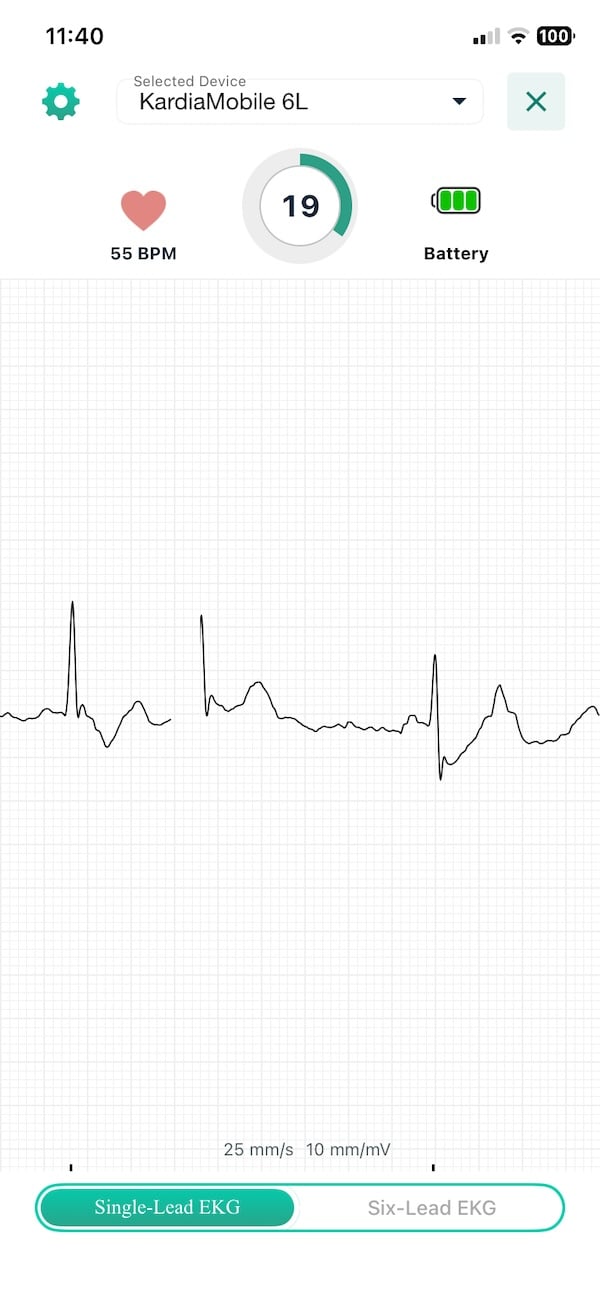
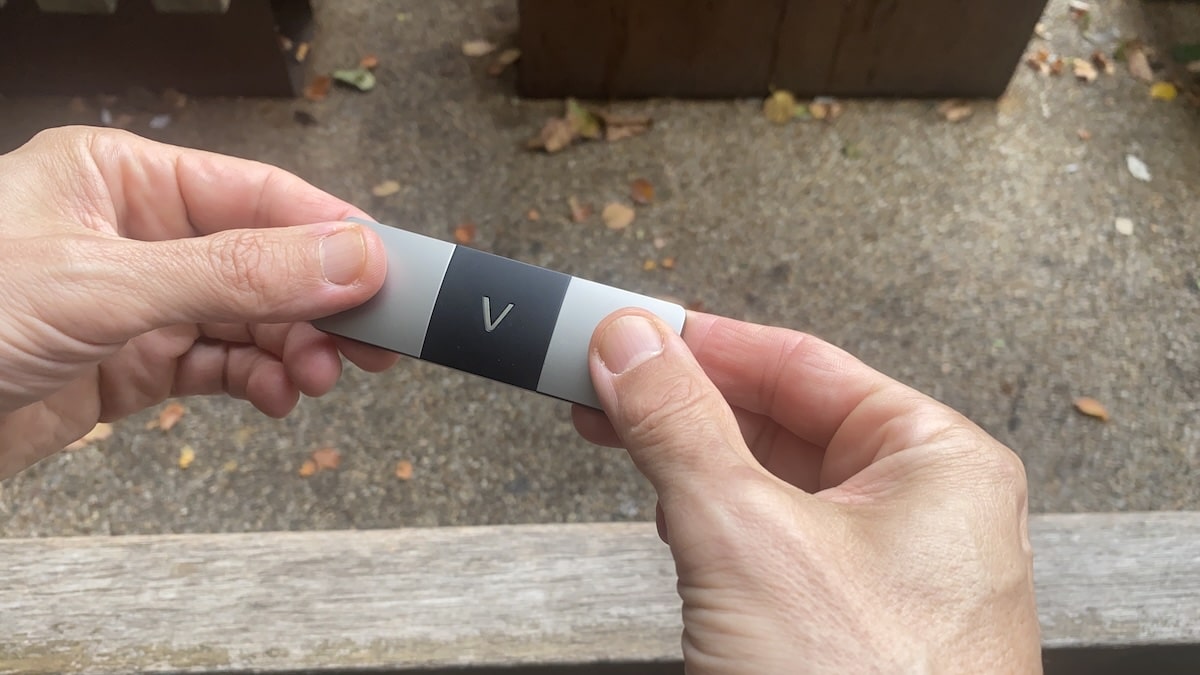
For a basic ECG, you just place two fingers from each hand on the metal contacts and sit still for 30 seconds. Or you can simply hold the device with your thumbs resting on the contacts.
One thing to watch out for is holding the device the right way around. I got this wrong a few times and had to start the recording again. The AliveCor logo in the middle should look like an A, not an upside-down V. It’s an easy mistake to make.
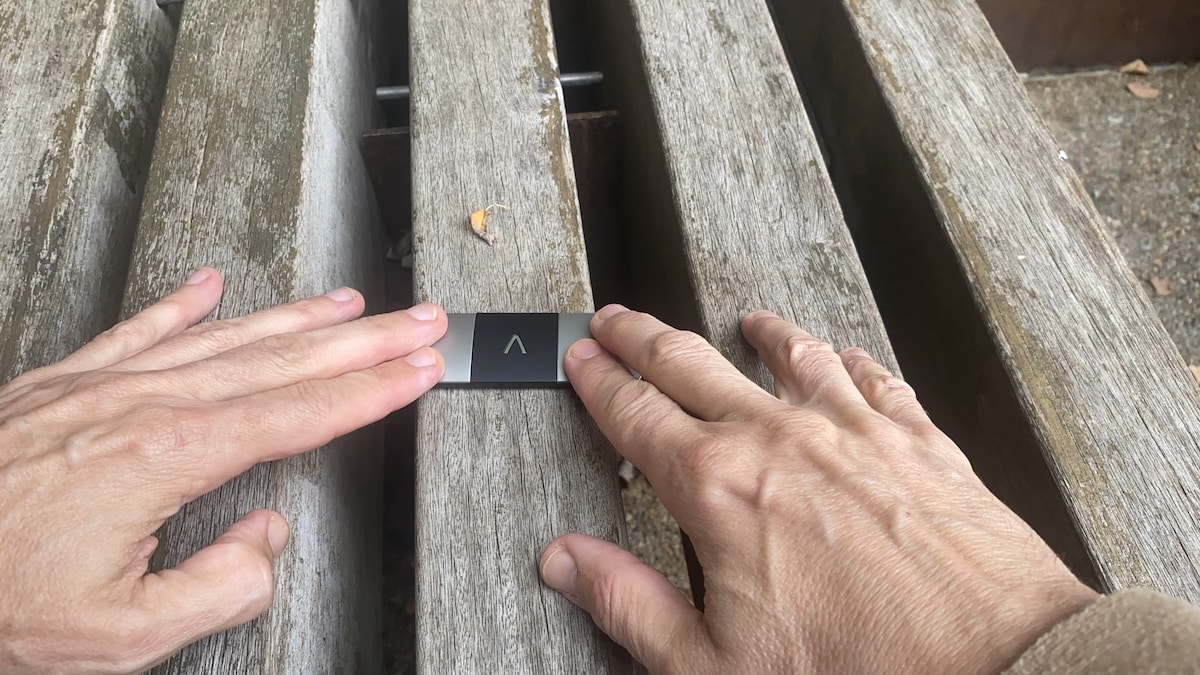
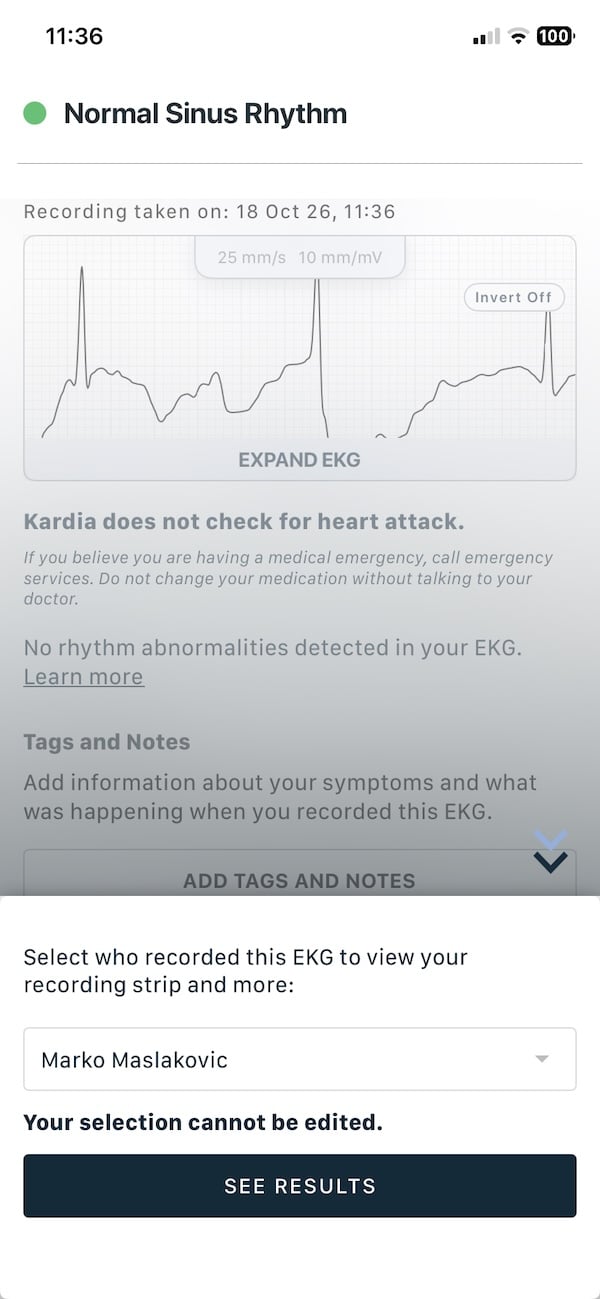
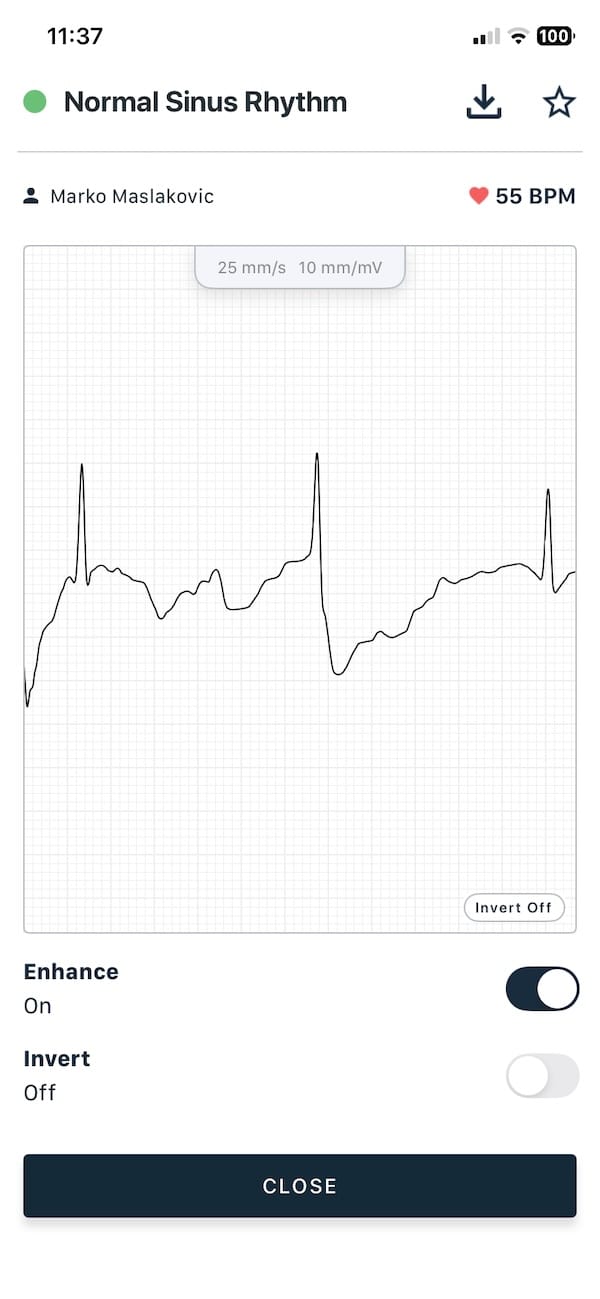
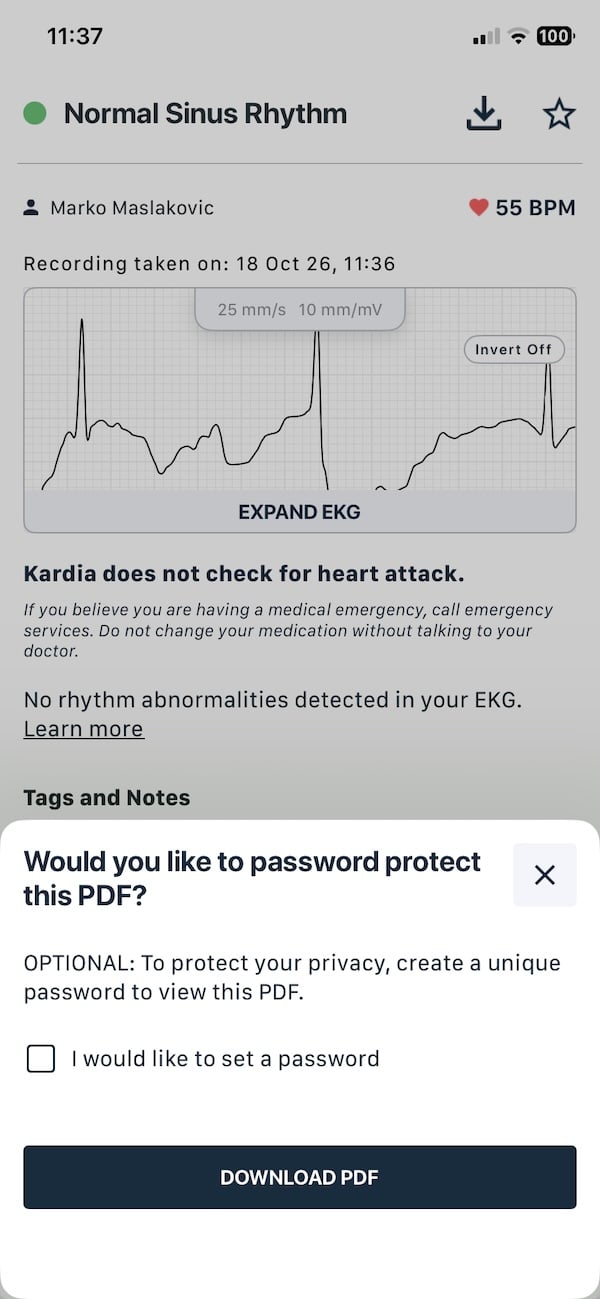
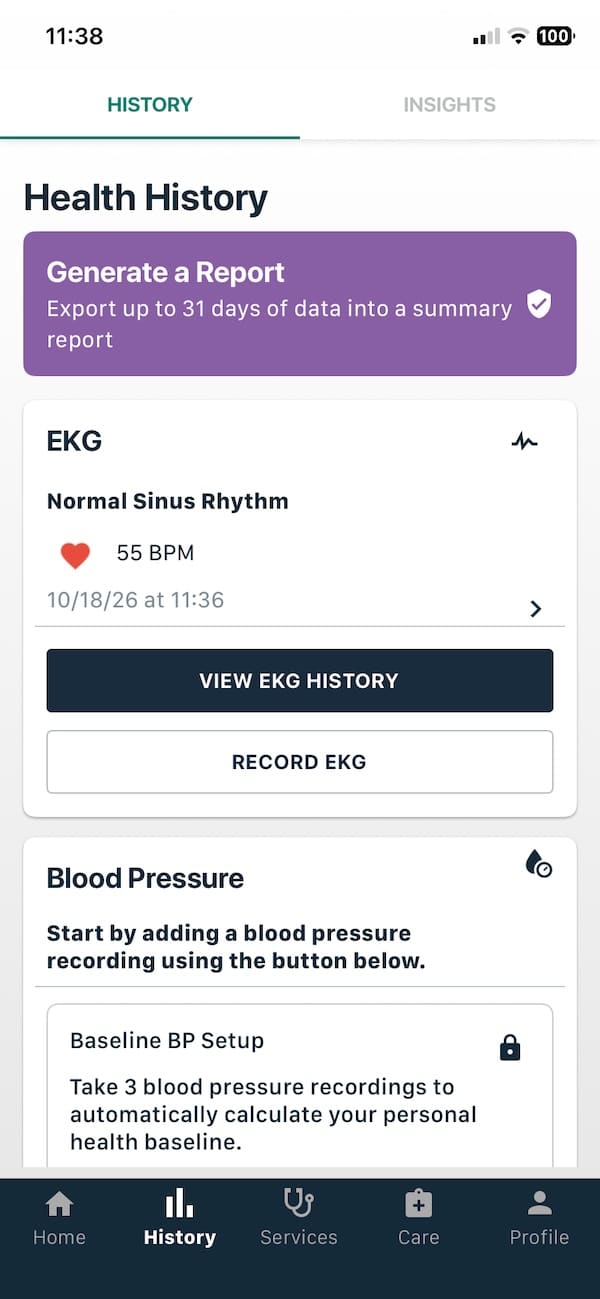
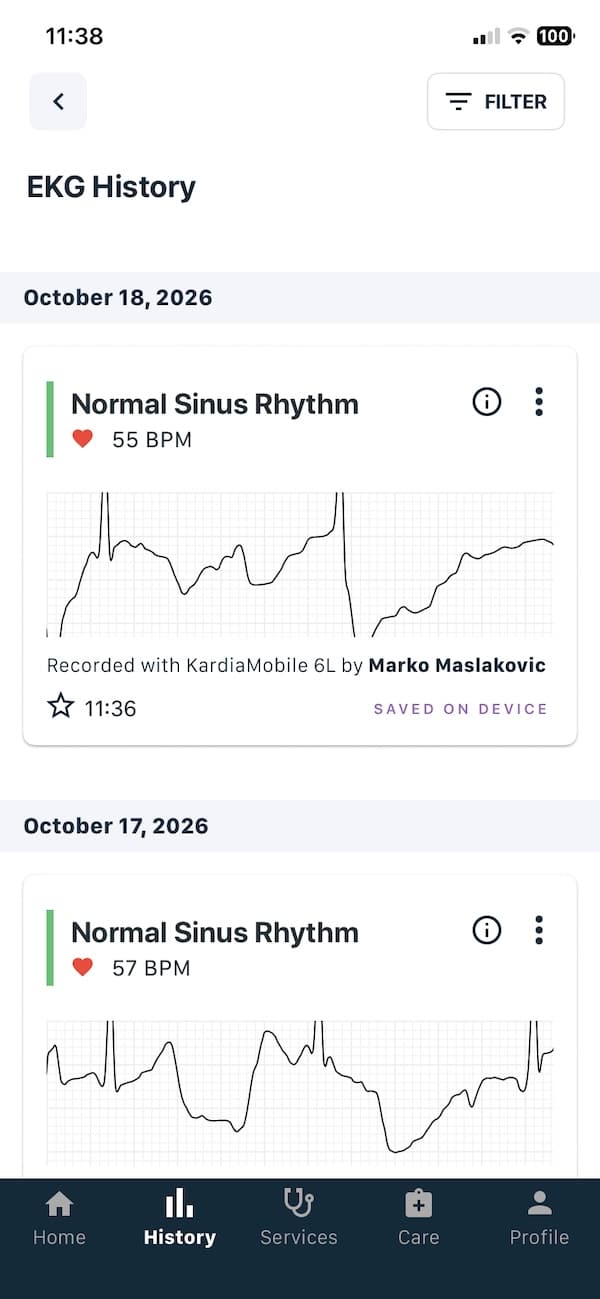
Once the 30 seconds are up, the app gives you a result and your heart rate. You don’t need to know how to read an ECG to make sense of it. But if you’re curious, you can always have a closer look at those squiggly lines yourself.
The six-lead reading takes a bit more effort. But not much.
You still keep your fingers or thumbs on the two upper contacts. But this time you also need to rest the bottom of the device against your bare left knee or the inside of your left ankle.
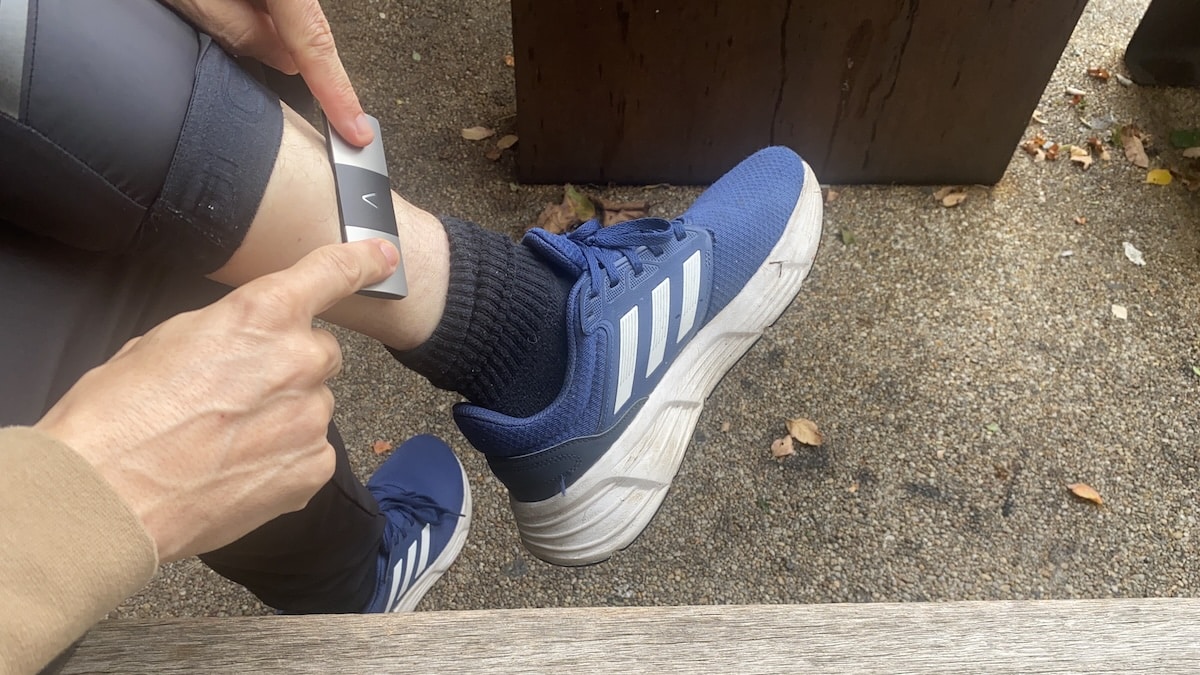
And yes, it has to be the left leg. That’s because the heart’s electrical signal normally travels downwards and towards the left, so that’s the leg ECGs have traditionally used to measure it. The right leg is normally used to help reduce electrical interference. It’s simply how ECG measurements were standardised, and the KardiaMobile 6L follows that same setup.
This time you get data that is a bit more detailed.
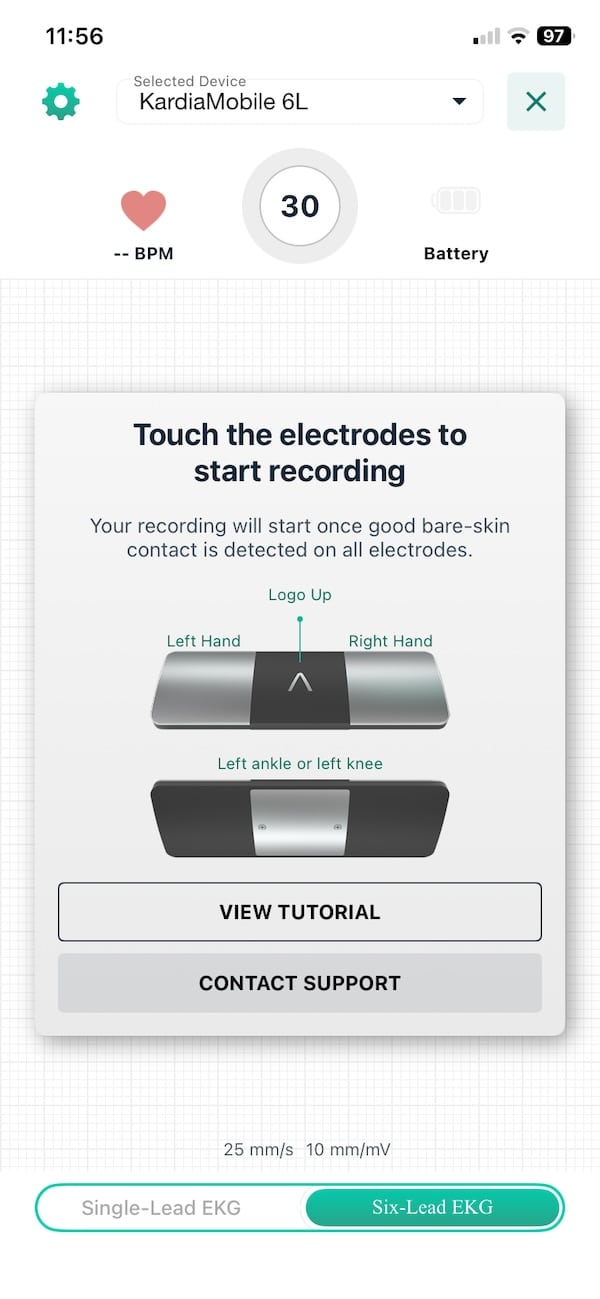
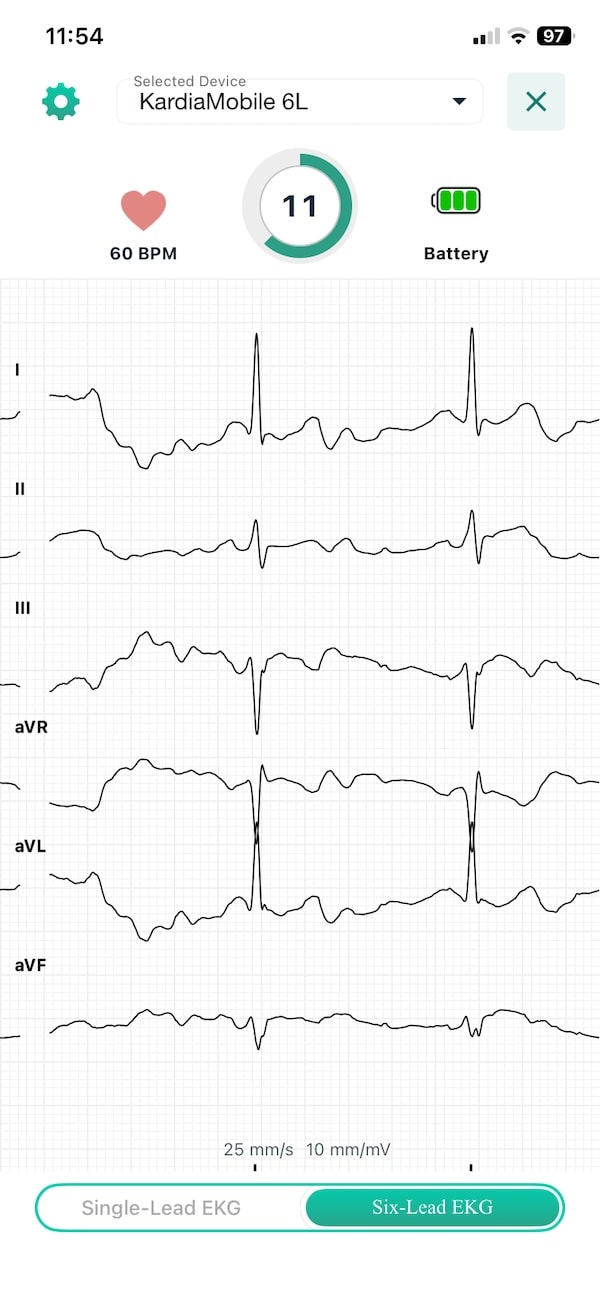
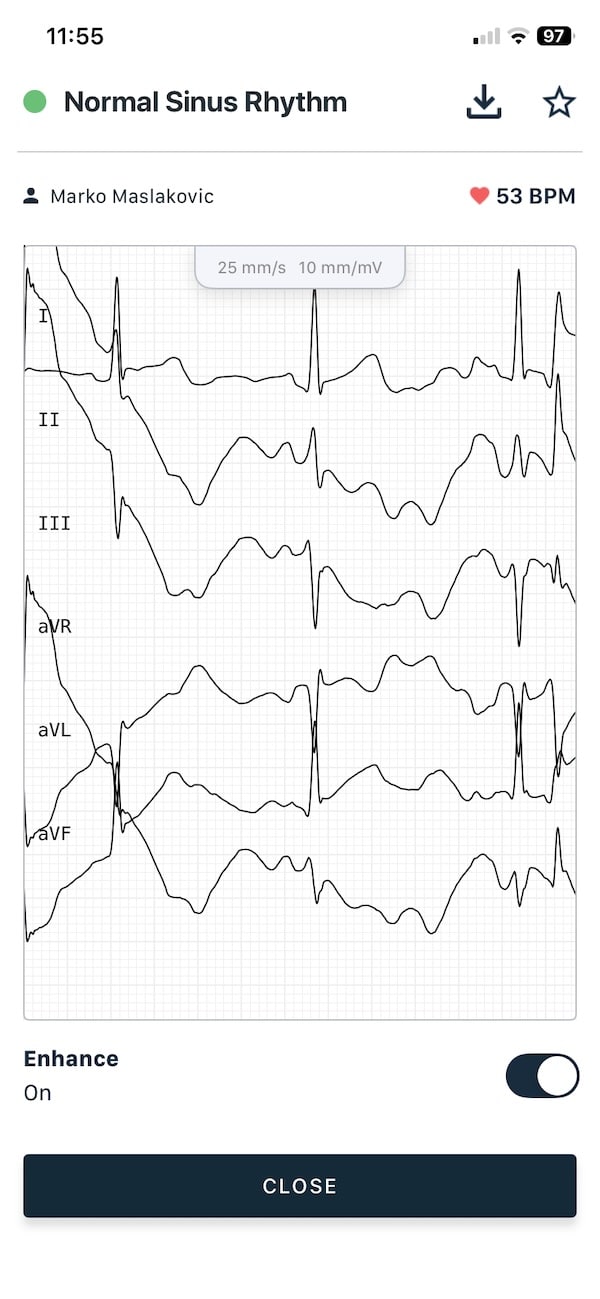
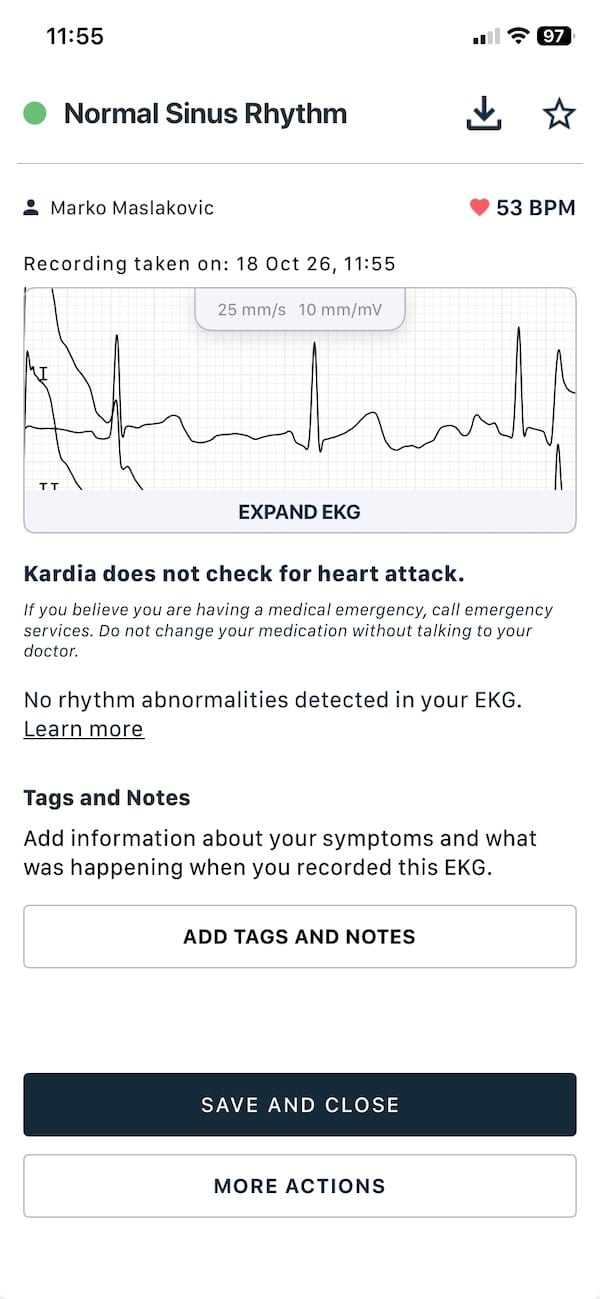
Of course, things don’t always go perfectly. You need to stay still and maintain good contact with the electrodes, otherwise the recording can get messy. Even something as simple as dry skin can cause problems. If the app struggles to pick up a decent signal, you might need to adjust your position and try again. And finally, you’ll want to keep it away from other phones, computers and laptops, as these can sometimes interfere with the signal.
Check out this video I recorded how to take both types of measurements.

Now, about those six leads. A normal smartwatch ECG looks at your heart’s electrical activity from one direction. The KardiaMobile 6L looks at it from six. You end up with six separate waveforms, which might not mean much to the average person, but they can tell a cardiologist quite a bit more about what’s happening.
And that’s really where the extra leads come into their own. The app doesn’t suddenly become six times better at spotting problems just because it has more information. In fact, AliveCor’s published documentation says its automatic rhythm analysis uses Lead I, even when you take a six-lead recording. So the additional waveforms are mainly useful when someone with medical training looks at them.
There is some good research behind this, too. One study involving 220 patients compared KardiaMobile 6L with ECG-equipped smartwatches. All of them were pretty good at spotting atrial fibrillation automatically. But when cardiologists looked at the recordings themselves, the six-lead device gave them an edge.
Kardia app and subscription features
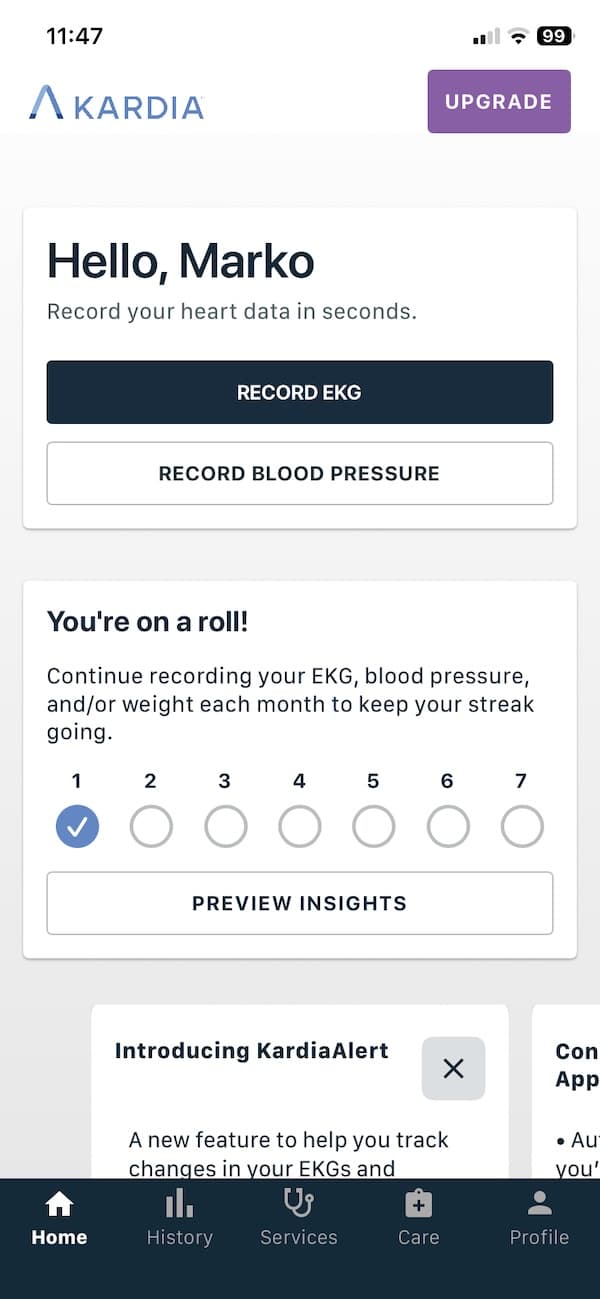
The Kardia app does the basics well enough, but I think AliveCor could do quite a bit more with it. After each reading, you get your heart rate and a classification such as normal sinus rhythm, possible AFib, bradycardia or tachycardia. Sometimes you’ll get an unclassified result, which doesn’t necessarily mean something is wrong. It just means the app can’t figure out what to make of the recording. It could be interference or you moved during the reading.
You can also look back through your ECG history, add notes about symptoms and export recordings as PDFs to send to your doctor. All of that is free, including the six-lead ECG recordings.
There’s even an option for a one-off ECG review without subscribing. In the UK, that costs £9.99 and a cardiac technician checks your recording. In the US, it’s $39, but there you’re getting a review from a board-certified cardiologist. So they’re not quite the same service.
But here’s what I don’t particularly like. You’ve got a device capable of recording six ECG leads, yet the app doesn’t really let you do much with all that information. There’s no proper way to dig into the underlying data. You get the waveforms and a fairly basic interpretation, and that’s about it.
For more features, AliveCor wants you to sign up for KardiaCare. That costs $11.99 per month or $99 per year in the US, and £10.99 per month or £79.99 per year in the UK.
The premium service adds three more rhythm classifications, including PVCs, supraventricular ectopy and wide QRS complexes. There’s also KardiaAlert for spotting changes against your usual ECG, monthly reports, trend insights, medication reminders, cloud storage and up to four cardiologist ECG reviews each year.
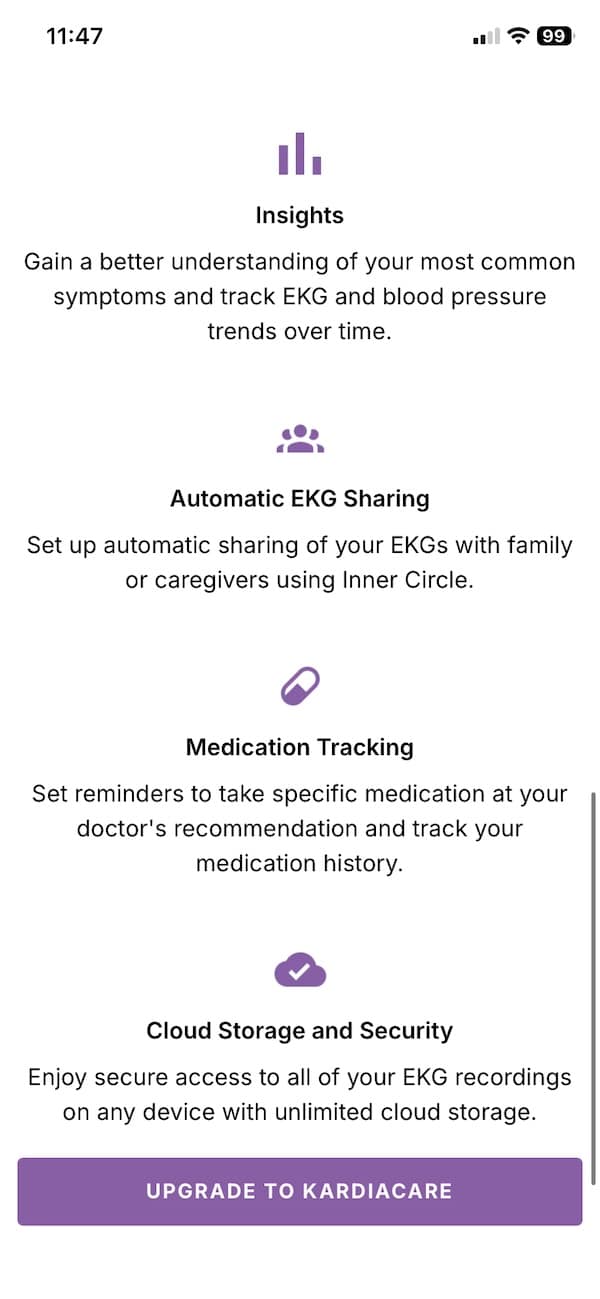
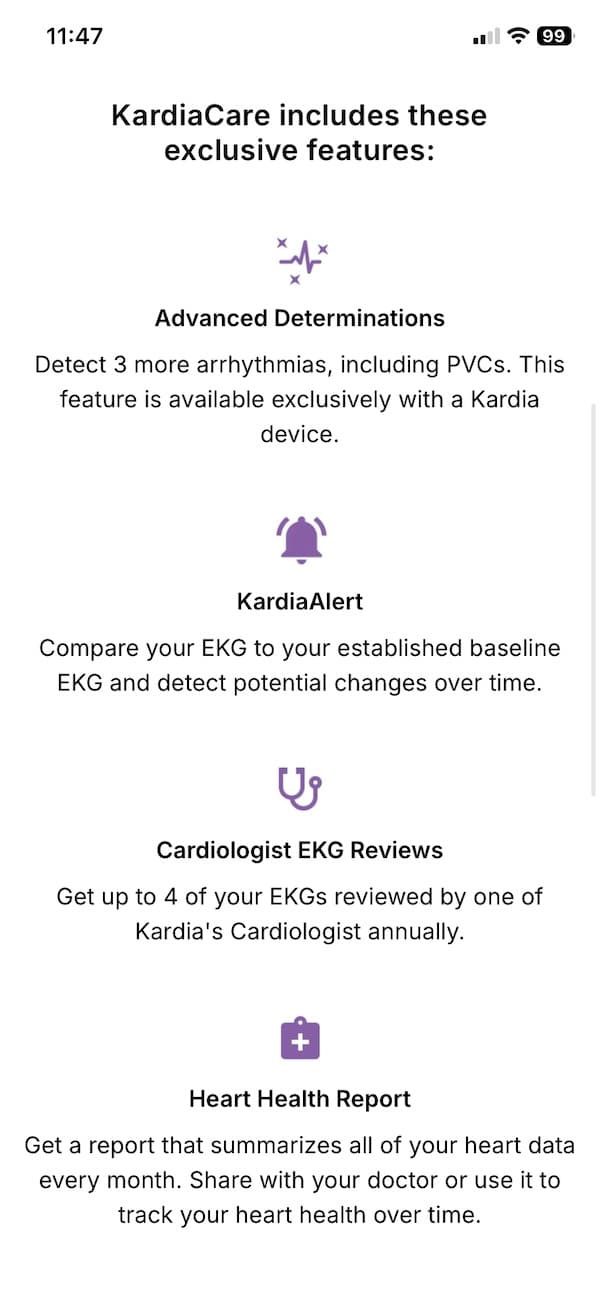
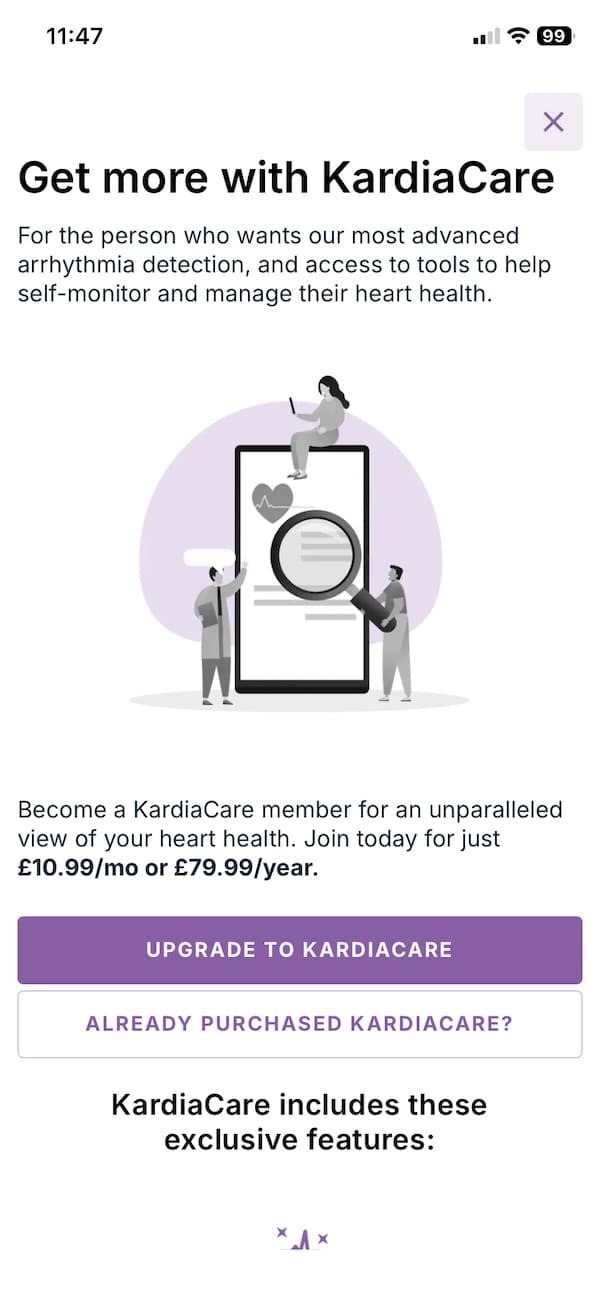
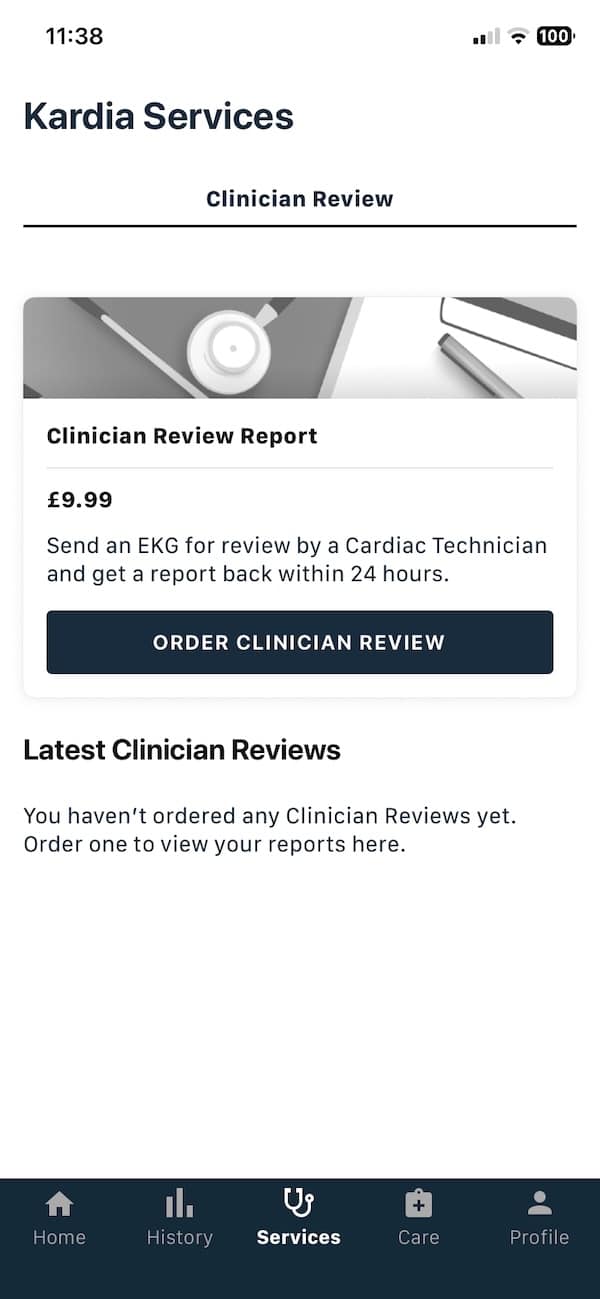
I can see why the subscription model rubs people the wrong way. You’ve already paid for the hardware, yet quite a few of the more useful software features require another payment. And the app isn’t particularly shy about reminding you that KardiaCare exists. It feels a little too focused on getting you to upgrade.
Having said that, I wouldn’t bother with the subscription unless I had a specific reason to use those extra features. Being able to take a six-lead ECG and send the recording to a doctor is the main attraction here, and thankfully that doesn’t cost anything extra.
KardiaMobile 6L vs smartwatch ECG
If you already own an Apple Watch or another smartwatch with ECG functionality, you might be wondering whether there’s any point buying the KardiaMobile 6L. After all, both can take a 30-second ECG and check for signs of atrial fibrillation.
The main difference is those six leads. Most smartwatches only record a single lead, while the KardiaMobile 6L captures six different views of your heart’s electrical activity. That gives a cardiologist more information to work with, particularly when looking at rhythm problems that aren’t always easy to identify from a single recording.
But smartwatches have a pretty big advantage when it comes to convenience. They’re already on your wrist, you don’t need to get your phone out, and some can check for irregular heart rhythms in the background. With the KardiaMobile 6L, you have to carry a separate device and take each reading manually.
So which makes more sense? For occasional ECG checks, a smartwatch will probably do the job for most people. But if you’re dealing with recurring heart rhythm issues, or your doctor wants more detailed recordings, the KardiaMobile 6L has a much stronger case.
Key specifications
FAQ
Does AliveCor KardiaMobile 6L require a subscription?
No, the standard KardiaMobile 6L works without a subscription. You can record single-lead and six-lead ECGs, receive basic rhythm classifications and share recordings without paying for KardiaCare. A subscription unlocks additional rhythm classifications and analysis features.
How accurate is the KardiaMobile 6L?
The KardiaMobile 6L is an FDA-cleared, clinically validated ECG device. Studies have demonstrated good accuracy in detecting atrial fibrillation, although results depend on recording quality and the type of rhythm abnormality. It cannot identify every heart condition, and its automatic classifications are not a substitute for a medical diagnosis.
What is the difference between a six-lead and a 12-lead ECG?
A six-lead ECG records six electrical views of the heart using electrodes connected to the limbs. A conventional 12-lead ECG adds six chest leads, providing additional information about electrical activity across different regions of the heart. The KardiaMobile 6L offers more information than a single-lead ECG, but it cannot replace a full clinical 12-lead examination.
Can KardiaMobile 6L detect irregular heartbeats?
Yes, the device can identify possible atrial fibrillation, bradycardia and tachycardia. With KardiaCare, additional classifications include sinus rhythm with premature ventricular contractions (PVCs), supraventricular ectopy (SVE) and wide QRS complexes. However, not every irregular heartbeat will receive a specific classification.
Does KardiaMobile 6L work with iPhone and Android?
Yes, the device works with compatible iPhones and Android smartphones through the Kardia app. It connects via Bluetooth and requires a supported phone or tablet to record and display an ECG. AliveCor maintains a compability list, so it is worth checking your particular phone before purchasing.
Can KardiaMobile 6L detect a heart attack?
No, the KardiaMobile 6L is not designed to detect or rule out heart attacks. It primarily records electrical activity to help identify certain heart rhythm abnormalities. A normal reading does not rule out a serious cardiac problem.
Can I share KardiaMobile 6L recordings with my doctor?
Yes, the Kardia app allows users to export ECG recordings as PDF files that can be emailed or shared with a healthcare professional. Six-lead recordings include all six waveforms, giving a clinician more information to examine than a conventional single-lead recording.
How long does the KardiaMobile 6L battery last?
The device uses a replaceable CR2016 coin-cell battery rather than a rechargeable battery. AliveCor estimates approximately one to two years of normal use, depending on how frequently recordings are taken. Replacing the battery requires removing the bottom electrode with a small screwdriver.
Don’t miss the latest from Gadgets & Wearables
Subscribe to our monthly newsletter and check out our YouTube channel.
You can also follow Gadgets & Wearables on Google News and add us as a preferred source in Google Search.

