

Muse S Athena vs SereniBrain: Which EEG headband is better?
Table of Contents
SereniBrain and Muse S Athena both put EEG sensors on your head, but that is about where the similarities end. Muse S Athena is the much more complete brain-training and sleep system, while SereniBrain is cheaper, simpler and gives you considerably more freedom to explore your own EEG data.
I have spent quite a bit of time with both, having reviewed Muse S Athena and more recently tested SereniBrain. They are pretty easy to separate once you start using them because they take very different approaches to brain tracking.
Muse clearly wins the hardware battle. Athena combines multi-channel EEG with fNIRS, heart-rate sensing and movement tracking, which gives it considerably more information to work with than SereniBrain.
It also tracks sleep, something SereniBrain does not attempt to do. But more sensors do not automatically make Muse the better purchase, particularly when SereniBrain costs less than half as much.
Muse gives you the more polished experience
Muse has been making consumer EEG headbands for years, and that experience shows with Athena. It feels like a finished ecosystem rather than simply a sensor attached to an app.
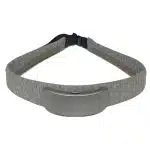
You can choose different meditation modes, train relaxation, work on focus, monitor heart rate and breathing, and use fNIRS to measure changes associated with mental effort. The app does most of the interpretation for you, so you do not need to understand EEG charts to get something useful from it.
One of Athena’s more unusual features is its Strength training. Instead of trying to relax, you deliberately increase mental effort while the fNIRS system monitors changes around the prefrontal cortex.


The app turns this into an interactive exercise, with your concentration affecting what happens on screen. It is quite different from the usual meditation-focused experience you get from most EEG headbands.

Muse also offers metrics such as Cognitive Performance and Brain Recharge. These attempt to turn complex sensor readings into something easier to understand, a little like the recovery and readiness scores you get from modern sports watches.
I found those metrics interesting during my testing, although this approach also means you are relying heavily on Muse to interpret the signals for you. Some of the more advanced functionality is also connected to Muse Premium, adding another cost if you want everything the platform offers.
SereniBrain lets you see what is happening
SereniBrain goes almost in the opposite direction. It gives you fewer sensors and fewer polished interpretations, but considerably more freedom to look at the EEG information yourself. You can simply follow its 1 to 100 relaxation score, but you can also open the EEG view and watch Delta, Theta, Alpha, SMR, Beta and Gamma activity change in real time.
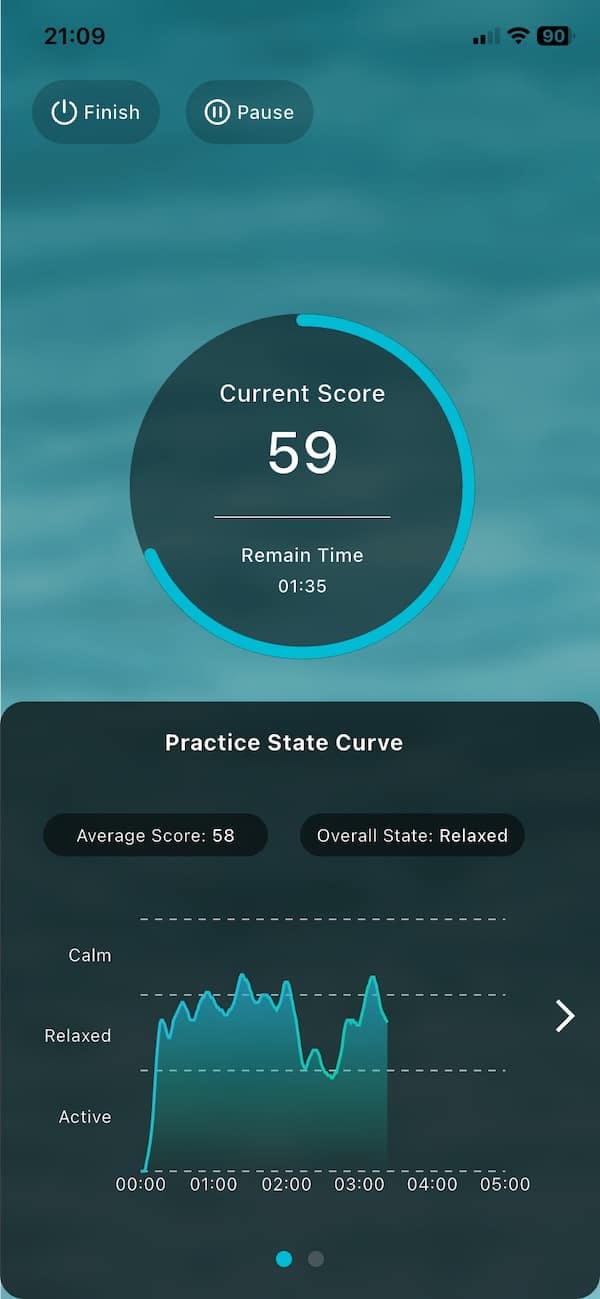
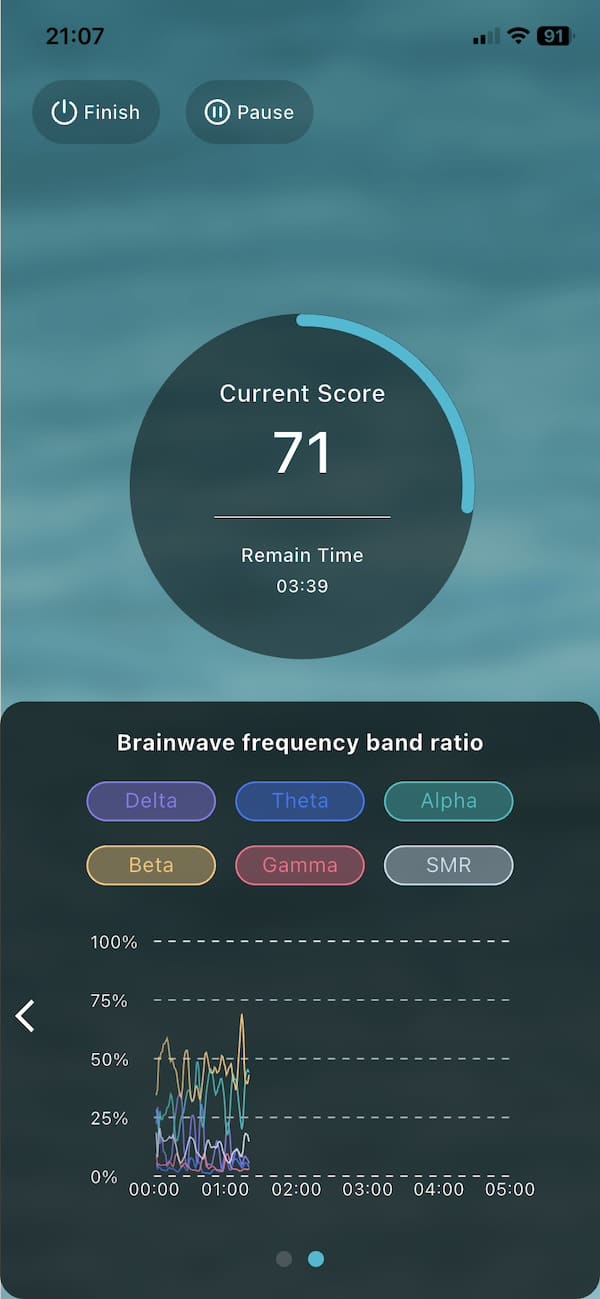
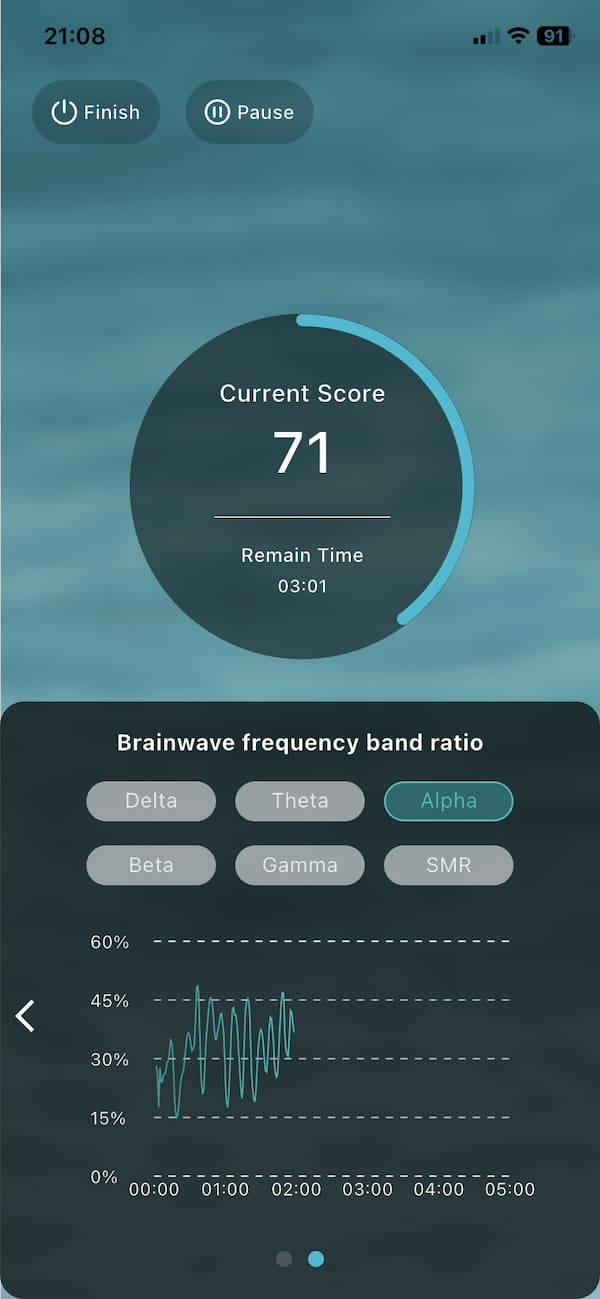
During testing, I could see obvious differences when I closed my eyes, concentrated, performed mental arithmetic or changed what I was focusing on. That does not mean every movement on the graph represents some profound change in brain activity, because blinking, facial movement and poor sensor contact can all introduce artefacts.

Still, it makes experimenting with EEG very interesting. Instead of simply being told that your brain is relaxed or focused, you can watch how the individual frequency bands behave.
Things get even more interesting after the session. SereniBrain lets you export session information as CSV data, including raw EEG voltage and values for the different brainwave bands.
That immediately opens up possibilities that most consumer wellness devices do not offer. You can build your own charts, compare sessions, analyse changes over time or simply check whether the app’s interpretation matches what the recorded data appears to show.
Muse has the better meditation system
If meditation is your main reason for buying one of these headbands, Muse has the stronger software platform. There is much more content, the app feels more mature and its neurofeedback system has had years of development.
My favourite remains the classic Mind Meditation experience. As your brain becomes more active the soundscape becomes busier, while birds appear when you manage to maintain a calmer state.
It sounds slightly gimmicky when described like that, but it works surprisingly well in practice. The feedback can occasionally become distracting itself, although Muse gives you enough options to adjust the experience.
SereniBrain’s meditation library is much smaller. That sounds like a major disadvantage, but I found it less restrictive than I expected because you are not forced to use only the content supplied by the company.
You can start its Meditation Tracker and listen to your own meditation audio, music or other material. SereniBrain continues recording the EEG session while you use whatever audio works for you.
I actually prefer that flexibility in some situations. A large meditation library is useful, but I do not necessarily want the hardware manufacturer deciding what I should listen to every time I use the device.
SereniBrain also includes visual and audio neurofeedback. One option uses a campfire that responds to your relaxation level, while another changes the behaviour of ocean waves according to your state.
The presentation is simpler than Muse, but the basic feedback mechanism works. SereniBrain feels more like an EEG tool with meditation features, whereas Muse feels like a meditation and brain-training platform built around EEG.
Sleep completely changes the comparison
If sleep tracking is important to you, the decision becomes much easier. Muse S Athena can monitor sleep using EEG alongside heart rate, breathing and movement, while SereniBrain is not intended to track sleep at all.
Athena identifies sleep stages and generates a Sleep Score. It also includes features designed specifically around falling asleep and returning to sleep during the night, extending the device well beyond daytime meditation.
When I reviewed Muse S Athena, I compared its sleep results with my Garmin Forerunner 955. The overall numbers were surprisingly close, while Muse appeared better at recognising some periods when I was actually awake rather than simply lying still.
That makes sense because Athena has EEG information available rather than relying primarily on movement and cardiovascular signals from the wrist. It does not mean I would want to sleep with an EEG headband every night, but for occasional deeper sleep checks it has a clear advantage.
SereniBrain has no answer to this part of the comparison. If you want one device for meditation, brain training and occasional sleep monitoring, Athena is the obvious choice.
Comfort is closer than expected
Muse S Athena weighs around 41 grams, while SereniBrain comes in at roughly 50 grams. That gives Muse an advantage on paper, although both were comfortable enough during my regular daytime sessions.
SereniBrain surprised me here because the headband is easy to adjust and its hydrogel contacts are relatively comfortable. I never felt that the extra few grams made a meaningful difference during normal meditation or neurofeedback use
There is one practical downside to the SereniBrain design. The hydrogel pads are consumables, so they eventually need replacing as their adhesion and condition deteriorate.
Muse uses conductive sensors integrated into its fabric headband instead. There is no equivalent disposable pad to deal with, and the softer construction also makes more sense if you intend to use the device while lying down or sleeping.
For normal daytime use, however, I would be happy wearing either. Comfort would not be the factor that decides this comparison for me.
Which one should you buy?
Muse S Athena is clearly the more capable device overall. It has more sophisticated sensing hardware, a much deeper meditation platform, sleep tracking, cognitive training and fNIRS, so you are getting a broader system rather than just an EEG headband.
That does not automatically mean it offers better value. At around $180, SereniBrain costs dramatically less than Muse S Athena, and it does not require a subscription to access its core functionality.
If your main interest is EEG, neurofeedback and experimenting with your own brain data, I would lean towards SereniBrain. Its hardware is simpler, but being able to watch six brainwave bands and export detailed session data makes it unusually interesting at this price.
Muse S Athena makes more sense if you want the device to interpret most of the information for you. It also wins easily if sleep tracking, guided meditation content or cognitive training are important parts of what you want from the headband.
In other words, these are not really two versions of the same product. Muse S Athena is the better all-round brain-training system, while SereniBrain is the more accessible EEG playground.
Don’t miss the latest from Gadgets & Wearables
Subscribe to our monthly newsletter and check out our YouTube channel.
You can also follow Gadgets & Wearables on Google News and add us as a preferred source in Google Search.

