

Oura patent shows a ring that could control your lights and blinds
Oura is exploring a smart ring that could track the light around you and decide whether it fits your body clock. A newly published patent also describes using that information to control smart lights, curtains, shades and blinds.
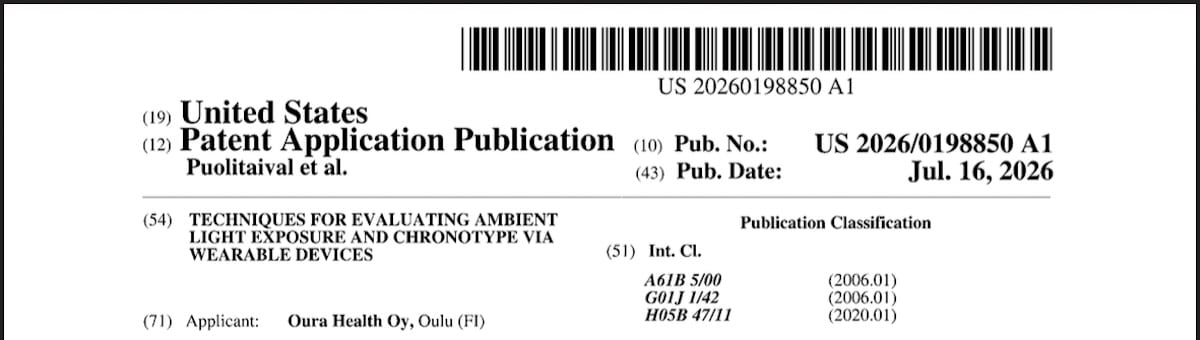
The patent application, titled “Techniques for evaluating ambient light exposure and chronotype via wearable devices,” was published on July 16. It combines ambient light readings with sleep data, physiological measurements and a person’s chronotype, rather than treating light as another isolated metric.
The ring could reuse its existing optical sensors
So how would Oura collect this data? The patent says a ring could use the same light-receiving components already involved in physiological measurements, although a separate ambient light sensor is also covered.
In one example, the ring takes a normal health reading while its LEDs are active, then measures environmental light while those LEDs are switched off. That would allow the photodetectors to pick up light from the room or outdoors without requiring a large new sensor on the outside of the ring.
This is entirely possible as RingConn already has a similar feature. That device uses its built-in PPG optical sensors not just for heart rate, but also to detect ambient light levels. This allows it to measure the intensity of environmental lighting throughout the day.
Oura wants to take this further. The filing covers the timing, intensity, duration and colour of the light reaching the wearer, including ultraviolet exposure and different parts of the visible spectrum. It could then compare those patterns with sleep timing, recovery and the wearer’s usual body clock.

Oura could then change the room
The more unusual part of the patent is what happens next. Oura describes a system that could communicate with connected lights, curtains, blinds and shades around the wearer.
The setup could dim bedroom lighting as bedtime approaches, close blinds when evening light is likely to interfere with sleep or open them in the morning. Some actions could happen automatically, while others might appear as suggestions inside the Oura app.
Users could also create simple rules. A light might switch off once the ring detects that the wearer has fallen asleep, or blinds could open when they remain asleep beyond a chosen time.
This does not mean Oura is about to launch a smart home platform. It does show the company thinking beyond the ring itself and looking at how the surrounding environment might affect the data it already collects.
Light could become another recovery input
The patent also suggests using ambient light to help explain changes in Oura’s scores. If sleep timing, heart rate variability or recovery suddenly shifts, the app could recognise unusual light exposure as a possible reason rather than treating the change entirely as a physiological problem.

Oura also covers UV exposure, skin-related insights and estimates linked to vitamin D production. Those ideas look less straightforward because a ring cannot know exactly how much light reached the eyes or how much skin was exposed, but the filing allows data from location, weather and other sensors to fill in some of the gaps.
There is no guarantee any of this will appear in a future Oura Ring. Patent applications often cover broad ideas that never make it into a product, but this one fits Oura’s current direction unusually well.
This article originally appeared on Gadgets & Wearables, the first media outlet to report the story.
Source: USPTO
Don’t miss the latest from Gadgets & Wearables
Subscribe to our monthly newsletter and check out our YouTube channel.
You can also follow Gadgets & Wearables on Google News and add us as a preferred source in Google Search.

