

Ultrahuman app overhaul brings clearer insights and offline access
Ultrahuman is rolling out Emerald, its biggest platform update so far and the first full redesign of its app in four years. It adds the UltraSphere decision engine, offline health insights and upgraded heart rate and VO₂ Max algorithms .
The update starts rolling out globally today and is free for existing users. It applies across Ultrahuman’s wider ecosystem, including the Ring AIR and Ring PRO, the M1 and M2 Live glucose monitoring services, Blood Vision and the Ultrahuman Home.
The app now focuses on what to do next
UltraSphere sits at the centre of the redesigned home screen. It turns health data into more than 60 suggested actions based on sleep, recovery, HRV, movement, stress, skin temperature, cycle phase and glucose readings.
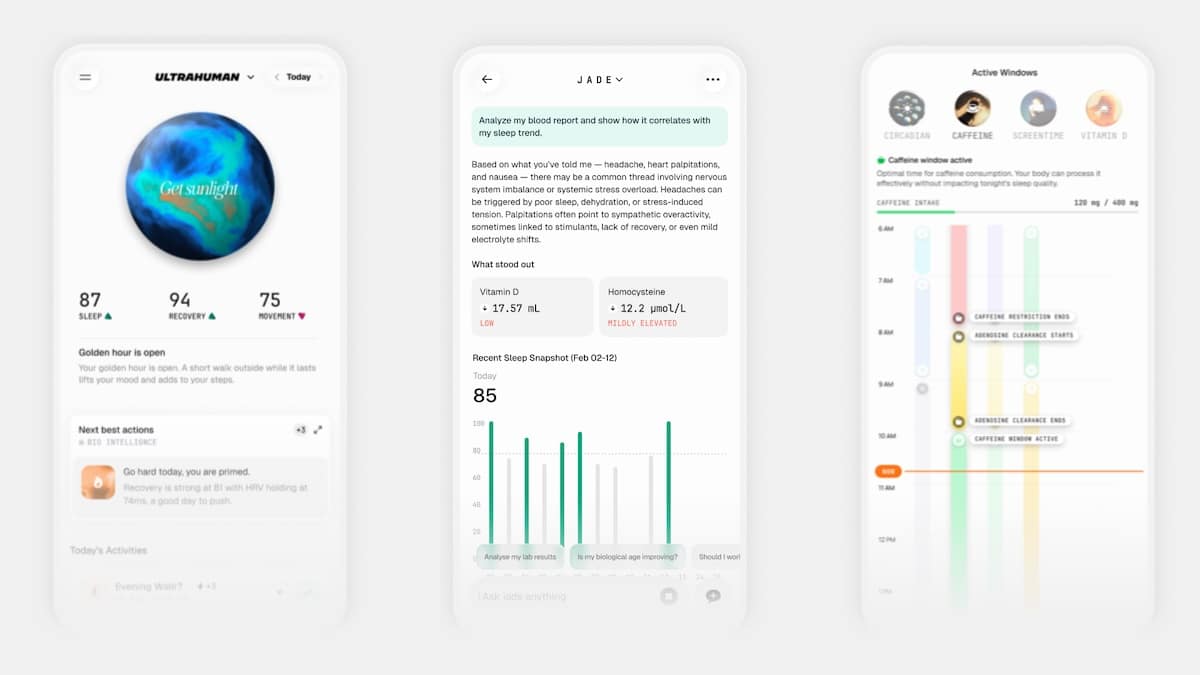
These can include getting outside for morning light, taking a short walk during an afternoon energy dip, cutting off caffeine or beginning an evening wind-down routine. The recommendations can also adjust for location, weather, circadian timing and different routines, including shift work, parenthood and frequent travel.
The company’s Jade AI health assistant now gets its own tab. It connects information from across Ultrahuman’s devices and services rather than treating ring, glucose and blood test data as separate streams.
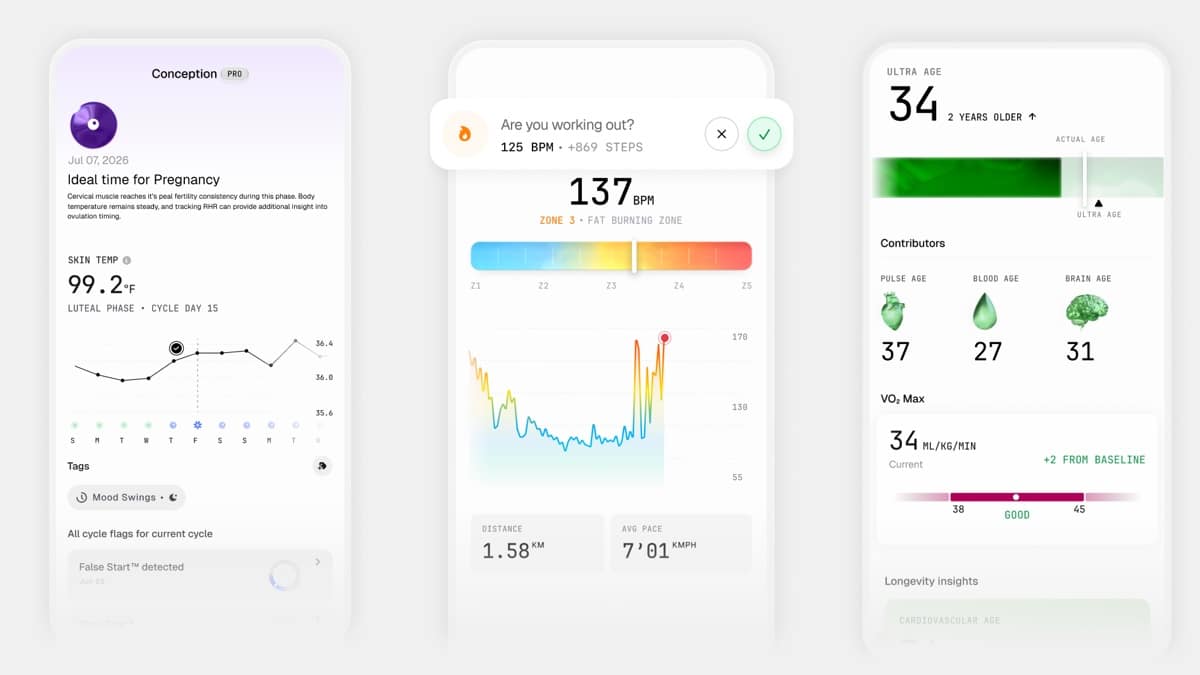
The redesign also moves longer-term measurements such as UltraAge, Pulse Age, Blood Age and Brain Age into a dedicated Longevity tab. Meanwhile, the new Windows view places time-sensitive information, including caffeine timing and circadian phases, onto a single daily timeline.
More insights now work offline
Emerald moves more analysis onto the phone, allowing sleep, recovery and movement scores to calculate without an internet connection. Live heart rate, stress, steps and UltraSphere recommendations can also remain available while offline.
This should be useful during flights, travel and time spent in areas with poor reception. It also means more of the app remains functional without a continuous connection to Ultrahuman’s servers.
Sleep Screener brings sleep duration, temperature, respiratory information, rhythm data and the Ultrahuman Smart Alarm into one nightly view. AFib Detection, where supported, also sits here after previously launching through Ultrahuman’s PowerPlugs platform.
Workout tracking gets an upgrade
Ultrahuman says it has also rebuilt workout tracking for Ring AIR and Ring PRO, with improved automatic detection, activity tagging and heart rate algorithms. This is an area worth watching, as workout heart rate was one of the weaker points in my Ultrahuman Ring AIR review.
The VO₂ Max algorithm has also been revised. Ultrahuman says it tested the estimate against CPET laboratory results from more than 100 athletes, with readings falling within 5 mL/kg/min of the lab measurement.
Emerald’s main change is a cleaner way of presenting Ultrahuman’s existing data and services. The redesigned interface and offline processing should make the app easier to use, while the new heart rate and VO₂ Max claims will need testing once the update reaches more users.
Don’t miss the latest from Gadgets & Wearables
Subscribe to our monthly newsletter and check out our YouTube channel.
You can also follow Gadgets & Wearables on Google News and add us as a preferred source in Google Search.

