

IFA 2026: Acemate tennis robot S10 Pro adds 75 mph feeds & more ways to train
Acemate has a new version of its AI-powered tennis robot at IFA 2026 in Berlin. The S10 Pro builds on the same moving, ball-tracking setup as the regular S10, but adds faster feeds, more ways to train and a much more developed coaching side.
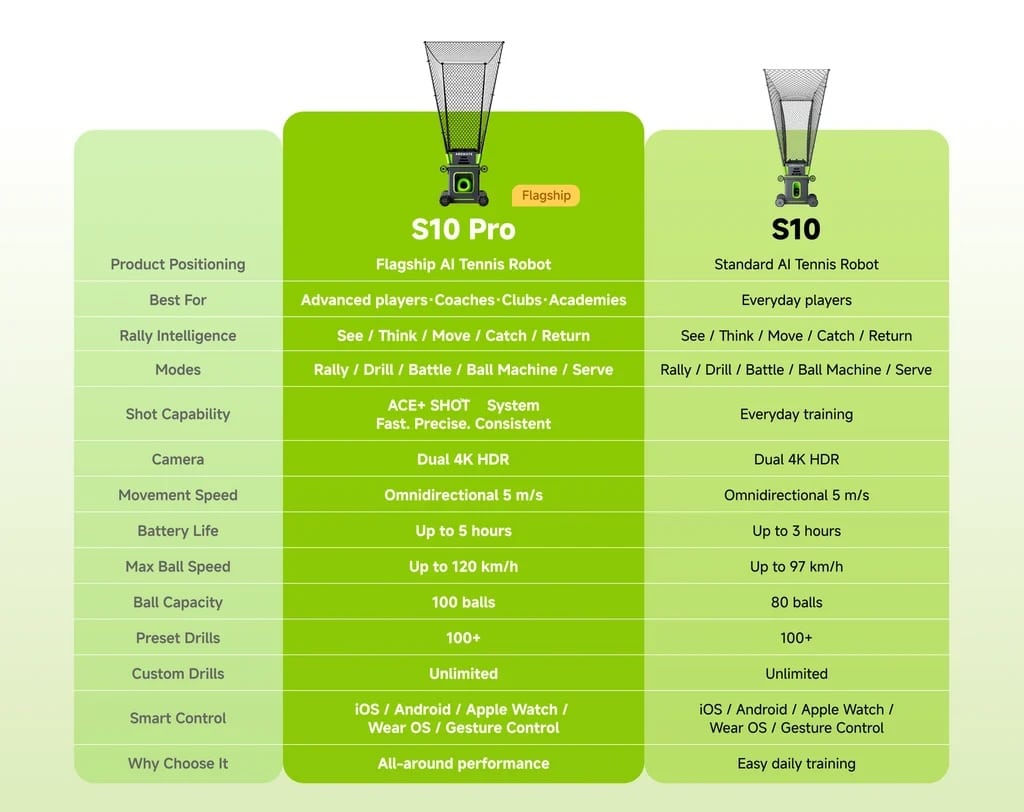
I reviewed the Acemate S10 last month, so the changes are pretty easy to spot. Ball speed now tops out at 75 mph, there are new options for serve practice and match-style sessions, along with more drills and a bigger emphasis on analysing what you did and what to work on next. Plus you get much longer battery life.
Five ways to train
The existing Rally Mode remains, with the S10 Pro tracking shots that land in and moving to return them from around the landing position. Acemate has now surrounded that with Drill, Serve, Ball Machine and Battle modes.
Serve Mode looks particularly interesting. The robot tracks whether the serve lands in, along with speed, net clearance and spin, before sending a return back so you can practise the serve-plus-one pattern. That turns it into something quite different from simply sticking a basket of balls next to you and hitting serves for half an hour.
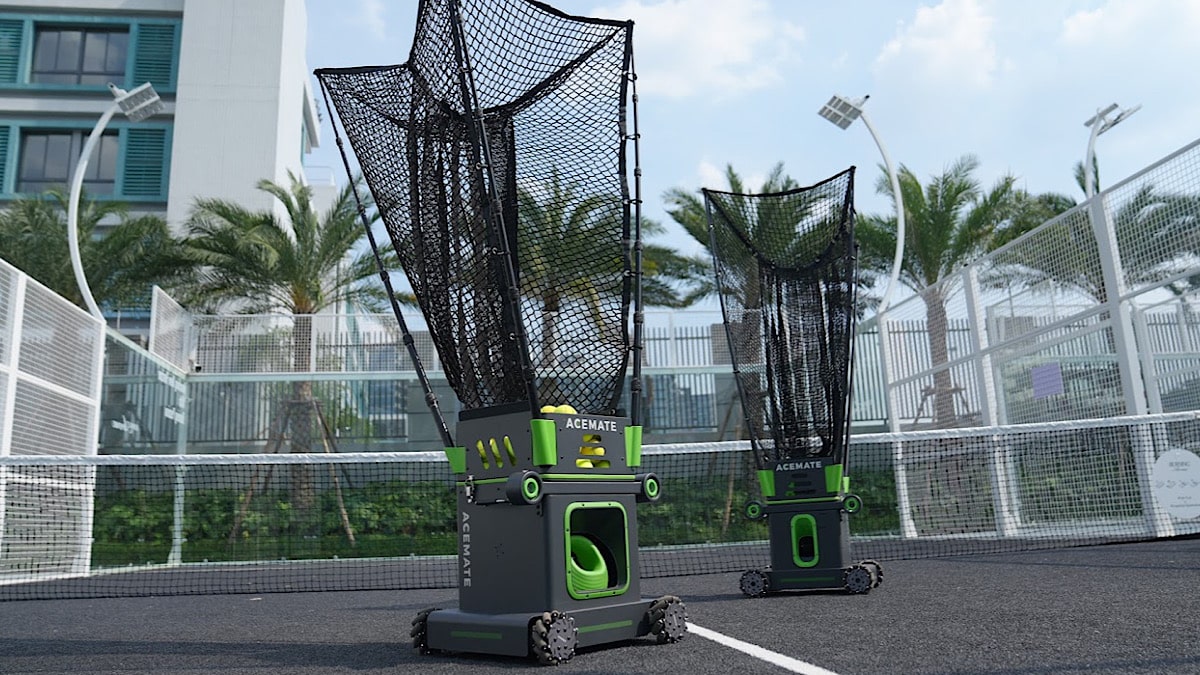
Battle Mode goes further. Here, the S10 Pro acts as an opponent and chooses its response according to what happens during the point. There are Defense, Attack, Topspin and Variety playing styles, with the machine keeping score and recording the point-by-point result.
How convincing that feels on court will be the big question. A tennis robot can react to ball position, speed and trajectory, but replicating the randomness and decision-making of a human opponent is another thing entirely. Still, this is a much more interesting direction than simply adding another hundred preset drills.
More pace was an obvious upgrade
There was one area where I thought the regular S10 had room to improve. Its 60 mph maximum speed was fine for recreational and intermediate play, but stronger players could eventually hit its ceiling. The S10 Pro raises that to 75 mph, or 120 km/h.
Acemate calls the new launching system ACE+ SHOT Tech. Instead of physically rotating the robot to change horizontal direction, the mechanism changes the direction of the ball inside the machine. In theory, that should allow quicker changes from one placement to another while the robot itself stays properly positioned on court. Horizontal coverage reaches 180 degrees, while players can also alter trajectory, feed interval and flat, topspin or backspin delivery.
That could be one of the more important S10 Pro upgrades. The regular S10 already moves around the court on omnidirectional wheels, so separating the robot’s movement from the direction of its next shot should make faster sequences feel less mechanical.
Capacity also rises from around 80 balls on the S10 to 100 on the S10 Pro. More importantly, Acemate now quotes up to five hours of battery life, roughly double the original model’s rated figure. It can operate on hard, clay and grass courts.
Acemate is also doing more with the data
The other big part of the Pro pitch happens after you stop hitting. Acemate describes the system as a five-stage loop covering training, tracking, analysis, review and improvement.
There are now more than 100 built-in training plans, along with custom settings through the Acemate app. Play can be controlled using a phone, supported smartwatch or gestures. After you are done hitting, the software records performance data and produces analysis and recommendations for what to work on next.
There is a price attached to all of this. The Acemate S10 Pro costs $2,999 in the US, €2,999 in Europe, £2,999 in the UK, CAD$3,999 in Canada and AUD$4,599 in Australia. The company is already accepting deposits for preorders on its website.
That puts it considerably above the regular S10, and also into a part of the market where buyers will expect the smarter training features to do more than look impressive in an app. Having recently compared the S10 with tennis robots from Slinger, Pongbot and Lumistar, I think Acemate’s strongest argument remains the same. It is trying to build something closer to a solo hitting partner rather than another very sophisticated ball launcher.
That distinction is becoming more interesting as the category gets busier. The Lumistar Tero puts more emphasis on portability and straightforward practice, while the Pongbot Pace S Pro takes its own approach to structured drills and player tracking. Acemate is increasingly betting on the idea that a robot should react to you rather than simply make you react to it.
Don’t miss the latest from Gadgets & Wearables
Subscribe to our monthly newsletter and check out our YouTube channel.
You can also follow Gadgets & Wearables on Google News and add us as a preferred source in Google Search.

