

Fitbit Air makes more sense alongside Garmin than instead of it
Fitbit Air did not replace my Garmin Forerunner, but after a month of wearing both, I think that is the wrong way to judge it. The more interesting question is whether Google’s screen-free tracker makes sense as a second device for people who already use a serious sports watch.
That worked better than I expected. Garmin remained my main device for runs, GPS, training load and workout analysis, while Fitbit Air became a lighter passive tracker for sleep, silent alarms, heart rate, AFib alerts and a second view of my daily health data.
Garmin remains the training device
I have been wearing a high-end Garmin Forerunner for a few years now. It is my main fitness tracking wearable and it still handles the serious stuff without much drama. I trust it.
Runs, workouts, GPS, training load, recovery data and performance trends all live there. If I want pace on my wrist, route data, heart rate zones, structured workouts or a deeper look at training status, the Forerunner is still the device I use.
Fitbit Air does not offer that kind of live workout experience. It has no screen or proper on-device training interface. You can’t see your pace or distance while running. That makes it a poor substitute for a serious sports watch, especially if you are used to Garmin’s training tools.
But that also misses the point. A second wearable does not need to replace the first one. It needs to give you something different enough to justify wearing it.
That is where Fitbit Air becomes more interesting. It does not beat Garmin at being Garmin. It gives you another stream of passive health data, with a different app, different assumptions and a different view of your body.

The testing showed both sides
For example, I did a wrist-based 5K run. Fitbit Air came surprisingly close to my Garmin on heart rate and distance, with average heart rate matching and distance coming in only around 40 metres short.


However, I did not suddenly see it as a Garmin replacement. But I did start to see it as more credible than a simple background tracker. The problem is, the depth of stats that you get for exercise comes nowhere near Garmin.


I also did an ankle placement test and let the Fitbit pick up on another 5K run automatically. The results here were not as clean. Fitbit Air did pick up the run automatically, but it started too early and finished too late. That dragged the average heart rate down because the session included time before and after the actual run.

The bigger issue was not the sensor. Again, it was the software. Google Health does not currently give you the simple editing tools needed to trim that kind of workout properly, which makes automatic tracking less useful than it should be.
That is the Fitbit Air story in miniature. The hardware idea has promise. The passive data can be useful. But the Google Health experience still needs more control if this is going to appeal to people who already understand wearable data.
With Fitbit Air, almost everything depends on the app. If the app cannot cleanly handle auto-detected workouts, edit sessions or explain differences between wear positions, the whole experience feels more limited.
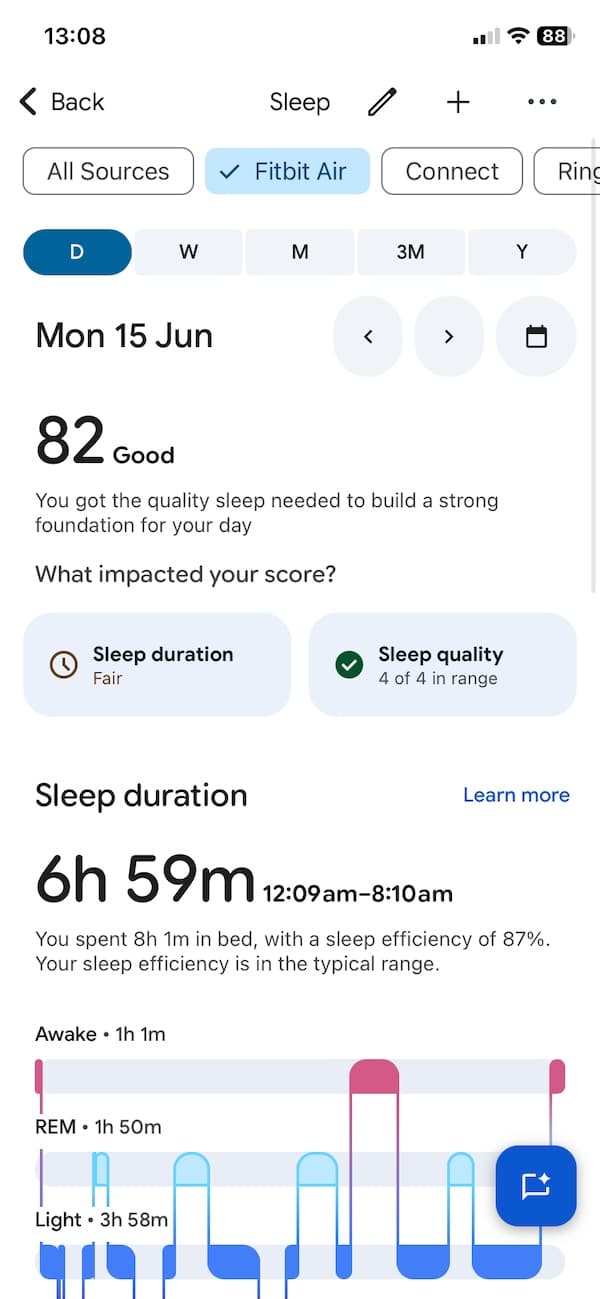
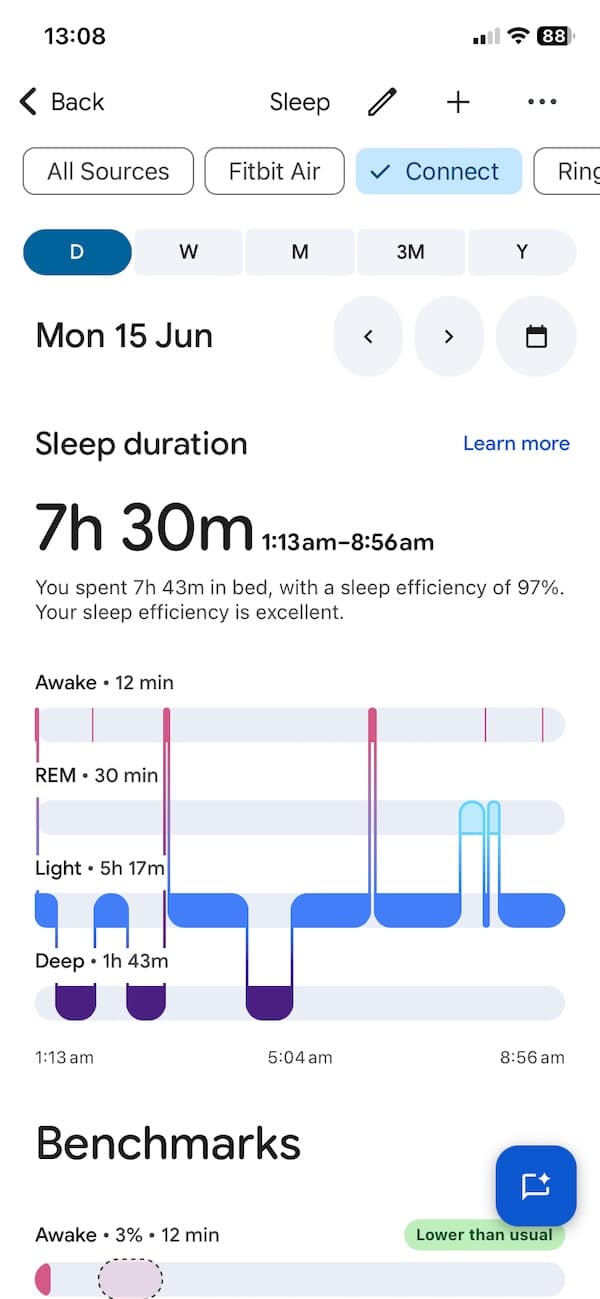
One thing I do like in Google Health is the side-by-side view of data from different sources. It makes Fitbit Air more useful as a second device, because you can put its numbers next to Garmin’s and see where they match or drift apart. It does not magically join the two ecosystems together, but it does make the data easier to sense-check.
Fitbit Air works better in the background
Once I stopped treating Fitbit Air like a watch, it made more sense. It is at its best when it fades away and lets the app do the interpretation later.
That makes it a very different device from Garmin. With a Forerunner, I interact with the watch constantly. I start workouts, check stats, glance at screens during runs and review structured training data afterwards.
Fitbit Air*
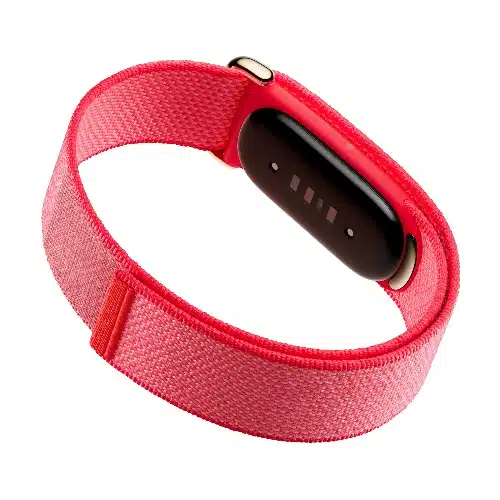
Order nowFitbit Air is more passive. It is there for sleep, general activity, heart rate, silent alarms and background health features such as AFib notifications. It is not trying to be a mini command centre on the wrist.
That is why it works better as a second device. Garmin can remain the serious training tool, while Fitbit Air fills the quieter parts of the day. It gives you another look at recovery, sleep and everyday health without asking you to wear a second full smartwatch.
The Whoop plus Garmin logic applies here
Some Garmin users also wear Whoop. They do not usually do this because they want Whoop to replace Garmin for running, cycling or structured workouts. They do it because Garmin handles performance while Whoop handles the background recovery layer.
Fitbit Air can sit in a similar category, although it is not the same type of product. Garmin remains the performance tool. Fitbit Air becomes the smaller passive health tracker that runs alongside it.
That comparison helped me understand the device better. I stopped asking whether Fitbit Air could become my main wearable and started asking whether it could add a useful second lens.
That is a much fairer test. It also makes Fitbit Air more relevant to people who already own a Garmin, Apple Watch or Pixel Watch. The use case is not replacement. It is companion tracking.
Who Fitbit Air is really for
After a month, I would not recommend Fitbit Air as someone’s only serious fitness device. If you run, cycle, train with structure or care about live workout data, Garmin is in a different class.
But Fitbit Air still has a role. It makes more sense as a second wearable for people who want another passive layer of health data alongside their main device.
That does not mean taking Garmin off at night. If you rely on sleep, HRV Status, Body Battery or Training Readiness, removing the watch creates gaps in Garmin’s own recovery picture.
Fitbit Air*
Order nowFitbit Air works better as an additional lens. It can give you a second view of sleep, resting heart rate, alarms, daily activity and background health signals, while Garmin remains the centre of the training setup.
The mistake is judging it as a Garmin rival. It is not one. Fitbit Air makes more sense next to Garmin than instead of it.
For buyers considering more than these two devices, our full screenless fitness tracker comparison looks at the five strongest alternatives. And don’t forget to check out my full Fitbit Air review.
Don’t miss the latest from Gadgets & Wearables
Subscribe to our monthly newsletter and check out our YouTube channel.
You can also follow Gadgets & Wearables on Google News and add us as a preferred source in Google Search.


I strongly agree with this article and glad I came upon it. I have been using the Fitbit Air along side my FR955. It has been a pleasant experience. My only hang up is where I want to input my calories/macros (connect+ for now and Google AI Pro so have premium GHealth). The more I think about it, the Fitbit air should have been a ring. This would have been perfect. IMO.
Interestingly, that’s exactly the same combination I have – 955 + Fitbit Air.
I use my FitBit Air with my Galaxy Watch 7 (and a Garmin Explorer bicycle computer/GPS). AI (Copilot) helped me set up the three devices to get the data I wanted without duplication. The FitBit Air excels at certain measurements, such as sleep, but lacks a built-in GPS, so it isn’t the best workout tracker.
The only reason I disagree with this approach is that I want a holistic view of data. Don’t want two apps where I need to total things between them. I currently have a Fenix paired with an old but still capable Vivosport band. Waiting for the so called Garmin CIRQ but let’s see if the high projected price rules it out as a secondary device.