

Why Apple Watch prices stayed put while Macs and iPads jumped
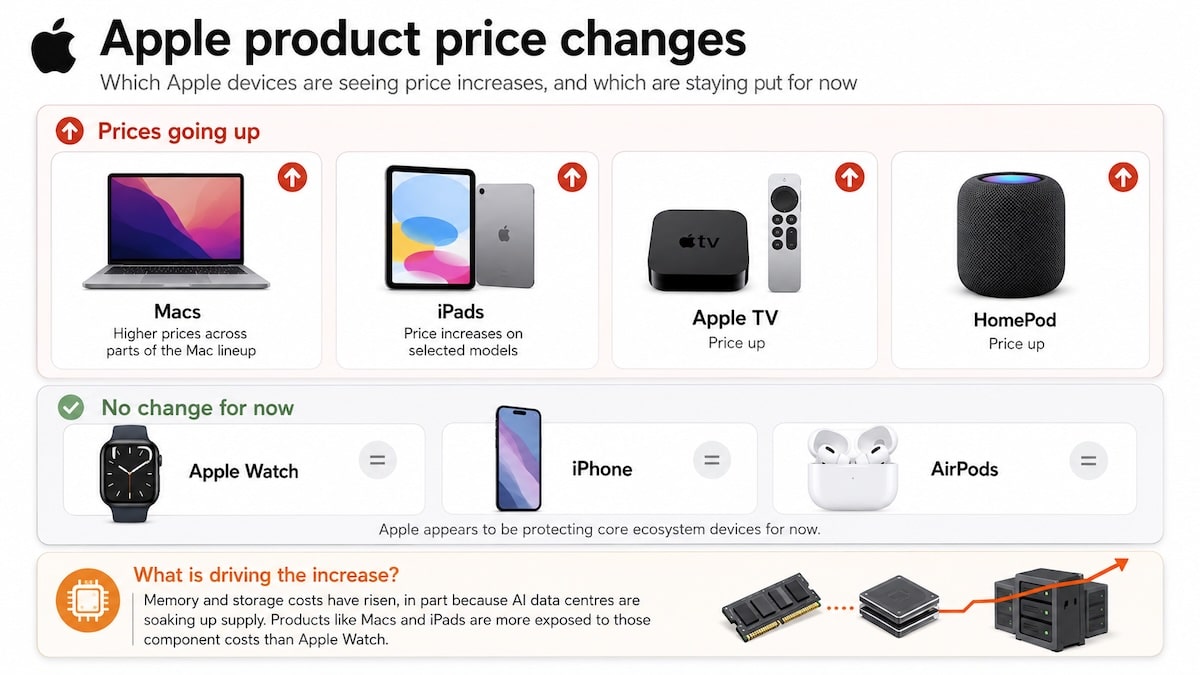
Apple has raised prices across parts of its hardware line-up, including Macs, iPads, Apple TV and HomePod, but Apple Watch has avoided the increase for now. Why is this?
The simple explanation is that Apple Watch is not a memory-heavy product in the same way as a MacBook, iPad Pro or Mac Studio. Those devices carry much larger amounts of RAM and storage, and they also offer expensive configuration jumps that expose Apple more directly to component price swings.
Apple Watch still uses memory and storage, of course. But the economics are different. You do not buy an Apple Watch with 512GB, 1TB or 2TB of storage. You do not choose between different RAM tiers. For Apple, that makes it a less obvious place to pass on a chip cost shock.
The reason for the wider price rise is also not complicated. Memory and storage chips have become more expensive as AI data centres soak up supply. Apple is passing some of that pressure to buyers rather than taking the full hit on its own margins.
Apple protected the products that matter most to the ecosystem
Apple leaving the iPhone, Apple Watch, and AirPods alone is definitely not a coincidence. These are the exact devices that keep people hooked on the Apple ecosystem every single day, with the watch sitting right at the center of everything.
Bumping up Mac prices might annoy buyers, but people replace computers less often and think about the purchase a lot more. The Apple Watch is different because it lives on your wrist, keeps you locked into the iPhone, and drives the entire health and fitness ecosystem. If Apple pushes that price too hard, they risk making one of their absolute best customer retention tools less attractive.
The watch is what really sells the idea that the ecosystem follows you everywhere. Things like notifications, fitness tracking, health alerts, Apple Pay, and sleep data all work together to make the iPhone feel way more valuable. Apple would much rather protect that loop than squeeze a little extra profit out of the watch today.
The Watch has fewer places to hide a price rise
The other issue is product structure. Apple can raise prices on Macs and iPads while pointing to higher memory and storage costs, especially on models with bigger SSDs. That argument is easier to understand when a MacBook Pro with more storage suddenly costs more.
With Apple Watch, the story is less clean. The main choices are case size, material, connectivity and strap. Storage does not sit at the centre of the buying decision, and most people do not think of the Watch as a configurable computer. A price hike would look more blunt, even if Apple could justify it internally.
That does not mean the Watch is safe forever. Apple could absorb the pressure now and adjust later. The next Apple Watch generation could launch at a higher starting price, or Apple could protect headline pricing while trimming discounts. It could also lean harder on accessories, AppleCare and services.
Time will tell. But at least for now, Apple Watch buyers have been spared.
Don’t miss the latest from Gadgets & Wearables
Subscribe to our monthly newsletter and check out our YouTube channel.
You can also follow Gadgets & Wearables on Google News and add us as a preferred source in Google Search.

