

Huawei Watch GT 7 series vs GT 6 series: All four models compared
Huawei’s Watch GT 7 and GT 7 Pro are newer than the GT 6 generation, but this is not the sort of upgrade where everything underneath has changed. Put the four watches side by side and most of the meaningful gains come from sports software, health analysis and longer GPS endurance rather than major new hardware.
The Watch GT 6 and GT 6 Pro launched in September 2025, while Huawei unveiled the Watch GT 7 and GT 7 Pro in China in August 2026. The new generation has now gone global, with Huawei launching both watches internationally on September 2.
View all these devices on Huawei’s website.
Huawei Watch GT 7 and GT 7 Pro vs GT 6 and GT 6 Pro at a glance
Let’s start off with the most important specs and some of the main differences between the four watches. There is a lot of overlap as can be seen from the table below.
Our full four-way technical comparison goes considerably deeper if you want to compare every sensor and feature. The more interesting question here is which of those differences you would actually notice.
The hardware is remarkably familiar
Start with the regular watches and things are not that different. The 46mm GT 7 has exactly the same 46 x 46 x 10.95mm dimensions and 51.3g weight as the 46mm GT 6, while the smaller versions are both 41.3 x 41.3 x 9.99mm. The GT 6 weighs 37.5g, while the 41mm GT 7 ranges from 36.5g to 37.6g depending on the version.
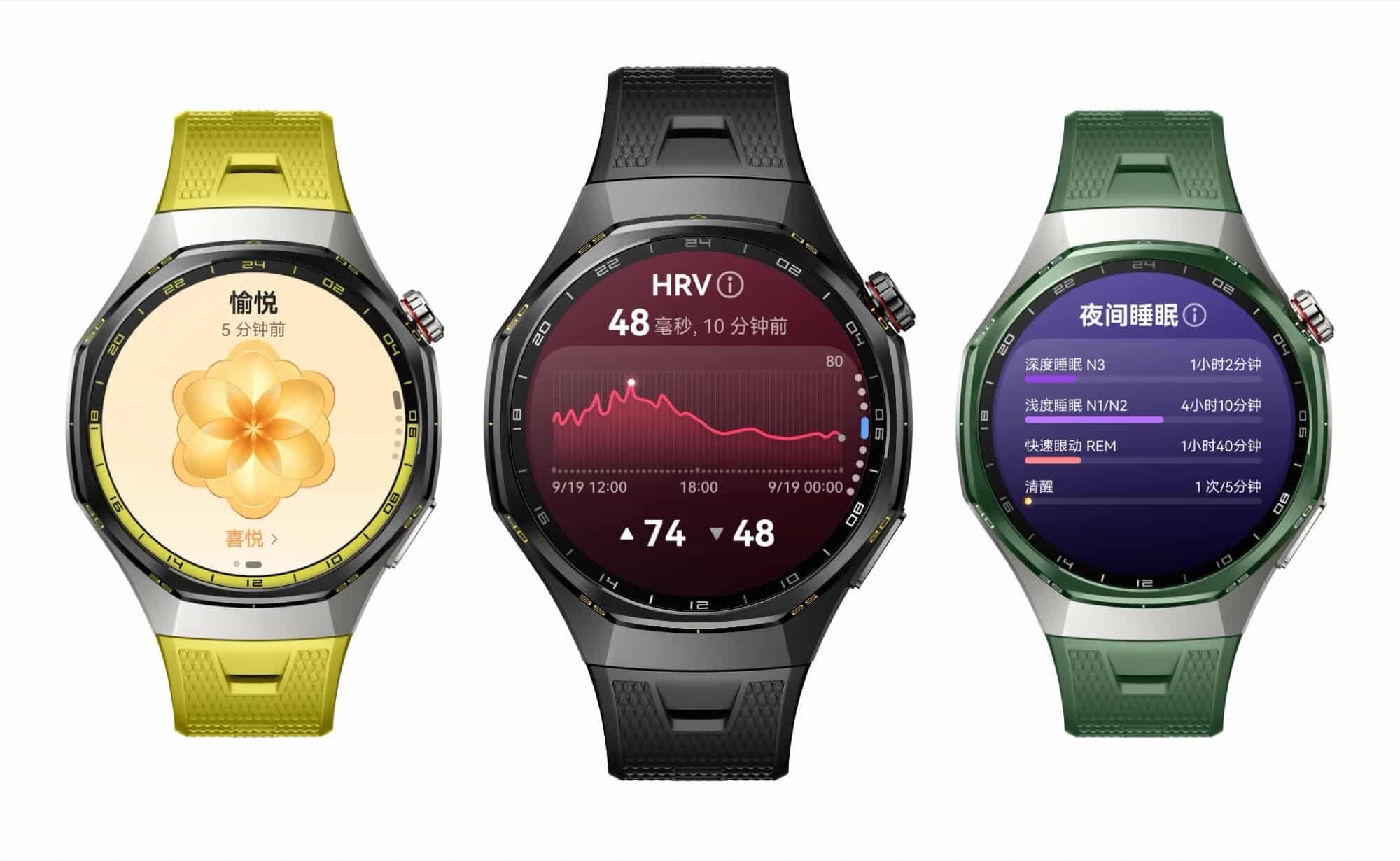
The displays have not moved either. Both generations offer a 1.47-inch 466 x 466 AMOLED on the larger watch and a 1.32-inch panel on the smaller one, with peak brightness staying at 3,000 nits. You still get 5 ATM and IP69 water resistance, wireless charging, dual-band GNSS, NFC, a microphone and speaker.
It is much the same story with GT 7 Pro. Its 45.6 x 45.6 x 11.25mm case is identical in size to GT 6 Pro, and the weight has actually crept up slightly from 54.7g to 55.5g. The titanium case, ceramic rear and sapphire glass all carry over, as does the 1.47-inch 466 x 466 AMOLED display with its 3,000-nit peak brightness.
The sensor package is also virtually unchanged. Heart rate, SpO2, skin temperature and ECG return on GT 7 Pro, along with the depth sensor and freediving support to 40 metres. Speakers, microphones, NFC, GPS and Bluetooth 6.0 are present again too.

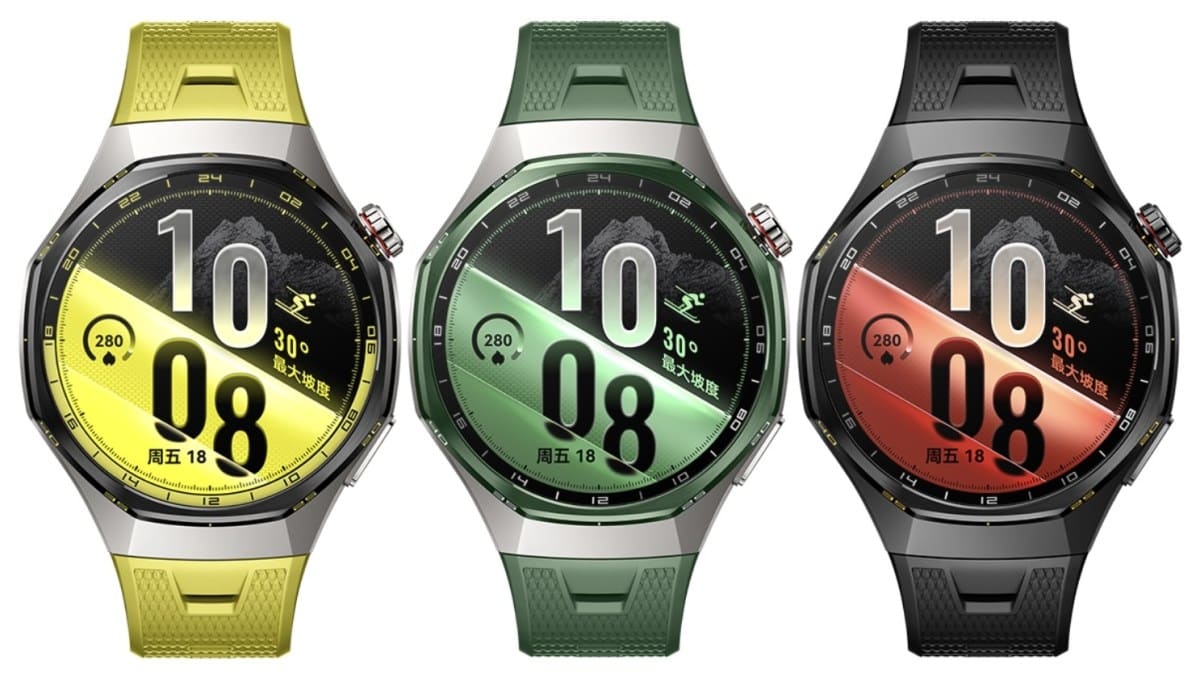
There are a couple of visible changes. Alongside black, Huawei now offers GT 7 Pro versions that combine a silver case with either green or yellow accents, while the included wristband has been redesigned to improve comfort. That is about the extent of the physical refresh.
Anyone expecting Huawei to bring across the side-mounted X-Tap sensor from the Huawei Watch 5 will also be disappointed. Neither GT 7 model gets it, so Huawei is still keeping a fairly clear hardware distinction between the mainstream GT range and its more expensive Watch series.
Battery life stays the same until you start using GPS
Huawei made a much bigger battery leap with GT 6, when it introduced its high-silicon stacked cells and pushed the larger watches to as much as 21 days. GT 7 keeps those same headline figures, with up to 21 days from the larger models and 14 days from the 41mm watch.
GT 7 Pro makes the similarities particularly obvious. Huawei quotes up to 21 days with light use, around 12 days with regular use and seven days with the always-on display enabled, essentially matching its predecessor. So there is no big jump in day-to-day endurance this time.
The useful improvement comes during long outdoor sessions. Huawei now quotes up to 51 hours for the larger GT 7 watches and 32 hours for the 41mm version, compared with 40 hours on the 46mm GT 6 and GT 6 Pro and 25 hours on the 41mm GT 6.
That will not make much difference to someone recording an hour-long run. But it becomes more useful for ultras, long hikes and other activities where GPS stays active for most of a day or longer.

Sports software is where GT 7 starts to pull away
GT 6 already made a pretty substantial move towards serious sports tracking, particularly for cycling. It introduced wrist-based virtual cycling power, route support and a much bigger collection of cycling metrics, while also improving trail running, golf and skiing.
GT 7 builds on that. Native running power joins the vertical oscillation and left-right ground contact balance already available on GT 6, while cycling adds climb planning, elevation profiles and sharp-turn warnings. Huawei has also upgraded its Sunflower positioning system and added AI-XDR inertial navigation.
Skiing also gets a bigger upgrade than it first appeared, and those changes are not limited to GT 7 Pro. Both new watches support indoor skiing and snowboarding, track data including G-force and turns, and can use maps for more than 3,000 ski resorts across 59 countries.
Golf gets one of the bigger updates on GT 7 Pro, with more than 17,000 course maps, slope compensation, movable pin positioning and rotatable green views. These are specialised additions, but for people who use the watch heavily for sport they are more meaningful than another small case redesign would have been.
Health tracking gets more interpretation rather than more sensors
There is a similar pattern on the health side. Heart rate, HRV, SpO2, temperature, stress and the other core sensors were already present on GT 6, while ECG and arterial stiffness detection remain advantages of the Pro versions. GT 7 is not introducing a dramatically different sensor platform.
Instead, Huawei is putting more emphasis on what it does with the data. GT 7 adds TruSleep 5.0 and a new body readiness assessment, while Huawei has also introduced a high blood sugar risk assessment on both GT 7 models in supported markets. This is not glucose monitoring, and the watches do not directly measure blood sugar.
GT 7 Pro is the hardest upgrade to justify
If you already own a GT 6 Pro, the reasons to move to GT 7 Pro are surprisingly limited. The titanium case, ceramic rear, sapphire glass, display, core health sensors, ECG, depth sensing, 40-metre freediving support and everyday battery figures are all essentially carried over. Even the dimensions are identical, while GT 7 Pro is fractionally heavier.
The new colour combinations and redesigned strap give GT 7 Pro a slightly different look, but most of the meaningful changes live in the software. Longer GPS endurance, TruSleep 5.0, readiness analysis, high blood sugar risk assessment and the expanded running, cycling, golf and skiing tools are the real upgrades.
Those changes make GT 7 Pro the better watch on paper, particularly if you make heavy use of its sports features. But there is very little here that suddenly makes GT 6 Pro feel outdated, and upgrading from one to the other will be difficult to justify for most owners.
The standard GT 7 makes a slightly stronger case because some of those software additions arrive at a lower point in the range. Even there, though, GT 6 owners are looking at refinement rather than a completely different watch.
The answer now comes down much more to price. GT 7 and GT 7 Pro have launched internationally, so buyers can make a straightforward choice between the two generations rather than waiting for the new watches to leave China.
If GT 7 and GT 6 sit close together, the newer model makes sense for its extra GPS endurance, readiness features and improved sports tracking. If GT 6 receives a decent discount, however, it could be the better-value choice because Huawei has left so much of the core hardware unchanged.
The same argument is even stronger with the Pro models. GT 7 Pro is technically the better watch, but GT 6 Pro already delivers almost all of the hardware that defines the Pro tier, including titanium, sapphire glass, a ceramic rear, ECG and diving support. Unless the newer sports features are particularly useful to you, the older Pro remains very close.
This generation is therefore less about replacing GT 6 and more about polishing what Huawei already had. GT 7 is better, but GT 6 owners have very little reason to feel that their watch has suddenly fallen a generation behind.
View on Huawei’s website.
Don’t miss the latest from Gadgets & Wearables
Subscribe to our monthly newsletter and check out our YouTube channel.
You can also follow Gadgets & Wearables on Google News and add us as a preferred source in Google Search.

