

Suunto Race 3S launches with silicon-carbon battery and offline music
The Suunto Race 3S is official, bringing a silicon-carbon battery, brighter AMOLED display, sapphire glass and a new AI coaching system. It also introduces offline music to the Race series, although that particular feature won’t be available straight away.
We’ve been following the Race 3S for quite a while now, and most of the leaked details have turned out to be accurate. The October 15 launch date was also spot on. So let’s delve into what is new.
A familiar design with quite a few upgrades
The Race 3S keeps the general appearance of the Race S, with its circular display, digital crown and two additional buttons. It measures 46 x 46 x 11.4mm and weighs 56 grams including the strap. That’s slightly larger and heavier than the titanium Race S, which comes in at 45mm and 53 grams.
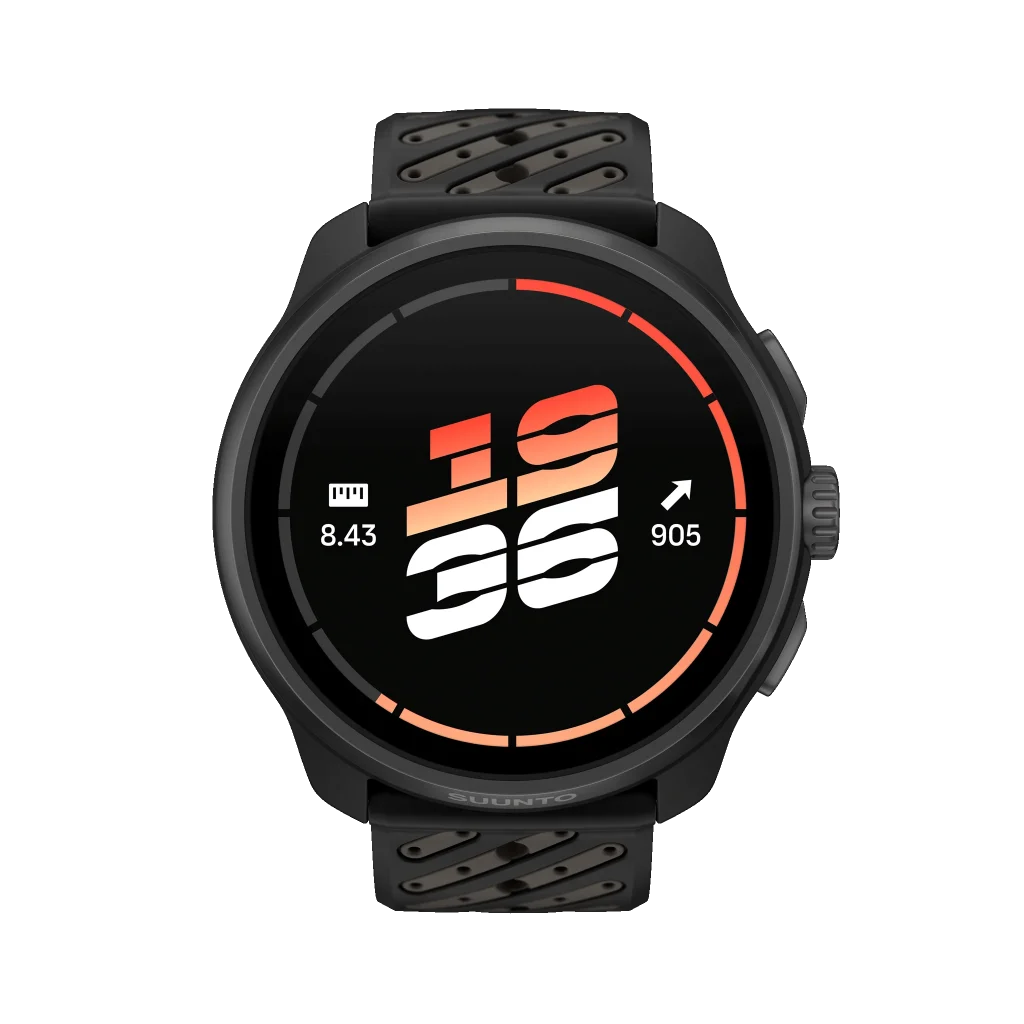
Suunto has gone with a titanium bezel and case back, along with sapphire crystal instead of the Gorilla Glass used on its predecessor. There are three colours to choose from, Titanium Orchid, Titanium Feather and Titanium Black. Water resistance remains at 5 ATM.
The display is still a 1.32-inch AMOLED panel with 466 x 466 resolution. However, maximum brightness increases from 600 to 2,000 nits, which should make maps and workout information easier to see in strong sunlight.
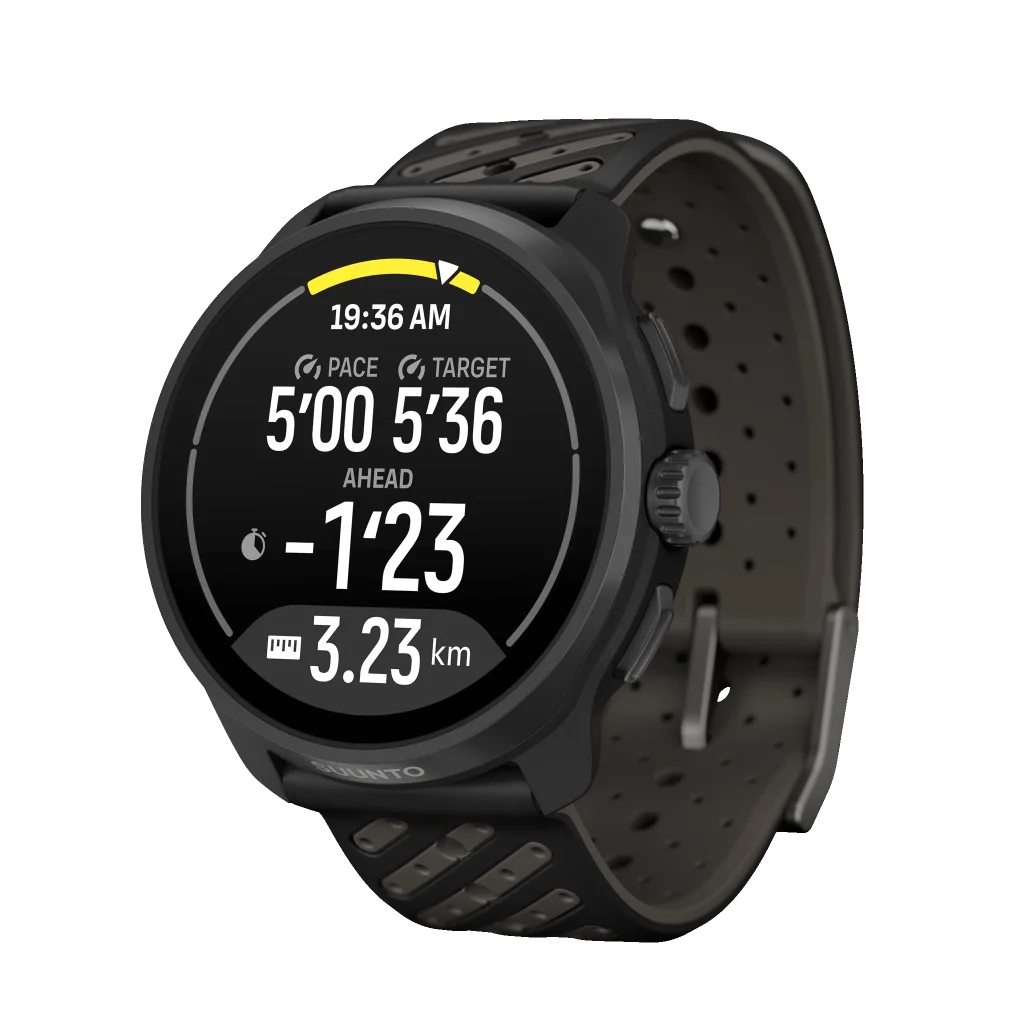
Inside, Suunto has switched from the Apollo 4 Plus processor to Apollo 510. The company says this improves responsiveness when moving through menus and loading maps. There’s also an upgraded optical heart rate sensor with six LEDs and four photodiodes, compared with four LEDs and two photodiodes on the Race S.
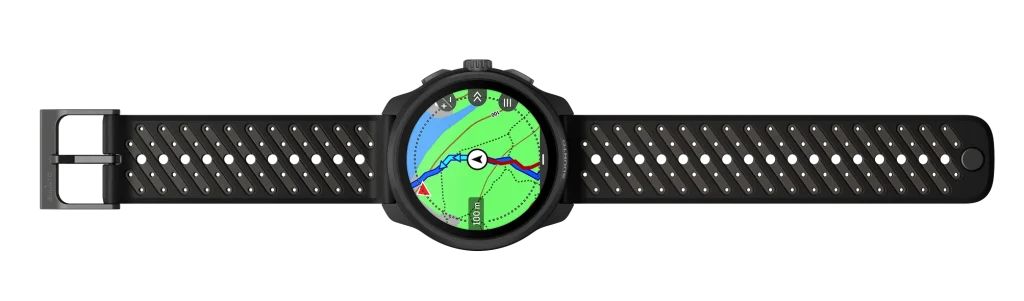
Storage doubles from 32GB to 64GB. That’s useful for downloadable maps, but it also gives Suunto room to introduce something that has been missing from its more expensive Race watches, offline music playback.
Battery life improves, but not quite as much as leaked
One of the bigger changes is the move to a silicon-carbon battery. This technology allows more energy to fit into a relatively compact space, and Suunto says the Race 3S has 46% more battery capacity than the Race S.
The official figures are slightly different from those in the earlier leaks. Suunto quotes up to 38 hours of dual-band GPS tracking, compared with 30 hours on the Race S. That’s an eight-hour improvement, rather than the 45 hours of dual-band GPS suggested by the leaked marketing material.
Even with the revised figures, the battery improvement is substantial for a watch that has barely changed in size. Whether that translates into noticeably better endurance with always-on display, mapping and navigation enabled remains to be seen.
AI coaching and new race planning tools
Suunto is also making a bigger push into personalised training. The Race 3S introduces a new version of Suunto AI Coach, which uses information about training load, recovery, sleep, HRV and fitness goals to provide recommendations.
Rather than simply presenting training statistics, users can ask the coach questions about their progress and get answers based on their data. It can also help create structured workouts, running plans and routes that can be saved in the Suunto app and transferred to the watch.
This is a different approach from the more basic AI coaching already available in Suunto’s ecosystem. The new service launches first with Race 3S, with support for compatible existing watches planned for early 2027.
There’s a subscription element, though. Buyers who activate their Race 3S before December 31, 2026 receive three months of Suunto AI Coach at no charge. Continued use after the trial requires a paid subscription, although the regular training analysis and existing Suunto app features remain available without one.
Another addition is Suunto Race Planner. It combines a course’s elevation profile, expected weather and the runner’s goal to work out a pacing strategy. During a race, the watch will show whether you’re ahead of or behind the planned pace, making it particularly relevant for trail events with substantial elevation changes.
Race Planner isn’t ready at launch, however. Suunto says it will arrive through a future app and firmware update, with no firm date announced.
The same applies to offline music. The Race 3S will support locally stored MP3 and WAV files played through Bluetooth headphones, removing the need to bring a phone for music. But that capability also requires a post-launch software update.
Other familiar features remain, including free worldwide offline maps, dual-band GNSS, Climb Guidance, ZoneSense, recovery tracking and more than 120 sports modes. Those are already central to the Suunto experience, as we found in our Suunto Race 2 review.
Price and availability
The pricing is set at $599. You can check out availability in your region on Suunto’s website.
For anyone choosing between the Race S and Race 3S, the decision largely comes down to the display, battery life and upgraded materials. The older model still offers dual-band GPS, offline maps and most of Suunto’s core training features, so it hasn’t suddenly become outdated.
The additions that could make the biggest difference are the upgraded heart rate sensor and new training software. Offline music is also a nice addition, particularly after its absence from the Race 2.
What’s missing from today’s launch is Suunto Race 3. That device has also been leaked and we expect a official release in the weeks ahead.
Don’t miss the latest from Gadgets & Wearables
Subscribe to our monthly newsletter and check out our YouTube channel.
You can also follow Gadgets & Wearables on Google News and add us as a preferred source in Google Search.

