

Suunto Race 2 review: Brighter screen, better accuracy
Suunto Race 2

PROS
- Bright, crisp AMOLED display
- Good heart-rate accuracy
- Strong GPS and navigation
- Detailed training metrics
- Excellent battery life
CONS
- No offline music or payments
- Limited app ecosystem
- Expensive
Suunto Race 2: One minute review
The Race 2 feels like Suunto smoothing out the rough bits. The screen looks great, it runs fast, and the battery still holds up. The watch is thinner, lighter and just nicer to wear. The buttons feel solid, the touchscreen reacts properly, and it still has that tough Suunto build that feels like it’ll last forever.
It’s not a massive jump from the first Race, but all the little tweaks make it better to use. The display’s easier to read outdoors, the heart rate tracking is sharper, and it just feels more finished.
I’ve been using the Vertical 2 alongside it, and while both share a lot of the same hardware, the Race 2 is the one that’s better suited for people with small wrists. Also the Vertical 2 feels more like an adventure watch – while this one fits better into daily training.
You still miss out on offline music and payments, but that’s nothing new for Suunto. What you do get is reliable activity and recovery data, along with great battery life. It’s a watch made for sports tracking, and it nails that without trying to do too much. I just wish it was a little less pricey.
Suunto Race 2 review: Design, hardware
Look & feel
The Race 2 keeps that tough Suunto feel but comes across a more polished this time around. The 49 mm case is still big, but it’s slimmer now so it wears better. It doesn’t shift around as much when running, and it doesn’t feel like a lump under a jacket cuff. The shape is smooth and it wears really well.

Build quality is exactly what you’d expect. The sapphire glass up front and the stainless steel bezel give it a proper tool-watch vibe. It looks like something made to take a beating. The bezel sits slightly raised which helps protect the screen without making the whole thing feel bulky. There’s nothing flashy in the design, but it looks sharp in a low-key way.
The display is a big upgrade. Suunto’s gone with a 1.5-inch LTPO AMOLED, and it changes how the watch feels day to day. It’s crisp and bright. Swiping through menus is quick, and the colours are far better than anything they’ve done before. It’s easy to read in direct sun, and the UI finally feels like it’s keeping up with the hardware.
I’ve been testing it alongside the Vertical 2, and while both watches share that same 49 mm size, they wear quite differently. The Vertical still feels more like a heavy-duty mountain tool, whereas the Race 2 is easier to wear all day and doesn’t feel overbuilt. It’s still every bit a Suunto, just in a more practical and refined package.

Worth a mention is that you don’t get the LED flashlight like on the Vertical, which is a bit of a shame. That thing actually comes in handy once you’ve used it a few times.
Under the hood
Hardware-wise, the Race 2 gets some useful upgrades. The heart rate sensor has been redesigned with a new layout, and it shows. It sits flush against the wrist and seems to hold better contact during movement.
Suunto’s also using dual-frequency GNSS again, and it performs well. Satellite lock is quick, and the signal holds steady even when running in tougher spots like wooded trails or built-up areas. You’ve still got support for all the major satellite systems, and the hardware seems to be tuned well for fast, accurate positioning.

Storage has been bumped to 32 GB across the board now. That gives you more room for offline maps without needing to manage what’s loaded all the time. It also helps with smoother performance overall.
There’s no barometer bump or extra sensors this time, but what’s here works well. The core build -processor, GNSS, HR sensor and storage – feels faster and tighter than before. It’s not a spec overhaul, but what’s under the hood has clearly been improved where it counts.
Battery life
Battery life is one of the strong points here. In regular smartwatch mode you can get up to 18 days, which is solid considering it’s running a bright AMOLED display. If you drop it into standby, it stretches to around 30 days, though that’s with most features turned off.
For GPS tracking, Suunto says you’ll get up to 55 hours using all systems with dual-band. That’s enough to cover a full weekend of long runs or a 100k race without having to worry. There are also other battery modes that push it out to 65, 90 or even 200 hours if you’re willing to trade off some accuracy.
The LTPO display helps too. It adjusts the refresh rate depending on what you’re doing, so the screen isn’t constantly draining power when you don’t need it. That makes a difference, especially during everyday use.
It’s not a massive jump from the original Race, but the extra few hours in GPS mode are useful. With daily training, notifications and sleep tracking turned on, I’ve still been getting well over a week on a single charge. For a watch with this kind of screen, that’s pretty good going.
Suunto Race 2 vs Race 1: Tech specs comparison
The Suunto Race 2 takes what worked before and just makes it nicer to live with. The screen’s the first thing you notice. It’s bigger, sharper, and way brighter, so you can actually see it properly in full sun. The whole thing is also a bit thinner and lighter, which you really feel when you’re out running for hours. Battery life is great too, now stretching to around 55 hours with full GPS, and the new heart rate sensor seems more accurate.
It’s basically the Race you already know, just quicker, lighter and smarter. You still get offline maps, solid GPS, and the usual rock-solid build. The main gripes are the same too, with no offline music or contactless payments. But that’s kind of the deal with Suunto – it’s a training watch first, everything else second. If you liked the first one, you’ll like this more.
Feature | Suunto Race 2 All Black | Suunto Race All Black |
|---|---|---|
Release date | August 2025 | October 2023 |
Price | £429 | £345 |
Dimensions | 49 × 49 × 12.5 mm | 49 × 49 × 13.3 mm |
Weight | 76 g | 83 g |
Backlight / display type | LTPO AMOLED, 2000 nits, 466 x 466 pixels | AMOLED, 600 nits, 466 x 466 pixels |
Display size | 1.5 inch | 1.43 inch |
Battery life – daily use (smartwatch mode) | up to 18 days | up to 16 days |
Battery life – standby mode only | up to 30 days | up to 26 days |
Battery life – training (All-Systems GNSS + Multi-Band) | up to 55 h | up to 50 h |
Battery modes (All) | 55 h / 65 h / 90 h / 200 h | 50 h / 65 h / 90 h / 200 h |
Heart rate sensor | New version | Old version |
Outdoor offline map storage | 32 GB | 32 GB / 16 GB (Titanium / Steel) |
Suunto Race 2 review: Health & fitness tracking
The Race 2 covers the ground when it comes to daily health tracking. You get 24/7 heart rate, stress, steps, calories and sleep, plus SpO2 and all the other usuals.
The interface is basic in a good way. No clutter, no weird menus, just the stuff you need when you need it. Syncing isn’t always instant though. Sometimes you have to wait a bit for things to push through.

Sleep tracking works fine, but still feels pretty light compared to what you get from Garmin or even Fitbit. You’ll get duration, sleep stages and a basic sleep score, but the insights stop there. If you want deep breakdowns or trend analysis, you’ll have to look elsewhere. That said, it’s accurate enough to be useful, and the integration with the Recovery Score adds a bit more context to the numbers.
There’s also continuous stress tracking, based mostly on heart rate variability. It runs in the background and feeds into the recovery view, but doesn’t surface a huge amount on its own. You can see trends over time, but it’s more of a supporting stat than something you’ll actively track day to day.
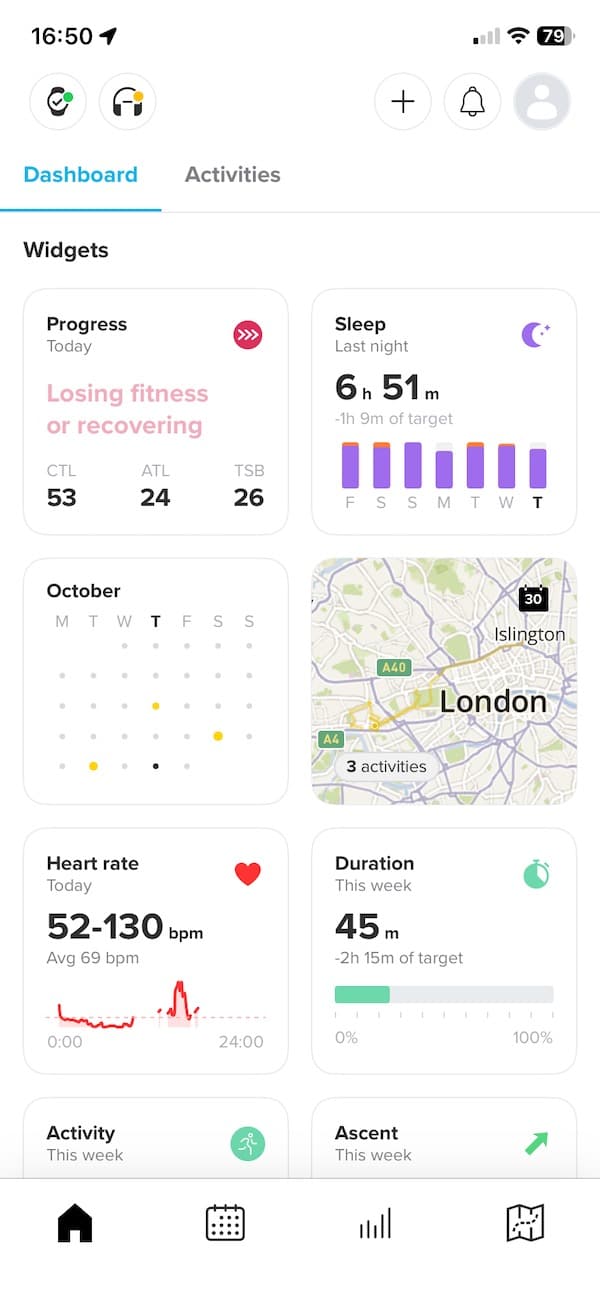


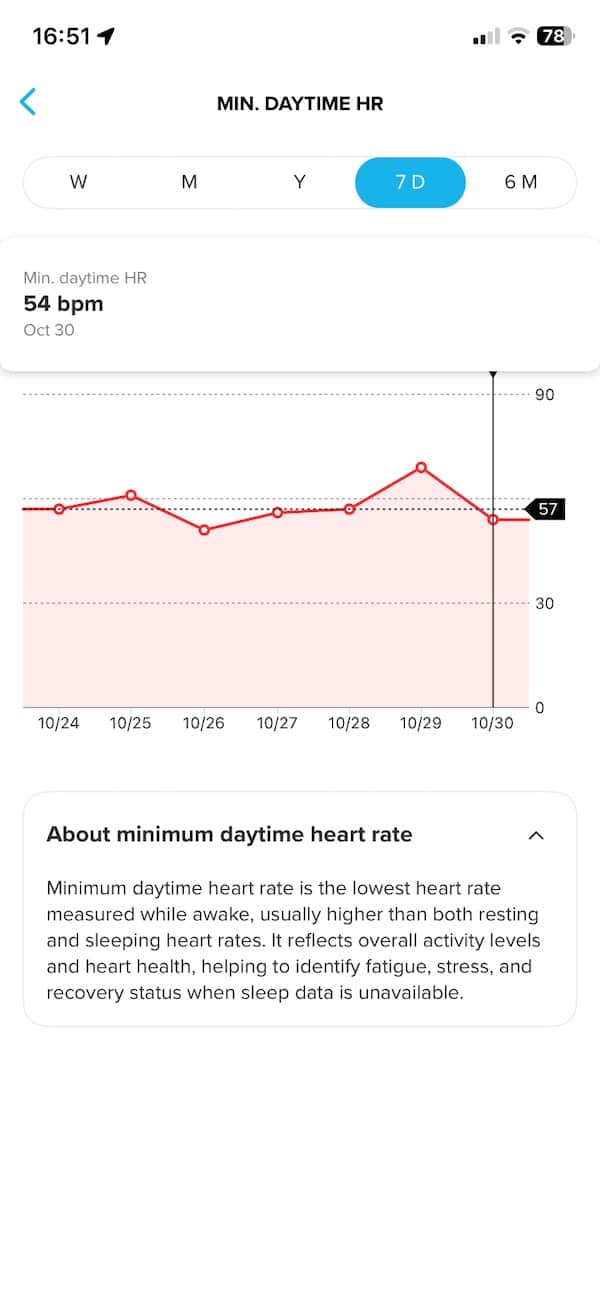


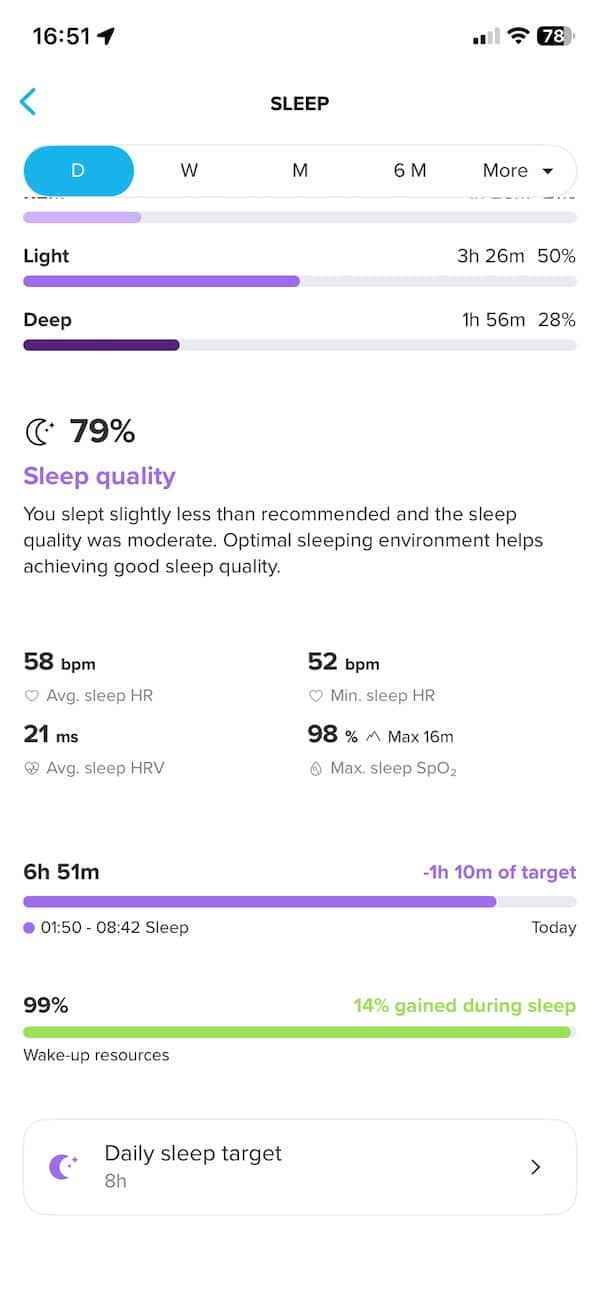
Overall, the Race 2 does enough on the health side to support training and recovery, but it doesn’t go deep. The data is there, and it’s accurate enough to be useful.
Sports tracking
The Race 2 handles sports tracking really well. It comes with over 115 sport modes, so pretty much every activity is covered. Running, cycling, swimming, strength training, triathlon, skiing, hiking – it’s all in there. You just pick your sport and go. The data on screen is clear and easy to follow, with heart rate zones, pace, distance, time, elevation and whatever else you need.
The new heart rate sensor seems to do a better job staying in contact, and there’s less of the random drifting you’d sometimes see on older Suunto models. Readings are steadier, and recovery stats look more believable. Like any wrist-based sensor, it can still struggle if the fit isn’t snug or during gym work with a lot of movement, but overall it’s much improved.

You can customise data screens, although not every sport mode lets you do it straight away. It takes a bit of app tweaking, but once you’ve got it set how you want, the experience is solid. The Race 2 is clearly built for serious training, and it delivers the data without getting in your way.
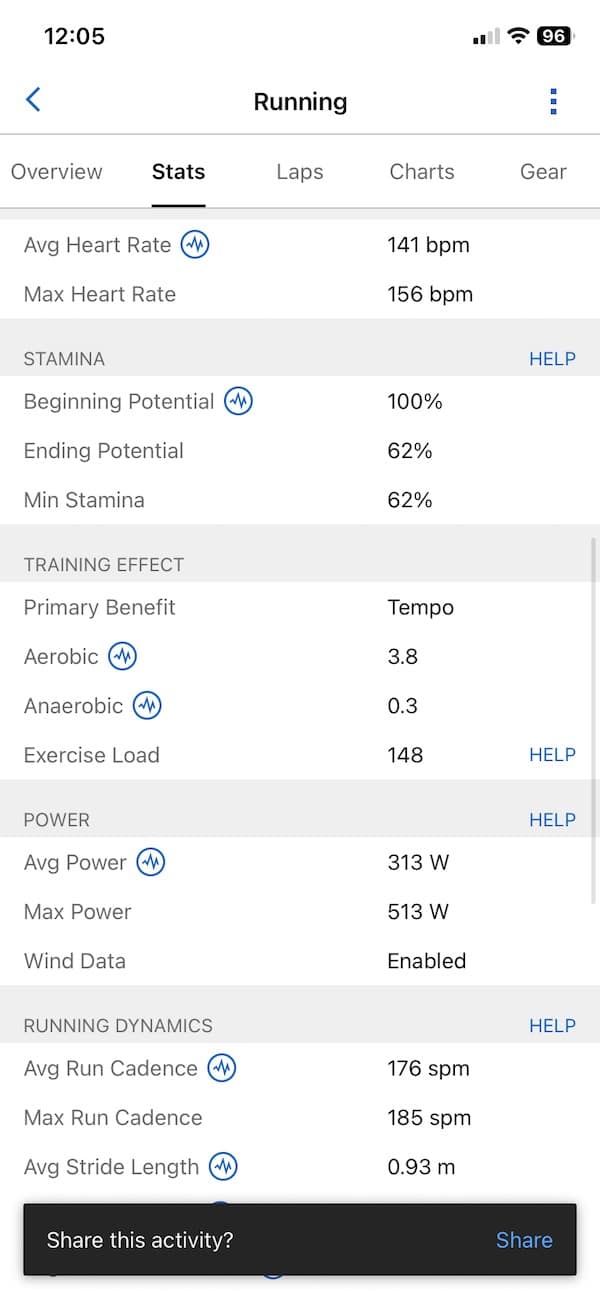
For running, I’ve tested it with a Garmin on my other wrist through the streets of central London on several different runs. GPS was just as quick to connect and accurate. The heart rate readings were very similar, as well.
On my most recent run, for example, the Garmin tracked a distance of 7.52 km while the Suunto tracked 7.56km. Remember, this is through busy street of London with lots of tall buildings.


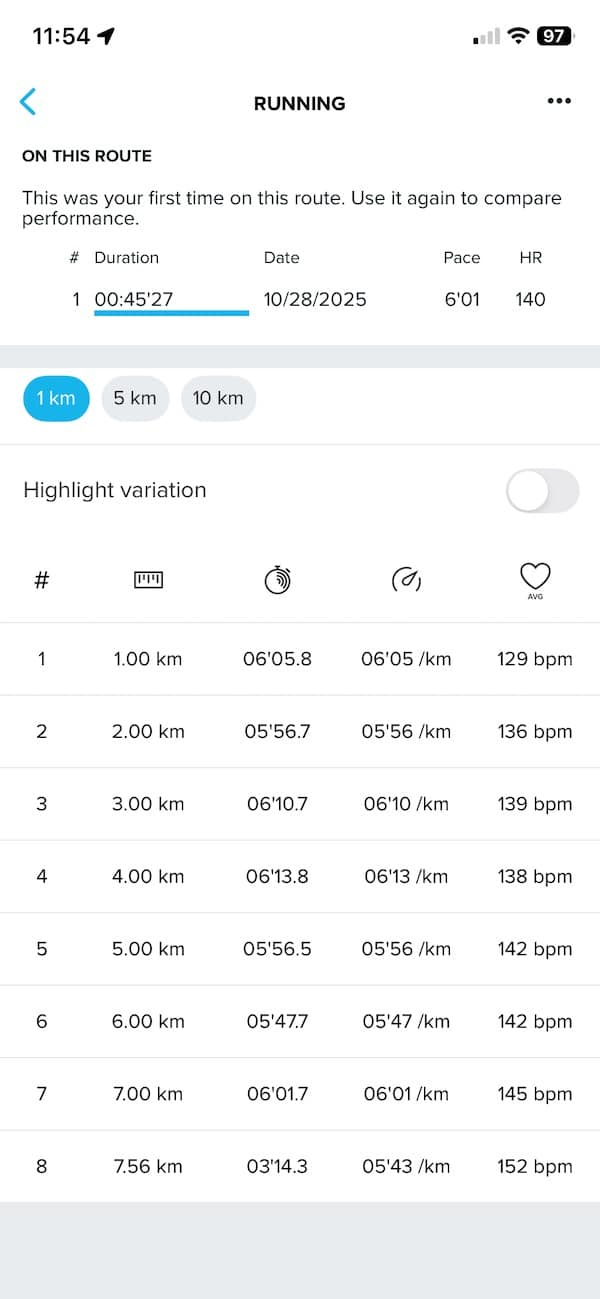
The heart rate readings were just as good. The Garmin showed an average of 141bpm and max of 156 bpm, while the Suunto showed 140bpm and 155bpm respectively. Not bad.
Also worth a mention is that when I was testing Vertical 2, because I have small wrists I had to make sure the watch was a couple of fingers above my wrist bone. That watch is heavier than Race 2. On Race 2 I could wear my watch as I normally do during runs and the heart rate tracking was accurate.




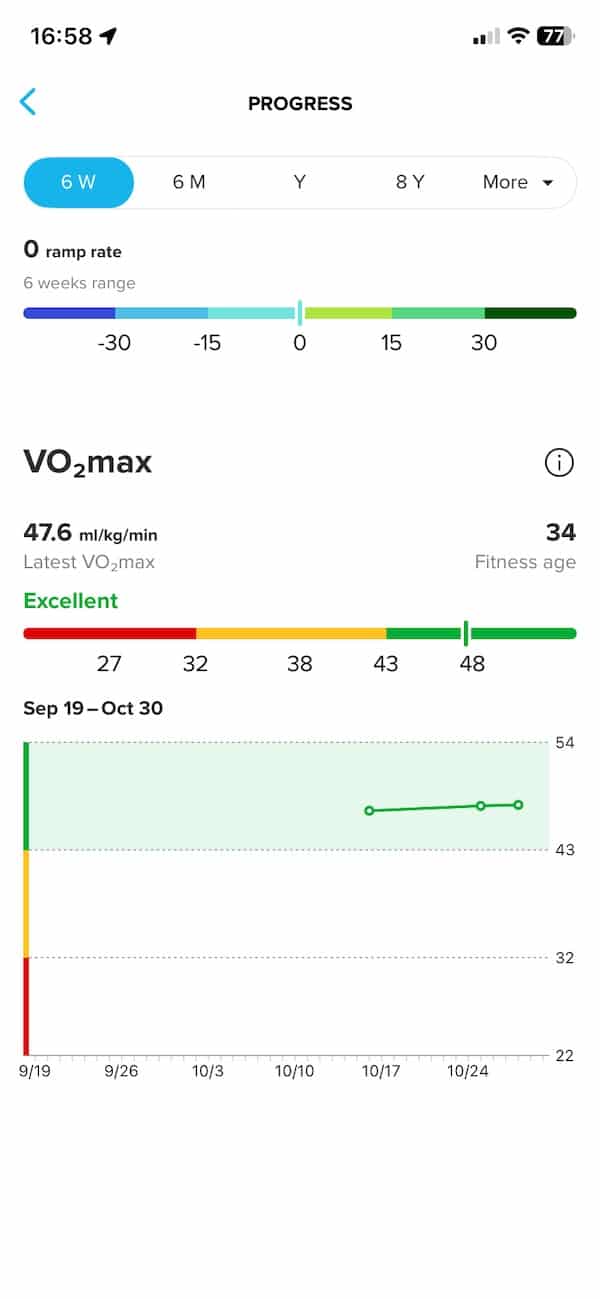
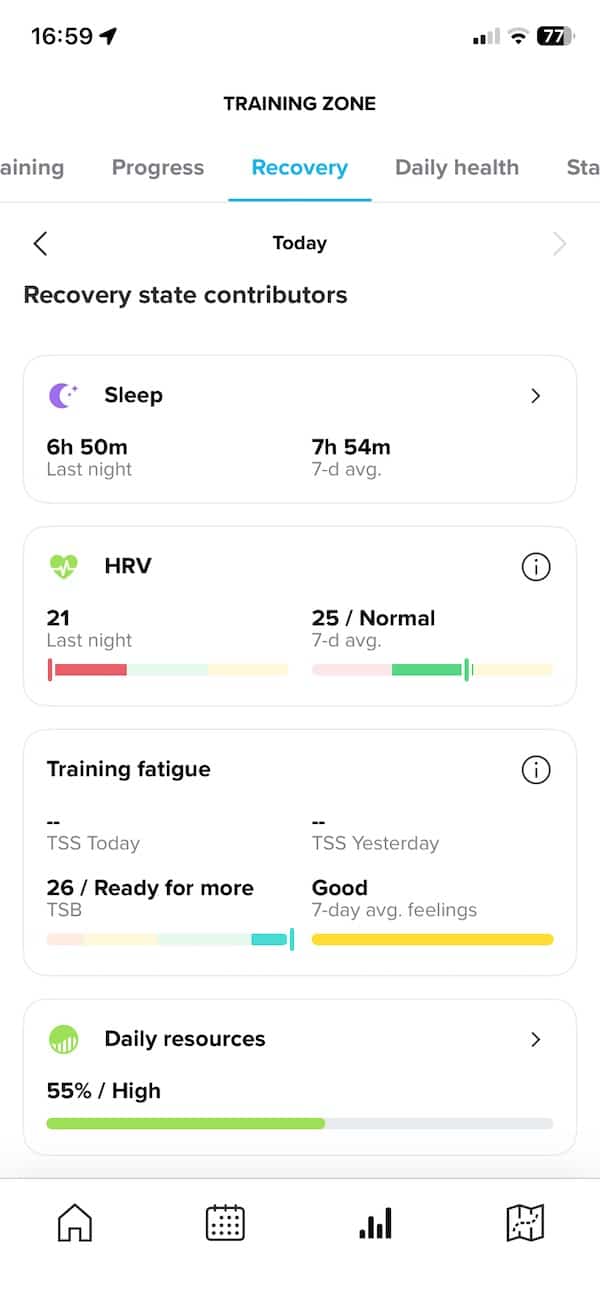
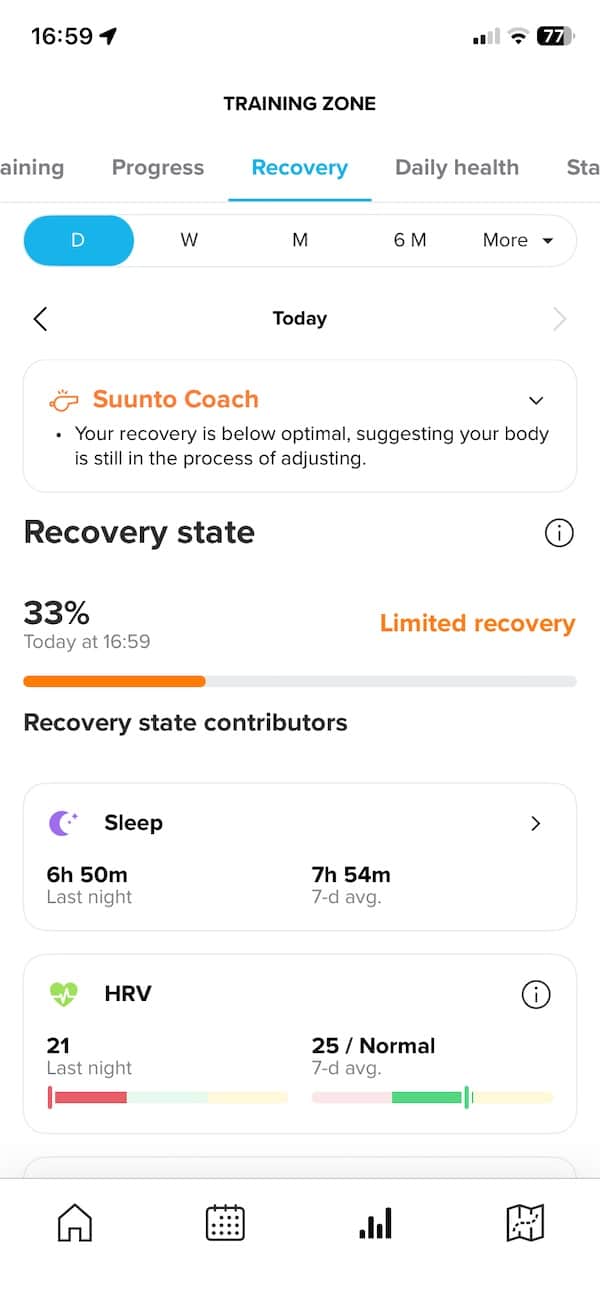
As shown in the screenshots below, you also get some recovery stats. These cover the basics although they do not go into as much depth as you’d get on a Garmin or Whoop. But for most people they will suffice.

Maps
The Race 2 handles maps really well. You can download full offline maps straight to the watch and use them without needing your phone. That’s a big plus if you’re heading out for a long run or hike and want to leave the phone behind. The maps are detailed, easy to follow and stay visible even when you’re off the grid.
Planning a route is simple. You set it up in the app, sync it to the watch and you’re good to go. The watch shows your location on the map, gives you basic guidance along the route and lets you zoom in and out using the crown. If you go off course, it gives you a nudge so you can get back on track.
The interface is clean and works smoothly. Maps load fast, and the AMOLED screen makes everything pop. It’s not overloaded with features, but it covers everything you actually need. For trail runs, hikes or just exploring new areas, it’s more than capable. Once you’ve used it a few times, it’s hard to go back to simpler breadcrumb navigation.
Suunto Race 2 review: Smart features
The Race 2 keeps things simple on the smart front. You get phone notifications, music controls and that’s about it. It handles calls, texts and app alerts fine, and the music controls work well enough when you’ve got your phone with you. But if you’re looking for offline music storage or contactless payments, you won’t find them here.
There’s no speaker, no mic and no NFC chip. You also don’t get any kind of app store or extras like weather widgets or calendars. What’s here covers the basics for training, but that’s where it stops. It doesn’t try to compete with full smartwatches, and it’s not really aimed at that crowd.
On the plus side, the interface feels smoother than older Suunto watches. Swiping around is quicker and the touchscreen works well with the buttons. If you’re already used to keeping your phone nearby, you probably won’t mind the limitations. But if you want a watch that replaces your phone, this one’s not it.
*We are a review site that receives a small commission from sales of certain items, but the price is the same for you. Purchasing items by clicking on links in this article allows us to run this website. We are independently owned and all opinions expressed here are our own. See our affiliate disclosure page for more details.
Subscribe to our monthly newsletter! Check out our YouTube channel.
And of course, you can follow Gadgets & Wearables on Google News and add us as a preferred source to get our expert news, reviews, and opinion in your feeds.
