

Suunto Vertical 2 review: Flashlight built into the bezel and a fresh look
Suunto Vertical 2

PROS
- Bright and sharp AMOLED display
- Built-in LED flashlight is genuinely useful
- Accurate dual-band GPS
- Excellent build quality
- Long battery life
CONS
- No solar charging
- Case may feel bulky on smaller wrists
- Price is on the high side
Suunto Vertical 2: One minute review
Suunto hasn’t reinvented anything here, but they’ve cleaned it up nicely. The AMOLED screen is the first thing you notice. It’s bright, sharp, and way easier on the eyes than what they had before. Maps look great, workouts are easier to follow, and it just makes the watch feel more modern. You lose solar charging, but honestly, most people won’t care.
The flashlight is surprisingly useful. Proper LED, not just the screen lighting up. Good for finding stuff in the dark or lighting your way on a trail. It’s easy to turn on with a shortcut, and once you’ve used it a couple of times, it starts feeling like something you don’t want to give up.
Sports tracking is solid across the board. GPS is accurate, heart rate is reliable if you get the fit right, and it supports chest straps if you want to go that route. It handles loads of activities, and it’s waterproof. You can take it swimming, hiking, running, whatever. Battery life holds up well, even with heavy use. And if you need more, you can switch to lower power modes on the fly.
The app keeps things simple but still gives you what you need. Recovery, training load, VO2 max, all that stuff is there. It’s not as deep as Garmin, but it’s clean and quick to use. Syncing is fast, layout makes sense, and nothing feels buried.
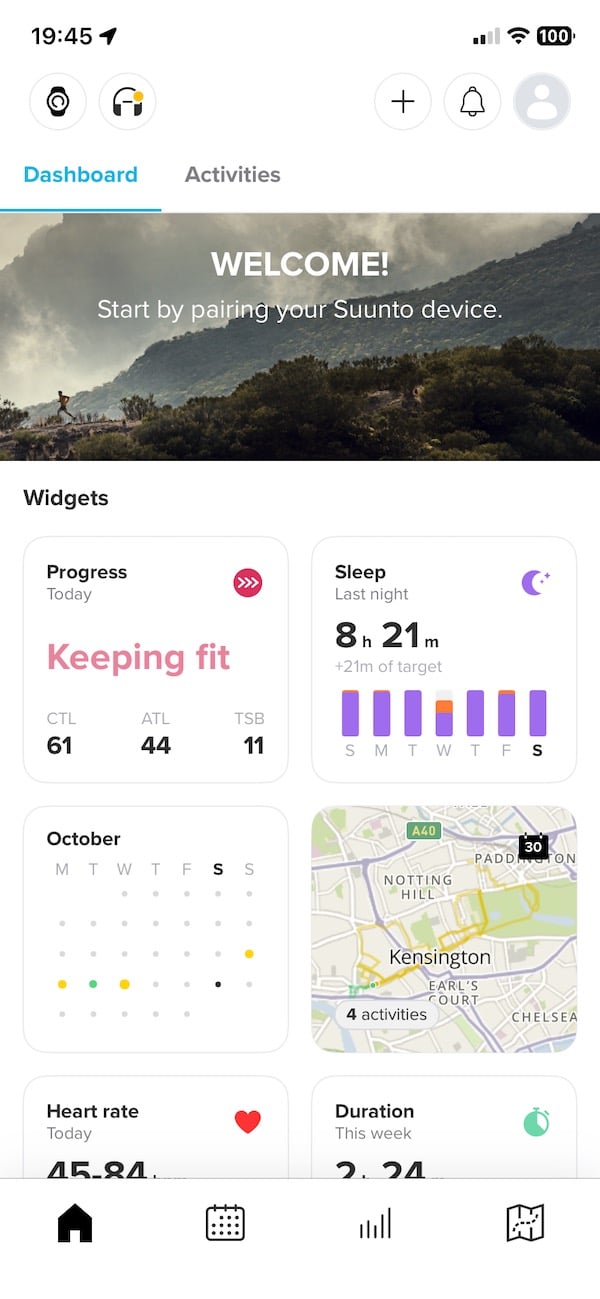
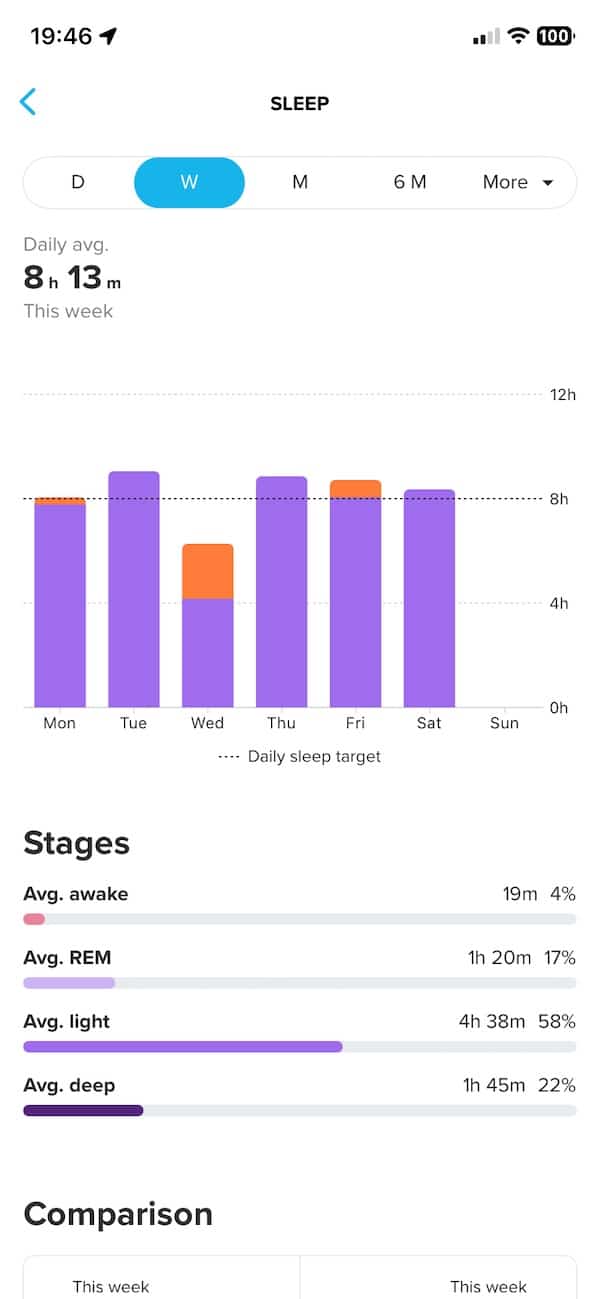
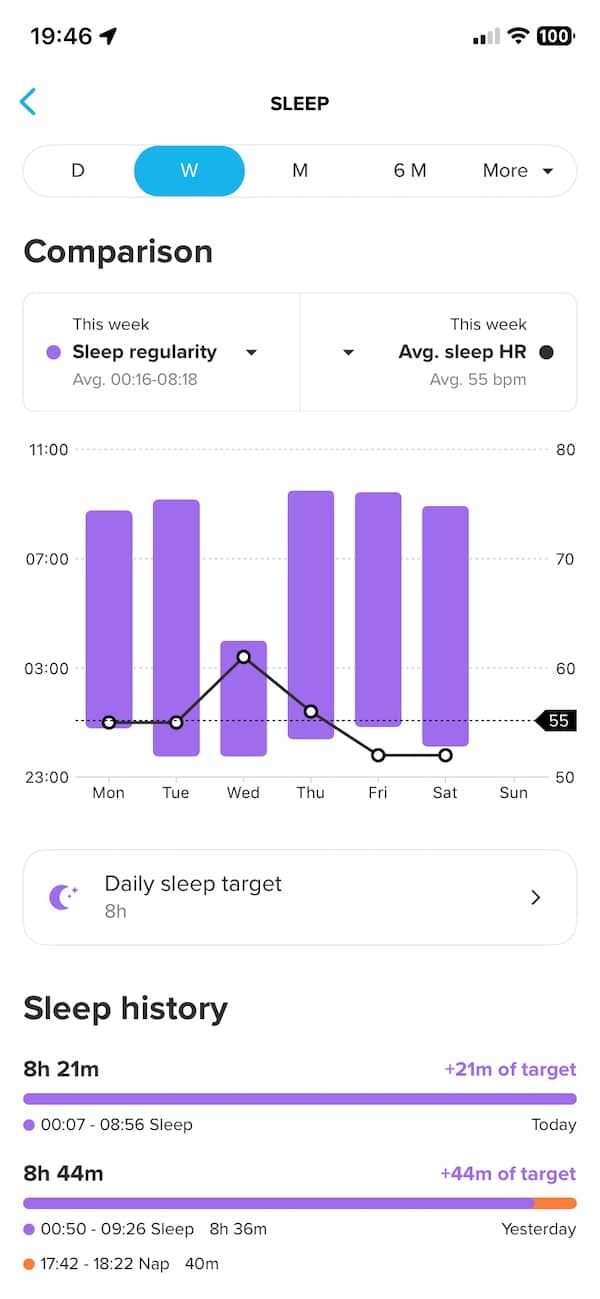
The app gives you the essentials without the fluff. You get recovery, sleep, heart rate and training trends in a layout that’s easy to follow. It’s not flashy, and sleep tracking can be hit or miss. But syncing is fast and it does the job.
This watch is for people who care more about solid tracking and battery life than apps and extras. If you’re into outdoor stuff, train regularly, and don’t need a full smartwatch on your wrist, it fits right in.
Suunto Vertical 2 review: Design, hardware
Look & feel
Suunto has stuck to its rugged DNA with the Vertical 2, but everything feels a notch more refined this time. The case still measures 49mm across, and while that may not suit everyone, it gives the display and internal hardware plenty of room. It’s a large watch, no doubt, but it is one of the better looking watches I’ve tested over the years. No quibbles with build quality at all.

The physical change that stands out most is the AMOLED screen. This is easily the biggest shift in how the watch looks and feels day to day as compared to its predecessor. The 1.5-inch panel is sharp, colourful and handles bright sunlight without any issues. Of course, there will be those that prefer the MIP of its predecessor. But the new display really is super-crisp.
The rest of the build also holds up well. The bezel sits slightly raised, so it offers some protection for the display, and the sapphire crystal hasn’t shown any marks in the couple of weeks of testing. The bezel and case blend into each other smoothly, which gives it a solid, unibody feel.

There’s a flashlight built into the top edge of the case which is not noticeable until you fire it up. This is a proper forward-facing LED, not just the screen lighting. Once you’ve used it a few times, you’ll realise how handy it is. But more on that later.
The strap uses a standard pin and buckle. Out of the box it felt a bit stiff, but after a couple of wears it softened up and now feels comfortable. Once it’s adjusted properly, it stays in place without needing to be cranked down. That said, the overall size and weight of the case do make it feel bulky under sleeves or tighter cuffs. That’s just something to live with if you want this level of hardware on the wrist.
Suunto has gone with a three-button setup on the right, plus a full touchscreen. The buttons have a solid, tactile click and work fine. The touchscreen is responsive without being too sensitive. Swipes and taps register consistently.
The interface is quicker than previous Suunto models, which is important to note. Animations are smoother and menus load faster. It’s still more functional than polished, but once you got used to the structure, it makes sense. As someone who has used Garmin watches a lot, there was practically no learning curve.
From a style point of view, the Vertical 2 sticks with that tool-watch look. It’s clearly made for outdoor use, and it doesn’t pretend to be anything else. The clean lines and solid build give it a bit more polish than earlier models. You either like the bold design or you don’t. For me, it’s a great looking watch.
Under the hood
The Vertical 2 includes the typical suite of internal sensors. The optical module tracks heart rate at the wrist and supports blood oxygen and HRV. The sensor sits flush and delivers consistent data without delay during movement. If you are exercising, though, I suggest you tighten the strap and move it above the wrist-bone. Particularly if you have small wrists like I do.

Environmental sensors include a barometric altimeter, pressure sensor, temperature sensor and a digital compass with tilt compensation. Altitude data combines barometric and satellite input for added precision. The pressure and temperature sensors are responsive and stable over long durations. The compass doesn’t need to be held flat to maintain directional accuracy.
GNSS is handled by a dual-band chip with L1 and L5 support. The receiver connects to up to four satellite systems at once, across GPS, GLONASS, Galileo, QZSS and Beidou. It can maintain up to 32 satellite connections simultaneously. The positioning hardware handles switching automatically, without any need for user input. I found the accuracy to be very impressive.
As far as internal storage, this has been bumped up to 32 GB. That space is used for map data, tracking logs and system operations. Unfortunately this cannot be used for music storage as the watch doesn’t allow for that.
Battery life
Battery life is one of the stronger points of the Vertical 2. Suunto rates it for up to 20 days in smartwatch mode and up to 65 hours with all systems GNSS plus multi-band enabled. That stretches to 75 hours with single-band, and can go as far as 250 hours in the most aggressive power-saving mode. Those numbers put it in the same league as other top-tier outdoor watches.
What matters more is how it holds up in real use. With full dual-band tracking, continuous heart rate and frequent interactions, the drain is noticeable but manageable. You can get through a full day of heavy activity with around ten percent drop, sometimes less, depending on screen brightness and notifications.
The quick-switch battery modes actually make a difference. Performance mode runs everything at full tilt. Endurance steps things down slightly while still keeping good GPS accuracy. Ultra and Tour cut right back to basics. The interface for switching modes is simple, and you can change it mid-activity if needed. That makes a big difference on longer outings.
There’s no solar charging this time around, so everything comes down to how you manage usage. In my opinion, solar is still a gimmick on most watches – it doesn’t really add that much to battery life unless you live in very sunny regions. So not much of a loss there for most people.
Suunto has also added some small touches to help extend battery life, like intelligent reminders and screen dimming based on wrist detection. These do their job in the background without getting in the way.
For daily use, you’re probably looking at around ten to twelve days without needing to think about the charger. For heavy training weeks with maps and tracking active, expect to charge more often. But overall, the endurance here is solid and practical.
Suunto Vertical 2 vs Vertical 1: Tech specs comparison
The Vertical 2 doesn’t look much different from the original, but some things have changed. The case size, thickness, weight and strap system are all pretty much the same. You’re still getting a 49mm watch with sapphire glass and a rugged build. But once you start using it, the upgrades become obvious.
As mentioned, the most noticeable difference is the display. Suunto has replaced the 1.4 inch MIP screen with a 1.5-inch AMOLED LTPO panel. Resolution jumps to 466×466 pixels, and peak brightness now hits 2,000 nits. That makes the new screen much easier to read in all lighting, with sharper maps, clearer text and better contrast.
Another new addition is the previously mentioned LED flashlight. It’s positioned at the top of the case.
Internally, Suunto has updated the heart rate sensor. The processor has been replaced with a newer MCU that makes the interface feel much faster. They’ve also increased memory, which helps with responsiveness and gives the device more headroom for future updates. But battery life has come down a bit.
Worth a mention are some software additions. Elevation guidance has been improved with better charting and waypoint support, making it more useful during climbs. Multi-sensor pairing is now supported, and you can get direct voice guidance if you pair the watch with the Suunto Wing 2 headset.
Finally, there has also been a shift in pricing. The stainless steel model now starts at $600, up from $500. The titanium version stays at $700.
Feature | Suunto Vertical 1 | Suunto Vertical 2 |
|---|---|---|
Display | 1.4 inch MIP | 1.5 inch AMOLED LTPO |
Display resolution | 280×280 | 466×466 |
Display brightness | Lower | 2,000 nits |
Flashlight | No | Yes (LED, forward-facing) |
Optical HR sensor | Previous gen | Same as Suunto Race 2 |
Processor | Standard | New MCU, faster UI |
Internal memory | Lower | Increased significantly |
GNSS battery life (dual-band) | 65 hours (90 hours with solar) | 65 hours |
Smartwatch battery life | 30 days (60 days with solar) | 20 days |
Charging cable | Original design | Improved connector |
Elevation charts | Basic | Improved with waypoints |
Multi-sensor pairing | Not available | Supported |
Voice guidance with headset | No | Supported (Suunto Wing 2) |
Starting price (stainless steel) | $499 | $599 |
Starting price (titanium) | $699 | $699 |
Suunto Vertical 2 vs Race 2
As far as the differences between Vertical 2 and Race 2, they boil down to build, buttons and a few added tools. Vertical 2 has a proper LED flashlight, while Race 2 doesn’t. The Race uses a rotating Digital Crown and two flat buttons for navigation, but Vertical sticks with three physical buttons. The Vertical also offers better battery life overall, with more time across all modes and a longer stretch in smartwatch use. It’s thicker than the Race, and the case uses more metal and titanium. Vertical 2 is clearly built with longer efforts and tougher environments in mind.

Suunto Vertical 2 review: Health & fitness tracking
The Vertical 2 handles key health features without overcomplicating things. Daily stats like steps, calories, heart rate and HRV are easy to check in the app. You can also do this on the watch and the UI is very snappy. The data for these metrics seems accurate enough. HRV fluctuations, for example, although not identical – mirror what I am getting on my Whoop and Garmin in terms of direction.
Sleep tracking kicks in automatically, but for that – accuracy can be hit or miss. You get your nightly stats, weekly averages, and a breakdown of sleep stages. Naps are picked up too, which is handy. One thing I noticed is that if I get up in the middle of the night for a bit, maybe to read for about 20 minutes or walk around, the app sometimes splits the night into two chunks – marking the second half as a nap. Which is annoying.
Daytime heart rate gets logged alongside RHR, with the lowest awake HR called out separately. That can be useful as a quick indicator of how recovered or stressed you might be.
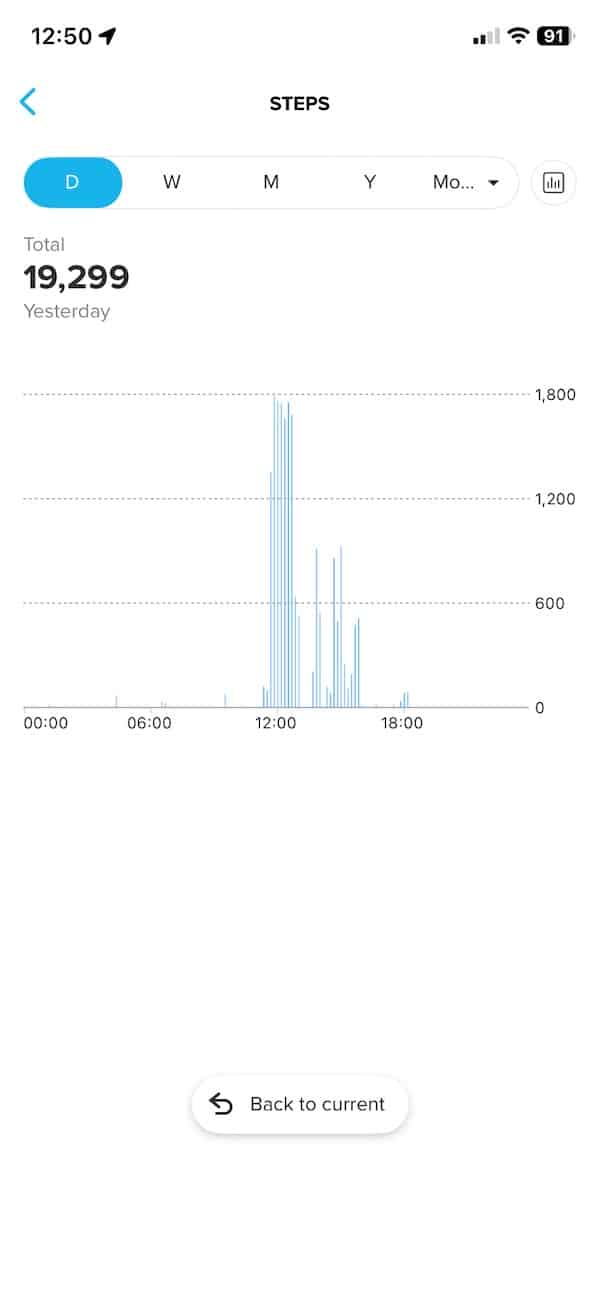

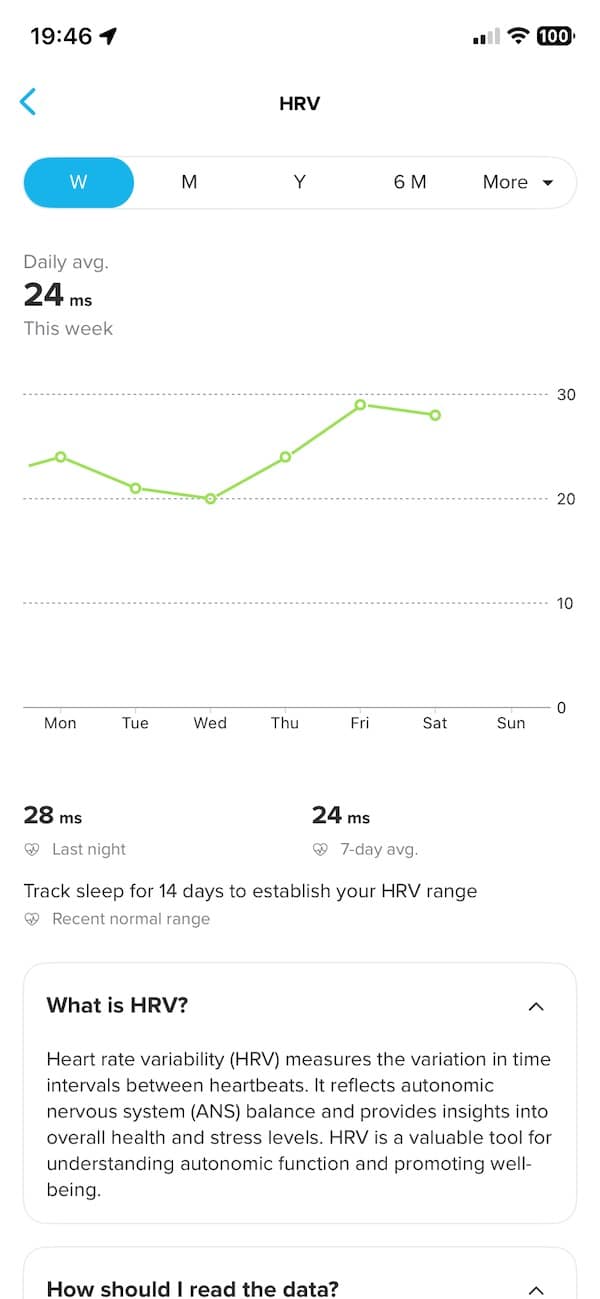

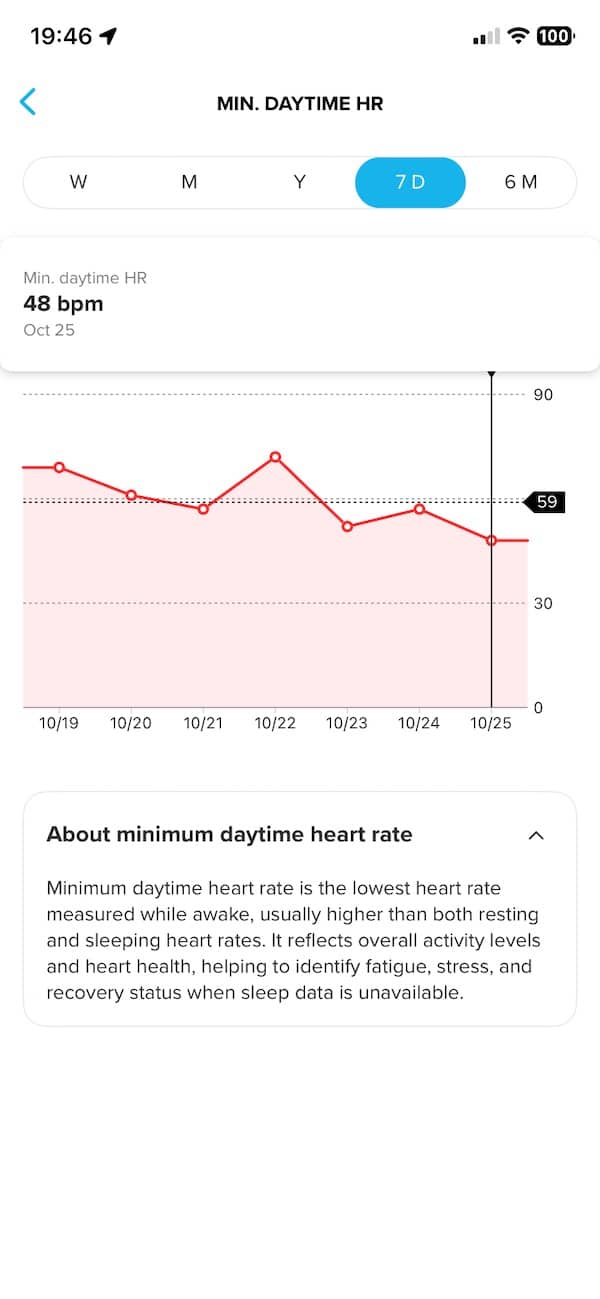

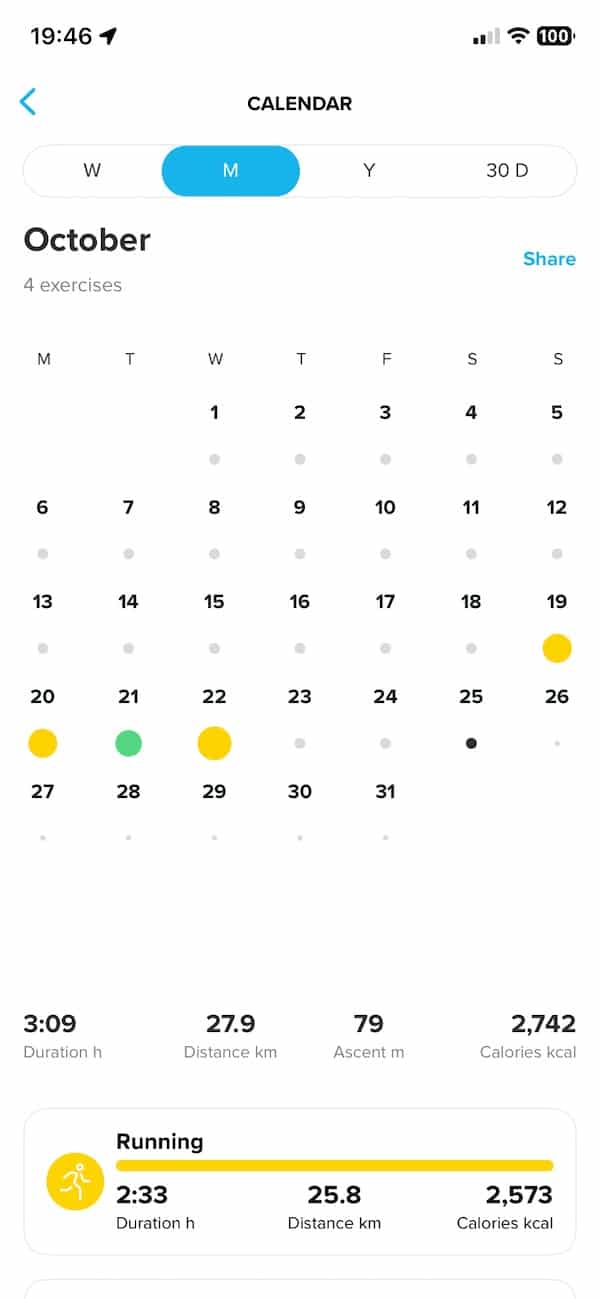
Commutes get logged if you’re walking or cycling. It even estimates your CO2 saved, which is a nice little bonus for regular movers.
Suunto keeps the experience pretty lean, but it covers the key health and activity areas well.
Sports tracking
The Vertical 2 tracks a multitude of sports, so whatever you’re into, it’s probably covered. You can use it for swimming, hiking, cycling, snowboarding, gym sessions, and a whole lot more. The device is fully waterproof and happy in the pool. Basically, it’s built to handle most sports without fuss.
If you’re wondering how the Suunto Vertical 2 stacks up against Garmin for running, the good news is it holds up well. I put it side by side with the Forerunner 955 across several runs, including a 10.7K loop through central London packed with tall buildings and tight turns.

In terms of GPS accuracy, the results were practically neck and neck. Both watches use dual-frequency GNSS and had no trouble locking onto satellites, even in these tough urban conditions. Distance discrepancies were minimal. One run came in at 10.71 km for the Suunto and 10.69 km for the Garmin. Another two logged almost the same distance.
When mapped, the GPS traces from both watches followed almost identical paths, with only minor gaps appearing in isolated areas. Suunto’s track was sharp and reliable throughout.

Heart rate accuracy was also solid, but getting the right fit on the Vertical 2 made a noticeable difference. The watch is heavier and can slide lower on the wrist if not secured tightly, which interfered with readings on the first run. Particularly for someone like me, as I have small wrists.
But once positioned higher up, the sensor kicked in properly. Across tests, average and max heart rates were nearly identical between the two devices. One test showed 150 bpm average on Suunto and 151 bpm on Garmin, with similar peaks.

The updated optical sensor on the Vertical 2 is the same as in the Race 2. It performs well, as long as the fit is dialled in. Garmin’s Elevate sensor was also consistent, though slightly slower to react to quick effort changes.
Suunto supports external chest straps, which is good news for anyone who wants better accuracy during workouts. When wearing, the wrist heart rate will take over if the chest strap drops connection.

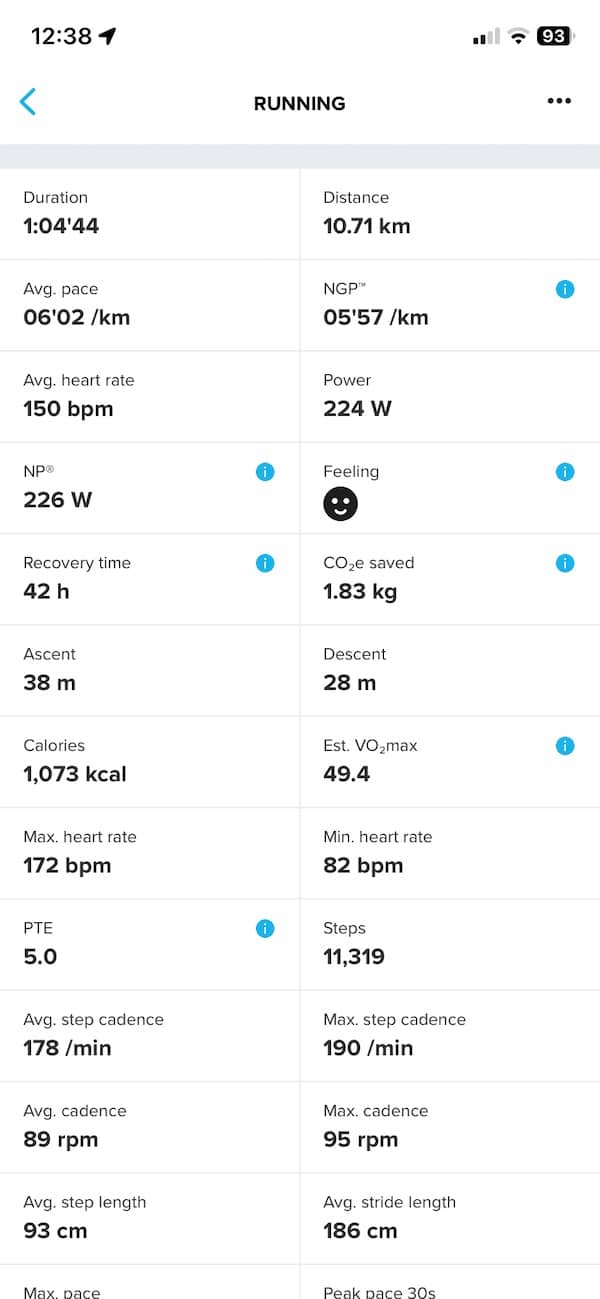
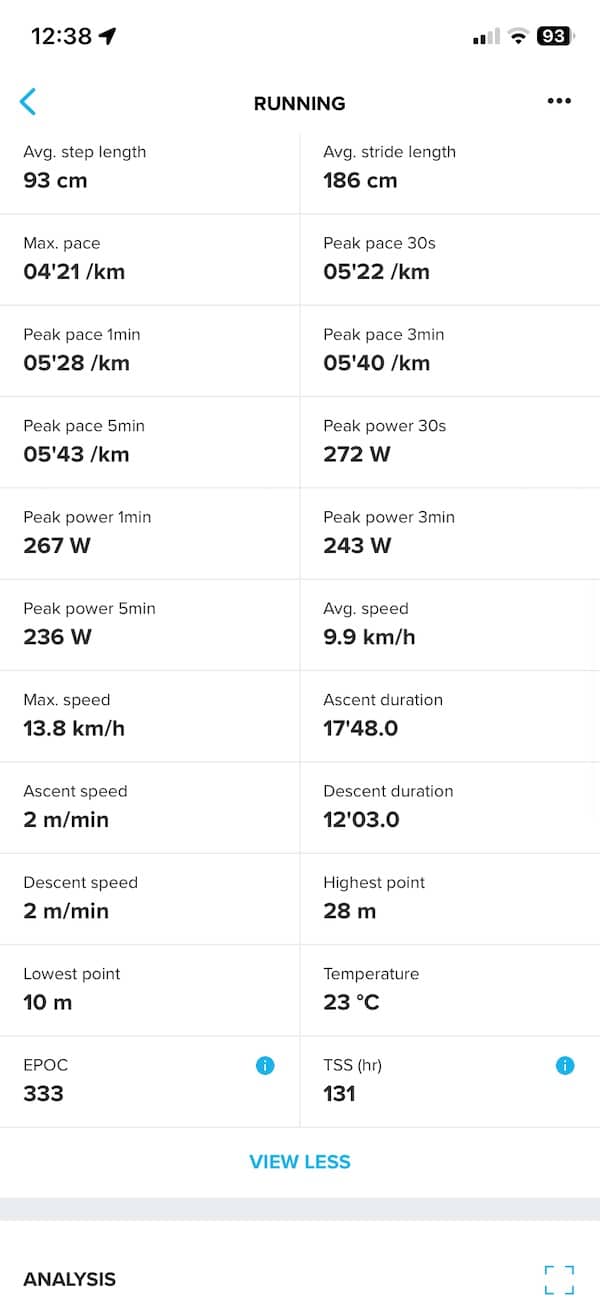

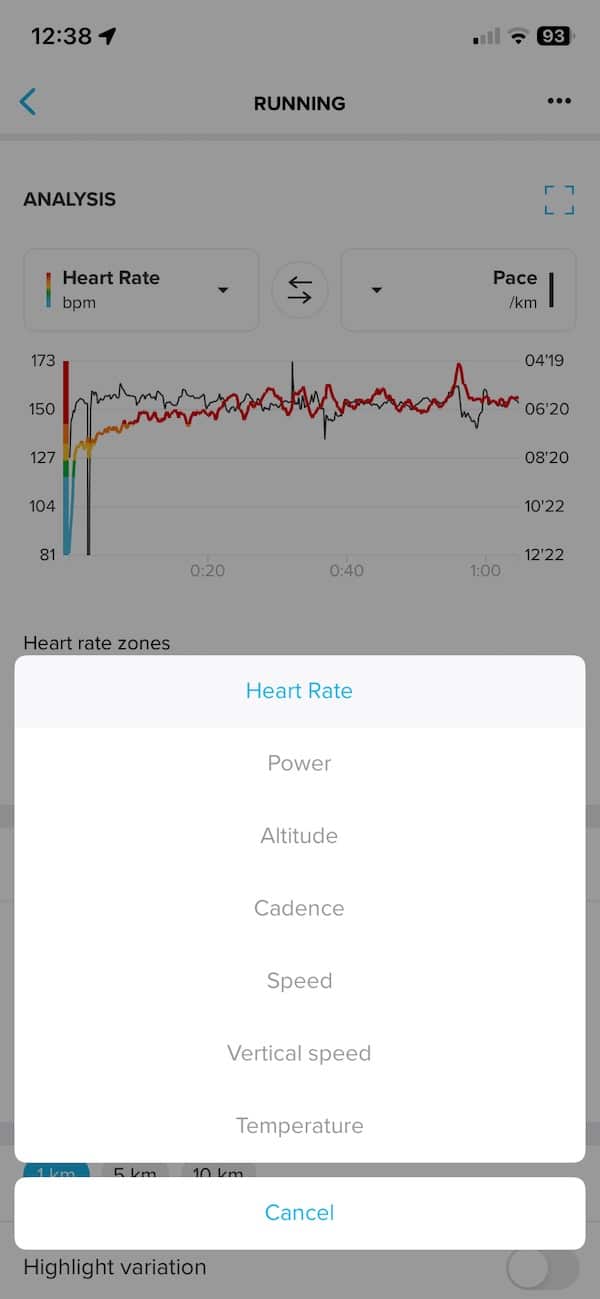
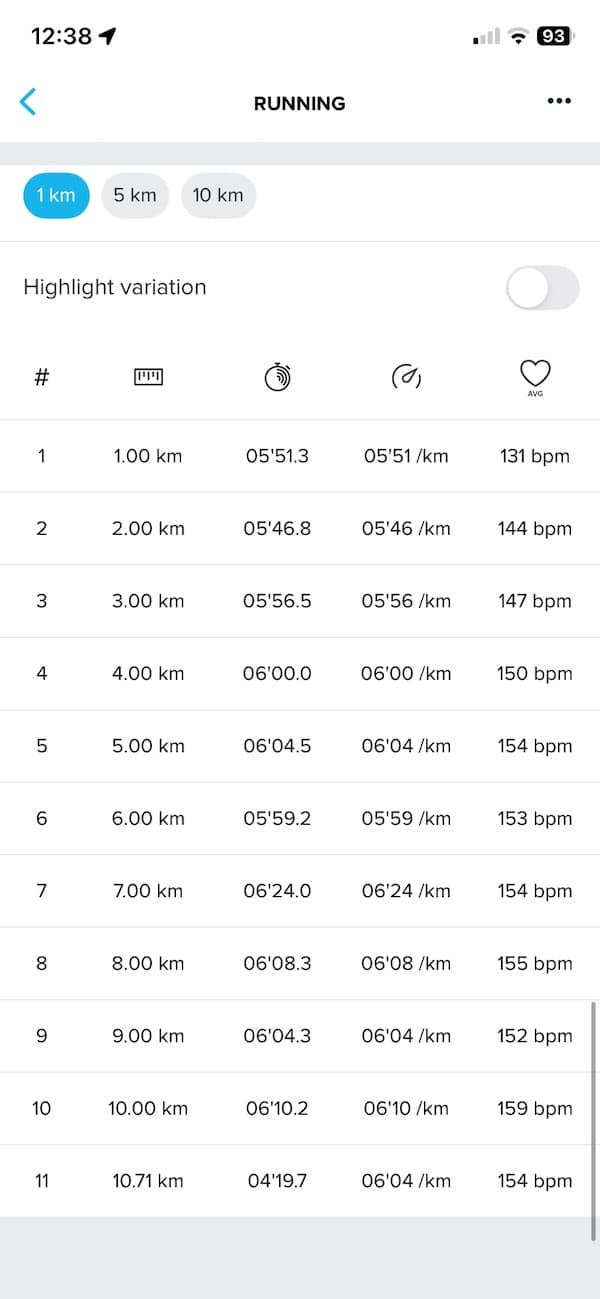

I would say, Garmin still leads when it comes to post-run analytics, plus everything is more customisable. You get deeper insights and more advanced metrics in Garmin Connect. But Suunto’s app has closed the gap quite a bit in recent years.
It includes training load stats, recovery data, VO2 max estimates, and trend graphs that are useful for tracking progress over time. The data might not be quite as rich as Garmin’s, but it’s more than enough for most runners. If you’re into sports, curious about how the body responds to training, and like digging into the details, the Suunto will have you covered.


If you’re used to the Garmin workflow, switching to Suunto is easy. The interface is clean and intuitive, with quick access to activities and settings. There’s also a smart prompt to resume an activity if you stop moving, which is handy when out on long runs.
Bottom line, the Vertical 2 handles GPS and heart rate tracking well, even when running through challenging environments. Just make sure the strap is fitted correctly, especially if you’ve got slimmer wrists.
Recovery and training load metrics
There are also a few recovery metrics. The resources metric works like the Garmin body battery, showing how much daily energy you’ve got left based on sleep and strain. It gives a quick idea of whether you’re bouncing back or running low.
There also a separate recovery state metric which lets you know if you are ready for an activity. That one takes into account things such as sleep, HRV and training.
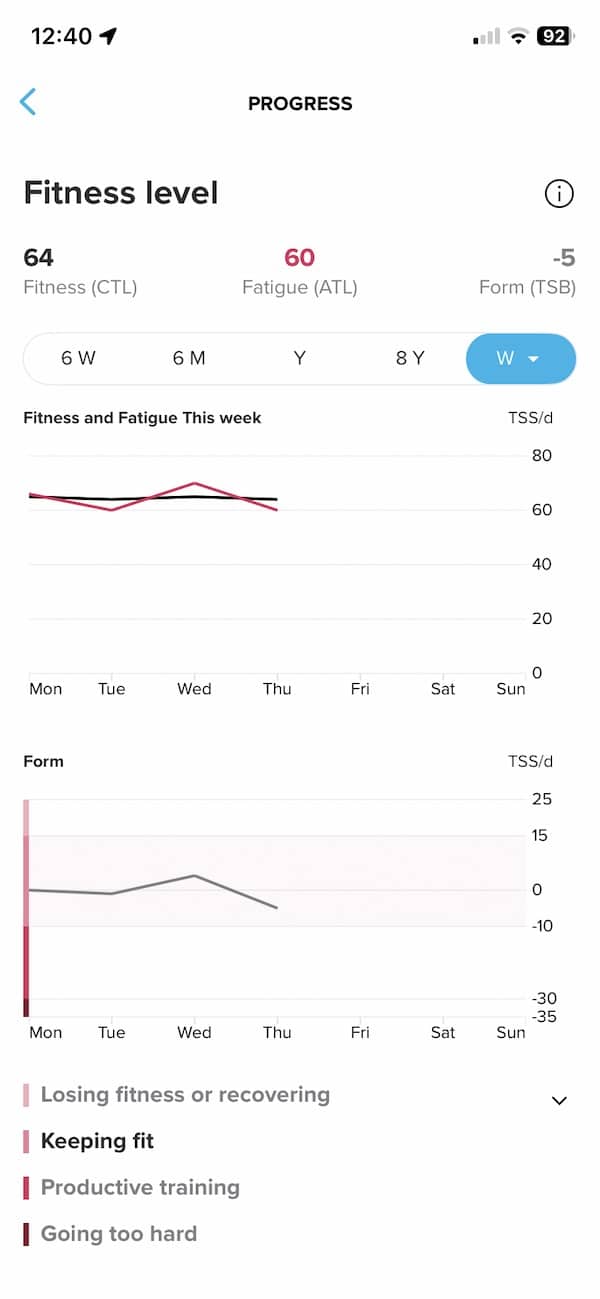
Furthermore, Suunto’s app helps you keep track of how hard you’re pushing yourself over time. It does this using something called a Training Stress Score (TSS), which is based on how long and intense each workout is. Over time, the app adds up these scores to show two key things: your overall fitness (based on the past 6 weeks of training) and your current fatigue (based on the past week). These appear in a graph.
Another graph shows your form, which is the difference between your long-term fitness and short-term fatigue. If your form is too low, you’re likely overtraining and at higher risk of injury. If it’s too high, you might be taking it too easy and losing fitness. Ideally, you want to land in the middle zone where training is productive. The graphs are broken down into four zones to help you see if you’re pushing hard enough, too hard, or not enough.
Maps
You also get offline maps. And there are no subscriptions like with some other brands.
I’ve tested the maps in a few different settings, and they work well. The only glitch I encountered was with setting up a WiFi connection to the watch. After several unsuccessful goes, I switched off the VPN on my phone and it worked. Not sure if this was causing the issue.

Downloading is pretty straightforward. Do a search for the area of interest in the smartphone app and it will transfer over to your watch. You do need to keep it resting on the charger during the process. Once the map data is on your watch, there’s no need for a phone connection. You’re good to go. Maps are downloaded via a direct connection of the watch to wireless network, not through your phone.
I like that there’s plenty of storage for maps. On my particular setup there is 28GB free. I downloaded a map of London and that only took 84mb of space. You can manage all the maps that have been downloaded via the Suunto app.
In day to day use, you can use the maps as a standalone navigation feature or while recording a workout. For the latter, select a sport mode that uses GPS. Scroll down and select map and the style you want to use. And then exercise as normal. You can view the map by pressing the middle button.


Navigation is easy to pick-up. You can pan and zoom, and there’s no redraw lag when switching views or loading new sections. The AMOLED screen resolution helps here – terrain details, contour lines and trail overlays are easy to make out even while on the move. Satellite and terrain layers are both available, and switching between them is quick.
I didn’t run into any crashes or slowdowns. Everything has stayed responsive and smooth. The maps are genuinely usable on the wrist, and I didn’t need to stop or fumble around to get my bearings. Once they’re on the device, they just work.
Suunto Vertical 2 review: Smart features
I’ve been using the Vertical 2 with my iPhone for a few weeks, and the smart features cover most of what I need day to day. Notifications come through reliably. I can see calls, messages and app alerts without pulling my phone out. There’s no option to respond to messages on iOS, but that’s expected. On Android you can send predefined replies.
Music control works fine. You can play, pause and skip tracks, but there’s no onboard music storage. Which means, if you leave your phone behind, you’re not listening to anything. That might be a drawback for some, but I don’t use my watch as a music player, so it didn’t bother me.
You also get phone-based features like media control, weather updates and software updates over the air. Everything syncs through the Suunto app. It’s all pretty straightforward. The Bluetooth connection held steady without any random disconnects.
There’s no contactless payment, no app store and no voice assistant. If you’re coming from a full smartwatch, this will feel more stripped back. But for checking alerts, controlling music and syncing data, it does the job.
LED flashlight
Finally, the most talked about Vertical 2 feature is the flashlight. Now, this isn’t just a screen glow. The Vertical 2 has a proper LED as I detail in my more comprehensive article. And it shines forward like a normal flashlight.
I’ve used a few watches with this kind of feature before, and Suunto’s version holds its own. The beam is wide enough and strong enough for short-range use. Around camp, on the way to the bathroom at night, or during a power cut, you will find yourself using it more than you expect.

You can set up a shortcut to turn it on with a button press, which is what I did. Digging through the menus works, but no one’s doing that in the dark. Once it’s on, you can cycle through four brightness levels and switch to a red mode if you want to preserve night vision. There’s also a pulsing mode, SOS flash, and something called breathing mode that you could use as a focus tool, though I never really reached for that.
The light always starts at 50 percent brightness, which gets annoying if you prefer one of the other settings. It doesn’t remember what you last used. Also, you can’t activate it during a workout without backing out of the activity screen, which feels like a miss. I’d rather be able to switch it on at any time.
Still, it’s useful. Not just during training but in everyday situations too. It doesn’t try to replace a headlamp, but for what it is, it works well. And you can keep tracking a session while it’s on, which I appreciated. The UI could be cleaner, but the hardware side of the flashlight is solid.

*We are a review site that receives a small commission from sales of certain items, but the price is the same for you. Purchasing items by clicking on links in this article allows us to run this website. We are independently owned and all opinions expressed here are our own. See our affiliate disclosure page for more details.
Subscribe to our monthly newsletter! Check out our YouTube channel.
And of course, you can follow Gadgets & Wearables on Google News and add us as a preferred source to get our expert news, reviews, and opinion in your feeds.
