

Zepp Health pushes Amazfit deeper into hybrid training
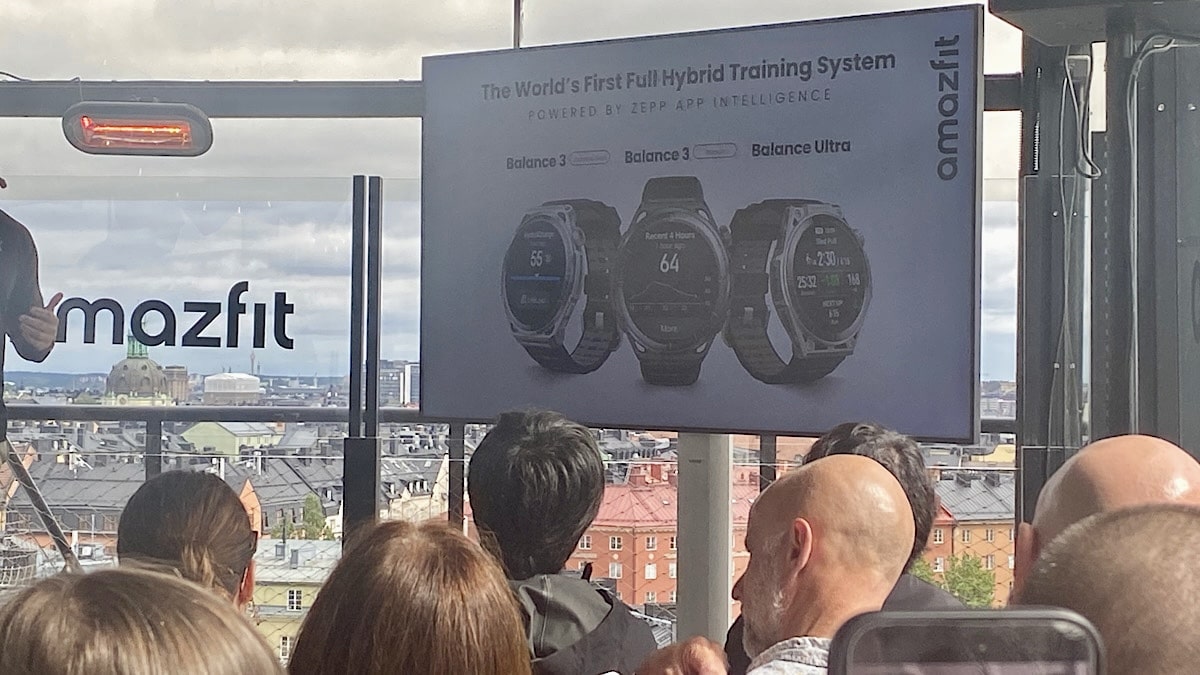
Zepp Health is using the HYROX World Championships in Stockholm to show a more focused direction for its Amazfit wearables. The new hybrid training system brings together the Zepp Health app, Amazfit Balance 3, Amazfit Balance Ultra, HYROX race tools and support from sensors such as Helio Strap.
The move gives the company a clearer performance identity. Instead of treating HYROX as a logo partnership, Zepp Health is building features around the actual shape of the sport, with race pacing, training plans, recovery guidance and post-race analysis designed for hybrid athletes.
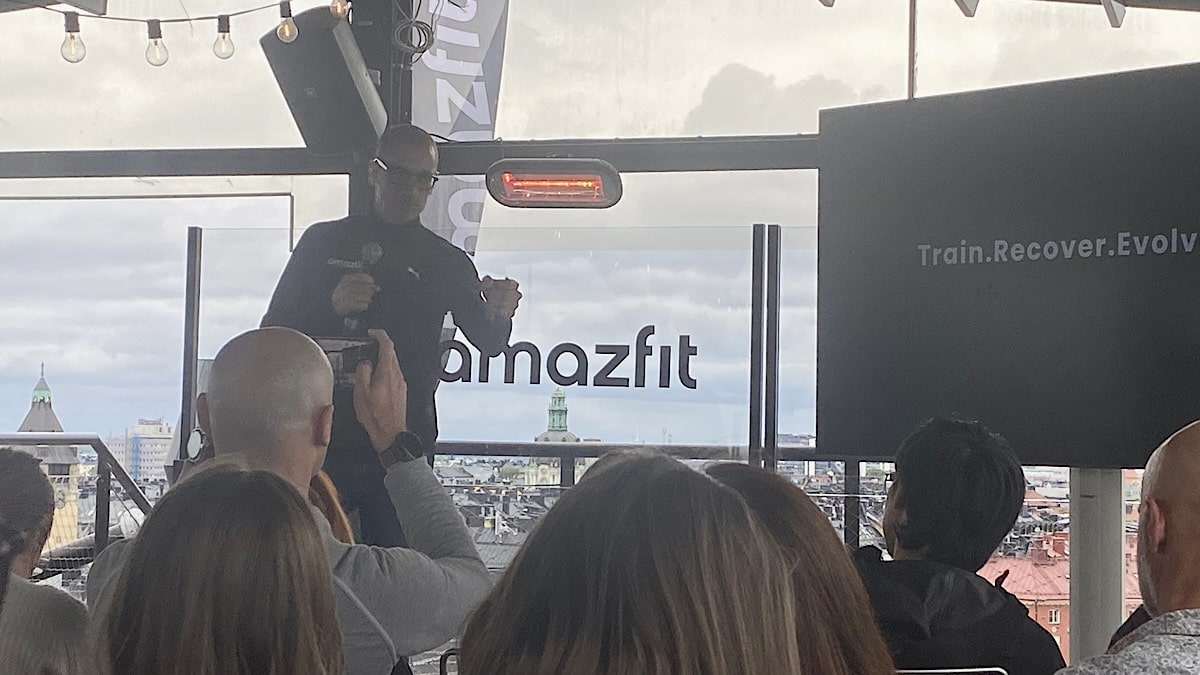
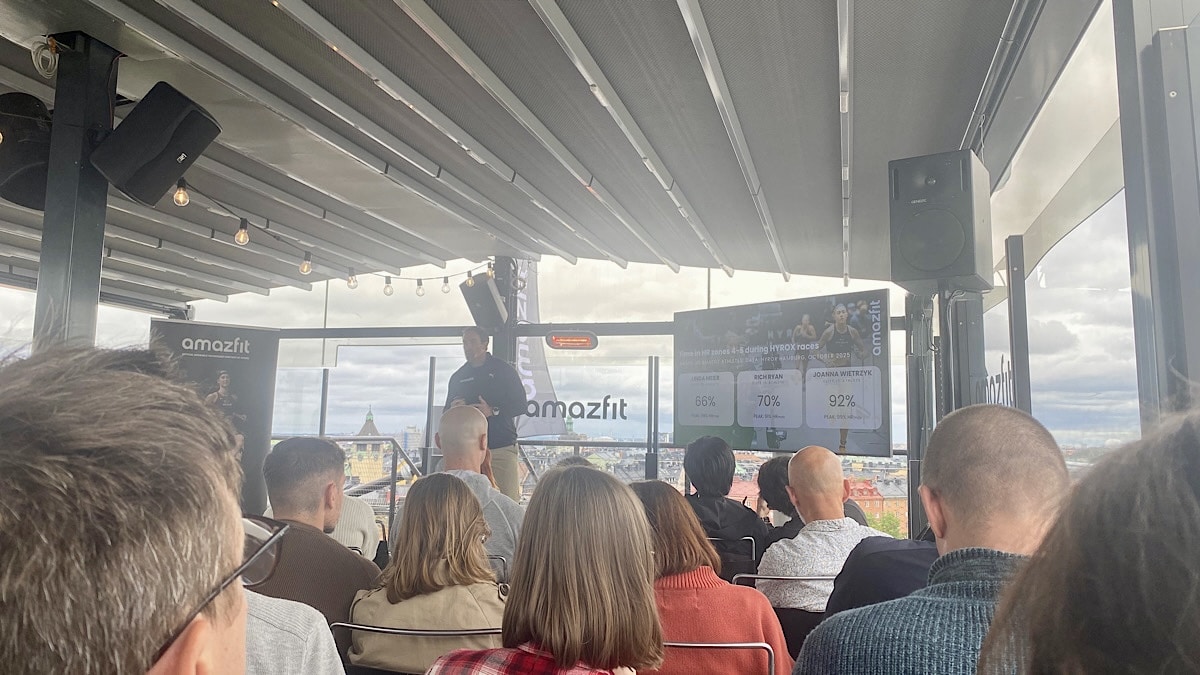
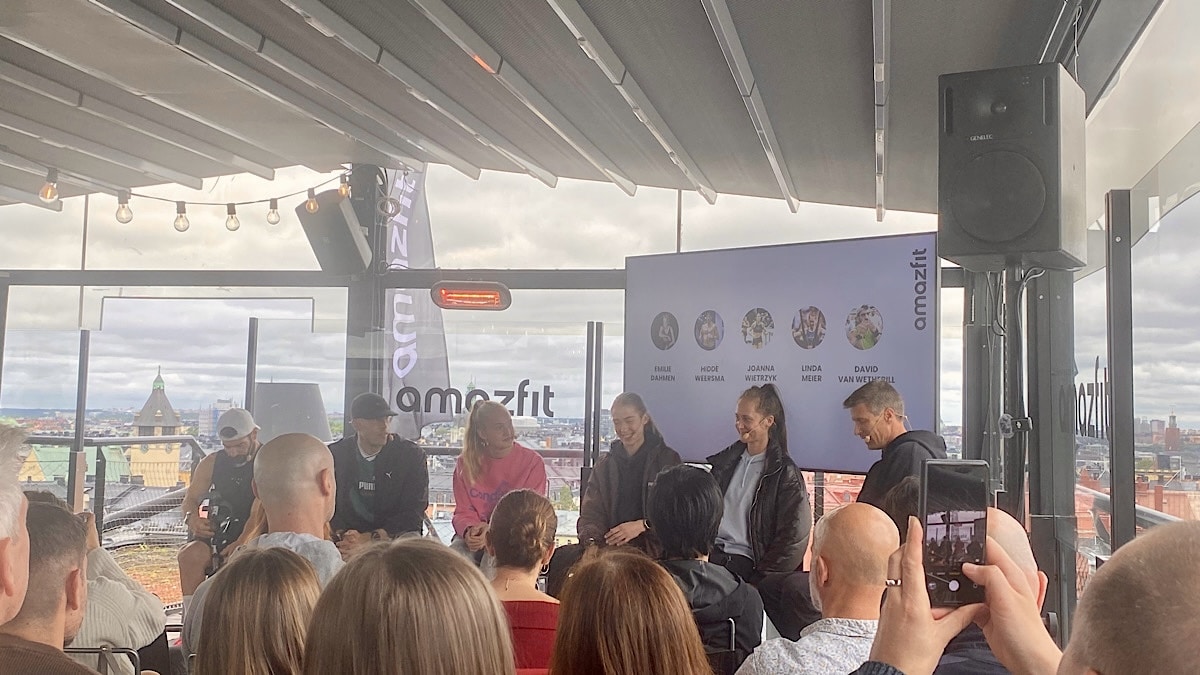
We were at the launch event earlier today. Some of the images in this article are from this gathering.
Zepp Health is building around hybrid training
Zepp Health describes the new system as a fully integrated hybrid training setup. The company says it is designed for athletes who need to balance endurance, strength and speed rather than train for one discipline in isolation.
HYROX exposes a weakness in many wearables. A normal running watch can handle the 1 km run sections well enough, but the race also includes sled work, carries, lunges, rowing, SkiErg and wall balls. That mix creates a different kind of fatigue.
The system centres on the Zepp Health app and the Amazfit Balance 3 and Amazfit Balance Ultra watches. The app acts as the hub, while the watches handle the training and race-day tools. Helio Strap fits into the wider picture as a way to improve heart-rate tracking during strength-heavy sections where wrist readings can become less stable.
This is the more interesting story. Zepp Health is not only adding another sport mode. It is trying to make Amazfit wearables more useful before, during and after a HYROX race.

The Zepp Health app gets the intelligence layer
Inside the Zepp Health app, the main additions are Training Balance, Weekly Focus and Hybrid Charge. We’ve seen these roll out to a number of different watches in recent months. The metrics are meant to give users a clearer view of how their training is split between strength and endurance, what type of work should come next and how recovered you are.
That makes sense for HYROX. A week can look manageable on paper if you only count running load, but station work changes the picture quickly. Heavy sled pushes, lunges and grip-heavy carries can leave fatigue that a pure endurance model may not understand properly.
Zepp Health says users can adjust fatigue levels after each session based on subjective feedback. As reflected in the panel discussion at the event, that detail is useful because hybrid training does not always fit neatly into sensor data. Sometimes the watch sees the numbers, but the athlete knows the session landed harder than expected.
Hybrid Charge expands that idea by combining training load, activity outside workouts, recovery, sleep and stress factors. Zepp Health also says it can include inputs such as work intensity, time pressure and reduced wellbeing caused by illness.
HYROX Virtual Pace is the feature to watch
The most specific addition is HYROX Virtual Pace. This shows whether an athlete is ahead or behind their target strategy, including the time left for each running lap and workout station.
That is a smart fit for HYROX because pacing the event is awkward. Athletes are not just trying to hold one pace. They are running under rising fatigue, moving through stations and dealing with Rox Zone transitions between efforts.
The Zepp Health app can create a race strategy based on a target result. That plan includes split times for the running segments and workout stations, with Rox Zone time shown separately. Athletes can also adjust the strategy manually, which is crucial because no two HYROX athletes lose time in the same places.
A good pacing screen could be genuinely useful in HYROX, especially for athletes trying to avoid going too hard early. The practical question is how much tapping or manual control the watch needs during the race.
Training plans are moving onto the watch
The HYROX Training Library adds another layer. Athletes can download hybrid sessions to Amazfit Balance 3 and Amazfit Balance Ultra, including different difficulty levels and race-specific sessions such as HYROX First Half Simulation and HYROX Second Half Simulation.
That is more useful than a generic workout library. HYROX training has a specific rhythm, with running mixed into functional stations. If the watch can guide that structure cleanly, it could help users train closer to race conditions.
The next step would be adaptation. Fixed sessions are fine for structure, but the bigger opportunity is adjusting plans based on fatigue, weakness, recovery and race goals. Zepp Health already has the pieces for that, at least on paper, with Training Balance, Weekly Focus and Hybrid Charge.
That does not mean the system is there yet. It means the direction is clear. Zepp Health wants the Zepp Health app to become the planning layer and the Amazfit watch to become the execution tool.
Helio Strap gives the system a cleaner data path
Hidde Weersma’s briefing points to an issue that anyone testing hybrid sports wearables will recognise. Watches tend to perform well during running, but strength elements can make wrist-based heart-rate tracking harder.
He specifically mentions Sled Push, Sled Pull and Farmer’s Carry as situations where stabilising data with a chest strap or armband such as Helio Strap can help. That gives Helio Strap a more obvious role in the system. It is not the headline device, but it could make the data cleaner when HYROX movements get awkward for wrist sensors.
For HYROX, that combination is probably more realistic than expecting one wrist device to do everything perfectly. The sport is too messy for that.
The athlete angle adds useful context
Zepp Health is also leaning on Elite 15 athletes to explain why data helps in HYROX. Weersma, the 2026 European Champion, talks about finding weak points rather than simply training harder.
His comments are worth paying attention to because they describe where HYROX races are often won or lost. He points to the drop in running pace after sled work and lunges, grip fatigue during Farmer’s Carry and Sled Pull, and lactate spikes during Sled Push, Lunges and Wall Balls.
He also says HYROX largely comes down to how fast an athlete can move around Zone 4 without burning out too early. That is a useful way to frame the role of wearable data. The watch is not just there to record the race afterwards. It can help athletes understand whether they are training at the intended intensity.
The wider athlete briefing says Emilie Dahmen used heart-rate monitoring during qualification and focused on staying calm while executing her tactical plan. Linda Meier’s World Championship win in Chicago is used as another example of pacing, composure and handling pressure. These are not just nice athlete quotes. They fit the broader point that HYROX is as much about control as raw output.
Our takeaway
This launch says a lot about where Zepp Health wants Amazfit to sit. Garmin already has the endurance crowd. Apple owns the mainstream smartwatch lane. Whoop has a strong recovery and gym audience. Zepp Health appears to be carving out space around hybrid training, where running, strength, recovery and race execution overlap.
The HYROX link did not appear from nowhere. Zepp Health first put Amazfit watches into the HYROX picture in 2024, when Amazfit became the Official Wearable and Timekeeping partner of the fitness racing series. That gave the company a route into a sport where structured data actually fits the event format, rather than feeling bolted on afterwards.
That relationship has since become much bigger. In April 2026, Zepp Health and HYROX expanded the deal into a three-year global partnership, with Amazfit positioned as the exclusive smart wearables partner across HYROX events. The broader agreement covers smartwatches, rings, straps and connected app experiences, which explains why this new system does not feel like a simple watch update.
Don’t miss the latest from Gadgets & Wearables
Subscribe to our monthly newsletter and check out our YouTube channel.
You can also follow Gadgets & Wearables on Google News and add us as a preferred source in Google Search.

