

Oura patent points to blood pressure and arterial stiffness tracking
Oura has published a patent filing describing a new optical sensor layout designed to squeeze more information from pulse signals inside a smart ring. The interesting part is what Oura says those signals could reveal, including blood pressure, pulse wave velocity, arterial stiffness and even blood viscosity.

This is not Oura’s first move in this area. We have previously covered its more detailed work on cuffless blood pressure monitoring, where pulse timing, calibration and software processing played a central role. This new filing approaches the problem from another direction, focusing much more closely on the physical layout of the sensors inside the ring.
A different way of reading the pulse
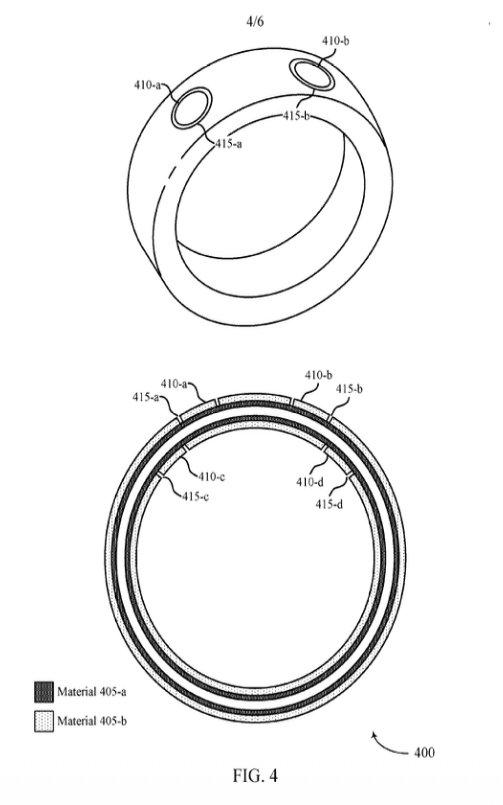
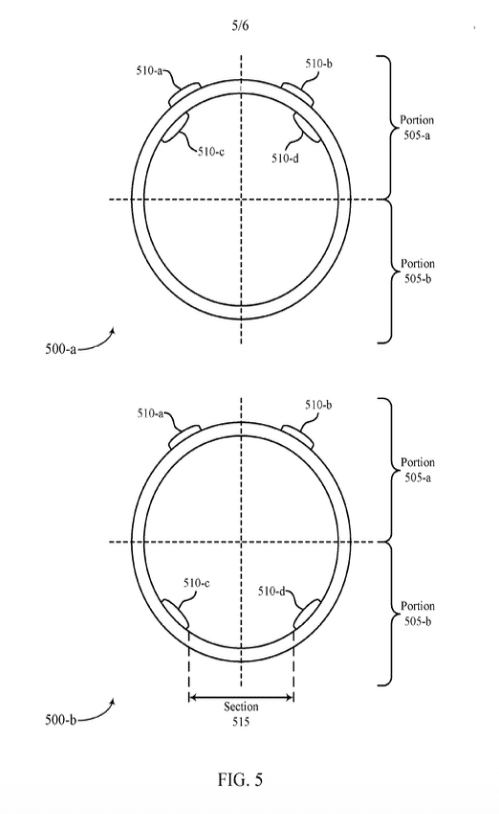
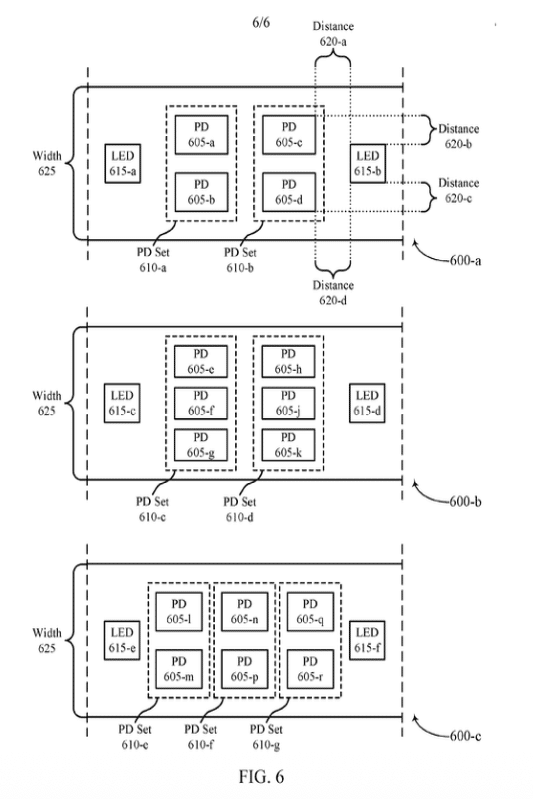
The patent, called “Axial photodetector array for wearable ring devices“, was filed as an international PCT application from the US and published by the World Intellectual Property Organization (WIPO) on August 13, 2026. Rather than relying on photodetectors arranged only around the inner circumference of the ring, Oura proposes placing multiple detectors across its width as well.
This creates something useful. Two photodetectors sitting a known distance apart can pick up slightly different versions of the same pulse wave, including differences in timing and signal characteristics.
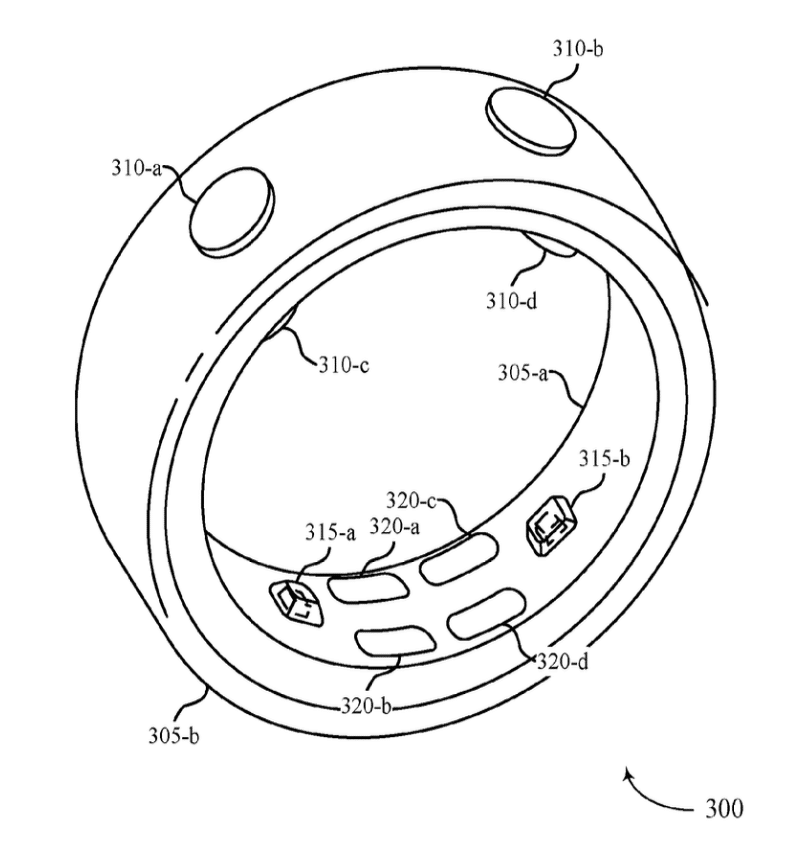
Oura describes comparing those measurements to calculate additional physiological information. In the claims, the company specifically names blood pressure, pulse wave velocity, arterial stiffness and blood viscosity as possible outputs.
The diagrams in the filing make the idea easier to understand. They show several possible layouts, with rows of photodetectors positioned between LEDs across the width of the sensing area. Some versions use four detectors, while others expand that to six.
Effectively, Oura wants several slightly different views of the same pulse. Comparing when those signals arrive, and how they differ, could provide information that a single detector cannot.
Blood pressure is not just a throwaway reference
Patents often contain enormous lists of measurements that a device might theoretically support, so a mention of blood pressure on its own would not tell us much. This filing goes considerably further because blood pressure and other vascular measurements appear directly in the patent claims.
That also makes this filing different from the blood pressure work we covered earlier this year. That previous Oura patent concentrated heavily on pulse timing, synchronisation and calibration. This one looks more like an attempt to improve the raw signal itself by changing the optical hardware inside the ring.
The two approaches could ultimately complement each other. Better optical measurements give the software cleaner data to work with, while the processing system then has to turn those signals into something useful.
Oura also says readings from several photodetectors could simply be averaged to improve the accuracy of ordinary physiological measurements. So even if blood pressure never becomes a consumer feature, the same arrangement could potentially improve existing PPG-based tracking.
There is more hiding in the filing
The patent goes beyond optical sensing. Oura also describes inner and outer electrodes that could create an electrical path through the wearer when they touch the outside of the ring with a finger from the opposite hand.
That arrangement could potentially support ECG, bioimpedance and electrodermal activity measurements. Oura says bioimpedance could provide information related to muscle mass, body fat or hydration, while EDA could be used for things such as galvanic skin response and stress-related measurements.
There is even a reference to NFC for payments, authentication and unlocking external devices. Those ideas sit further away from the core invention, though, so we would not read them as evidence that Oura is preparing an NFC ring.
Still, the direction is pretty clear. Oura is looking at ways of getting much richer vascular information from the finger, and this particular filing shows that the company is attacking the problem at the sensor level rather than relying entirely on software.
Don’t miss the latest from Gadgets & Wearables
Subscribe to our monthly newsletter and check out our YouTube channel.
You can also follow Gadgets & Wearables on Google News and add us as a preferred source in Google Search.

