

Best heart rate monitor 2026: chest straps & arm bands for exercise
If you want more reliable heart rate data during exercise than you typically get from the wrist, there are two main ways to go: a chest strap or an optical armband. Chest straps remain the obvious choice if accuracy comes first, while armbands are easier to put on and generally more comfortable if you do not like having something wrapped around your chest.
Quick picks
Why use a dedicated heart rate monitor?
For everyday tracking, the heart rate sensor on a smartwatch is usually good enough. Things get a bit more demanding once you start using heart rate to control a workout, particularly during intervals, harder runs or sessions where you are trying to stay inside a specific training zone.
That is where a dedicated monitor still makes sense. Chest straps generally react more quickly when your heart rate rises or falls, while armbands can offer a nice middle ground if you want something more comfortable. If you use heart rate zones regularly, the cleaner data can make it easier to judge effort rather than relying entirely on pace or how you happen to feel that day.
Heart rate zones themselves are useful for different types of training. Easier zones are typically used for aerobic and endurance work, while the higher zones come into play during threshold sessions and harder intervals.
Chest strap vs armband vs wrist
The three approaches measure heart rate in slightly different ways. Most chest straps detect the electrical activity produced by the heart with electrodes sitting against the skin. It is essentially a simplified version of the principle used by an ECG, which is why chest straps tend to respond particularly well when intensity changes quickly.
Armbands usually use optical PPG sensing, much like a smartwatch. The difference is where the sensor sits. Moving it higher up the arm can reduce some of the movement and fit issues you get at the wrist, while also making the device much easier to wear than a chest strap for some people.
Smartwatches and fitness trackers are the most convenient option because you are probably already wearing one. They shine light into the skin and analyse changes in blood flow to estimate your pulse. Modern sensors have become very good, particularly during steady exercise, but movement, fit, cold weather and rapid changes in effort can still cause problems.
That is why there is no single best format for everyone. A chest strap still makes the most sense if accuracy is the priority. An armband is a good compromise if comfort matters more, while a wrist sensor is easily the most convenient for everyday use.
How much more accurate is a chest strap?
There is plenty of research showing why chest straps became the reference point for exercise heart rate tracking. One Cleveland Clinic study compared several wrist-based monitors with a Polar H7 chest strap and a three-lead ECG while participants ran on a treadmill.
The chest strap produced the closest agreement with the ECG throughout the test. The Polar H7 recorded a correlation coefficient of 0.98, while the Apple Watch Series 3 came next at 0.96. The other wrist devices tested were lower at around 0.89.
The gap also tended to increase as running speed went up. At rest and during easier activity, the difference between wrist and chest measurements was much smaller. Once participants were working harder, the limitations of optical wrist sensing became more noticeable.
It is worth putting those results into context. The study used devices that are now several generations old, and wrist-based heart rate sensing has improved considerably since then. It also took place on a treadmill rather than outdoors, so it does not perfectly reproduce real-world running.
The broader point still holds, though. Wrist sensors can work very well during steady exercise, but chest straps remain the safer bet when you care about rapid changes in heart rate. That matters most for intervals, threshold work, racing and other sessions where a delayed or incorrect reading can throw off the entire workout.
Armbands sit somewhere between the two. They still rely on optical sensing, so they do not have the same inherent advantage as an electrical chest strap. But moving the sensor away from the wrist often gives it a cleaner signal, while keeping the setup more comfortable and easier to put on.
Best heart rate monitor chest straps
Polar H10

The Polar H10 has been around for a long time now, but there is a reason it is still one of the easiest chest straps to recommend. We reviewed the H10 back when it launched and found it comfortable, accurate and very reliable, and not much has changed on that front.
The soft fabric strap uses silicone dots to stop it moving around during exercise, while the sensor itself can connect to two Bluetooth devices at the same time. ANT+ and Polar’s 5 kHz GymLink transmission are also supported, so it works with a wide range of watches, cycling computers, gym equipment and training apps.
There is onboard memory as well, although it only stores one training session at a time. That is handy if you want to train without carrying your phone, and the H10 is also water resistant to 30 metres for swimming. With up to 400 hours from a replaceable CR2025 battery, charging is something you simply do not have to think about.
It is not the newest heart rate monitor in this guide, nor does it try to throw a long list of extra training metrics at you. What it does very well is deliver dependable heart rate data with excellent compatibility, which is why the H10 remains such a strong all-round choice.
Pros
Cons
Wahoo TRACKR HEART RATE
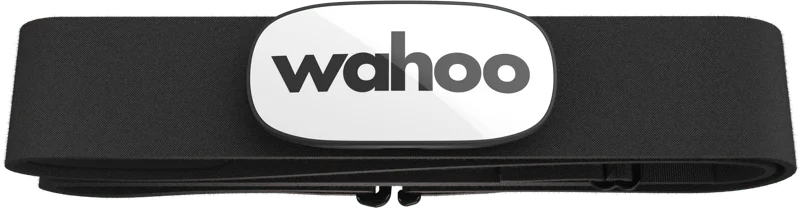
Wahoo TRACKR HEART RATE replaces the old TICKR generation with a much simpler proposition. It is still a straightforward chest strap built around accurate heart rate tracking, but Wahoo has finally moved away from the replaceable coin cell and given it a rechargeable battery.
Battery life is rated at more than 100 active hours, so this is not something you should find yourself charging particularly often. The sensor uses electrical heart rate measurement and can also provide HRV data to compatible apps. There is ANT+ support as well as up to three simultaneous Bluetooth connections, which makes it particularly handy if you train with several devices at once.
Comfort is another area Wahoo has focused on. The strap is slim and soft, while the pod sits fairly flat against the chest. There are also LED indicators that let you quickly check battery and connection status before starting a workout, which is a small thing but genuinely useful when you are trying to get out of the door.
The trade-off is that TRACKR keeps things pretty basic. There is no onboard workout memory, no running dynamics and no attempt to turn it into an all-purpose training sensor. But if what you want is an accurate, rechargeable chest strap that can talk to several devices at the same time, that simplicity is part of the appeal.
Pros
Cons
Myzone Switch 2.0

Myzone Switch 2.0 takes one of the more unusual heart rate monitors around and gives it a fairly substantial refresh. The big idea has not changed. You can wear the same sensor on your chest, arm or wrist, which means you are not stuck with a chest strap every time you want to track a workout.
How it measures heart rate depends on where you put it. On the chest it uses an ECG sensor, with Myzone quoting 99.4% accuracy. Move it to the arm or wrist and it switches to optical PPG, where the company quotes 95%. That flexibility is the real reason to choose it over a conventional chest strap. You can use ECG for harder sessions where accuracy matters most, then move it to the arm or wrist when comfort is more important.
Switch 2.0 also improves quite a few things from the original MZ-Switch. The sensor has upgraded hardware, a larger LED display and redesigned straps, while battery life is now rated at between three and six months depending on use. There is also up to 36 hours of onboard workout storage, so you do not need to keep your phone nearby.
Connectivity is good too, with both Bluetooth and ANT+ for linking to gym equipment, cycling computers and compatible apps. It can also track swimming when worn on the wrist and is waterproof to 10 metres. The downside is that you are paying quite a bit more than you would for a straightforward chest strap, but few alternatives give you this much freedom over how and where you wear the sensor.
Pros
Cons
Garmin HRM 600
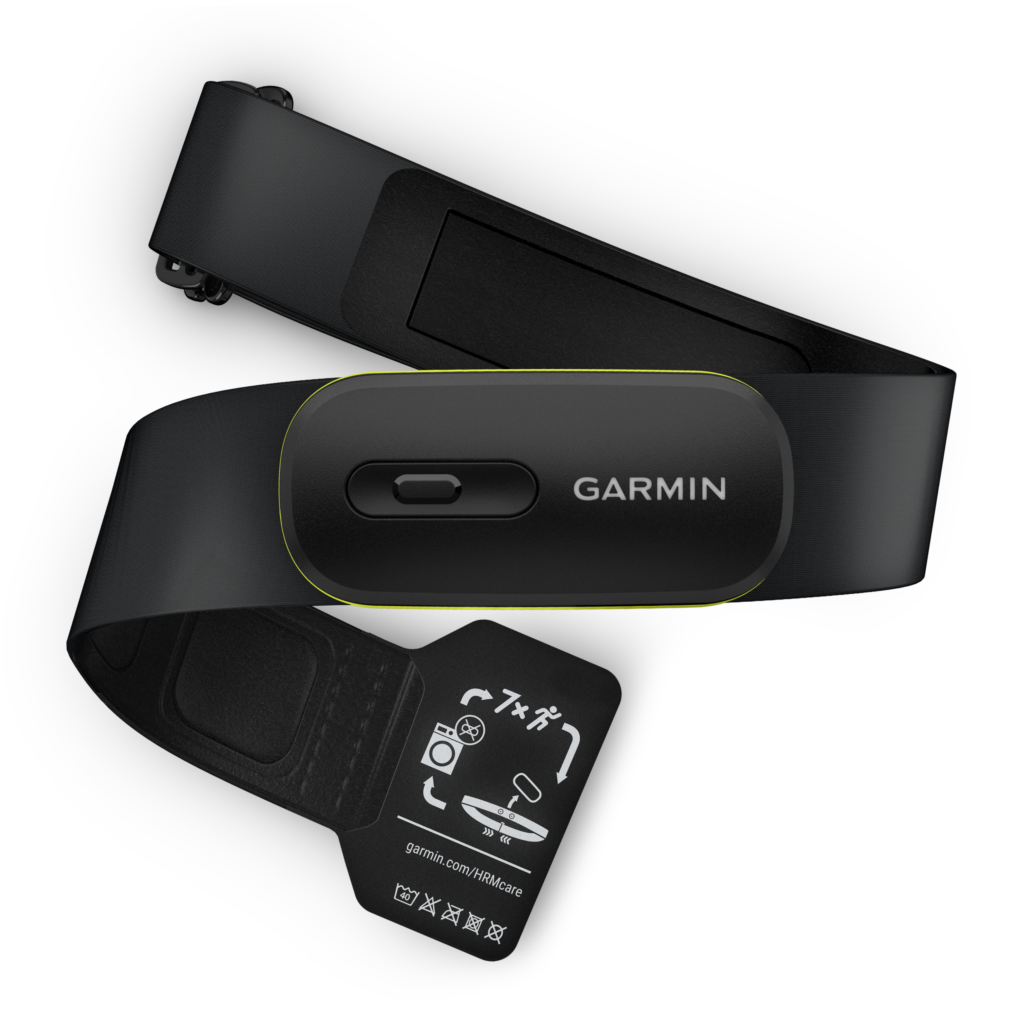
Garmin HRM 600 is the one to look at if you already train with a Garmin watch and want more than basic heart rate data. It sits at the top of Garmin’s current heart rate monitor range, combining an ECG chest sensor with running dynamics, standalone workout recording and swimming support.
Pair it with a compatible Garmin watch and it can add metrics such as stride length, vertical oscillation, ground contact time balance and step speed loss. The latter also feeds into newer features such as Garmin’s Running Economy metric. It can also provide pace and distance during indoor track and treadmill sessions, which makes it quite a bit more useful than a chest strap that simply sends across your heart rate.
The HRM 600 can record an activity even when you are not wearing a watch and sync the session directly to Garmin Connect afterwards. That also comes in handy for swimming, where it can store heart rate data underwater and pass it back to a compatible Garmin watch once the session is finished.
Garmin has also switched to a rechargeable battery this time around. Battery life is rated at up to two months if you use it for around an hour per day, and the sensor module can be removed so the strap itself can go in the washing machine. It is one of the more capable chest straps here, but a lot of that extra capability makes the most sense if you are already firmly inside the Garmin ecosystem.
Pros
Cons
Suunto Smart Heart Rate Belt 2
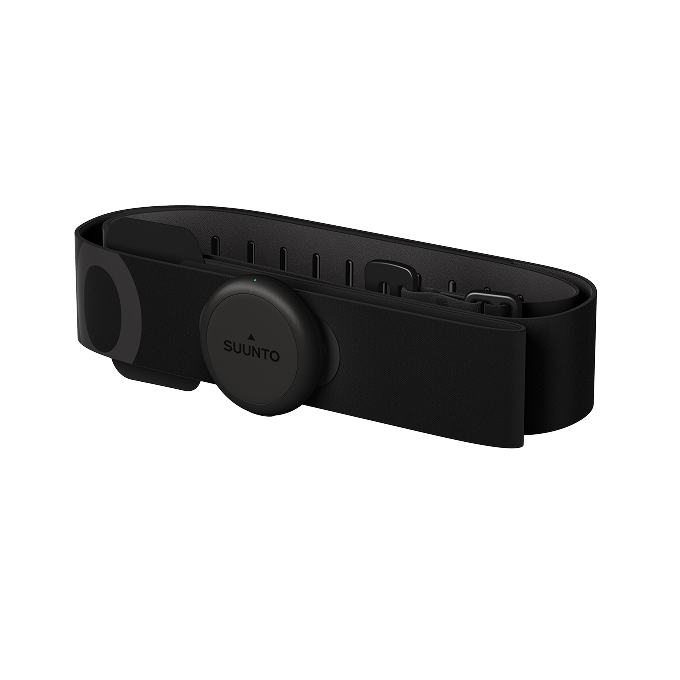
Suunto Smart Heart Rate Belt 2 is a much bigger update than the name suggests. It still handles the basics you would expect from a chest strap, including accurate heart rate and beat-to-beat R-R data, but Suunto has also packed in motion sensors, onboard memory and support for several devices at once.
The six-axis motion sensor is the standout addition. Pair the belt with a compatible Suunto watch and it can measure running metrics including cadence, ground contact time, vertical oscillation, flight time and left-to-right ground contact balance. That puts it much closer to Garmin HRM 600 territory than the simpler chest straps in this guide.
It can also store up to 20 hours of heart rate and R-R data when your watch is out of Bluetooth range. That is useful for swimming, team sports and other workouts where wearing a watch is awkward or not practical. The R-R data is also important for Suunto ZoneSense, which uses beat-to-beat information to assess exercise intensity.
Battery life is another big strength. Suunto quotes around 460 hours from a replaceable CR2032 cell with power saving enabled and running-form tracking switched off. It can also maintain three Bluetooth connections at the same time, although there is no ANT+ support, which is worth keeping in mind if you have older gym equipment or cycling gear that relies on it.
Pros
Cons
Frontier X2 and Frontier Zone

Frontier X2 and Frontier Zone are quite different from the other chest straps in this guide. Heart rate is only part of what they do. Both continuously record a single-lead ECG during exercise and use that signal to produce additional data such as HRV, breathing rate, Cardiac Strain, Training Load and Body Shock.
We have spent plenty of time with both. In our Frontier X2 review, one of the main strengths was the amount of physiological data available beyond heart rate. The newer Frontier Zone keeps that basic idea but simplifies the hardware, removes the small display, switches to USB-C and stretches typical battery life from around 14 days to as much as 30 days.
Both can work independently and save a workout to onboard memory, or broadcast heart rate over Bluetooth to compatible watches, cycling computers and training equipment. You can connect a phone plus two external devices at the same time. There is no ANT+, though, which makes them less flexible than Polar, Garmin and some of the other straps here if you still use ANT+-only equipment.
The Zone is the one we would lean towards now. Battery life is considerably better, the screen on the X2 never added much in practice, and the vibration alerts are genuinely useful for staying inside a training zone without constantly looking at a watch. There is a catch, though. Some features that came as standard with the X2, including live ECG streaming, ECG exports and Garmin Connect integration, now require Frontier Premium on the Zone.
These are also overkill if you simply want accurate heart rate during exercise. Their real appeal is the ability to record ECG continuously while you train and dig much further into what was happening during a session afterwards. They are health and fitness devices rather than replacements for clinical ECG equipment, but they offer a type of data you simply do not get from an ordinary heart rate strap.
Pros
Cons
Wellue VisualBeat Strap-Free HRM

The Wellue VisualBeat is the odd one out here, and that is exactly why it earns a place in the guide. As we found in our hands-on review of the VisualBeat, you can wear it with a conventional chest strap or ditch the strap altogether and attach the sensor directly to your chest using disposable ECG electrode patches.
It still uses electrical heart rate sensing in either setup, so going strap-free does not mean switching to optical PPG. In our testing, the numbers were very close to a Garmin watch paired with a Polar heart rate monitor over a 15km run, and the same pattern continued across other workouts. The patches were also noticeably less obtrusive than wearing a band around the chest.
There is quite a bit packed into the sensor too. It has Bluetooth and ANT+, can record without your phone, and stores up to 10 sessions or 30 hours of data in total. The ViHealth app gives you live heart rate and ECG, while configurable vibration alerts can warn you when you move above or below your chosen heart rate thresholds.
The strap-free setup does have limitations. We found that the adhesive patches can start to come loose during particularly sweaty or intense workouts, in which case the regular chest strap is the safer choice. IP22 protection also means this is not a monitor for swimming. But if you dislike wearing a traditional chest strap and still want electrical heart rate sensing, the VisualBeat offers something genuinely different from the rest of this list.
Pros
Cons
Best heart rate monitor armbands
Polar Verity Sense

Polar Verity Sense is the armband we would put at the top of the list right now. We covered the Verity Sense when it first arrived, and the basic idea still works very well. Instead of wrapping a sensor around your chest, it sits on your upper or lower arm and measures heart rate optically.
Comfort is the big attraction. The sensor itself weighs just 5 grams and the complete setup comes in at 19 grams, so it is easy to forget about once you start training. Moving the optical sensor away from the wrist also helps avoid some of the fit and movement problems you get with watches, although it is still an optical sensor and can lag behind an ECG chest strap when heart rate changes very quickly.
Polar has packed in plenty of useful extras as well. Battery life is now rated at up to 30 hours, while the 16MB of internal memory can store as much as 600 hours of training. You can record a workout without carrying your phone, or broadcast heart rate live using ANT+ and two simultaneous Bluetooth connections. Bluetooth range stretches to as much as 150 metres with the sensor in its holder.
Swimming is another area where the Verity Sense stands out. It comes with a clip that attaches the sensor to your swimming goggles, placing it against the temple rather than the arm. In swimming mode it can record heart rate as well as pool metrics, and WR50 water resistance means it is built for regular use in the water. If you want something more comfortable than a chest strap without giving up serious training features, this is probably the most complete armband option here.
Pros
Cons
Scosche RHYTHM24

Scosche RHYTHM24 has been around for a while, but it still has a few tricks that most optical armbands do not. In our RHYTHM24 review, we found it comfortable, easy to wear and remarkably close to a Polar H10 chest strap during running.
It uses a combination of green and yellow optical sensors and can be worn on either the upper or lower arm. Once the strap is adjusted properly it stays in place well, and for anyone who dislikes having something wrapped around the chest, it is a much less intrusive way of getting heart rate data.
Where RHYTHM24 still stands out is the feature set. There are separate running, cycling, swimming, heart rate and HRV modes, along with duathlon and triathlon modes. It also has up to 13 hours of onboard memory, so you can train without carrying a phone or watch and upload the workout afterwards.
Battery life is rated at up to 24 hours and connectivity covers both Bluetooth LE and ANT+. IP68 water resistance also means it can be used for swimming, although heart rate is recorded to the device rather than transmitted live through the water. The hardware remains capable, but the software side has never been its strongest point. In our testing, the Rhythm Sync app felt much more basic than the hardware deserved.
Pros
Cons
Wahoo TICKR FIT
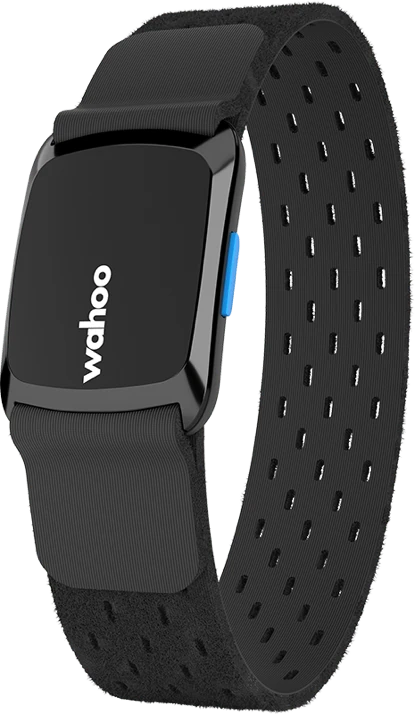
Wahoo TICKR FIT keeps things much simpler than the other two armbands in this guide. There is no onboard memory, swimming mode or long list of extra metrics. You put it on your arm, pair it with your watch, bike computer or phone and use it as an external heart rate sensor.
It uses an optical sensor and can be worn on the forearm or upper arm, with small and large straps supplied in the box. The whole setup weighs just under 20 grams, so it is easy to forget about during a workout. Wahoo also includes LED indicators that confirm when the sensor is switched on and connected.
Connectivity covers both Bluetooth and ANT+, although Bluetooth is limited to a single connection. Battery life is a strong point at up to 30 hours per charge, which actually puts it slightly ahead of both the Polar Verity Sense and Scosche RHYTHM24 on paper.
We have also compared TICKR FIT with competing optical armbands in our Polar OH1+ review. The appeal remains much the same today. It is comfortable, straightforward and widely compatible, but it lacks the onboard recording and swimming features you get from Polar and Scosche. If all you want is an optical heart rate sensor that sends your numbers to another device, that simplicity can work in its favour.
Pros
Cons
Don’t miss the latest from Gadgets & Wearables
Subscribe to our monthly newsletter and check out our YouTube channel.
You can also follow Gadgets & Wearables on Google News and add us as a preferred source in Google Search.


If you do a follow-up post it would be good to include those wearables that include heart rate and breathing tech directly in the fitness garment.
This is a great article! I really appreciate the time and effort that went into making this article. I was wondering if there are any articles that include recommendations. I was also wondering if the MyZone heart monitor connects to any other apps (like MapMyRun).
For once, some decent data/feedback on questions I have been asking for many years! I have had a heart condition for 13 years and have always used a SUUNTO. It has tracked very well against all ECGs (within 1-2 bpm), however, it can give very wayward results that leave me frustrated at times. For instance, this morning, when I started training, my heart rate suddenly dropped 11bpm, then shot up 26 and started to normalise after about 7 mins…. So I am researching which chest straps are currently the most accurate (as one of my doctors once said- the closer to the heart that you measure, the more accurate the reading will be. If we wanted to use your wrist for ECGs, we’d put the electrodes there!).
What’s the cheapest fitness tracker can I use to connect to these external heart rate sensors?