

Suunto Smart Heart Rate Belt 2 adds running dynamics and much more
Suunto Smart Heart Rate Belt 2 is much more than a cosmetic refresh of the old chest strap. It adds running dynamics, three simultaneous Bluetooth connections, 20 hours of onboard memory and a redesigned ECG measurement system aimed at producing cleaner heart rate and R-R data.
It arrives alongside Suunto Run 2 and is clearly aimed at people doing more serious endurance training. The old belt was basically a very good heart-rate sensor. This one is starting to look more like a heart-rate belt and running dynamics pod rolled into one.
View on Suunto’s website.
Running dynamics are the big addition
Smart Heart Rate Belt 2 uses a six-axis IMU to measure running form when paired with a compatible Suunto watch. It tracks cadence, ground contact time, vertical oscillation, flight time, GCT/FT ratio and left/right ground-contact balance.
That is a much bigger feature jump than we normally see with a chest strap. The original Smart Heart Rate Belt does none of this, with its job largely limited to heart rate, R-R intervals and storing data when the watch connection disappears.
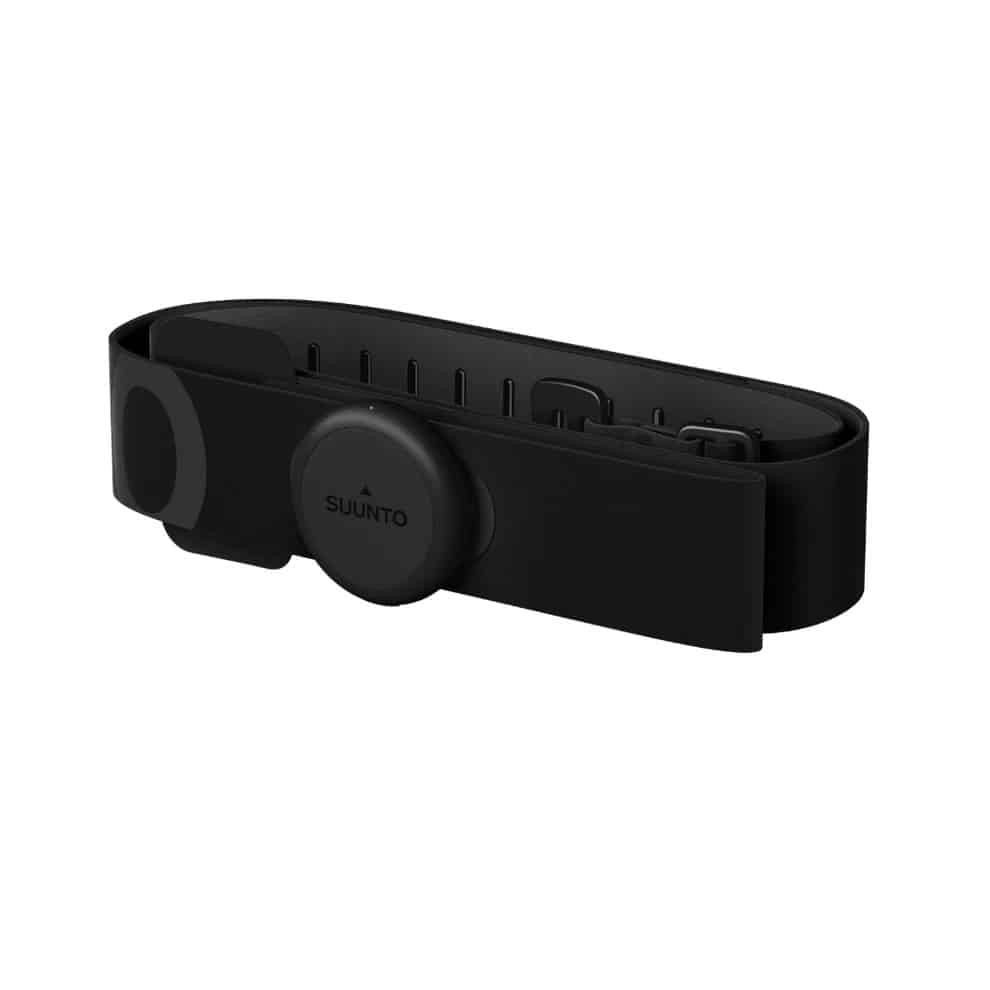
Adding a six-axis movement sensor puts Belt 2 into a different category. It can now do some of the work that previously required a separate running pod or another sensor capable of analysing movement.
The chest is also an interesting place to collect these measurements. It gives Suunto a stable reference point around the torso rather than trying to infer everything from wrist movement, and it should make it easier to see how running form changes as pace increases or fatigue starts to creep in.
For runners, this is probably the strongest reason to choose the new model over the old one. Running-form measurement does require a compatible Suunto watch, so this is not a completely standalone running dynamics sensor.

Suunto has also worked on cleaner ECG data
Both generations measure electrical activity from the chest, but Suunto has put quite a bit of work into cleaning up the signal on Belt 2. The new model uses ECG-based detection to identify QRS-complex artifacts affecting heart-rate and R-R interval measurements.
The strap construction has also been changed to reduce ESD noise, which can be introduced by things such as dry synthetic clothing. Suunto says the combination produces a heart-rate trace that follows intervals, sustained surges and long efforts more consistently.
The R-R interval side of this is particularly important for ZoneSense. ZoneSense looks at beat-to-beat data to estimate physiological intensity, so poor R-R data gives the algorithm worse raw material to work with.
ZoneSense itself is not exclusive to Belt 2. The original belt already provides the R-R information needed by the feature, but Suunto is clearly pitching the new belt as a better source of that data, particularly when training becomes harder and signal quality is more difficult to maintain.
Bluetooth finally catches up
Smart Heart Rate Belt 2 can maintain three simultaneous Bluetooth connections. That means the same live heart rate can be sent to something like a Suunto watch, bike computer and phone at the same time.
The old belt can remember multiple paired devices, but only one Bluetooth connection can actually be active at once. That increasingly felt restrictive, particularly for cyclists and anyone using indoor training platforms alongside a watch.
Moving from one active connection to three is therefore a proper upgrade rather than a spec-sheet extra. Suunto also describes the Bluetooth connection as protected, which should help reduce unwanted connections and interference when lots of sensors are operating nearby.
Running-form data is more restricted than basic heart rate. Suunto says the running metrics are available with compatible Suunto watches, while standard live heart rate can be sent across all three Bluetooth connections.
Onboard memory jumps to 20 hours
The memory system gets a significant upgrade as well. Smart Heart Rate Belt 2 can hold up to 20 hours of rolling workout data directly on the transmitter.
A compatible Suunto watch can read that information back using timestamps if the Bluetooth connection is temporarily interrupted. That means gaps in the live connection do not necessarily become gaps in the final workout record.
The original belt already has onboard memory, but its capacity is much smaller. Suunto quotes roughly 3.5 hours of stored measurement data at 120 bpm for the older model, so the move to 20 hours is substantial.
This also makes the belt much more useful for very long sessions and situations where maintaining a continuous Bluetooth connection is difficult. Workout-memory support requires a compatible Suunto watch.
The strap has been reworked too
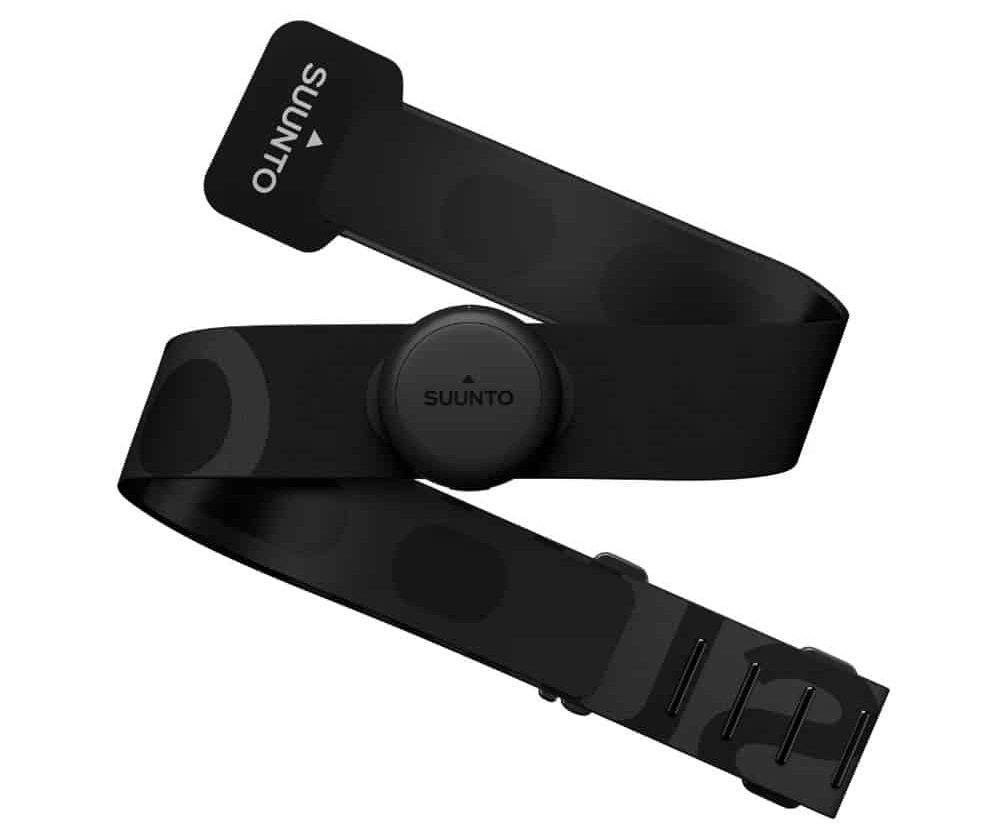
Suunto has made the transmitter more compact and paired it with a softer strap. Silicone grip sections help keep it from moving during harder sessions, which should mean fewer mid-run adjustments.
The new construction also plays a role in reducing electrical interference. That matters because chest straps can become surprisingly sensitive to clothing, moisture and movement, particularly early in a session before the electrodes have good contact.
There is also a status LED and button-controlled pairing, both of which make the belt easier to deal with away from a phone or watch screen. These are small changes individually, but chest straps tend to live or die on exactly this sort of day-to-day usability.
The new model is listed with an M/L strap covering 74 to 125 cm. The outgoing belt uses separate S, M and L options, so anyone outside that range will want to pay attention to the strap options available in their market.
Battery life is slightly lower
Suunto rates Smart Heart Rate Belt 2 for approximately 460 hours of use. That is slightly below the roughly 500 hours quoted for the original Smart Heart Rate Belt, although both figures are long enough that battery changes should remain infrequent.
The new transmitter uses a replaceable CR2032 cell rather than the CR2025 battery found in the old model. So while the battery itself is larger, the extra IMU, memory and connectivity hardware means rated runtime actually comes down slightly.
That is not really a meaningful downside in normal use. At 460 hours, someone training ten hours per week would still be looking at close to a year between batteries.
Suunto Smart Heart Rate Belt 2 vs Smart Heart Rate Belt
The original Smart Heart Rate Belt remains perfectly capable if all you want is reliable chest-based heart rate and R-R data for ZoneSense. Its battery life is actually slightly longer too, so there is no reason to replace it just because a newer version exists.
Belt 2 is aimed at a broader job. The six-axis IMU turns it into a running-form sensor, three simultaneous Bluetooth connections make it much easier to use across several devices, and 20 hours of rolling memory is a major increase over the old belt.
The signal-quality work may end up being just as important. Better protection against QRS artifacts and ESD noise is not the sort of thing that looks exciting on a product page, but cleaner R-R data matters if you use ZoneSense and train by intensity.
For existing owners, the choice is pretty straightforward. If you only need heart rate and ZoneSense, the original remains fine. If you want running dynamics, longer onboard memory or regularly send heart rate to several devices at once, Smart Heart Rate Belt 2 is a much more substantial upgrade.
View on Suunto’s website.
The new belt also has plenty of competition, so we’ve included it alongside Garmin, Polar and other options in my heart rate chest strap buying guide.
Don’t miss the latest from Gadgets & Wearables
Subscribe to our monthly newsletter and check out our YouTube channel.
You can also follow Gadgets & Wearables on Google News and add us as a preferred source in Google Search.

