

Prungo FluxGo review: When red light therapy feels like it’s doing something
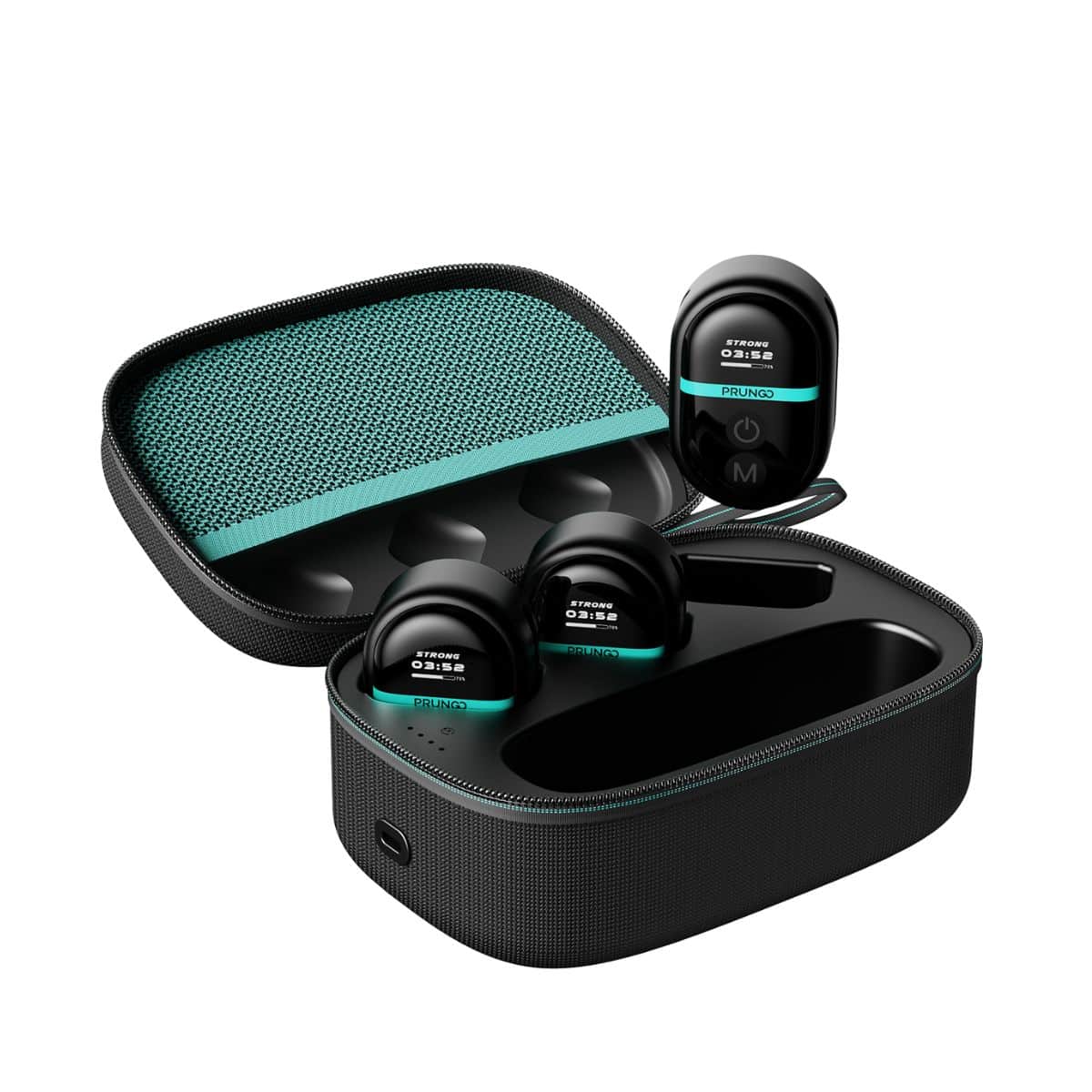
Prungo FluxGo
Pros
- Helps reduce pain, inflammation and improve mobility
- Built for targeted use, not full-body overkill
- Compact and easy to travel with
- Wavelengths and output match clinical standards
- No app, no syncing, just press and go
Cons
- Not ideal for very curved or awkward areas
- Strap setup takes a bit of practice
- Charging time is slow compared to use time
The Prungo FluxGo looks like something out of a sci fi drawer, but it’s really just light aimed at sore joints and muscles. You strap it on, press a couple of buttons and let it run while you get on with whatever you’re doing.
I’ve been using it to see if it helps with my tennis elbow and sore shoulder. Here’s what it’s like to live with a wearable light therapy device that promises recovery without the fuss.
Prungo FluxGo: One minute review
FluxGo is for people who are dealing with a specific issue and want something they can actually stick with. You’re not buying a smart device with tracking or a panel that lights up half the room. You’re getting a focused, portable setup. That’s the design. If you want to deal with sore knees, stiff shoulders, tight hamstrings or anything else that needs repeat attention, this gives you a way to do that without changing your whole routine. Strap it on, press a couple of buttons and move on with your day.
You feel it straight away. There’s a clear calming effect after each session. It’s not a magic fix that resolves the problem in a single go. But the area feels better almost immediately, like the edge has been taken off. With regular use, that effect builds. The soreness eases off faster, movement gets easier, and it feels like the recovery process is actually shifting. That lines up with what this type of light therapy is meant to do.
The strap system takes a few tries to get right, and it won’t sit perfectly on every part of the body without adjustment. But once you’ve figured out the best fit for your use case, the setup becomes easy to repeat. You can use it while working, watching something or walking around the house.
This is not a general wellness device for full-body recovery. It’s not made for that. It’s for people who have one or several areas that need regular attention and want something they can use without thinking about it. If that’s what you’re after, FluxGo makes sense.
You can check out Prungo FluxGo on Prungo’s website. Use code INY15 at checkout for 15% off.
Jump to
Prungo FluxGo: Design, hardware
Look & feel
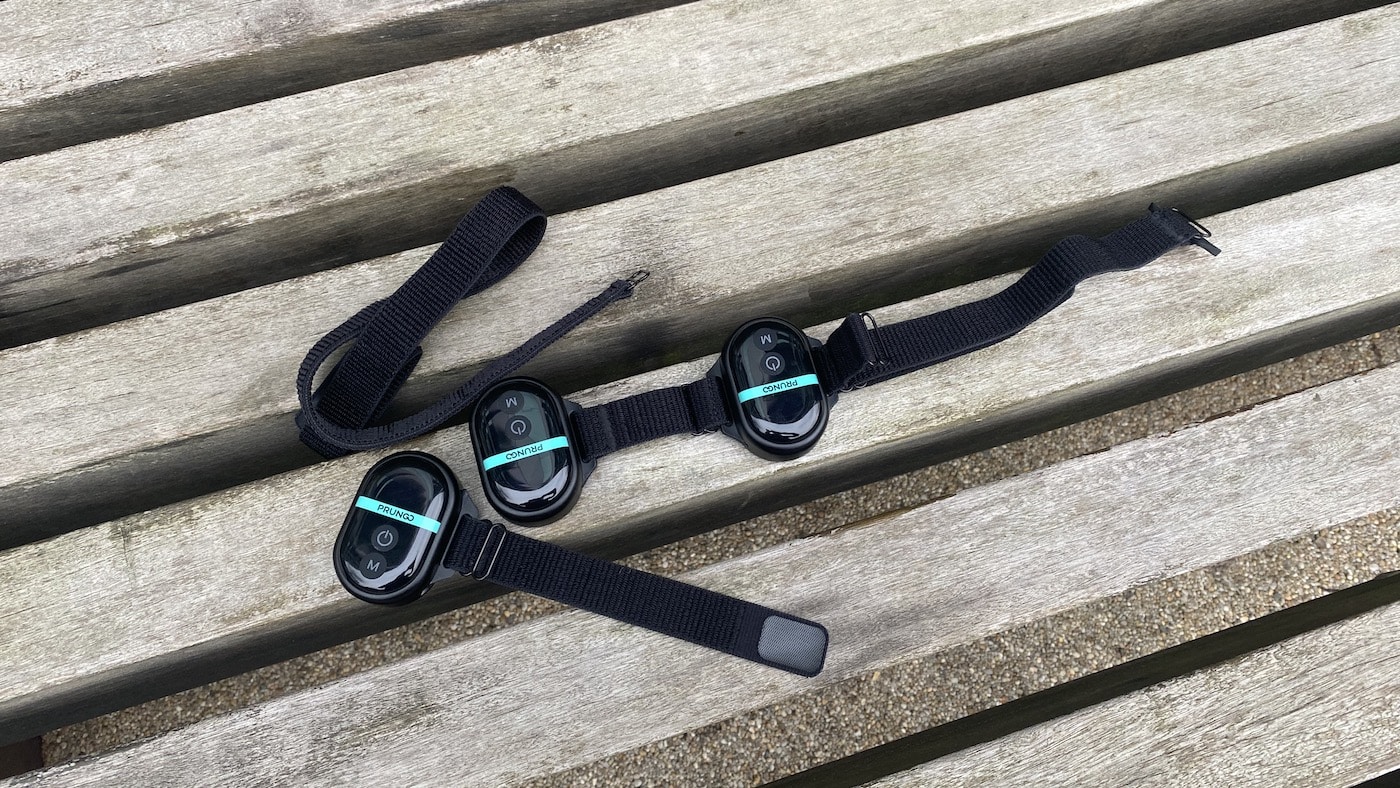
The FluxGo comes in a compact zip-up case. The whole thing is small enough to throw in a backpack and sturdy enough not to feel disposable. Inside, the three modules are docked in place, with the strap and cable tucked in the appropriate departments. You open the box and immediately understand what everything does.
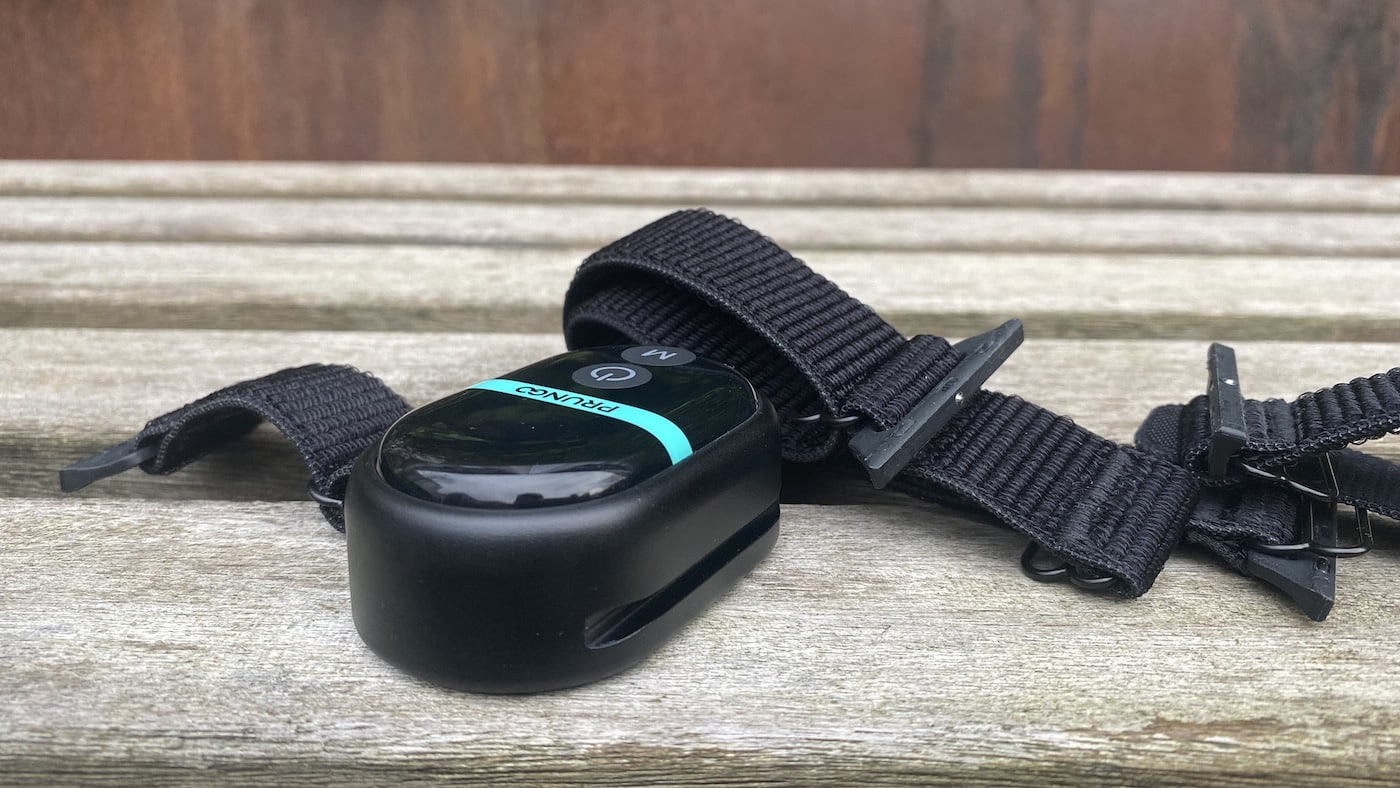
Each module is roughly palm-sized, 72 x 48 x 29 mm as per my measurements, and weighs around 115 grams. That weight is noticeable in the hand but not excessive. It gives the impression of proper hardware rather than a lightweight wellness gadget.
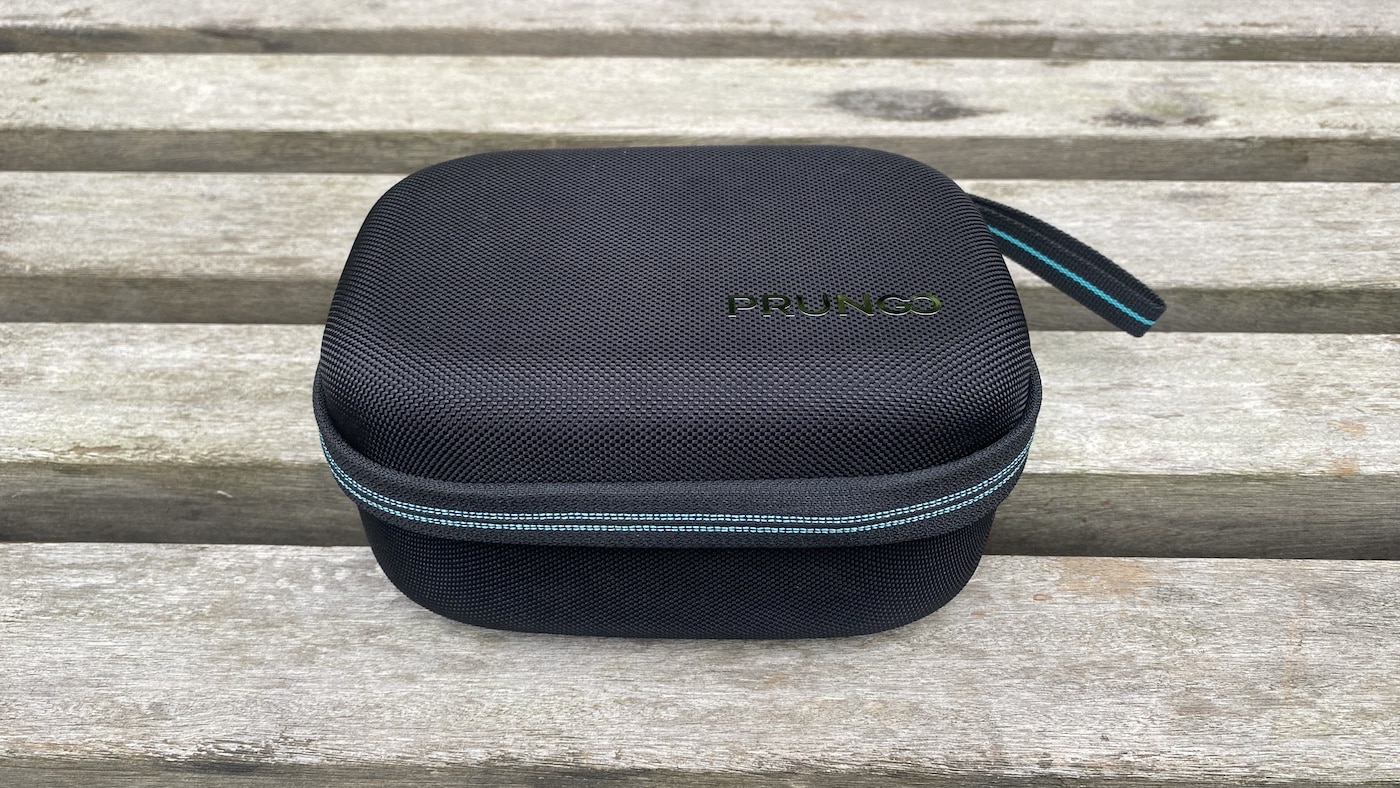
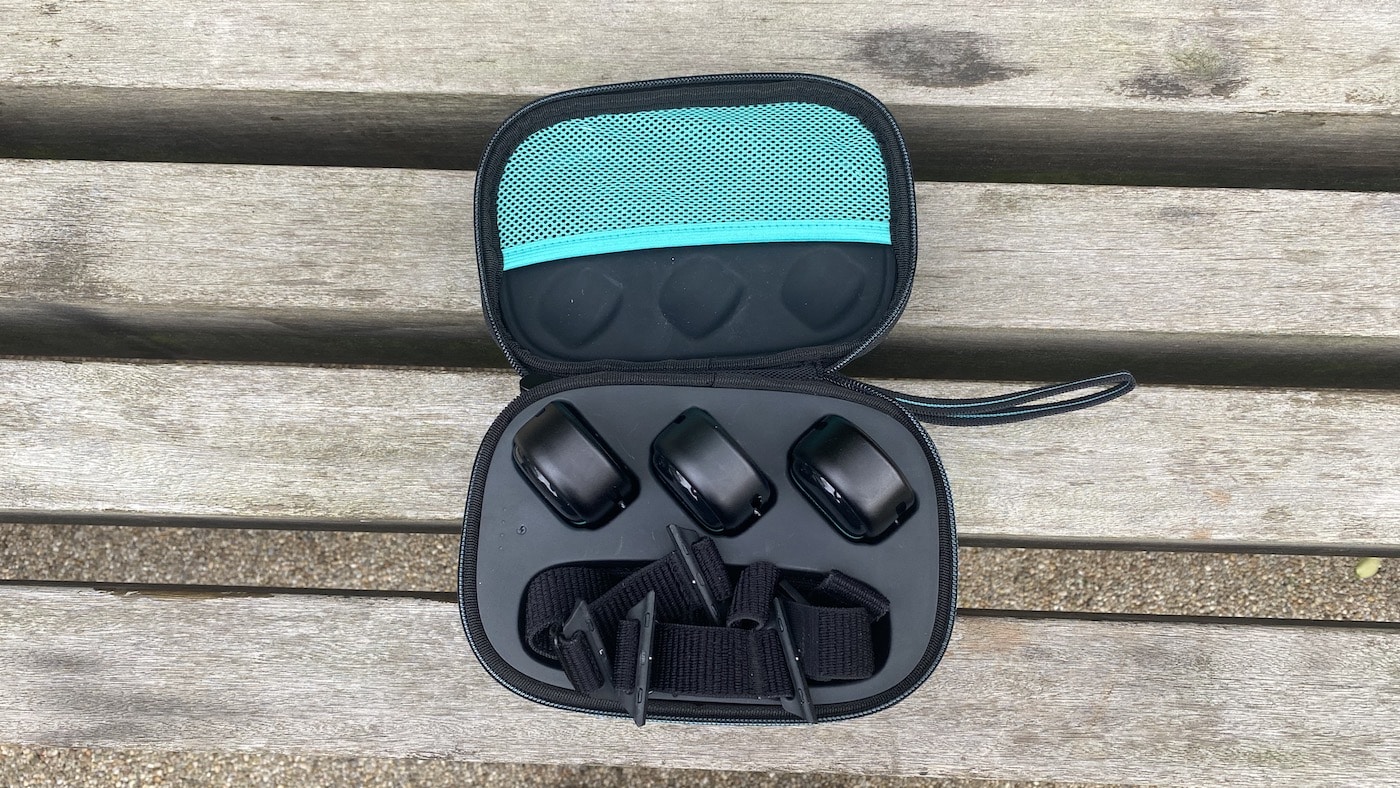
In use, it feels most at home on bigger joints like knees or shoulders where there’s enough space to lay out the modules and get the strap sitting tight without much hassle. That said, you can still wrap it around smaller areas if you’re willing to tweak the setup a bit.
On the top of each module there are two physical buttons. That’s the only control. No smartphone app or any such non-sense.
Press one button to start, the other to cycle through the three modes. Simple and to the point. A small LED display shows which mode you’re in and a countdown timer. It’s visible but not distracting. Just as it should be.

Getting everything aligned takes a bit of patience at first. The modules don’t automatically sit flat on curved areas, so you’ll need to adjust angles and spacing. Once you’ve figured out the right layout for a body part, it becomes repeatable. The modules stay put even if you move around or change position. It also takes a bit of time to figure out how to connect the strap to the modules. But, as mentioned, you don’t really need an instruction booklet. After a bit of experimenting you will get the hang of it.
The modules are rated IP65, so sweat and splashes aren’t a problem. You don’t need to baby them during use, but they’re clearly not meant for showers or full water exposure. Overall, the materials and construction feel deliberate and durable. Nothing feels fragile, decorative or overdesigned. It’s a tool that expects to be handled often and without ceremony.
You can take this thing anywhere. It’s light, it packs down small, and it doesn’t make a big deal out of itself. Throw it in a gym bag, use it at home, bring it on a trip, whatever. It’s made to be used.

Worth mentioning, this isn’t my first red light therapy device. I tested the Kineon Move+ Pro a few months back, and I’ll be doing a separate piece soon that looks properly at how the two compare.
Purely on design, though, I’d lean toward Prungo. The light modules are noticeably larger than the ones on Kineon, which lets you cover more area at once. The strap setup is also simpler and quicker to deal with. Add in the lower price, and Prungo starts to look like the more practical option overall.
Under the hood
Each module in the FluxGo uses a mix of red and infrared light. You get 18 red LEDs at 660 nanometres and 12 laser diodes at 850 nanometres. The lasers are VCSELs, which means the beam is more focused than what you get from standard LEDs. There’s also a lens in front of the light source and a polarising filter over the infrared to help push the light deeper. Prungo says it can reach three to five centimetres into tissue depending on the area.

There are three modes to pick from, Mild, Mid and Strong. Each one runs a timed session. Mild is 8 minutes, Mid is 15, Strong is 20. You control it using the buttons on top of each module. In the strongest setting, the LEDs put out just over a watt per module, and the lasers stay at 48 milliwatts. Prungo lists the surface irradiance between 65 and 100 milliwatts per square centimetre depending on the mode.
Here’s a table that cleanly lays out the performance in each mode.
Mode | Session length | LED output | LED irradiance | Laser output | Laser irradiance |
|---|---|---|---|---|---|
Mild | 8 minutes | 18 × 50 mW LEDs (900 mW per unit) | 65 mW/cm² | 12 × 4 mW VCSEL lasers (48 mW per unit) | 50 mW/cm² |
Mid | 15 minutes | 18 × 55 mW LEDs (990 mW per unit) | 70 mW/cm² | 12 × 4 mW VCSEL lasers (48 mW per unit) | 75 mW/cm² |
Strong | 20 minutes | 18 × 60 mW LEDs (1080 mW per unit) | 80 mW/cm² | 12 × 4 mW VCSEL lasers (48 mW per unit) | 100 mW/cm² |
When a session ends, the module gives a short beep and shuts off. Built-in safeguards cover overcurrent, overvoltage and low battery shutoff.
Battery life
Each module runs for about 75 minutes per charge. That’s enough for at least three or four sessions depending on the mode. You can see a tiny battery left percentage on the display of each module.

Charging is done through the case, which also works as storage. It has a built-in 10000 mAh battery and can recharge the modules several times before you need to plug it in. Just drop the modules into the slots and they click into place. No cables, no lining anything up. The case charges over USB-C and has a row of lights on the front to show how much juice it’s got left.
There’s also a little proprietary cable in the box that you can use to charge a pod without the storage case by connecting directly to a USB port. Which might come in handy on occasion.
Tech specs
Feature | Specification |
|---|---|
Dimensions | Module: 72 x 48 x 29 mm; charging case:187 × 135 × 96 mm |
Weight | 115g per module; 970 g (with charging case) |
Light sources | 3 x modules per unit, LED x 18 (per unit), Laser x 12 (per unit) |
Technology | LED Light Equipped with Focusing Lens |
Wavelength | 660nm deep red LEDs, 850nm Infrared lasers |
Treatment modes | Mild/Mid/Strong |
Operation | Wearable, hands-free, portable, rechargeable |
Target areas | Any joint or muscle (knees, shoulders, hips, back, neck, etc.), treatment depth 3-5cm |
Strap system | Adjustable straps with modular design |
Display | Digital timer and battery display |
Materials | Durable, medical-grade construction |
Water-resistance | IP65 |
Battery | Rechargeable Lithium-ion, module: 700mAh; charging case: 5000mAh. 75 mins battery life on single charge. Case/module charging time – between 3.5 and 4 hours from zero to full. |
Safety | Non-invasive, drug-free, side-effect free |
Warranty/guarantee | 30-day money-back guarantee |
Price | $399 |
Prungo FluxGo: How to use
There’s nothing complicated about using the FluxGo. As mentioned – press and hold the power button on the module to turn it on. Then press the mode button to cycle through Mild, Mid or Strong. Once you’ve picked a mode, hit the power button again to start the session. That’s it. Each session runs on a timer, so you don’t need to watch the clock.
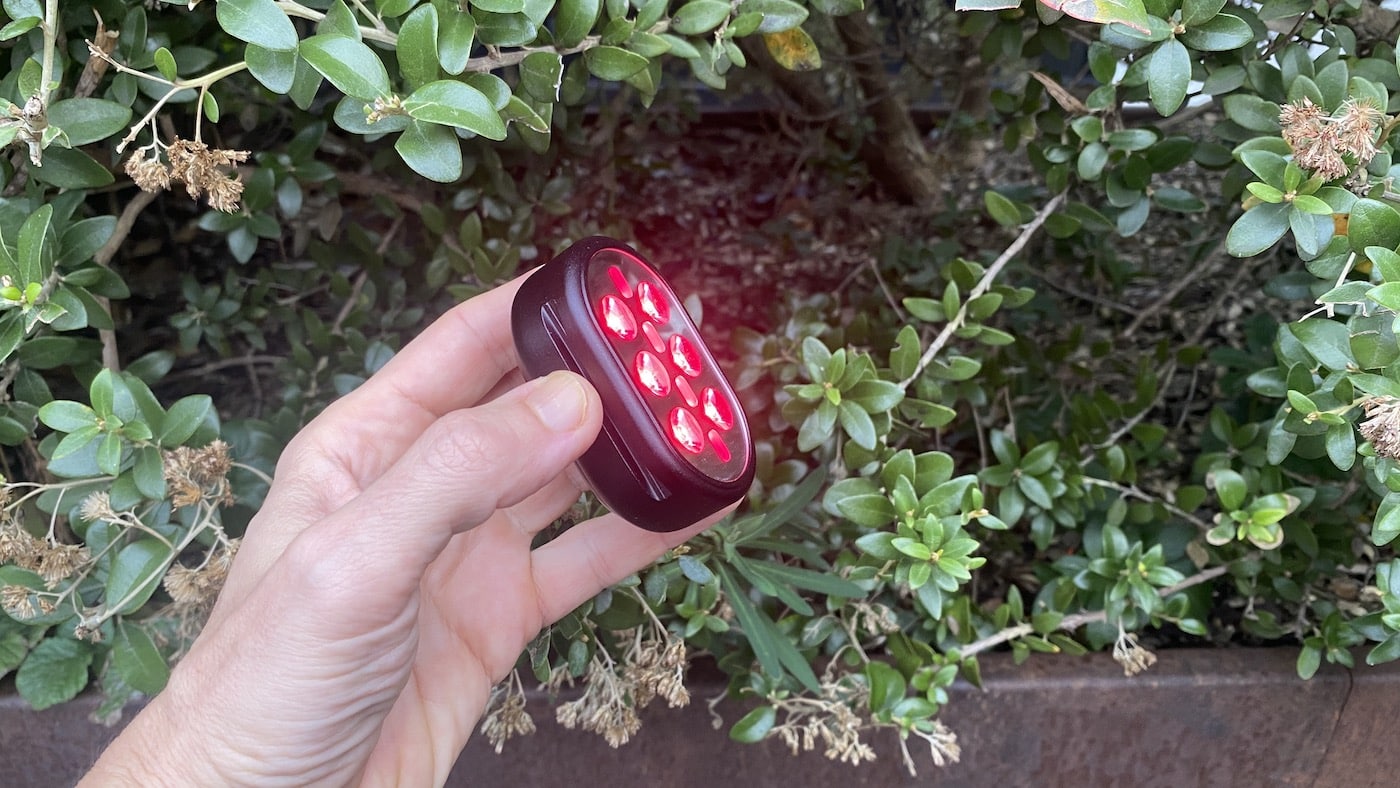
You can use one, two or all three modules at once. Strap them where you want them, line them up as flat as you can, and let them run. If you’re covering a knee or shoulder, it’s easy to stack the modules side by side. For a longer muscle like a hamstring, you can spread them out a bit more. You’ll need to tweak the position sometimes during the first few tries, but once you’ve figured out your setup, it’s quick to repeat.
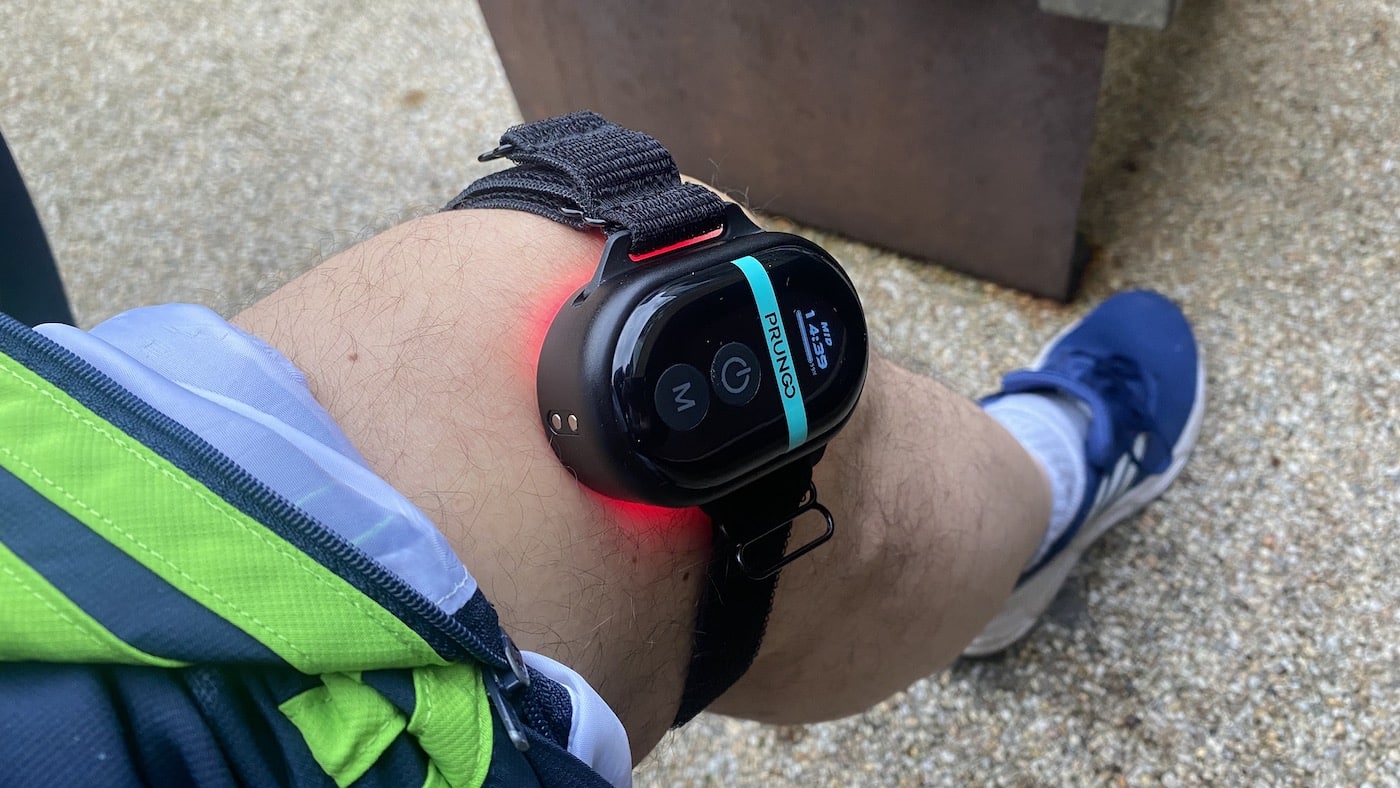
You don’t need to stay still while it’s running. Most people just wear it while sitting at a desk, watching TV or moving around the house. Under the light, you will feel a bit of warmth that sinks in deep. Once the session ends, the module beeps and shuts off. You can restart it or switch modes right away if you want another round.
Pick one area and use it every day. That’s how you’ll actually see results. It’s not something you use once and forget about. The company suggests you use it twice per day on the effected areas.
For smaller aches, you might feel a difference after a few sessions. If it’s something more stubborn, give it a couple of weeks. After you’re done, give the modules a quick wipe if they’re sweaty and drop them back in the case so they’re ready to go again. That’s all there is to it.
Effectiveness
Of course, the all important question is – does it work?
I’ve been using it mainly for tennis elbow, which I somehow picked up without actually playing tennis. It’s been nagging me for months. The same strain, picked up while carrying wood, also left my right shoulder sore.
From the first session with Prungo, I felt immediate relief. More of a soothing effect than anything dramatic. It didn’t fix my elbow or shoulder in one go, but after each session there was a clear improvement. The aching felt dialled down. I’ve been using it on those areas a few times a day, and over time I can feel both the tennis elbow and the shoulder slowly improving. There’s definitely a noticeable difference.
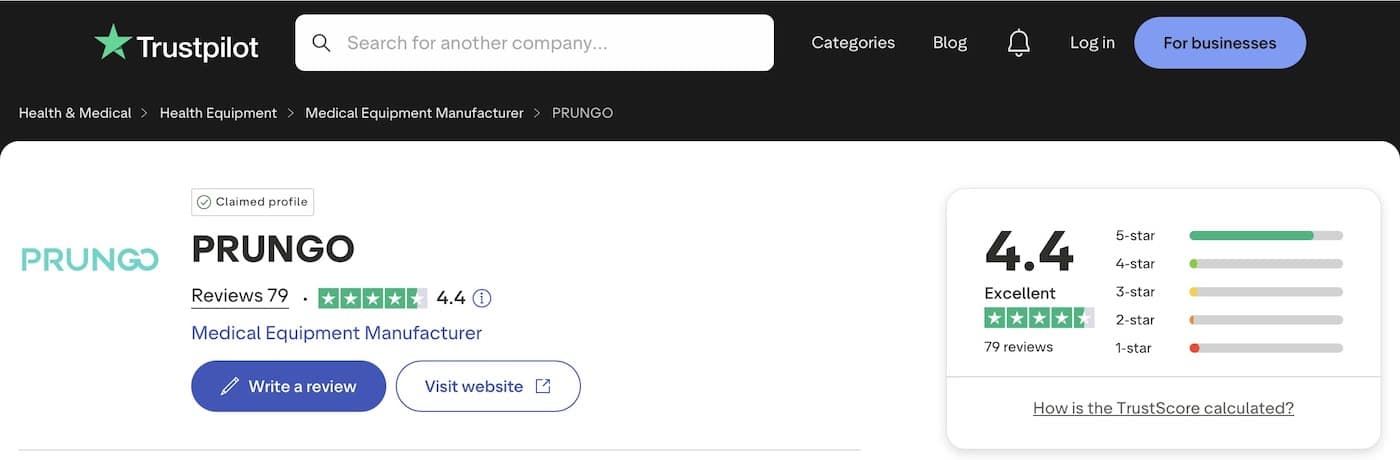
And my view seems to be in line with what you see on Reddit, Trustpilot (where it has a 4.4 rating out of 5), and other social and review sites. Most people using FluxGo say it helps if you stick with it.
You see a lot of posts about joint pain easing up after a week or two of regular sessions, especially for knees, shoulders and elbows. It’s not instant but people talk about less stiffness, quicker recovery and being able to move more easily after using it daily. A few mentioned that when they stop for a few days, they feel it. The soreness creeps back in. That matches up with how this kind of therapy usually works.
Plenty of users also compare it to red light panels and pads, saying FluxGo works better in smaller areas and is easier to wrap around joints. Some say they feel a warm, relaxing sensation during a session and more flexibility afterwards. It’s not all glowing reviews. A few say they didn’t notice much at first or that it took a while before anything changed. But the general takeaway is that if you use it regularly, and you’re not expecting miracles, it can actually make a difference.
This isn’t for full-body stuff. It’s for hitting one spot over and over. Easy to use, easy to stick with. That’s what makes it work.
What about the science?
There’s actual science behind red and infrared light therapy. Research into photobiomodulation, which is the formal name for this kind of low-level light treatment, shows it affects cells and tissues in specific ways.
Light in the 660 and 850 nanometre range interacts with mitochondria inside cells, which can boost ATP production, improve blood flow, and reduce inflammation and oxidative stress. This mechanism is well described in a widely cited review published in the journal Medicine, which explains why these wavelengths are commonly used in clinical rehab and pain management settings.
When you look at outcomes, the evidence is fairly broad. A large systematic review published in BMJ Open found that red and near-infrared light therapy can reduce pain and improve function in people with musculoskeletal conditions, including knee osteoarthritis and chronic joint pain.
Other reviews have reported benefits for conditions like fibromyalgia, lower back pain, and post-surgery recovery, especially when treatment is applied consistently over time rather than as a one-off session. For example, a review in Frontiers in Pain Research looked at whole-body red and near-infrared light exposure and found reductions in pain scores and improvements in quality of life for people with chronic pain conditions.
It’s also worth saying that results aren’t identical across every study. Some trials show mixed outcomes depending on dosage, treatment duration and the condition being treated, as discussed in a recent analysis published in PLOS One.
Still, the overall picture is that red and infrared light therapy can help with pain, inflammation, and recovery when used properly and regularly. Which is exactly the context devices like FluxGo are designed for.
Buy if, don’t buy if
Buy if
- You want to target one or several specific pain or sore spots daily
- You like gear that’s simple to use with no app or setup
- You prefer wearable light over big panels
- You’re okay with putting in a bit of consistent time
- You want something you can toss in a gym bag or backpack
Don’t buy if
- You want full-body light therapy coverage
- You expect instant, dramatic results
- You need data or tracking with an app
*We are a review site that receives a small commission from sales of certain items, but the price is the same for you. Purchasing items by clicking on links in this article allows us to run this website. We are independently owned and all opinions expressed here are our own. See our affiliate disclosure page for more details.
Subscribe to our monthly newsletter! Check out our YouTube channel.
And of course, you can follow Gadgets & Wearables on Google News and add us as a preferred source to get our expert news, reviews, and opinion in your feeds.
