

Your Ultrahuman Ring might one day adjust room temperature
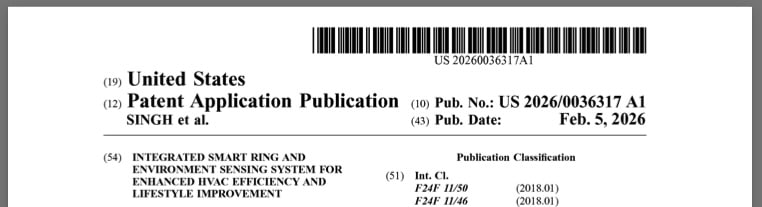
Ultrahuman has filed a patent that connects wearables like its Ring Air to heating and cooling systems. The goal is to automatically adjust indoor climate based on your body’s real-time data.
This patent application moves the company’s smart ring into surprising territory. The filing describes a system that links wearable biosignals to HVAC controls, allowing the environment around you to adapt based on how your body is reacting. That means your heart rate, skin temperature and even sleep patterns could help fine-tune the air in your room without needing to touch a thermostat.
At the heart of this idea is a loop between three components. The Ultrahuman Ring collects physiological signals. A separate set of sensors monitors ambient conditions like temperature, humidity or air quality. Actually, that is already being done by its Ultrahuman Home gadget. These two streams are then analysed by a central control unit, which then instructs the HVAC system to make real-time adjustments.
Use cases range from sleep optimisation to better workday comfort. The patent gives an example where, if your skin temperature rises during the night, the system could cool the room slightly to maintain restful sleep. Or if your vitals suggest stress or restlessness, airflow might be increased or humidity reduced. Over time, the system learns from these responses, refining how and when it makes changes.
What makes this different from smart thermostats is that it doesn’t just respond to environmental sensors or schedules. It reacts to you. The wearable becomes the source of truth about how the room feels, not just how it measures on a wall-mounted device.
Ultrahuman’s implementation also leaves room for manual overrides and app controls. So while the automation would run quietly in the background, users could still tweak settings or set preferences. There’s even potential for deeper machine learning integrations, where your habits, daily rhythm and past reactions inform smarter defaults.
While the patent doesn’t guarantee a product launch, it aligns with Ultrahuman’s direction. The company has increasingly positioned its Ring as a 24/7 wellbeing tool, not just a sleep tracker. And there’s the above mention of Home, which extends its ecosystem into the environment.
This isn’t just about comfort. It’s a shift toward using wearables as environmental sensors, not just fitness devices. Whether or not Ultrahuman brings this to market remains to be seen.
This article originally appeared on Gadgets & Wearables, the first media outlet to report the story.
Source: US Patent office
Subscribe to our monthly newsletter! Check out our YouTube channel.
And of course, you can follow Gadgets & Wearables on Google News and add us as your preferred source to get our expert news, reviews, and opinion in your feeds.
