

Suunto’s next wearable may be a screenless Whoop-style band
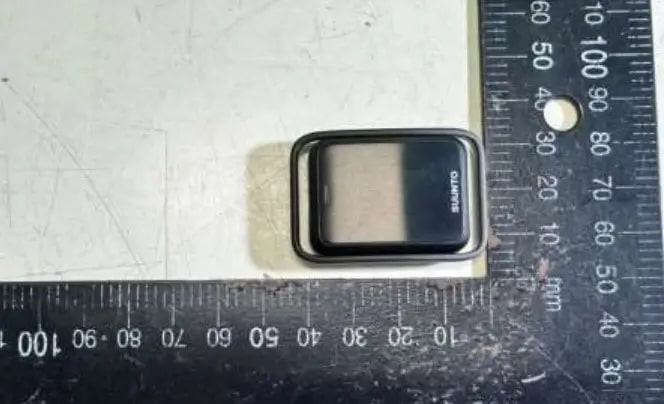
Suunto’s upcoming HR264 is starting to look like much more than a basic heart-rate accessory. Regulatory photos show a compact, screenless optical sensor with fabric straps, and the design hints at something more than a conventional chest strap.
That immediately brings back a possibility we raised previously, when we looked at whether Suunto could eventually move into Whoop-style tracking. About a year ago, the company ran a survey where they explored something described as a “heart rate band worn on the upper arm or bicep”. At the time, Suunto was evaluating whether it could double as a wrist-based device for sleep and recovery tracking.
HR264 is the first piece of hardware we have seen that makes that idea look genuinely plausible. A Whoop-style gadget.
What the filings actually tell us
HR264 has actually been showing up in regulatory databases since late September. A Suunto heart-rate monitor first appeared at Singapore’s IMDA on September 30, followed by HR264 itself at South Korea’s RRA on October 2. The Korean entry identified it simply as a heart-rate monitor.
The UAE followed on October 12, where the TDRA approved HR264 under reference ER66304/26. We have also added that filing to our wearable regulatory tracker.
Until the photos surfaced, that was about as far as we could go. “Heart-rate monitor” seems like a fairly standard description.
This does not look like a normal heart-rate monitor
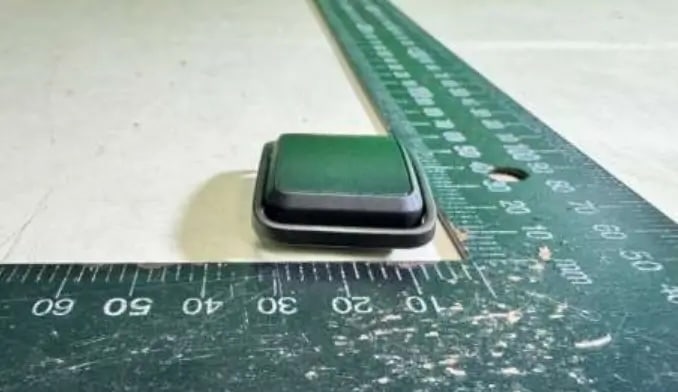
The new regulatory images show a small rectangular Suunto module with rounded corners and no display. From the ruler alongside it, the body looks to be roughly 4 cm by 3 cm, so we are talking about a genuinely compact piece of hardware.
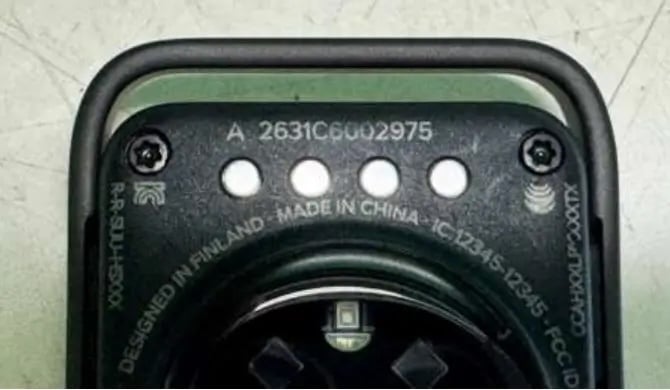
Flip it over and there is what appears to be an optical heart-rate sensor in the centre, together with four metal contacts. Other certification material also shows a dedicated charging attachment, so this is a rechargeable device rather than the type of coin-cell heart-rate strap Suunto already sells.
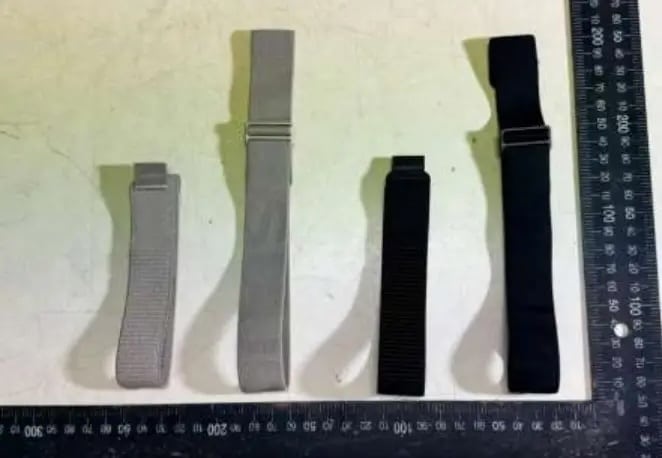
Then there are the straps. The photos show separate black and grey fabric sections in different lengths, with adjustable hardware rather than a conventional watch buckle.
Multiple fabric strap lengths would make plenty of sense for something designed around different wearing positions. That is only an interpretation of the photos, but it fits the earlier information surprisingly well.
The Whoop comparison is getting difficult to avoid
None of this proves that HR264 will be a Whoop competitor. There is still a simpler possibility. HR264 could be an optical workout sensor intended for the upper arm, giving runners and cyclists an alternative to wearing a chest strap.
But the hardware leaves the door open to quite a bit more than that. A small rechargeable optical module, comfortable fabric straps and no screen are exactly the ingredients you would use for a wearable designed to stay on for long periods.
The timing is also worth watching. Suunto has just launched the Race 3S alongside Suunto AI Coach, which draws on training, sleep, HRV, recovery and activity data when giving users guidance. Suunto says the service will expand to compatible watches from early 2027.
A lightweight device that keeps feeding that system when someone does not want to wear a sports watch would make obvious sense. That is speculation for now, but it shows why HR264 could potentially be more useful to Suunto than simply launching another exercise heart-rate sensor.
The screenless category has also changed quickly. Whoop now sits alongside products such as Garmin CIRQA, Fitbit Air and other display-free trackers, so Suunto would not be entering some strange niche by going down this road.
In fact, it could fit Suunto particularly well. Someone could wear a proper Suunto watch for training, maps and outdoor use, then switch to something much smaller for sleep, recovery and the rest of the day.
via: Wearable Fans
Don’t miss the latest from Gadgets & Wearables
Subscribe to our monthly newsletter and check out our YouTube channel.
You can also follow Gadgets & Wearables on Google News and add us as a preferred source in Google Search.

