

Ultrahuman now lets you upload your own blood tests
Ultrahuman has added a new feature called Vision Cloud that helps make sense of your blood tests. It’s built into the existing smartphone app, live now on Android, with results viewable on both Android and iOS.
This works alongside Ultrahuman’s Blood Vision service, which launched in the US earlier this year but hasn’t rolled out to other countries yet. The useful bit is that you don’t need to rely on their lab panel. You can upload your own third-party blood reports instead. Whoop recently announced a similar feature, letting users either order tests or upload results, but for now it’s limited to a US-only beta. Ultrahuman’s own lab tests are also restricted to the US, but the upload feature works globally.
I gave the upload feature a go to see how it works. It’s built to work with the Ring Air and M1 glucose tracker, which I’ve reviewed before. But you don’t need either of those – it works fine on its own.
A smarter way to handle blood work
Blood tests usually come with a wall of numbers, confusing reference ranges and little guidance. It’s easy to overlook small issues or miss trends. Vision Cloud changes that by turning a basic PDF report into something far more readable.
All you need to do is upload your own lab results. The system extracts the data, fills in the fields automatically and returns a clean dashboard that shows which biomarkers are in or out of range. You can then review and confirm each marker. In my tests, it was impressively accurate. Out of 30 or so values, only one needed correcting.


The layout splits markers across clear categories like cardiovascular, metabolic, immune, kidney and liver health. You’ll see totals for each section, showing how many biomarkers are in range and how many are flagged. Tap into each category and you get colour-coded tiles, trend indicators, and context for why a value matters. All useful stuff.


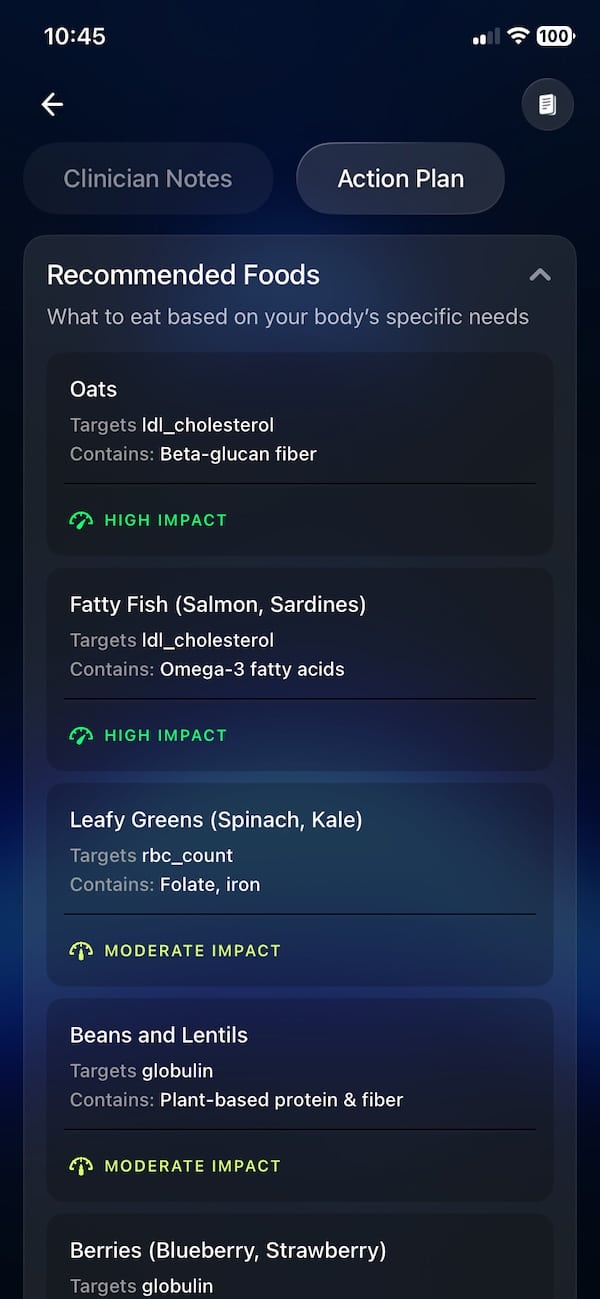
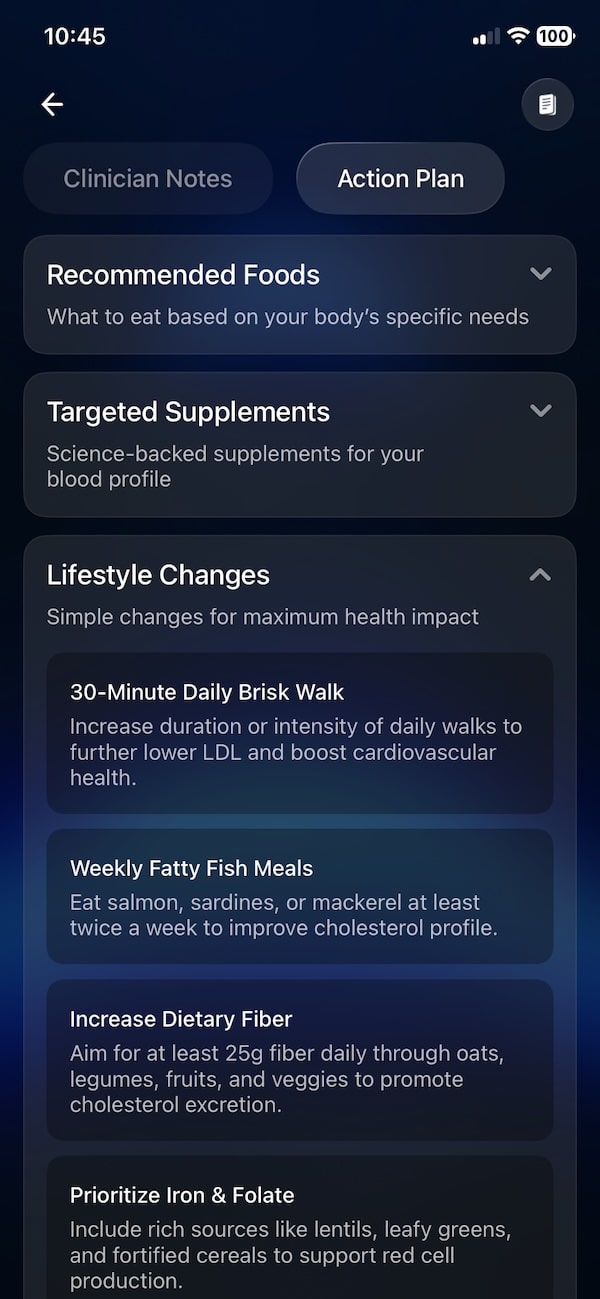
What makes this more than just a bunch of numbers is how it connects your results to things you can actually do. You get supplement tips, how much to take and the option to buy them if you want. There are also food suggestions and lifestyle tweaks based on your data. It even tells you which ones matter most.

Not just for Blood Vision users
If you’re already using Ultrahuman’s Blood Vision testing service, Vision Cloud becomes a companion layer. You can view results from your official panel or upload external tests to track additional markers.
Essential reading: Top fitness trackers and health gadgets
But the feature works even if you’re not part of the Blood Vision programme. Just download the app, create a profile and start uploading PDFs from your own blood work. This opens the door to people who’ve tested elsewhere but still want the benefits of structured insights.
Worth noting is that for now, uploads are currently only possible through the Android version of the app. But once your data is in, it syncs across both platforms. The iOS app lets you explore the same visuals, summaries and suggestions.
A deeper view of your own data
Beyond simple range checks, Vision Cloud provides an overall Blood Age score. This estimates how your markers compare to healthy population norms and gives a rough sense of biological ageing. In my example, blood age came in six years below my actual age, with LDL cholesterol as the main flagged concern. I’ll be working on that one.


Beyond LDL cholesterol, the AI also highlighted globulin and RBC count as slight concerns, each tied to related markers like total cholesterol or albumin. Clicking into each marker shows ranges, trends, and short explanations to make the numbers more meaningful.
The platform does a good job layering guidance without overcomplicating things. My supplement advice includes Omega-3 for LDL, Vitamin D for globulin and iron if RBC is low. On the food front, I was nudged toward oats, leafy greens, and fatty fish, with notes on what each food targets.
A useful bridge between lab data and daily choices
Vision Cloud isn’t trying to replace your doctor. It’s not diagnostic. But it does fill a gap by helping you make sense of lab results in a personal and structured way. If you’re tracking your health over time or dealing with multiple blood tests, it adds a useful layer of clarity.
Sure, you could probably get similar insights by uploading a PDF of your results to ChatGPT. But it wouldn’t be laid out as clearly. You wouldn’t get the charts or be able to track trends. And if you already use the company’s smart ring, it keeps all your health data in one place.
The full Vision Cloud experience is part of the Ultrahuman app, and it’s free. That includes uploads, analysis tools and AI-generated summaries. If you’re in the US, you also have the option to do the full Ultrahuman Blood panel, which tests over 100 biomarkers.
Subscribe to our monthly newsletter! Check out our YouTube channel.
