

WHOOP’s muscle oxygen patent explains how it could see beyond the fat layer
WHOOP has another muscle oxygen patent. And this one gets into the really interesting bit, how you separate what is happening in the muscle from all the tissue sitting above it.
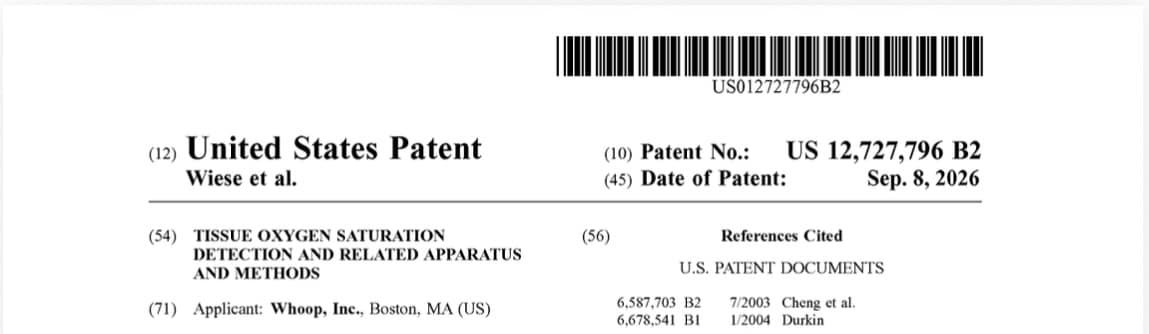
The patent was granted on September 8, 2026 and describes a wearable that uses several light sources and detectors to measure what is going on at different depths under the skin. The drawings show it being worn on places such as the thigh, which fits with the muscle oxygen patents we have already seen from the company.
A different part of the muscle oxygen problem
This is now the third piece of WHOOP muscle oxygen intellectual property we have looked at this year, but the patents are not simply repeating each other. In the April filing the focus was a pressure-sensitive wearable designed to work on various locations of the body.
We covered the second patent in August. That one dealt more directly with how to get a proper fit. It described determining whether a sensor is pressing against the body with the right amount of pressure, something that is important when optical measurements depend heavily on consistent skin contact.
This latest patent goes into more detail on what happens once the light gets under the skin. WHOOP uses several emitters and detectors spaced at different distances, which lets the system pick up signals from different depths.
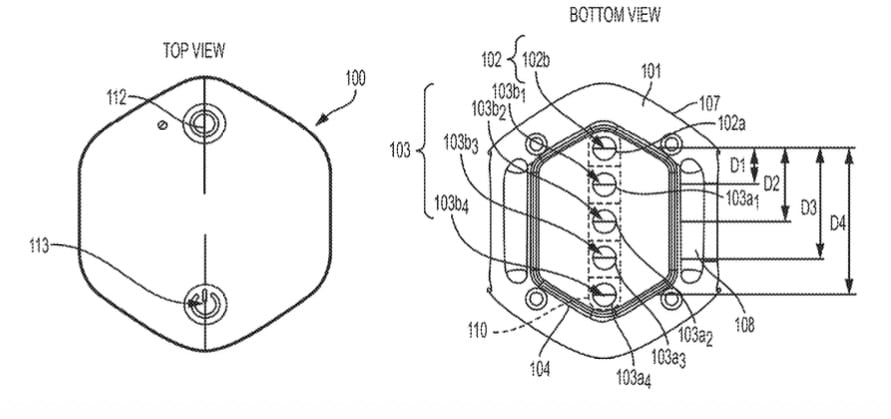
From there, the software tries to tease apart what is happening, including muscle oxygenation and different haemoglobin measurements. In simple terms, it is trying to work out which part of the signal is coming from the muscle and which part is coming from the tissue sitting above it.
And that is important because the sensor is not measuring muscle directly through an empty window. There is skin and, depending on the person and where the sensor sits, a varying amount of fat in the way.
The patent specifically tackles that problem. It even covers estimating superficial fat at the measurement site, which could help the system account for how much tissue the light has to travel through before it reaches the muscle. Now, this is not WHOOP measuring your overall body fat percentage. It is much more local than that, and really about getting a cleaner muscle oxygen reading.
This has a very familiar Humon connection
There is another reason this patent caught our attention. We have effectively used an earlier version of this type of technology before.
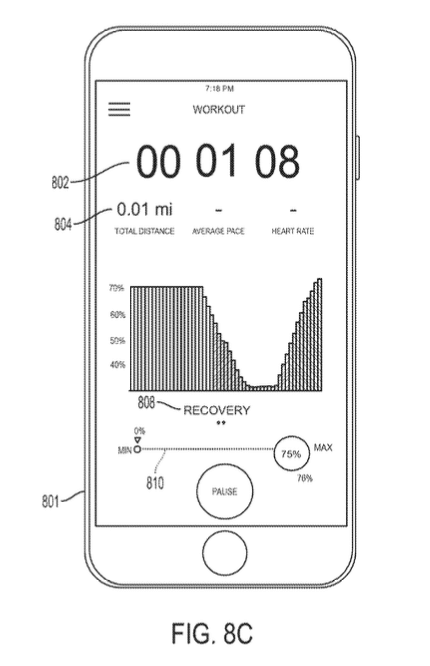
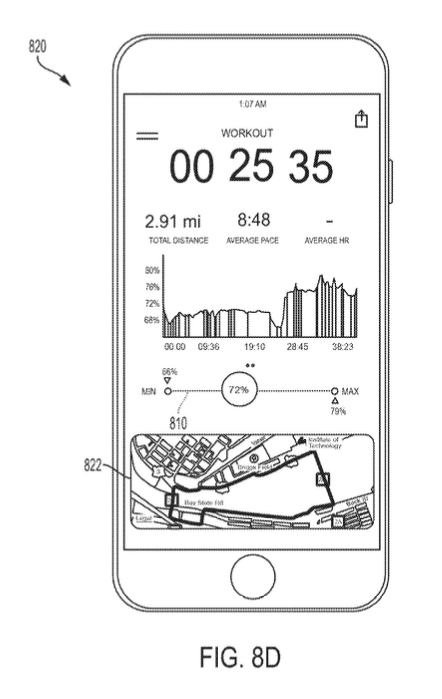
Back in 2019, we reviewed the Humon Hex, a small sensor that strapped around the thigh and used near-infrared spectroscopy to measure muscle oxygen in the quadriceps. It provided real-time SmO2 information during exercise, showing when the muscle was warming up, when effort was becoming difficult to sustain and how it was recovering afterwards.

The connection is not coincidental. This latest WHOOP patent continues an international application originally filed in April 2019 by Dynometrics, the company behind Humon, and that application claimed priority from May 2018.
There is an even more interesting bit of history here. When Humon shut down its service in 2020, we suggested there was a decent chance its technology had been sold to a larger company. Assignment records subsequently showed Dynometrics transferring related Humon muscle oxygen patents to WHOOP in 2020.
So some of the WHOOP muscle oxygen patent activity we are now seeing has much older roots. WHOOP did not suddenly start investigating the idea over the past few months, it acquired technology and intellectual property from a company that had already put muscle oxygen sensing into a commercial sports wearable.
The bigger WHOOP picture is getting clearer
That makes the recent run of patents more interesting when looked at together. WHOOP now has intellectual property around measuring muscle oxygen, distinguishing signals at different tissue depths, accounting for tissue above the muscle, monitoring sensor pressure and checking whether the wearable has suitable contact with the body.
Those pieces address several of the practical problems that made devices such as the Humon Hex more complicated than they need to be. When we tested Hex, for example, positioning and strap tightness mattered, and moving the sensor could affect the usefulness of the readings.
A muscle oxygen sensor could provide another layer to Whoop data. Positioned over the quadriceps or biceps, it could potentially show how quickly oxygen availability changes during repeated efforts and how rapidly the muscle recovers.
Don’t miss the latest from Gadgets & Wearables
Subscribe to our monthly newsletter and check out our YouTube channel.
You can also follow Gadgets & Wearables on Google News and add us as a preferred source in Google Search.

