

Luna Ring 2 review: a practical alternative to pricier rings

- – Covers all important health metrics with good accuracy
- – Comfortable for 24/7 wear
- – Excellent uncluttered app with a decent AI assistant
- – Good battery life with a portable charging case
- – Competitive price with no subscription
- – Heart-rate accuracy issues during exercise
- – Limited third-party integrations
- – Could be slimmer
Luna Ring 2 is easy to get along with once you spend a bit of time with it. What stood out most is the solid sleep tracking, dependable battery life and a straightforward feature set that covers what most people actually need.
Compared to the original, it feels like a clear step forward. The whole package comes across as more complete, both in terms of the hardware and the app. Nothing feels experimental or half done. It all works together in a way that makes sense.
In terms of accuracy, things are mostly consistent. The main weak spot is exercise, where heart rate tracking struggles. That said, this is not unusual for smart rings. Most devices in this category run into similar issues once intensity goes up.
Where the ring really stands out is value. Retailing for around $300, you get a wide range of features without having to think about a subscription. And that shifts the overall appeal quite a bit.
If you go in with realistic expectations, Luna Ring 2 delivers a well rounded experience. I would put it right up there with RingConn, Ultrahuman and Hello Ring as a solid subscription free alternative to Oura.
View on Luna*
You can explore the strongest alternatives and our current recommendations in our guide to the best smart rings.
Jump to
Luna Ring 2 review: Design, hardware
Look & feel
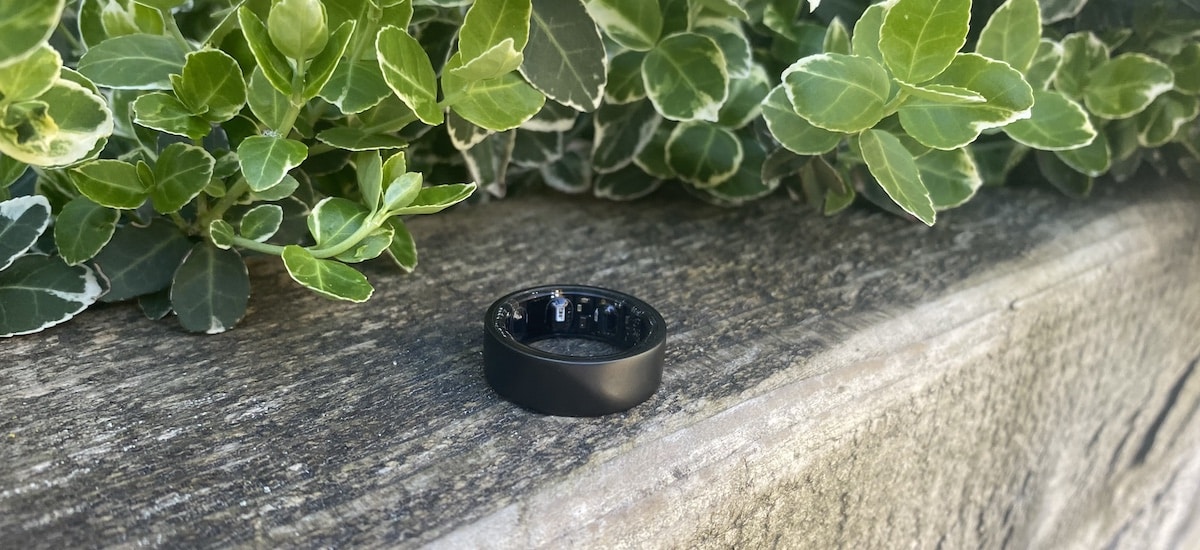
I’ve tested quite a few smart rings over the years, and Luna Ring 2 comes in a form factor I’m very familiar with. It goes for a clean, understated look. More practical than luxurious.
There are no buttons or anything like that. Just a smooth surface. The titanium build gives it a solid, durable feel. Nothing out of the ordinary here, a simple design with a shape that feels natural after a day or two of wear. Which is exactly what you want from something you wear 24/7.
Getting the right size matters though. There is a sizing kit, and it is worth using it.
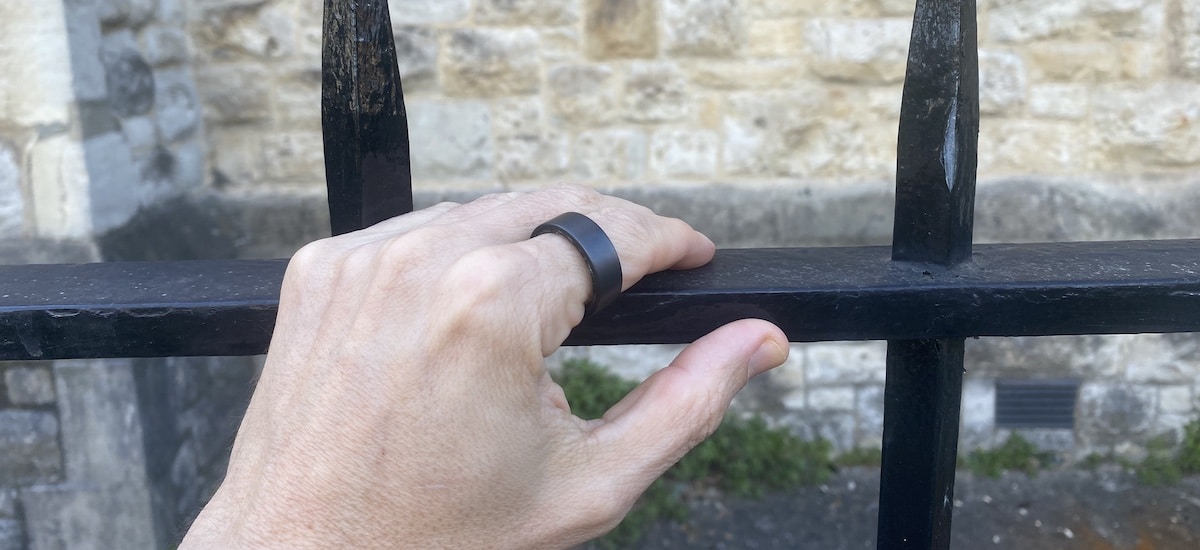
The edges are more rounded than on the first generation, although this could still go further. The thickness is also slightly noticeable compared to slimmer rings, especially if you are used to wearing traditional jewellery. But nothing that would be a deal-breaker.
In terms of design, I would say Luna Ring 2 is right up there with most smart ring alternatives. Probably better looking than Ultrahuman, but slightly behind RingConn.

As far as scratch resistance, I have been wearing it for the past few weeks including on bike rides and during weight lifting sessions. And it has held up well. There are no visible marks so far, which suggests the finish is pretty solid.
If you are coming from the Gen 1 device, there is not much to separate the two visually. The overall design stays very similar, with slight slimming and small refinements. It feels very light and comfortable on the finger, including during movement and sweating.
Under the Hood
Under the hood, Luna Ring 2 keeps things fairly straightforward. It uses an optical sensor setup to track heart rate throughout the day, along with support for blood oxygen during the night and skin temperature.
There is also an accelerometer for handling movement. That takes care of steps and general activity, but it is not a complex system designed for detailed workout analysis. It does a solid enough job, though, of capturing how active you are across the day.

These are the core signals you would expect from a smart ring, and that is exactly what you get here. It covers all the basics – nothing lacking, but also nothing extra.
Flip the ring over and you can see the sensor array on the inner side. It sits close to the skin and feels quite low profile, which helps with consistent readings without affecting comfort. Once it is on your finger, you do not really notice it, and that is kind of the point.
Decent battery life
Battery life is one of those things you don’t really think about after the first couple of days, which is a good sign. I was genuinely impressed with it. Mind you, some smart rings face battery depletion issues after a year or two of use – so it will be interesting to see how Luna Ring 2 holds up long term. I’ve only been using it for a few weeks.
You can expect the ring to last around five days before needing a proper top-up. If you are a bit lighter with it, you can stretch that closer to six.
What makes Luna Ring 2 feel easier to live with is the charging case. Instead of waiting for the battery to run down completely, you can just drop the ring in for short top-ups here and there. That changes the whole experience a bit. You are not dealing with a dead device, just keeping it topped up as part of your routine.

Also, I like the fact that the charging case is small. Smaller than some other options on the market. And nice looking.
Charging itself is quick enough that even a short break is useful. Take it off while showering or sitting at your desk and you can claw back a decent chunk of battery without thinking about it too much.
Luna Ring 2 review: Features
Now what about the health tracking features? This is where a smart ring either works or falls apart.
The good news is Gen 2 has moved things forward. The original sometimes struggled with sleep tracking, but that feels improved here. The app has also come a long way over the past year. It feels more polished and easier to navigate.
You get all the usual metrics running in the background, heart rate, blood oxygen, skin temperature and stress. The app pulls all of that into a vitals dashboard, along with three main scores, sleep, readiness and activity. Those are the ones you actually check. They give you a quick sense of where you stand without digging through charts.
The app keeps things simple. It is not cluttered, but everything you need is there. You also get extras like your circadian rhythm mapped through the day, plus useful touches like a suggested caffeine window.
What stands out is the restraint. They are not trying to overwhelm you with endless metrics or features you will never use. Compared to Ultrahuman, you get fewer features. Compared to RingConn, the level of detail is not quite as deep. But for most people, this will land in the right place. You get what matters, without the noise.
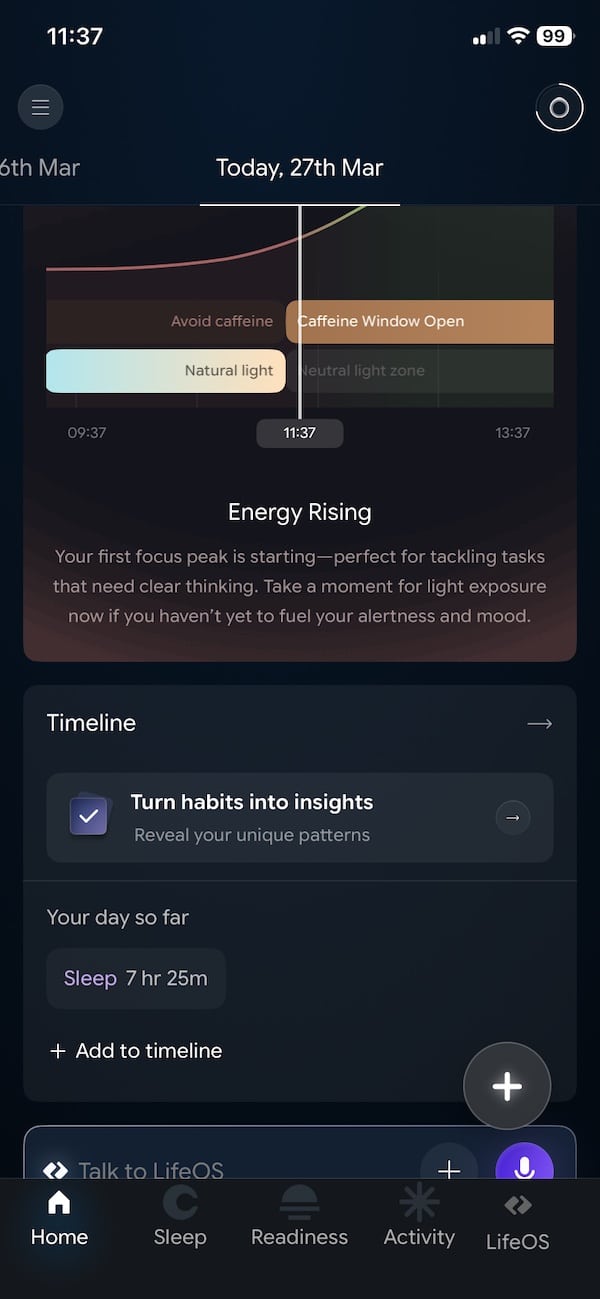
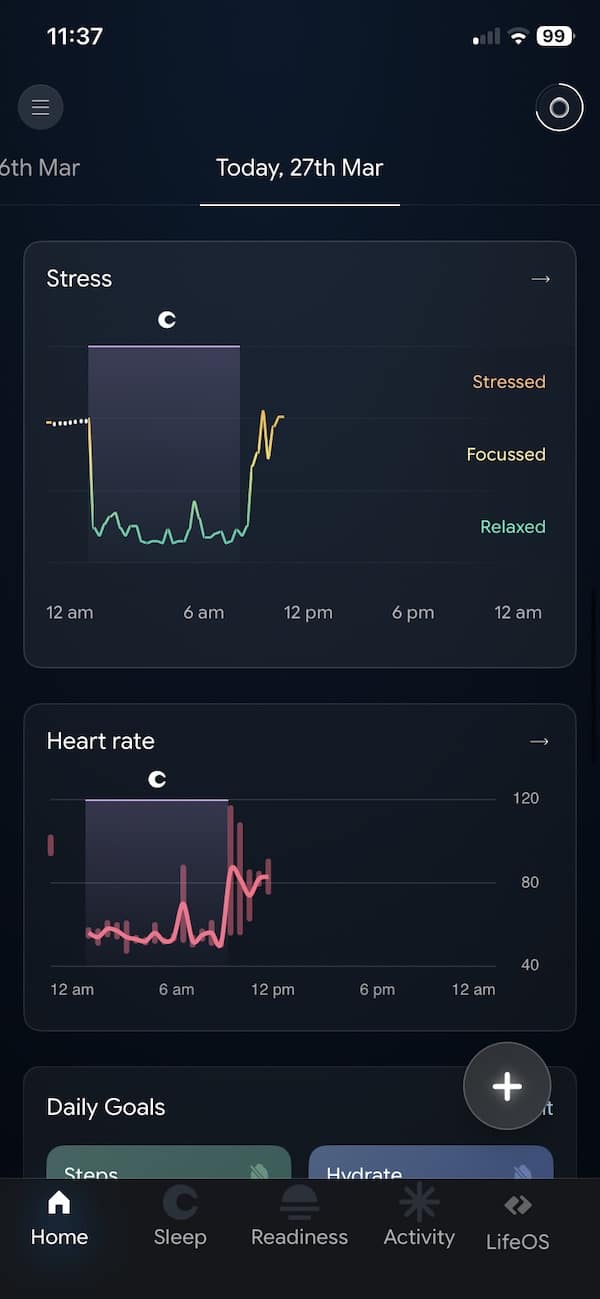
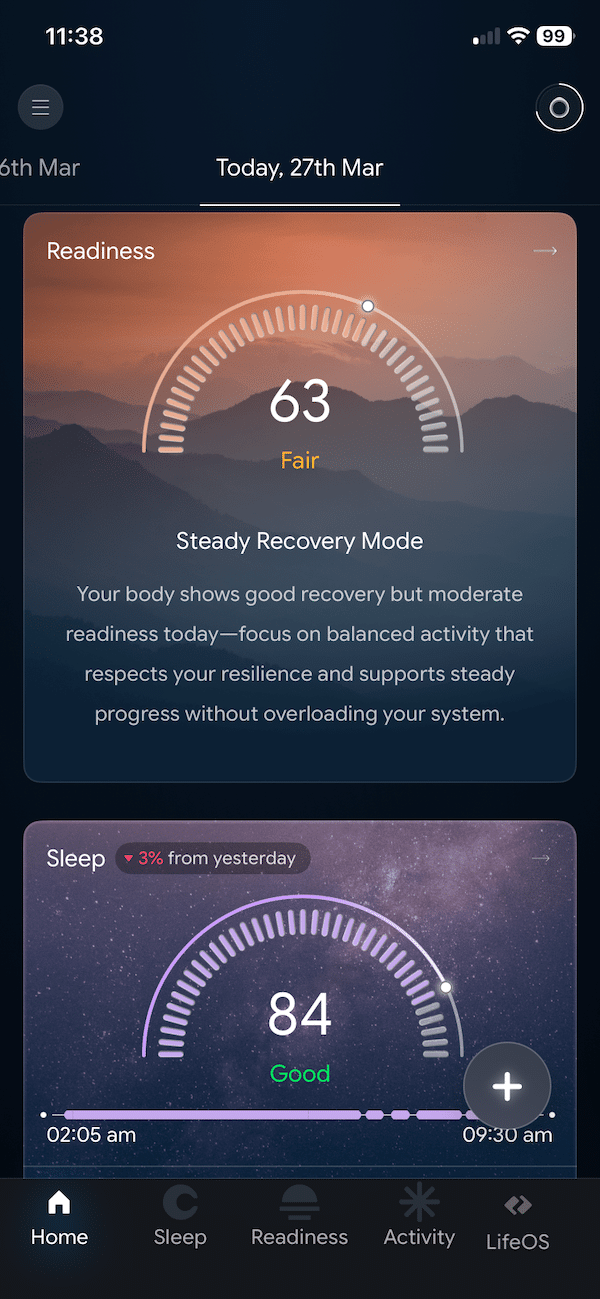
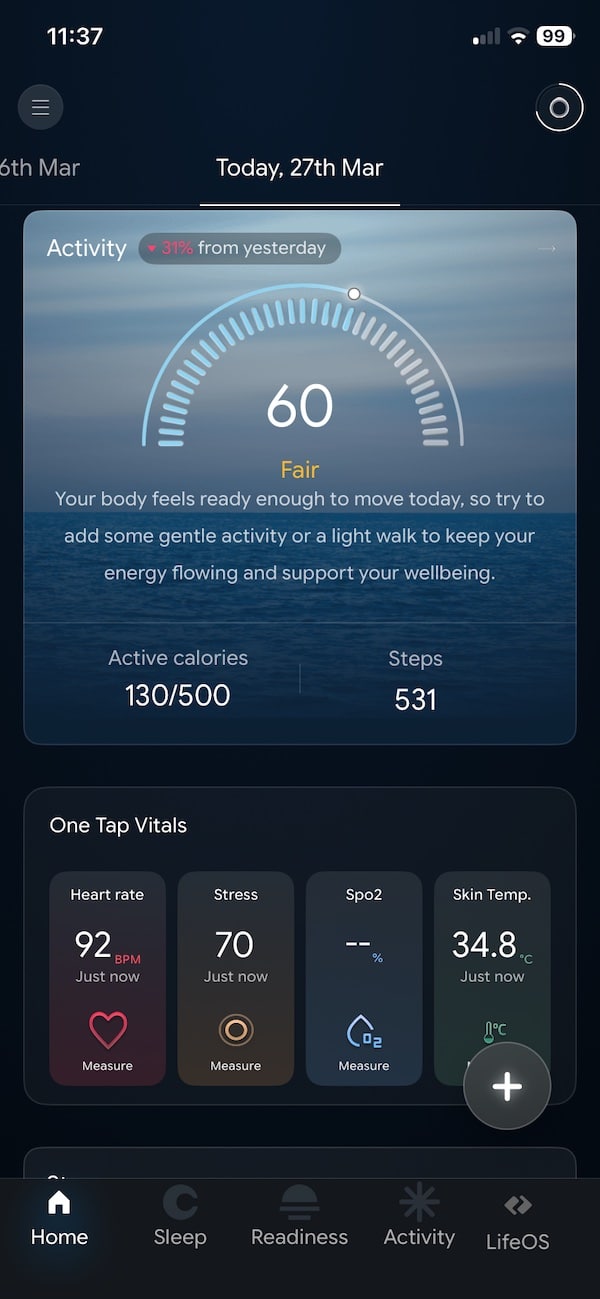
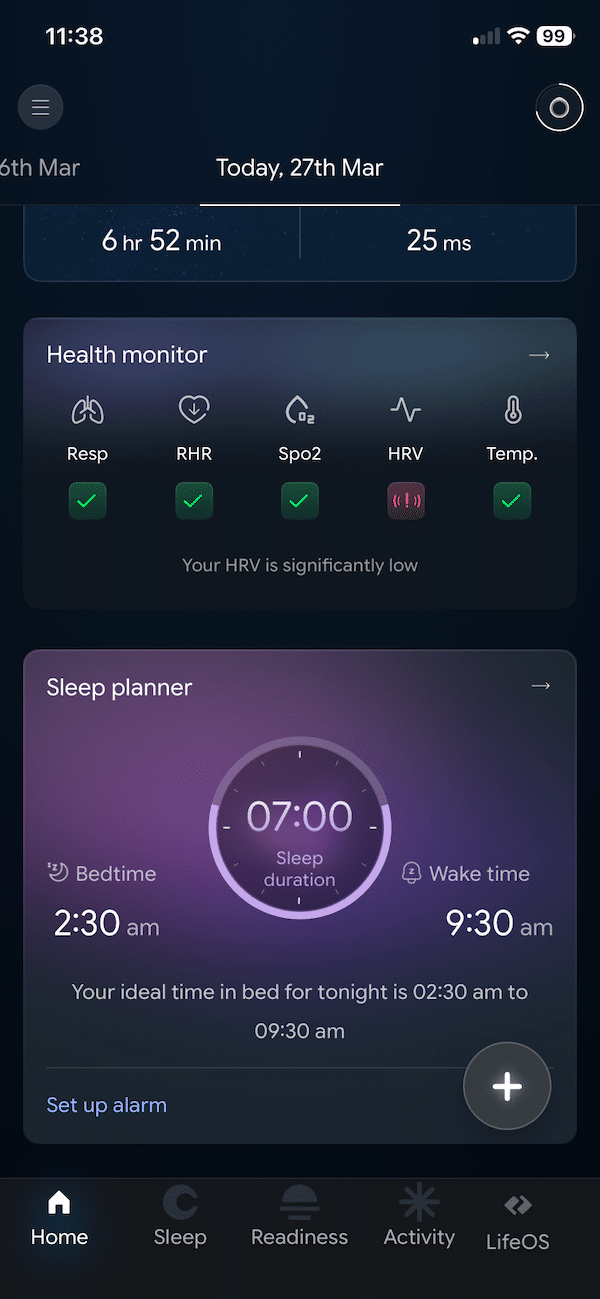
The stats feel generally reliable. I compared them against my Garmin watch and a couple of other smart rings, and most of the data lines up pretty well. Overnight blood oxygen is the one area that felt a bit off. On a couple of nights, the ring flagged readings as below optimal, which did not quite match what I expected.
Sleep is where the ring feels most complete. You get a sleep planner based on your vitals, and in the morning the app breaks everything down into light, deep and REM sleep. It also shows total duration, sleep consistency and breathing patterns. On top of that, there is a sleep score with a simple breakdown of what went well and what did not. After a few days, it becomes easy to spot patterns.
It is also good at picking up naps and shorter sleep sessions, which is not always a given with these devices. And there’s a smart alarm, which is a nice touch. Taken together, the sleep tracking and tools feel genuinely useful.
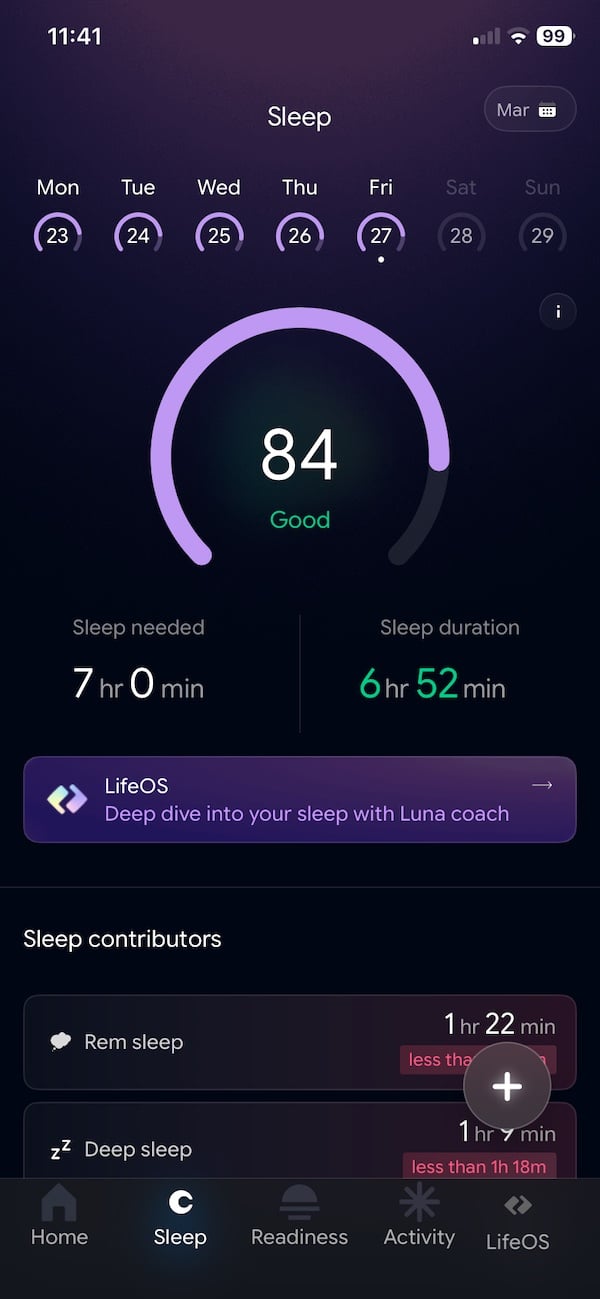
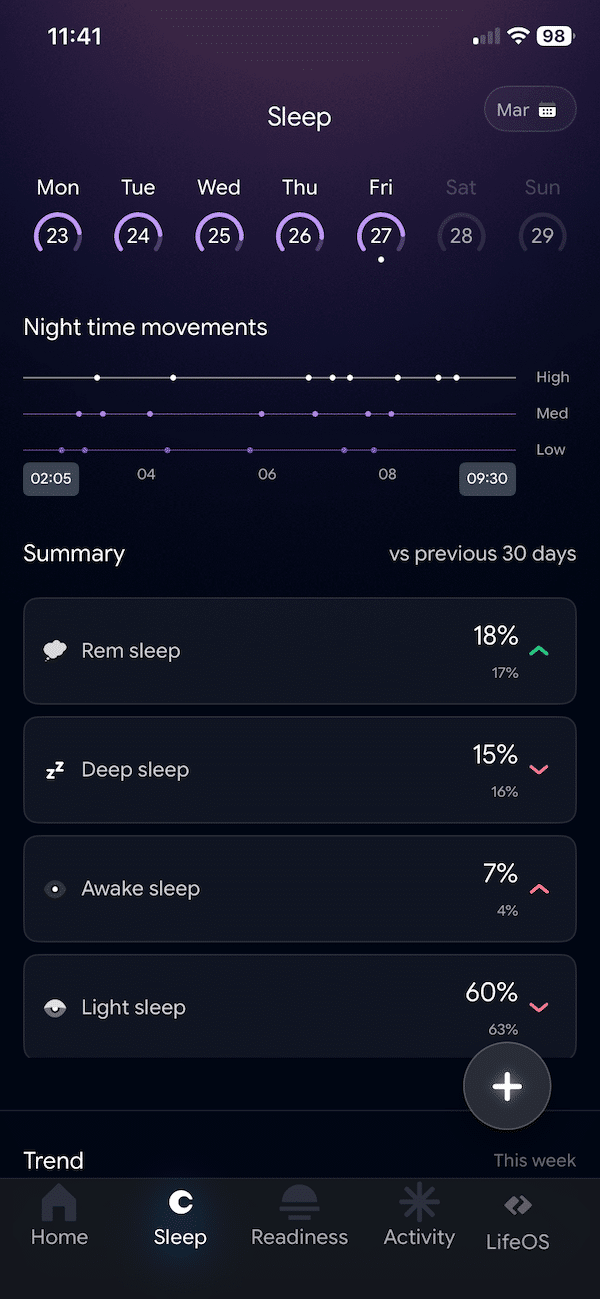
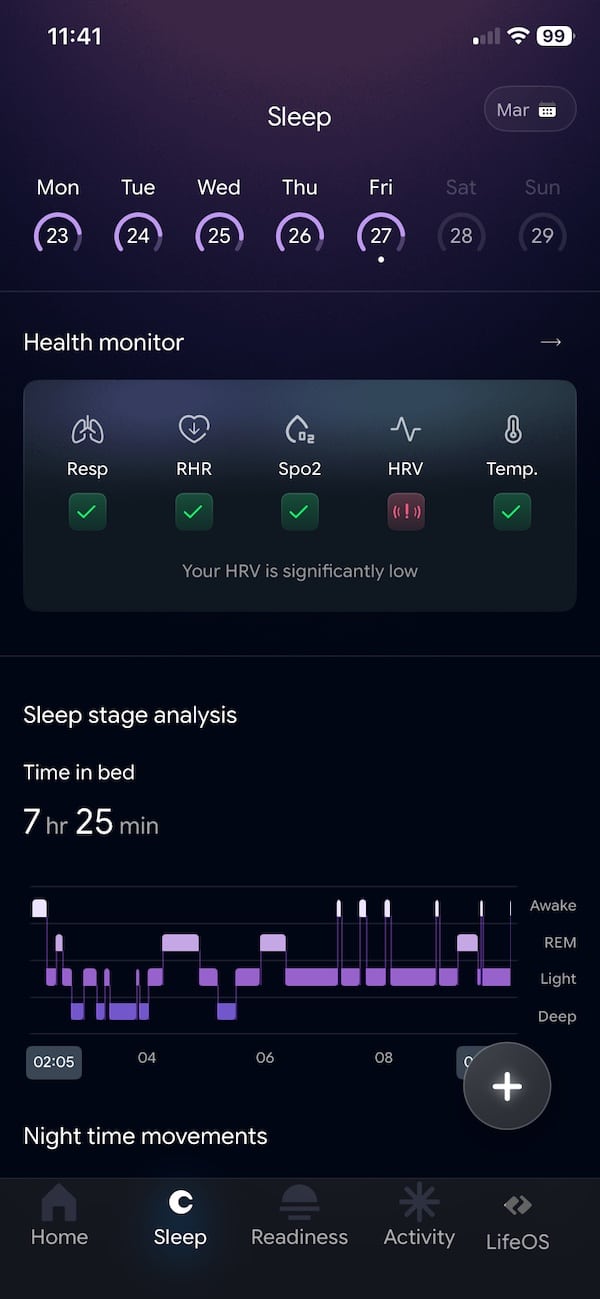
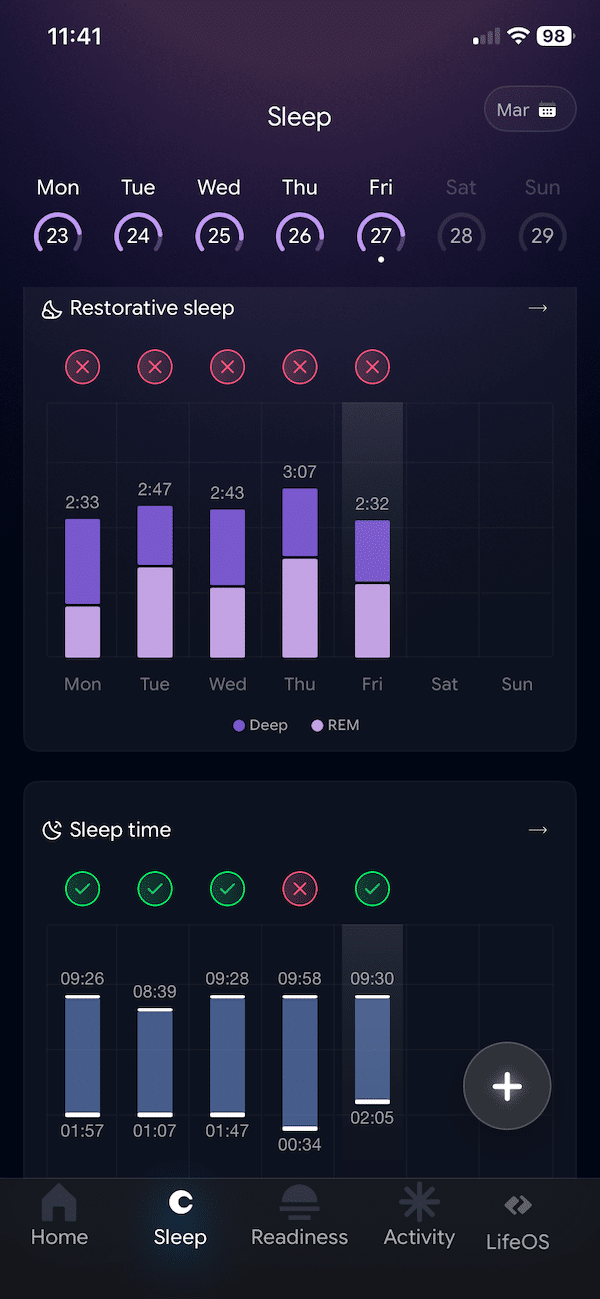
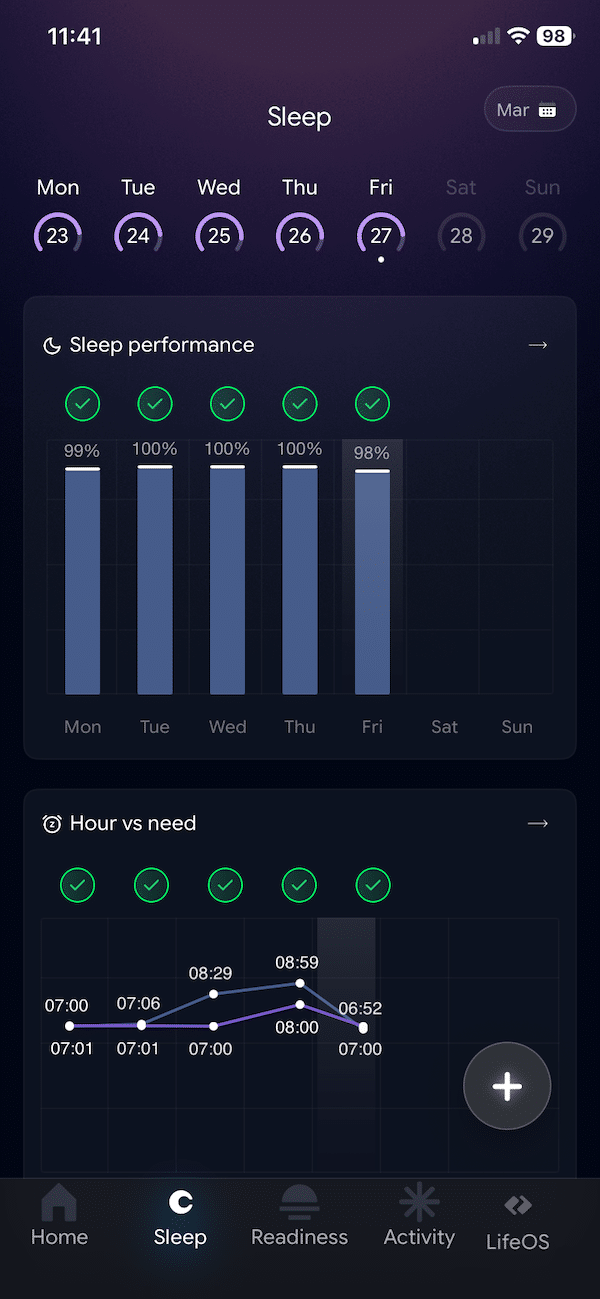
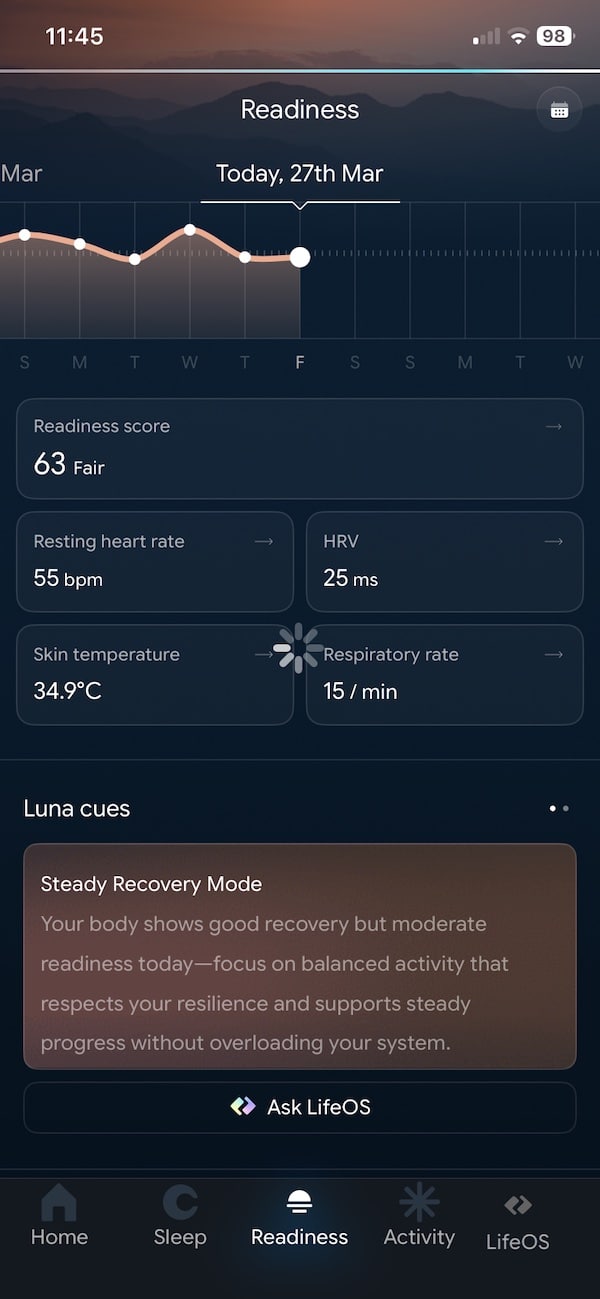
Readiness pulls together things like resting heart rate, heart rate variability, temperature trends and sleep quality. It is basically a quick check of how recovered you are before the day starts. It does not go very deep, but it gives you enough to know if you are on track or should take it a bit easier.
Stress tracking runs in the background and builds a score based on how your heart rate behaves during the day. You also get guided breathing sessions in the app if you want them. It is simple, but easy to access and does the job.
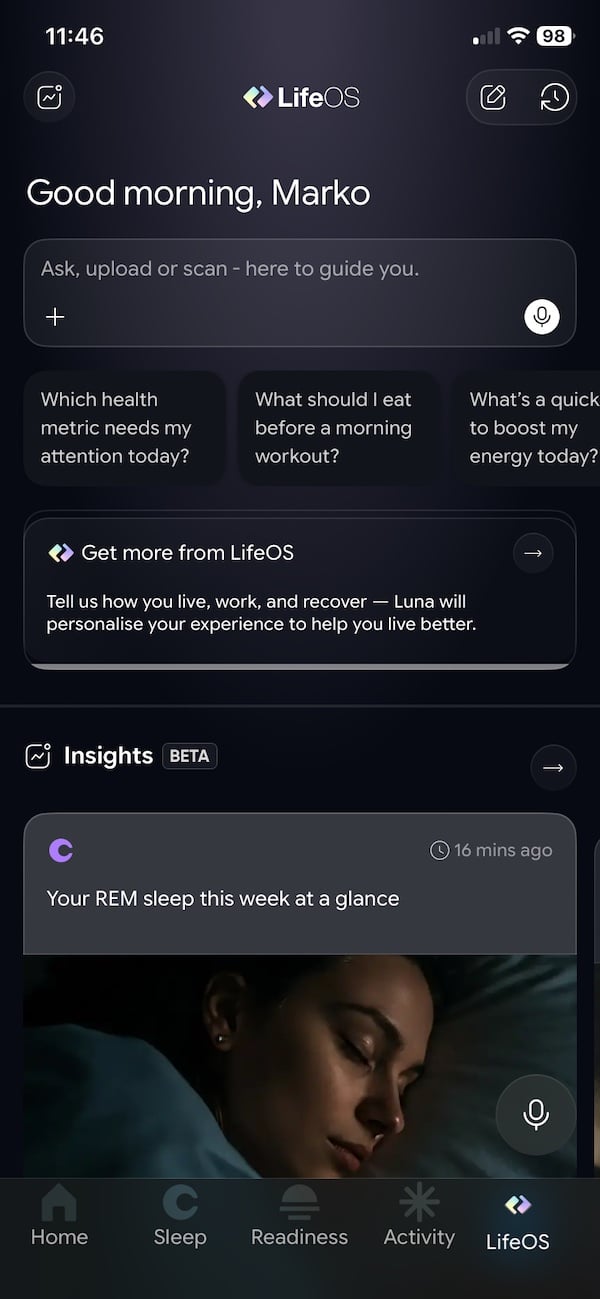
Then there is the AI side of things. Luna’s assistant feels fairly well put together. You get daily suggestions, the option to dig deeper into your health data and even some basic workout guidance. It is not perfect, but it feels more useful than what a lot of other smart ring apps offer right now.
Activity and exercise tracking
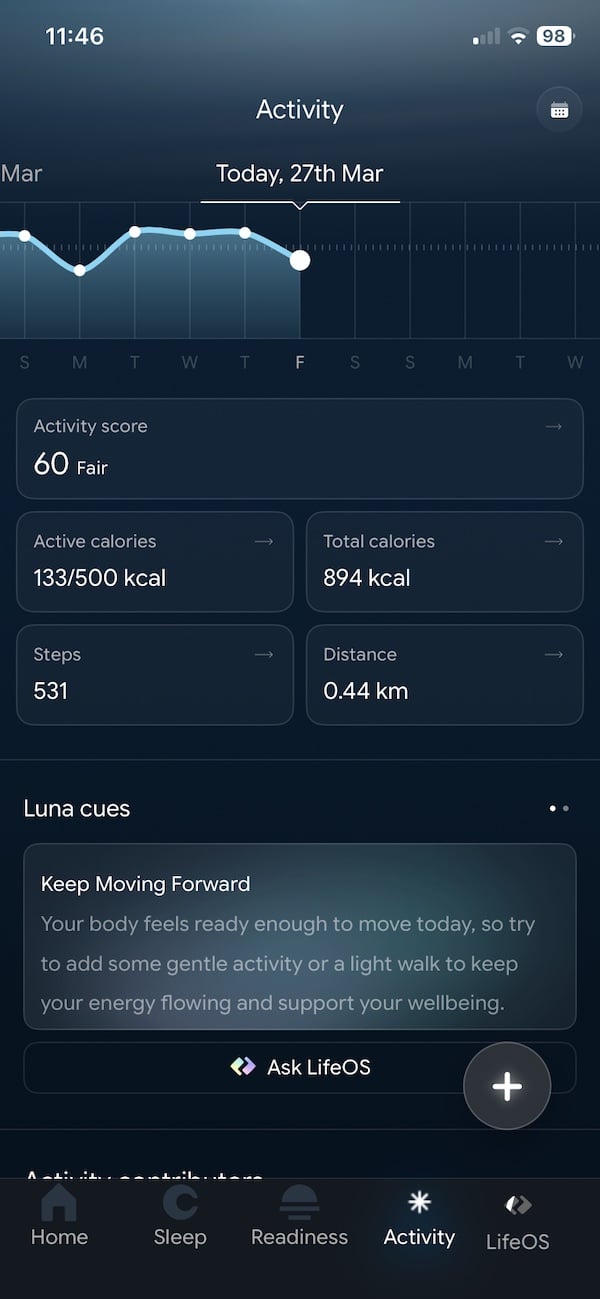
Activity tracking is more on the basic side. Which shouldn’t surprise as smart rings typically focus on recovery metrics. Luna Ring 2 is no different.
You get steps, calories and general movement, plus the option to log workouts. That said, it is not trying to replace a sports watch. There is no real depth to workout analysis. It is more about keeping a record than breaking things down in detail.
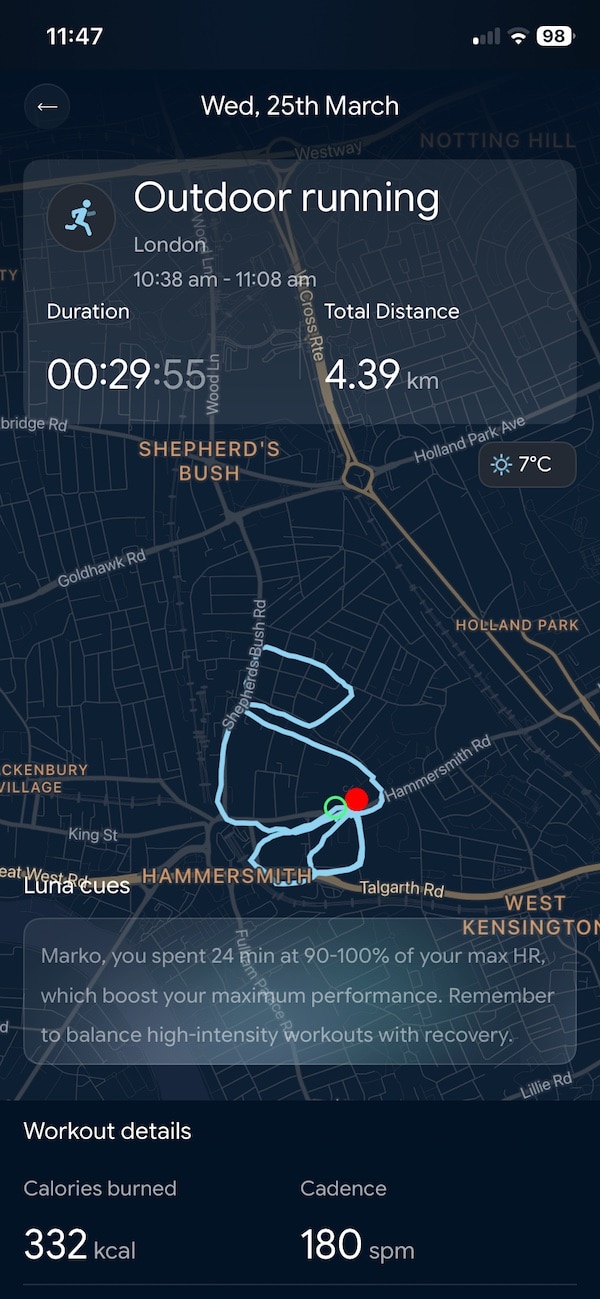
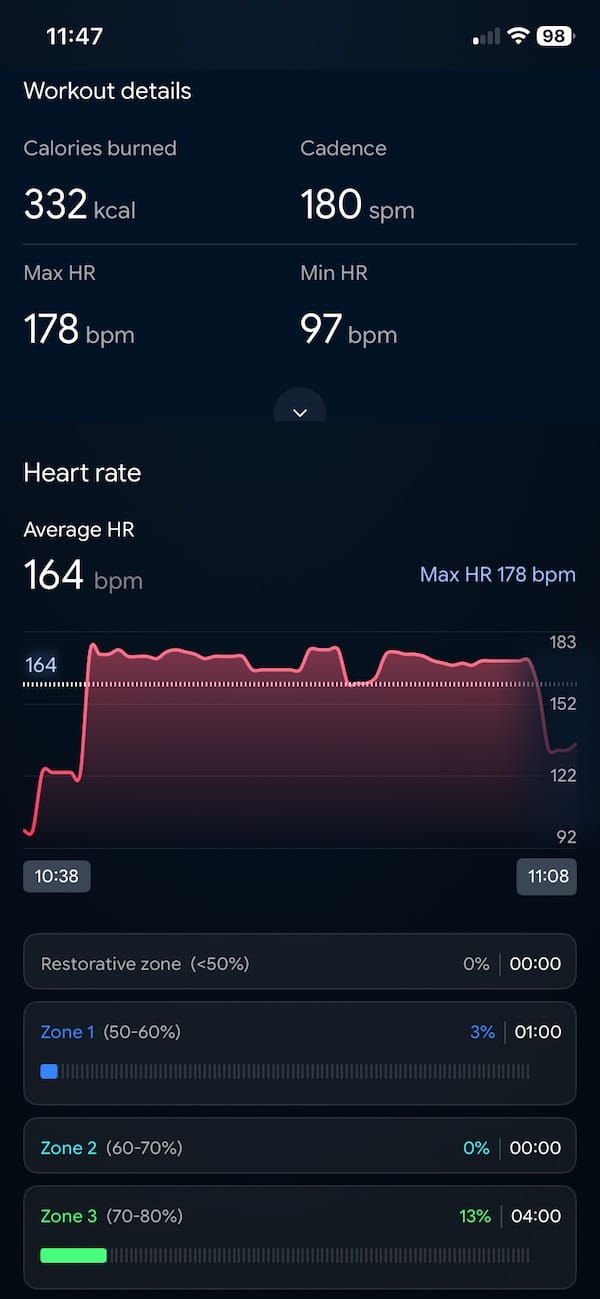
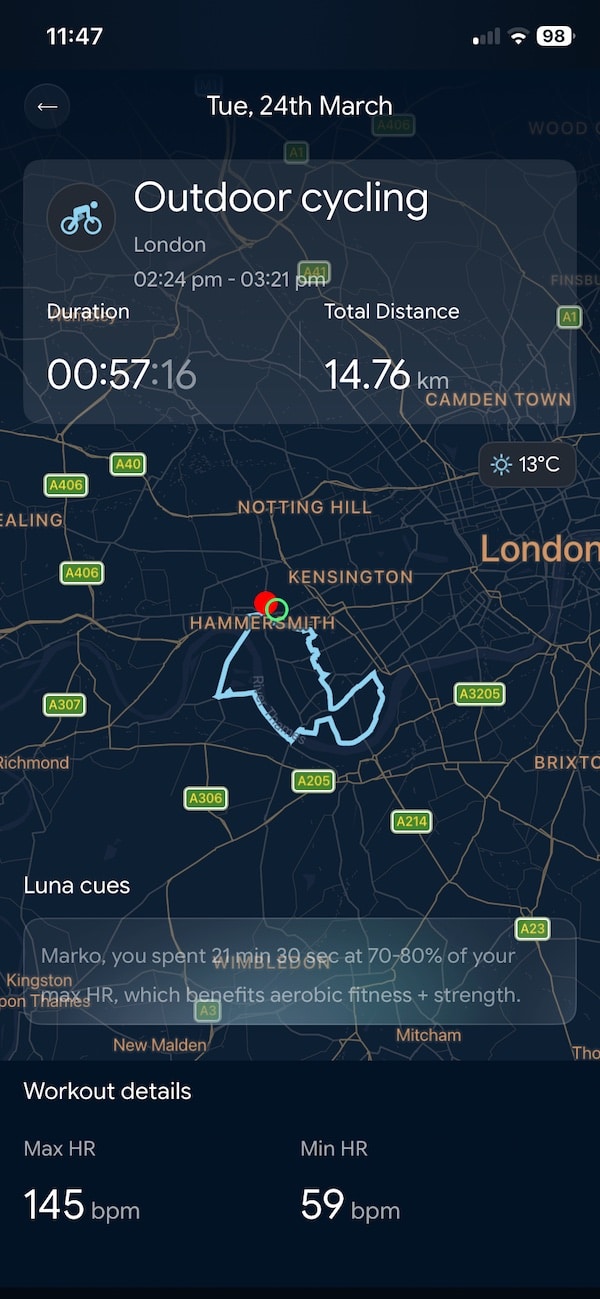
You are meant to start exercise tracking from the app. This has the benefit of being able to link the data to your smartphone’s GPS signal, and that part works well. Where it falls apart is with heart rate tracking accuracy, which means the data ends up being of limited use.
That is not unique to this ring. Most smart rings struggle here. The issue comes down to how and where they sit on the body. Your finger has less stable contact during movement, more variation in blood flow and more external interference from grip and hand motion. That makes it harder for optical sensors to lock onto a clean signal, especially during higher intensity workouts.
Alternatives to consider
We are not big on monthly subscriptions. That said, if you are fine with paying one, the Oura ring still sits near the top of the category and has one of the most complete app experiences out there.
The good thing is you now have a few solid options that do not lock features behind a subscription. Luna Ring 2 is one option. RingConn is also right up there. It tends to be one of the more accurate smart rings, battery life is strong and the app goes deeper into your data than most.
Ultrahuman is also worth a look. The Ring Air is not the most eye catching in terms of design, but the app is one of the strongest around. It offers a wide range of features and add-ons, so there is quite a bit to explore if you want more insight.
Then there is the Amazfit Helio Ring. In our Amazfit Helio Ringtesting, it is one of the few that can keep heart rate reasonably accurate during exercise. It also runs on the Zepp Health app, which means it fits neatly if you already use other Amazfit devices.
There is now a genuine choice depending on what you value most, whether that is accuracy, depth of data or just keeping things simple without a subscription.
Don’t miss the latest from Gadgets & Wearables
Subscribe to our monthly newsletter and check out our YouTube channel.
You can also follow Gadgets & Wearables on Google News and add us as a preferred source in Google Search.

