

Ozlo Sleepbuds vs QuietOn 4: Which approach actually helps you sleep
Ozlo Sleepbuds and QuietOn 4 both target the same problem, noise at night, but they go about it in completely different ways. One leans on active noise cancellation to reduce what you hear, while the other builds a sound environment to help you ignore it.
That split shapes everything. It affects how they feel, how you use them and who they are actually for. But this is not where the differences end, as covered in my Ozlo Sleepbuds and QuietOn 4 reviews.
Ozlo Sleepbuds (view on Ozlo / Amazon); QuietOn 4 (view on QuietOn).
Two very different approaches to noise
QuietOn 4 is built around active noise cancellation. The goal is simple, reduce external noise as much as possible and let you sleep in silence. In practice, that works best for steady low frequency sounds like snoring or distant traffic. It does not eliminate everything, but it takes the edge off enough to make a difference.
Ozlo goes in the opposite direction. Instead of trying to remove noise, it masks it. You get built in soundscapes and the option to stream your own audio, whether that is white noise, rain sounds or a podcast. The idea is not silence, it is control. You decide what fills the space.
That difference sounds subtle on paper. In reality, it completely changes the experience.
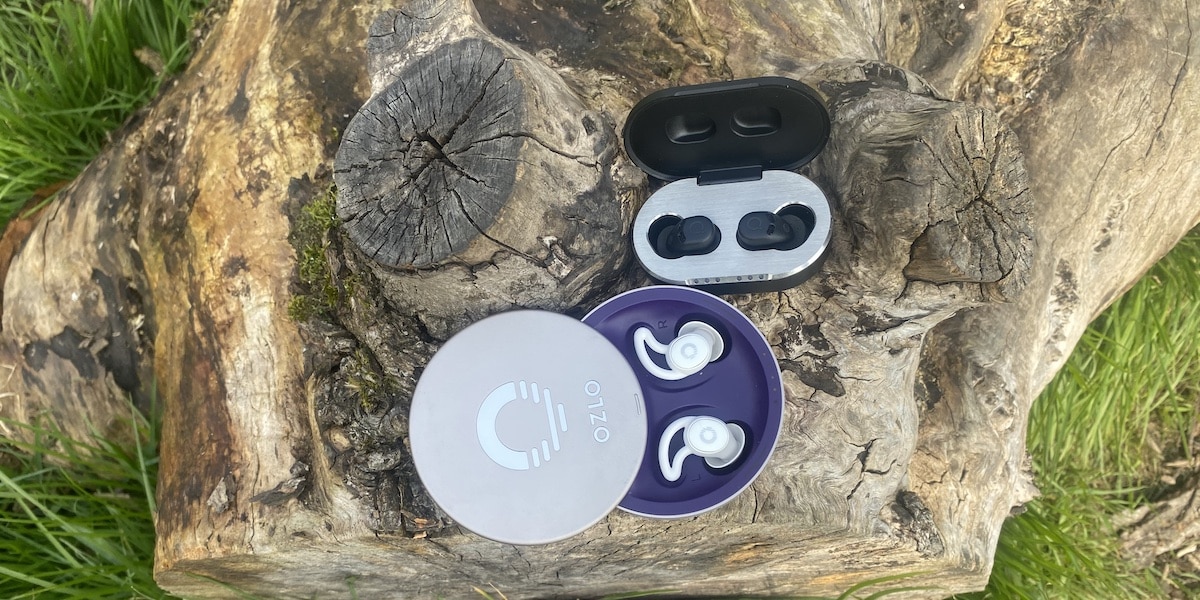
Simplicity vs a full system
QuietOn 4 keeps things very stripped back. There is no app and no Bluetooth connection to worry about. You take them out of the case, put them in and they start working. There is nothing to tweak or manage, which makes them easy to use night after night. That simplicity is a big part of the appeal, especially if the goal is to remove friction at bedtime.
Ozlo Sleepbuds take a more involved approach. The Smart Case plays a central role, and you are expected to use the app to get the most out of them. That is where you pick your sounds, control playback and adjust how they behave overnight. It is not difficult to use, but it does mean there is a setup step and an ongoing dependency on the app.
In practice, this creates a clear difference. QuietOn fits into your routine without really changing it. Ozlo asks you to engage with it, which makes it feel more like part of the routine itself.
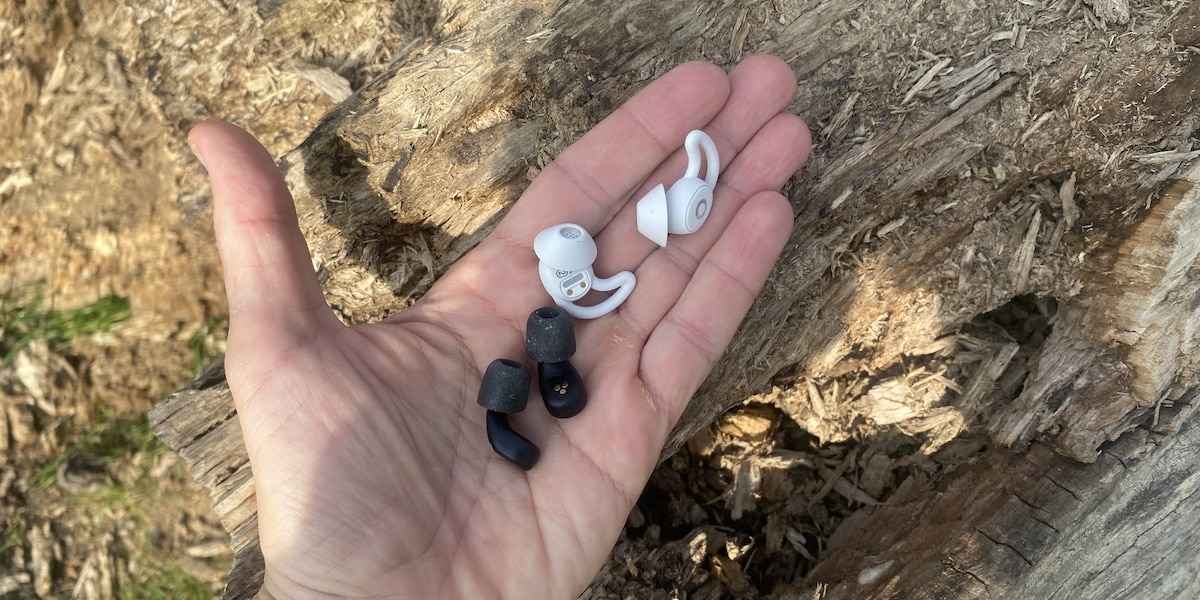
How they deal with real world noise
QuietOn 4 works best when the noise is consistent. Snoring, engine hum or background city noise are exactly what it is designed for. It reduces those sounds rather than covering them up. That can feel more natural if you are sensitive to audio playing in your ears.
Ozlo handles a wider range of situations. Because you are masking noise rather than cancelling it, it can deal better with unpredictable sounds. A sudden noise is less likely to pull you out of sleep if it is competing with something you are already listening to.
This is less about which one is better and more about the type of noise you are dealing with.
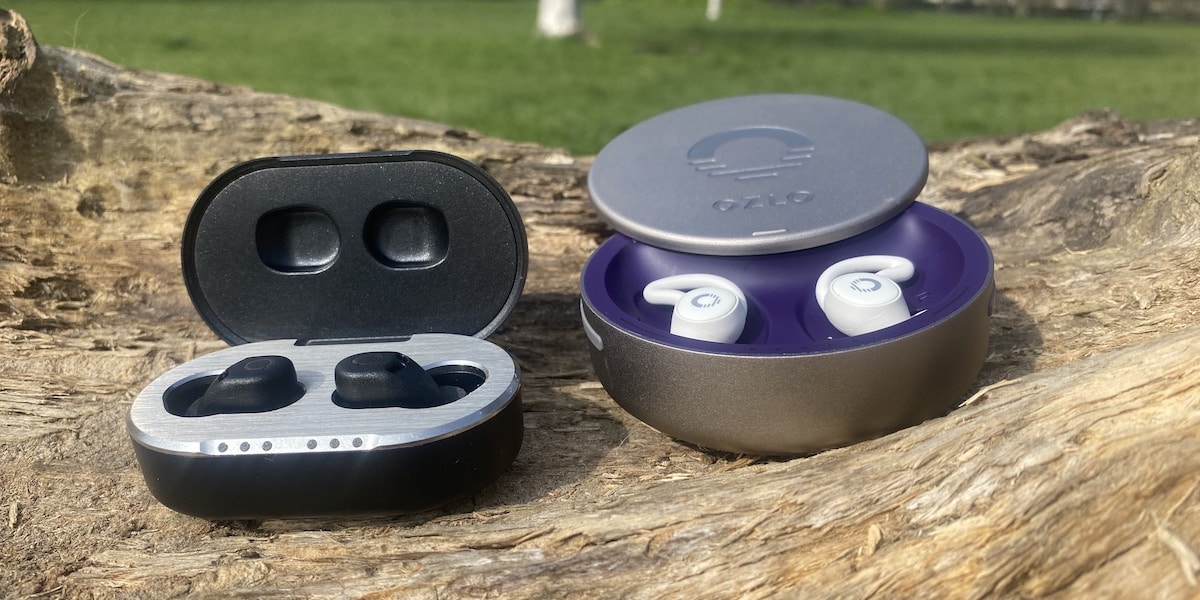
Comfort and overnight use
Both are clearly built for side sleeping, but they do not feel the same once you actually lie on them for a full night.
Ozlo Sleepbuds stand out here. The low profile design and soft tips mean they sit flush enough that you can lie on your side without that sharp pressure you get from regular earbuds. They stay in place and do not need constant adjustment, even when you move around. The fact that they manage this while still delivering audio is a big part of why they feel so well executed.
QuietOn 4 is also comfortable, but in a different way. The smaller size helps, and they sit neatly in the ear without sticking out much. At the same time, the fit is a bit more earplug-like. They do the job, but there is slightly more awareness of them, especially when your ear is pressed into the pillow.
So both work for overnight use, but they do not disappear in the same way. Ozlo feels more natural over long periods, while QuietOn leans more towards a functional, earplug-style fit.
As far as battery life – either of these will get you through a full night of sleep. And they both come with a portable charging case that you can use on the go.
Our takeaway
The duo sits in a similar price bracket, at around $300, so this is not a budget versus premium decision. It really comes down to how you want to deal with noise at night.
QuietOn 4 is the simpler option. You put them in and they get to work reducing background noise, with nothing to manage or think about. That makes them easy to live with, especially if the goal is to keep things as frictionless as possible.
Ozlo Sleepbuds take a different route. You are getting audio, an app and a Smart Case, which gives you far more control over what you hear. That also means a bit more setup and interaction, but it opens up more ways to deal with noise.
So neither is clearly better at this price. The choice is between removing sound as much as possible, or replacing it with something you control.
Ozlo Sleepbuds (view on Ozlo / Amazon); QuietOn 4 (view on QuietOn).
Tech specs comparison
Feature | Ozlo Sleepbuds | QuietOn 4 |
|---|---|---|
Price | ~$350 | ~$300 |
Core approach | Noise masking + audio | Active noise cancellation |
Audio playback | Yes, streaming + built-in sounds | No |
Bluetooth | Yes | No |
App | Yes | No |
Battery life | Up to 10 hours | Up to 28 hours |
Sleep features | Auto switch to masking sounds, app insights | None |
Case | Smart Case with extra features | Charging case |
Fit | Multiple tips, low profile | Compact, earplug-style |
Use style | Interactive, configurable | Passive, set and forget |
Subscribe to our monthly newsletter! Check out our YouTube channel.
And of course, you can follow Gadgets & Wearables on Google News and add us as a preferred source to get our expert news, reviews, and opinion in your feeds.
