

In/Out tennis line calling has come a long way since our 2017 review
Back in 2017, when I reviewed In/Out tennis for the first time, the idea felt slightly futuristic. A portable device that could act as your own electronic line judge, record video and help settle those endless “was it in?” arguments sounded clever, but it also felt like something still finding its feet.
Fast forward to 2026 and the product looks very different. In/Out has moved well beyond that original single-device setup into a full v4.0 system with Net Devices, Line Devices, multiple sport support and years of software updates that have made the whole thing feel much more practical.
In the original review, one of the main attractions was simplicity. You clipped the device onto the net post, connected it to your phone and suddenly your local tennis match had a touch of Hawk-Eye style technology. It was fun, useful and definitely something that got people talking on court.
But there were obvious limits. Asking one device sitting at the side of the net to judge everything was always ambitious. Accuracy depended heavily on positioning and calibration, and while the idea worked, it still felt like an early version of something that needed more refinement.
From one gadget to a proper court system
That is probably the biggest difference today. In/Out is no longer really selling one gadget. It is selling a court setup.
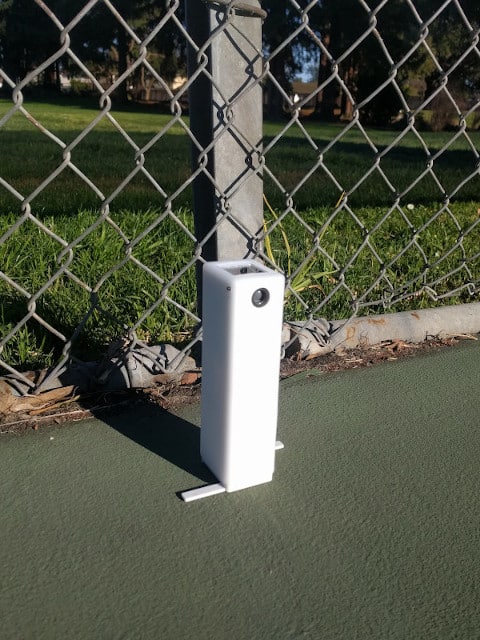
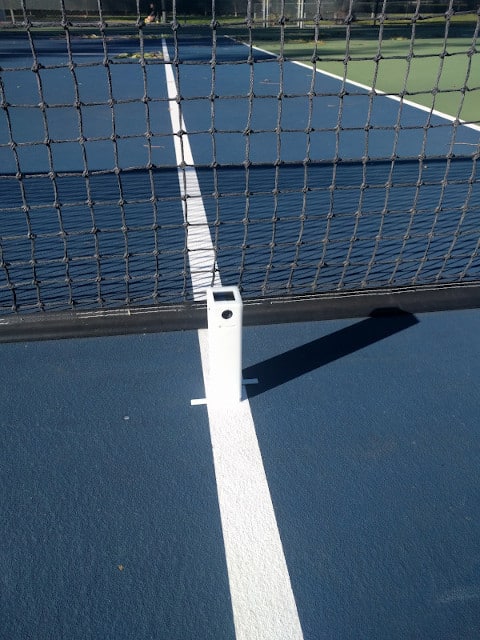
The company now uses Net Devices and Line Devices. Net Devices still sit on the net posts and handle the main match operation, while Line Devices sit directly along the lines they monitor. In/Out describes them as the equivalent of chair umpires and line umpires, which is actually a very good way to explain it.
This solves one of the obvious weaknesses from the original product. A device looking straight down a baseline has a much better chance of making an accurate call than one trying to judge everything from the side. In/Out says these Line Devices help deliver millimetre accuracy, and for amateur matches it recommends using two Net Devices and two Line Devices, particularly for baseline coverage.
Compared to the version I tested in 2017, this feels far less like a clever gadget experiment and much more like a serious officiating system.
Hardware has matured
My early review focused on a much simpler hardware package. Since then, In Out has gone through multiple generations including v1, v2, v3 and now v4.0.
Version 3.0 introduced support for a third middle camera on the Net Device, which expanded both video capture and match analysis. It also improved net-related tracking by separating serve net faults from rally net faults, something the original system could not handle nearly as well.
Version 4.0 takes things further with a dedicated app flow, clearer device pairing and support for a much more modular setup. One v4.0 device can now work with multiple Line Devices, and the whole system is positioned not just for tennis, but also pickleball and badminton. Also, now there’s no screen on the device itself – instead it all works through your smartphone.

Software did most of the real work
Looking back at the original review, the concept was already strong. What the product really needed was reliability.
That seems to be where most of the work happened. In/Out’s own changelog says there have been 75 software releases and five hardware generations over eight years, which tells you this was not a product left sitting after launch.
Updates improved camera speed, Line Device communication, calibration, ball detection and overall call consistency. There were fixes for cases where devices disagreed with each other, better automatic recalibration after movement and fewer false detections.
One feature I particularly like is the “Too Close To Call” alert. Instead of pretending every call is perfectly certain, the system can now flag when a decision falls inside the margin of error. That feels much more honest and much more useful for real tennis.
Back in 2017, the discussion was often whether the technology could work. Now the focus is more about how smoothly it works in practice.
The app matters much more now
When I first tested In/Out, the app was mostly there to support the device. Today it’s a much bigger part of the product.
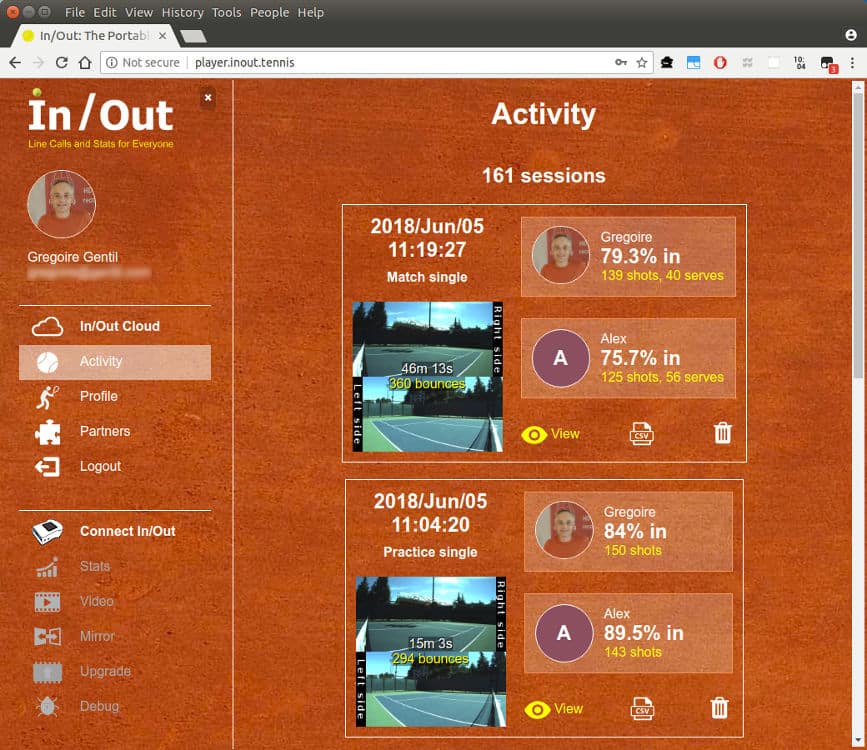
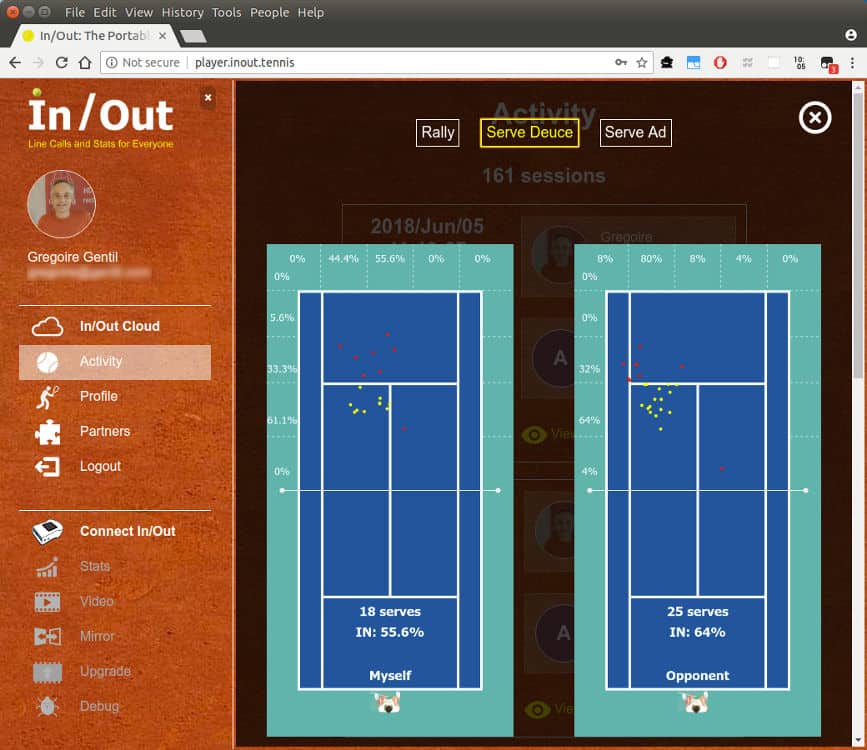
The v4.0 app handles umpiring, stats, camera views, replays and video recording. It can record from the phone or device view, stream matches and save videos directly to the smartphone. That makes it far more useful for coaching sessions and match review, not just line calls.
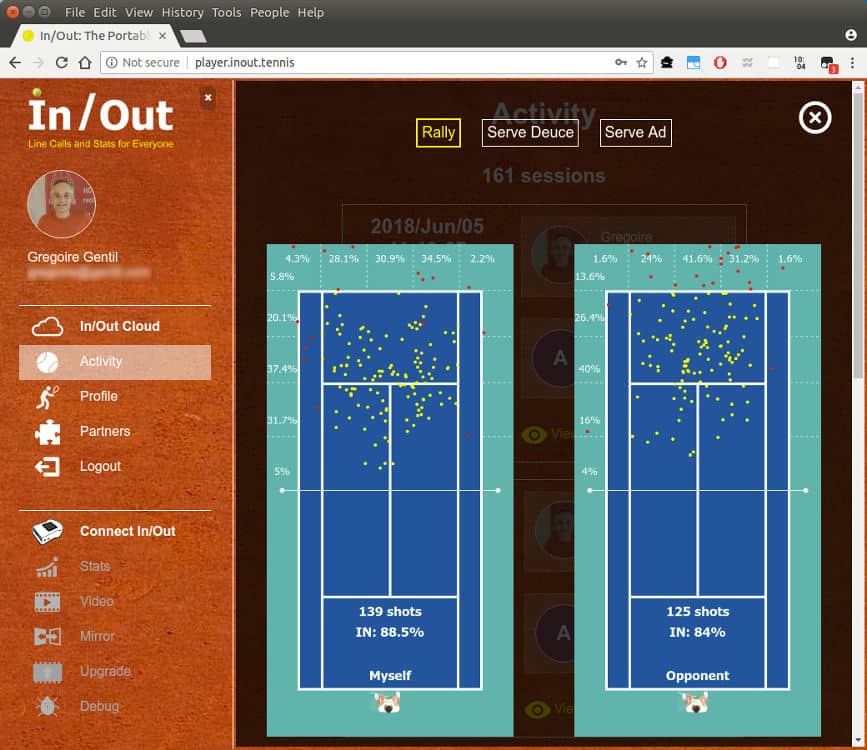
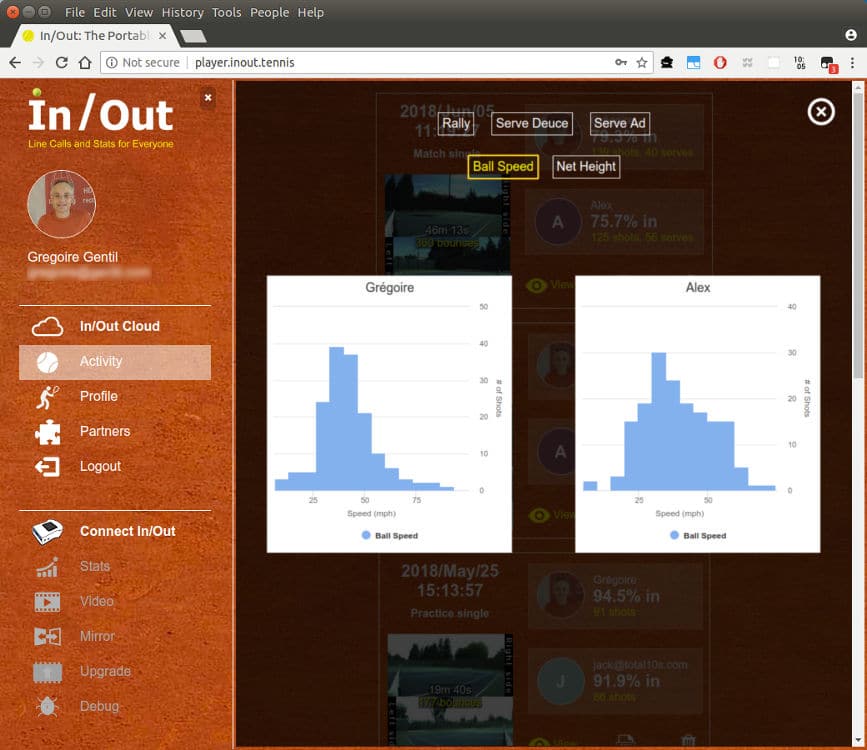
Stats have also grown. Training zones, player positioning and better Line Device stats all make the system feel less one-dimensional than before. It is still not trying to replace professional broadcast-level analytics, but it offers far more than the original “was it in or out?” use case.
Still not for everyone
One thing has not changed much. This is still a specialist product.
The current v4.0 pricing costs around $499 for one Net Device and two Line Devices. That means it is still aimed more at serious players, coaches and clubs than someone playing casual doubles once a week. But that was always the reality. Even in 2017, the value was strongest for people who played regularly enough to care about accuracy, video review and structured training.
You can also opt just for the Net Device for $299. Plus, there’s a special promotion with free shipping until May 8th for Europe. No customs fees or import duties guaranteed, too.
Looking back at that original review, the core idea was right. Tennis players hate bad line calls and love any tool that removes arguments. The difference now is that the product is far more complete.

Subscribe to our monthly newsletter! Check out our YouTube channel.
And of course, you can follow Gadgets & Wearables on Google News and add us as a preferred source to get our expert news, reviews, and opinion in your feeds.
