

Garmin’s 2025 activity report spotlights the 20,000-steps-a-day crowd
Garmin’s 2025 Connect report shows a few unexpected leaders, like Vietnam dominating racket sports activity, Brazil edging every other country in strength training, and Portugal waking up with the highest morning Body Battery levels. A small but committed group even averaged twenty thousand steps a day!
A world in motion
Garmin’s annual data drop is always a highlight for anyone who tracks their health with a wearable. It’s not just the volume of activity that stands out, but where and how users moved over the year. The 2025 report draws on anonymised data from tens of millions of people across the globe, covering everything from hiking habits to stress levels.
There’s a clear shift toward more training across nearly every activity type. Granted, some of this increase is due to growth in the user base. Nevertheless, the standout stories are hidden in the regional details.
Racket sports and strength training took off
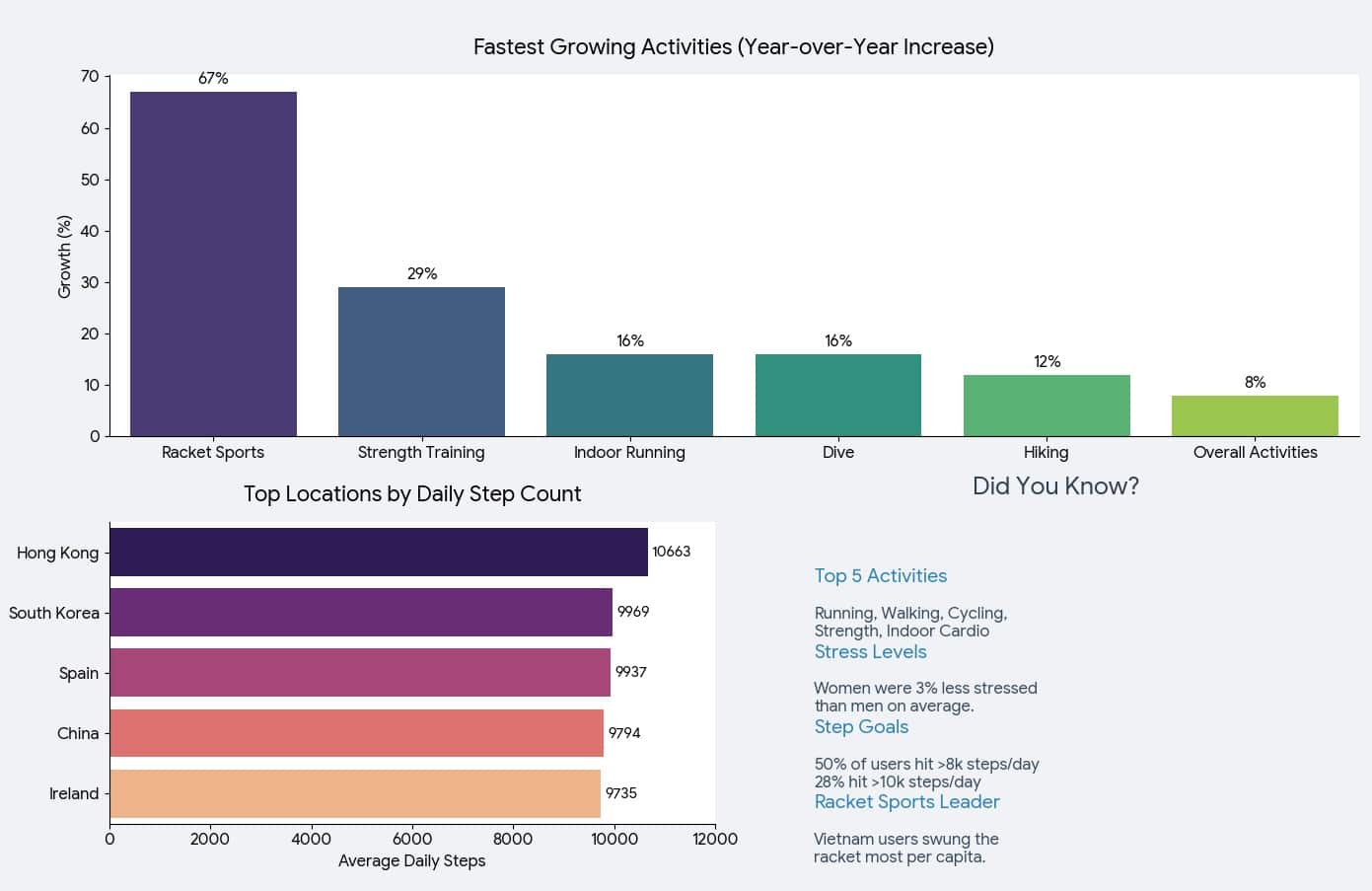
Out of all the logged workouts, racket sports had the sharpest rise. Pickleball, badminton, table tennis and more made a strong showing in the 2025 data. Vietnam led globally by frequency, with the 18 to 29 age group and women driving much of the increase.
Strength training continued its multi-year growth streak. Interestingly – women recorded more strength workouts than men overall, and Brazil stood out again, logging more sessions per user than any other country. Mexico followed in second, but the gap was wide.
Other activities like Pilates, HIIT and hiking also grew, with Slovenia topping the charts for trail hikes. There was also a noticeable uptick in winter sports and dive sessions, while classic activities like yoga and indoor cardio held steady.
Activity preferences shifted with age
Younger users still prefer running, especially outdoors. Track running was most common among those aged 18 to 29. Meanwhile, users in their 30s leaned into indoor training, with a strong preference for strength, cardio and treadmill workouts.
Trail running peaked with those in their 40s. And from 50 onward, the shift moved toward cycling, swimming and hiking. Users in their 60s had the highest outdoor cycling rates. Those 70 and above showed the strongest golf participation.

Time of day followed predictable patterns. Older Garmin users started early, often between 8 and 10 a.m. Those in their 20s were more active late afternoon and early evening, particularly between 4 and 7 p.m.

Step data showed clear overachievers
Garmin users walked more in 2025. The increase wasn’t massive, but it added up. More than half of all users hit at least 8,000 steps per day, and 28% averaged over 10,000.
Hong Kong once again led the global average with 10,663 daily steps, followed by South Korea, Spain, China and Ireland.
But the most surprising stat was the group who pushed even further. Around 0.4% of Garmin users managed to average 20,000 steps per day. That’s a pretty relentless pace that suggests either highly active professions, heavy training blocks or both.
Stress levels and recovery varied by location
Garmin’s stress metric, built off heart rate and HRV, painted a mixed picture. Women came in slightly lower on average stress than men. But the broader trend was age-based. Older users reported higher stress scores overall.
Country-level data showed some clear leaders. The Netherlands recorded the lowest stress scores globally, followed by Belgium, Portugal, Ireland and the UK. These regions seem to be managing their load more effectively.
Body Battery stats added another layer. Users in Portugal started the day with the highest energy levels. At the other end, Japanese users showed the lowest average morning score.
As for energy drain, China topped the list, with users there burning through more of their Body Battery during the day than anyone else. South African users, by contrast, conserved more and reported the highest average low-point.
Badges, big goals and the Garmin Connect+ highlight reel
Badges remain a core part of the Garmin experience. They gamify progress and push users toward consistency, especially during a motivation dip.
The most earned badge in 2025 was Global Wellness Day. But a few rare ones stood out too. The Appalachian Trail badge, which requires tracking 2,200 miles of steps, was earned by 0.5% of all users this year.
Even fewer made it to the top of Everest – at least virtually. Just 0.2% logged enough elevation gain to earn that badge in 2025. The all-time total of Everest badge holders still sits below 1%.
Source: Garmin
Subscribe to our monthly newsletter! Check out our YouTube channel.
And of course, you can follow Gadgets & Wearables on Google News and add us as a preferred source to get our expert news, reviews, and opinion in your feeds.
