

I tested the Amazfit Active Max vs Garmin for running
I wanted to see how the Amazfit Active Max holds up against a watch I know well, a Garmin Forerunner. Rather than relying on specs or lab tests, I wore both on the same 7.5 km run through central London to see how they recorded and interpreted the session.
This was not a clean park loop or a track workout. It was a typical city run through Zone 1 with traffic lights, brief stops, changes in rhythm and mixed terrain. That kind of session tends to expose how good a watch is at handling reality rather than ideal conditions.
You can check out the watches on the Zepp Health website and Garmin.com.
Distance tracking stays within reason
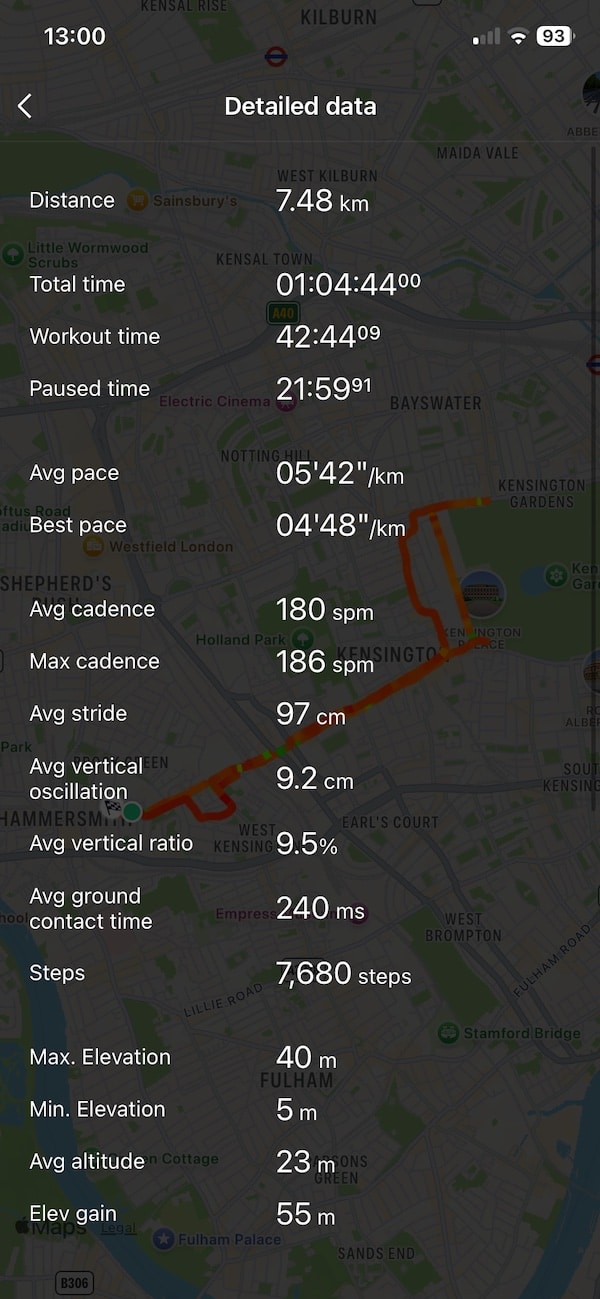
Both watches landed close enough on distance that neither raised concerns. Garmin recorded 7.58 km while Amazfit came in at 7.48 km. Over this kind of route, that difference sits well within normal GPS variation. Also, very little difference in the speed of acquiring the initial GPS connection.

So far so good.
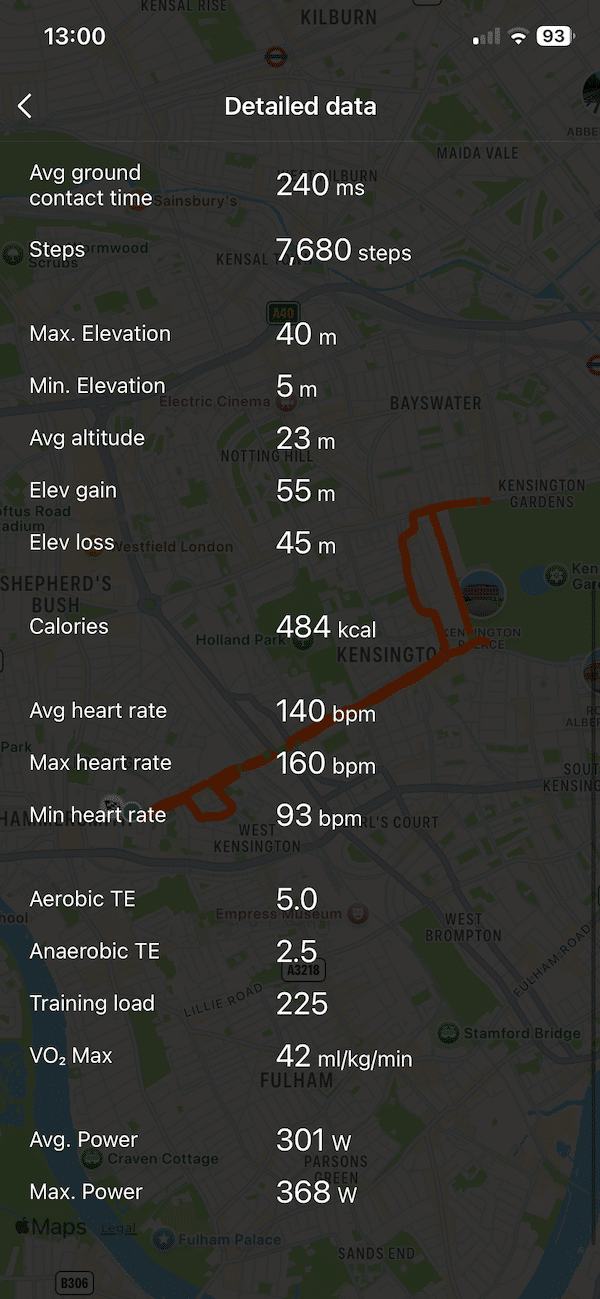
Heart rate is also where the two platforms were close. Amazfit gave me an average of 140 bpm with a peak of 160 bpm. Garmin reported 139 bpm on average and a slightly higher max of 166 bpm.

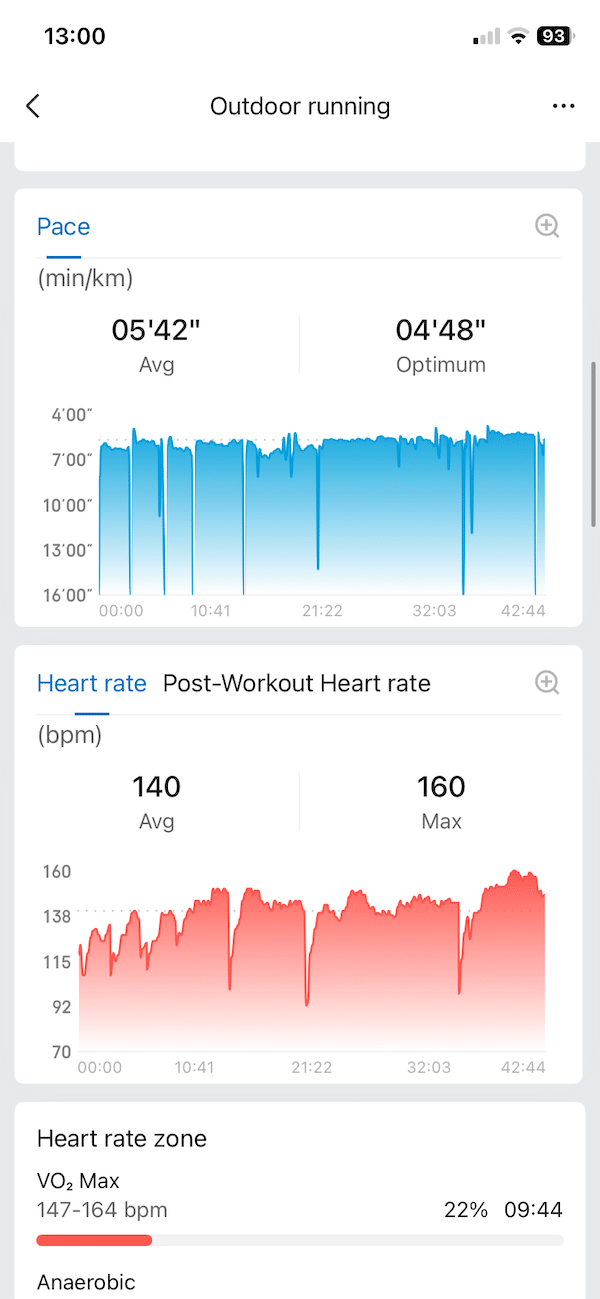

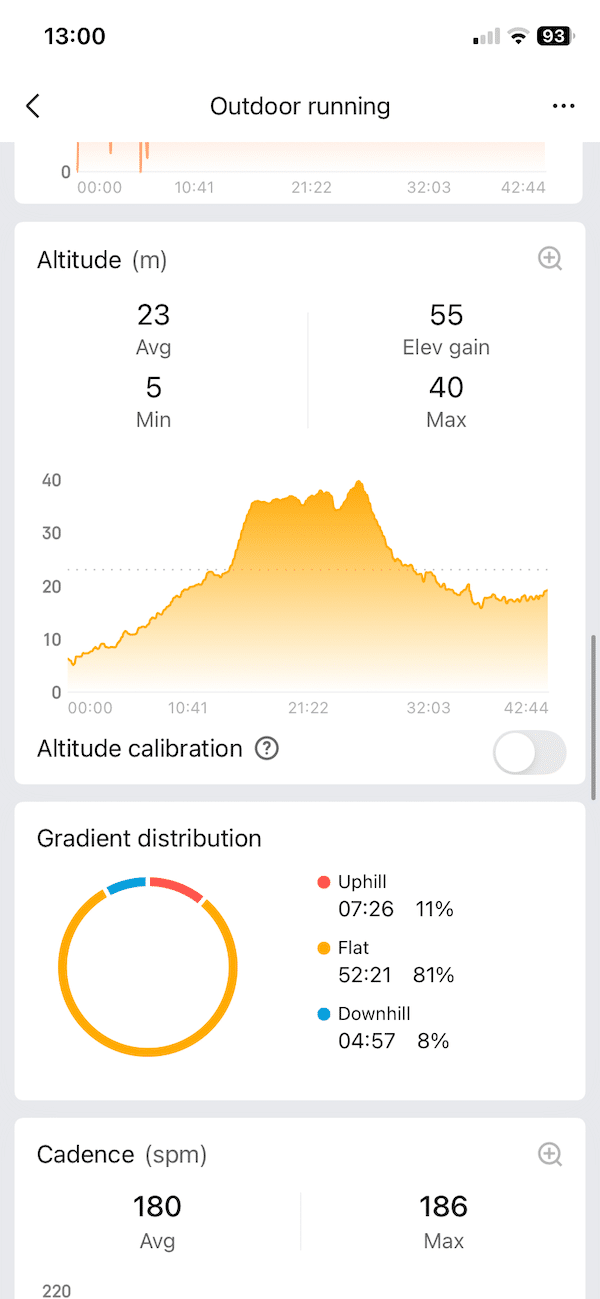

The overall pattern matched closely throughout the run. For an optical sensor in a stop start environment, that is a strong result on both sides. From a training point of view, I would be comfortable using either set of heart rate data to guide aerobic work.


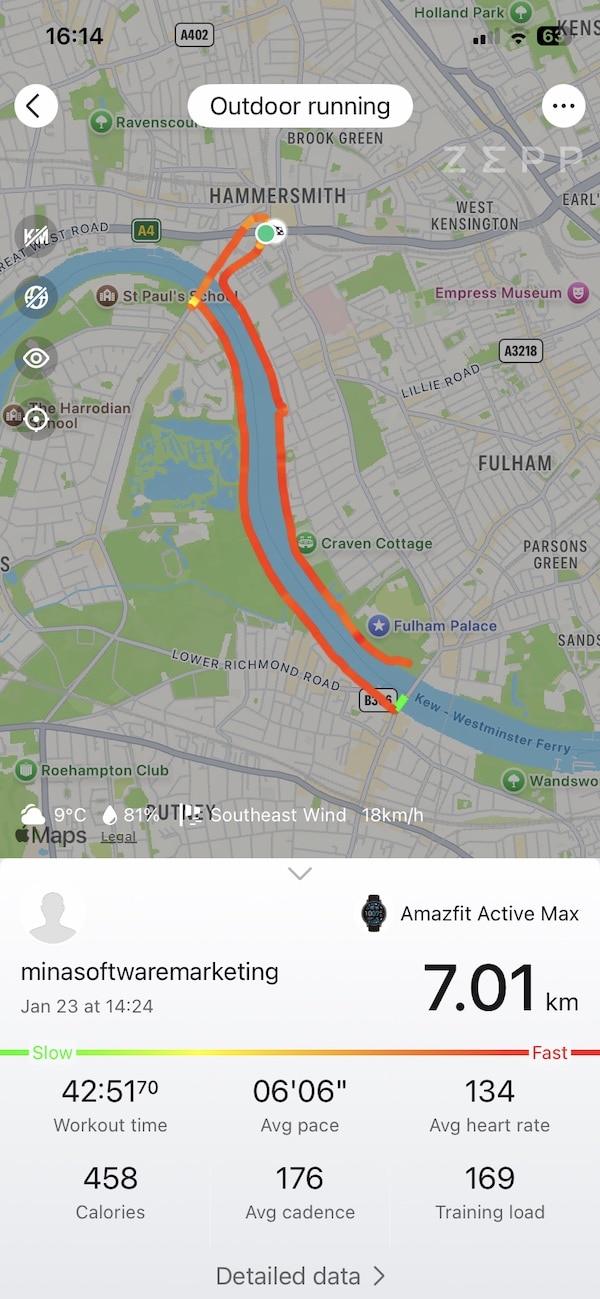
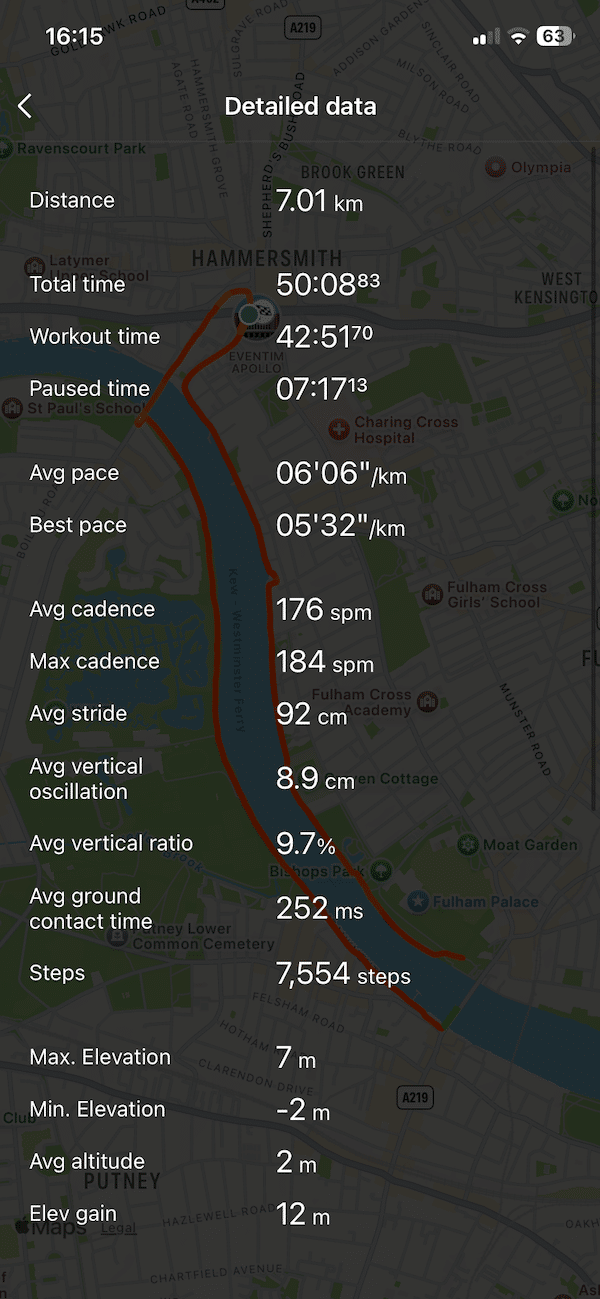
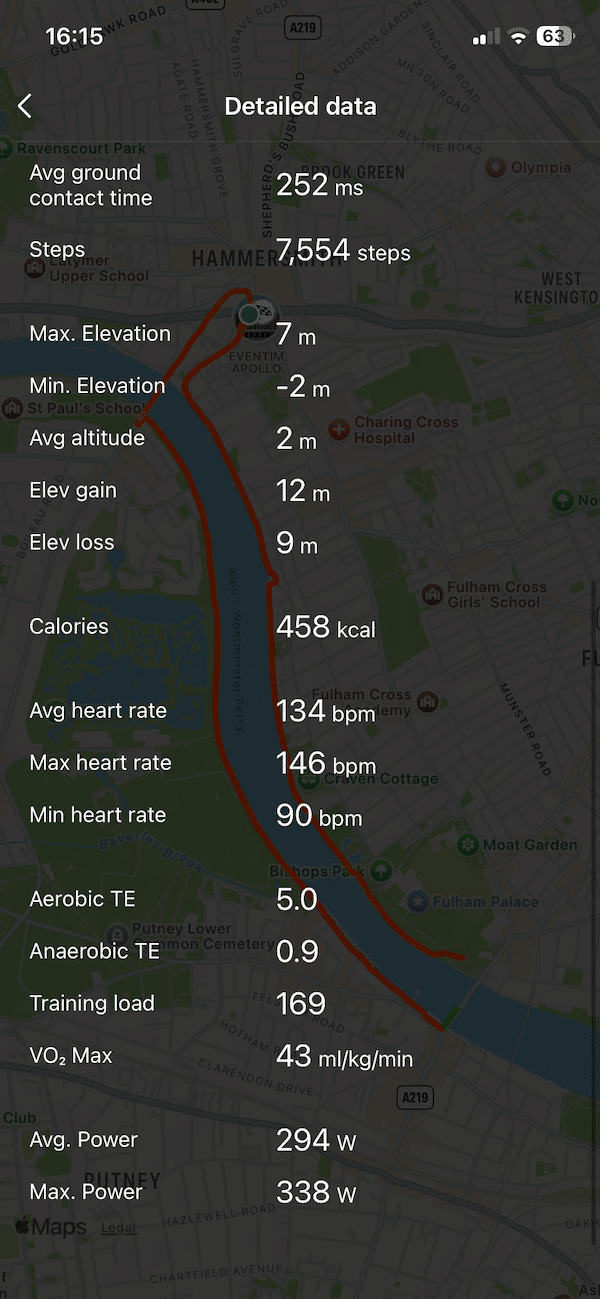
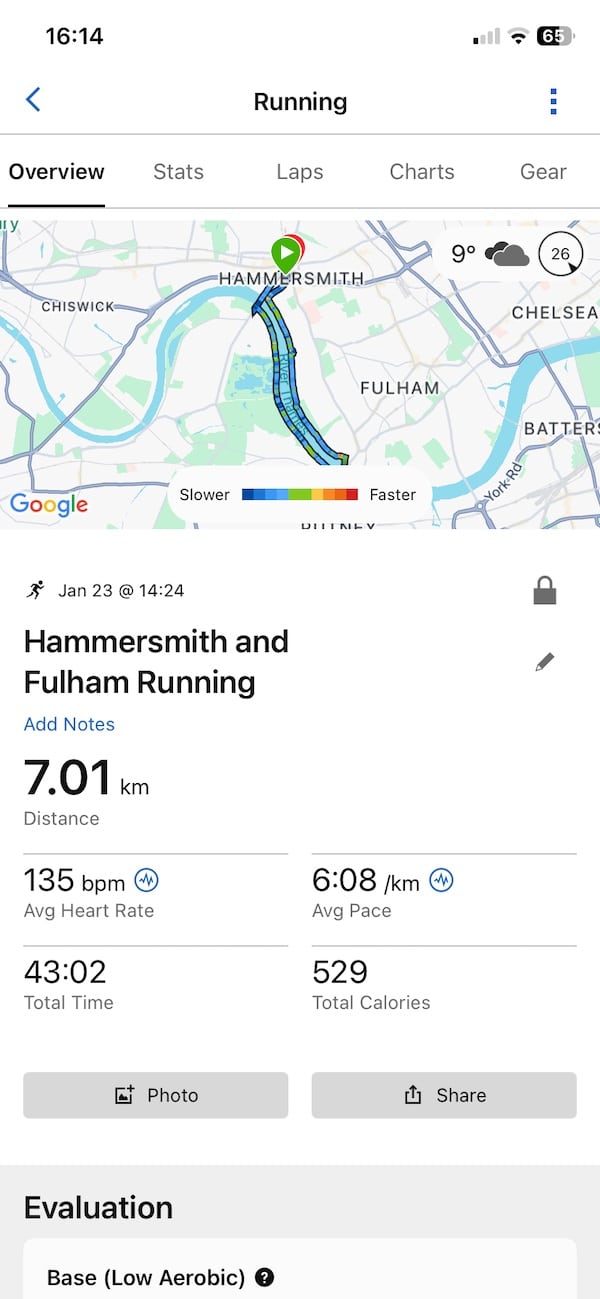
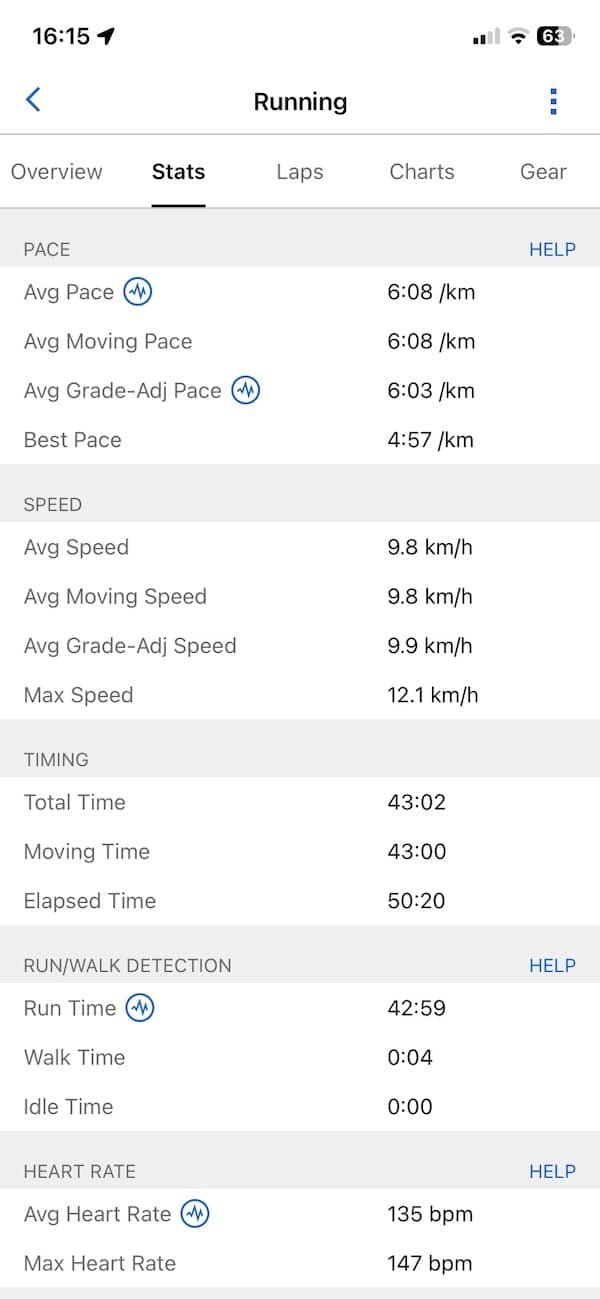
Granted there was a difference for HRmax, but this was an outlier. On my other runs the max heart rate difference was typically within 1-3 beats. A subsequent Zone 2 7K run in Central London showed pretty much identical GPS tracking and only a 1 bpm difference in average and maximum heart rate as shown in the screenshots below.
Running dynamics show small but consistent differences
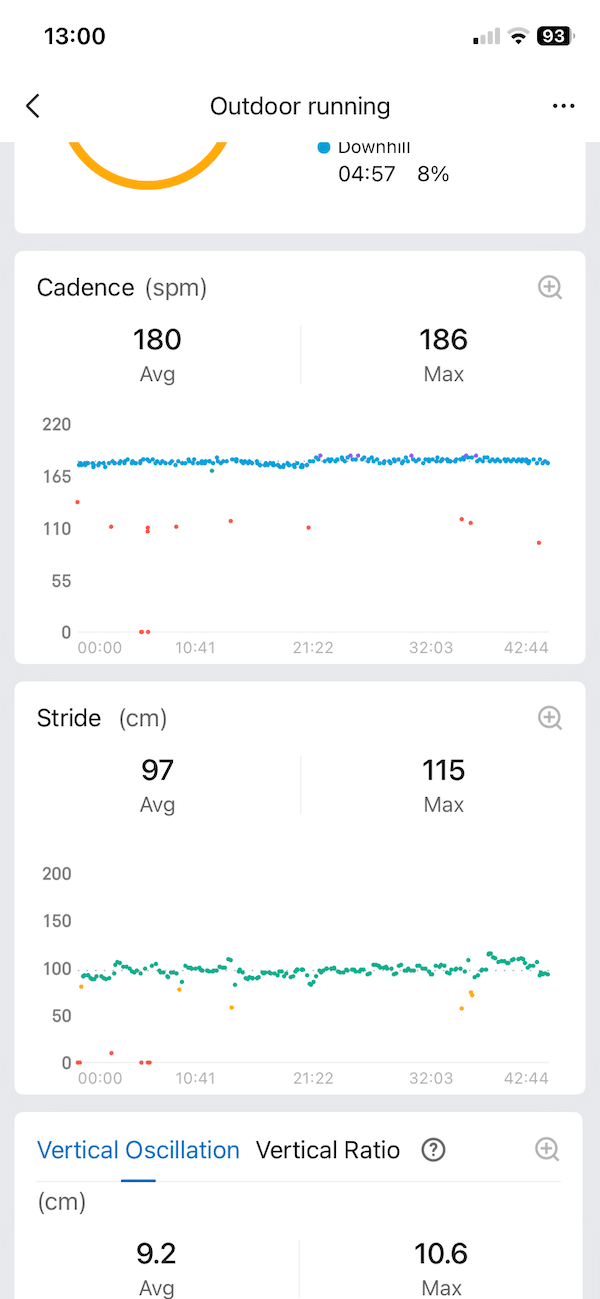
Cadence was close but not identical. Amazfit reported 180 spm on average while Garmin came in at 176 spm. I have seen this pattern before. Amazfit tends to sit a little higher on cadence, especially when pace fluctuates.
Stride length was effectively the same. Amazfit showed 97 cm and Garmin rounded that to 1 metre. That tells me both watches are broadly aligned on forward motion.

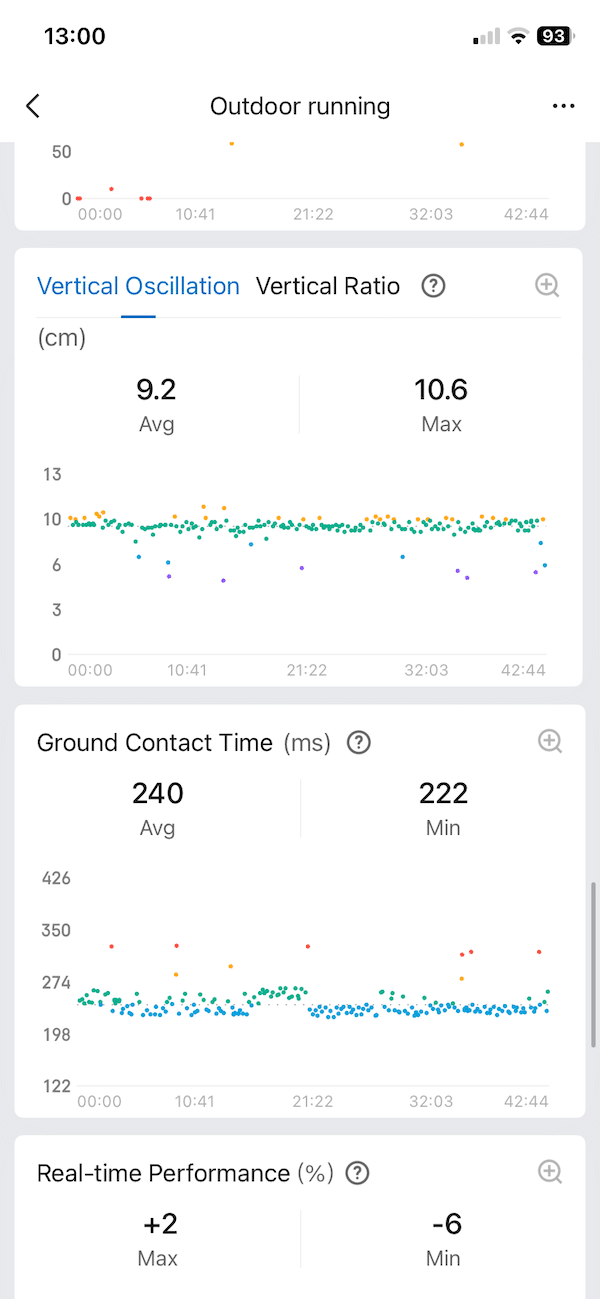
Vertical movement is where the numbers drifted further apart. Amazfit reported higher vertical oscillation and a higher vertical ratio. Garmin showed lower values for both, suggesting a more conservative view of bounce and efficiency. I tend to trust Garmin more here, based on long term consistency across different runs and shoes.
Ground contact time flipped the story. Amazfit logged a shorter contact time than Garmin. Both figures were plausible, but again this looks like a modelling difference rather than a meaningful disagreement about how I was running.
Training load interpretation
This is the area where the two ecosystems clearly diverged for me. But there’s a reason.
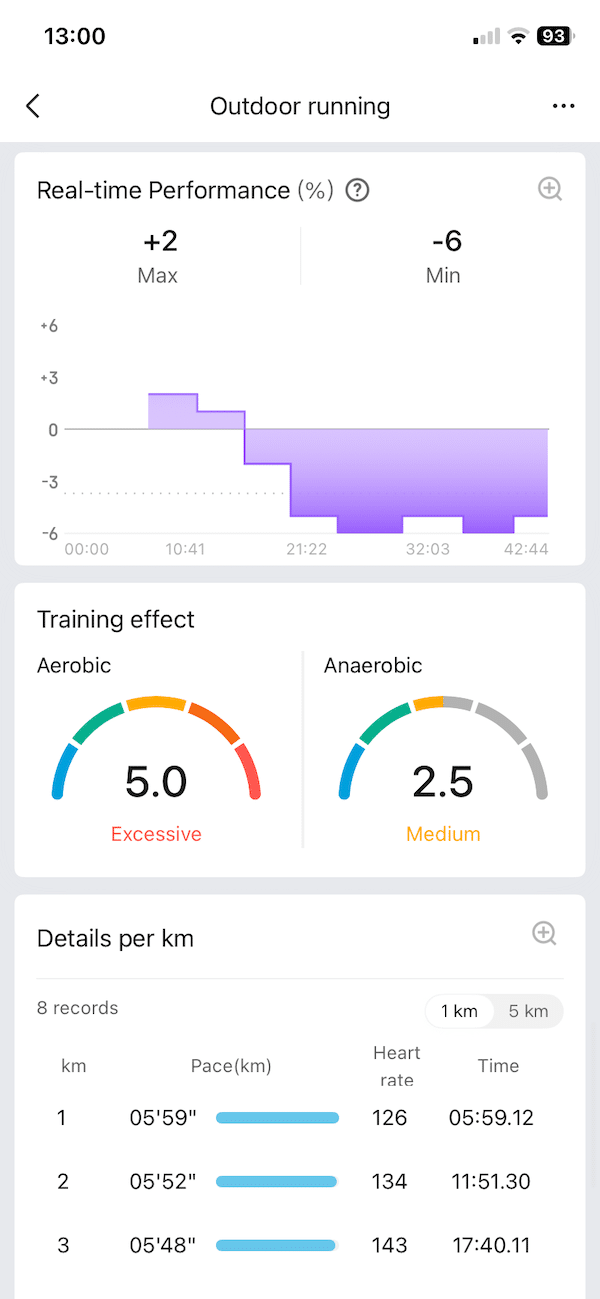
Amazfit rated the run as Aerobic 5.0 and labelled it excessive, with a high training load score and higher recovery time. Garmin classified the same session as a tempo focused aerobic run and assigned a much lower overall load.
Based on how the run felt, Garmin’s interpretation made more sense. This was a steady effort with interruptions, not an all out aerobic stress test.
Subsequently I looked at how my heart rate zones were set up. And the mystery was solved..
The Amazfit estimated my maximum heart rate from which it calculated the HR zones at 164 bpm, while Garmin pegged my max at 174 bpm. I have used the Garmin for years so it had time to estimate more accurately this metric. You can’t edit the Amazfit metric directly, but over time the max HR would have adjusted gradually. Which in turn would have eliminated this difference in training load.

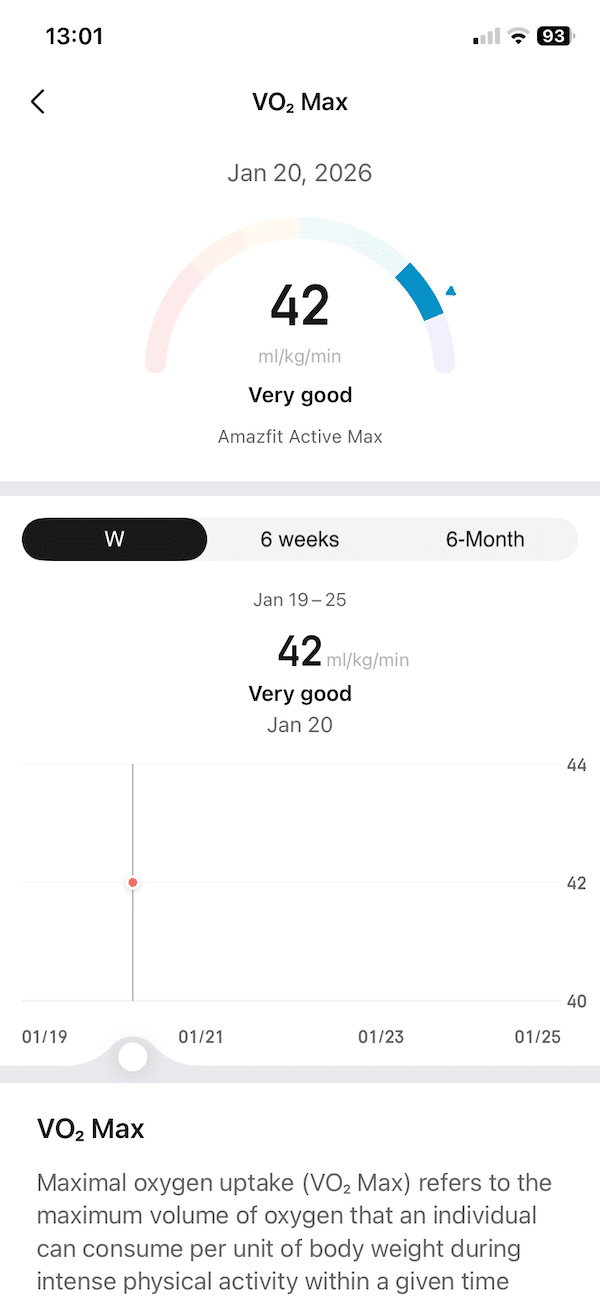
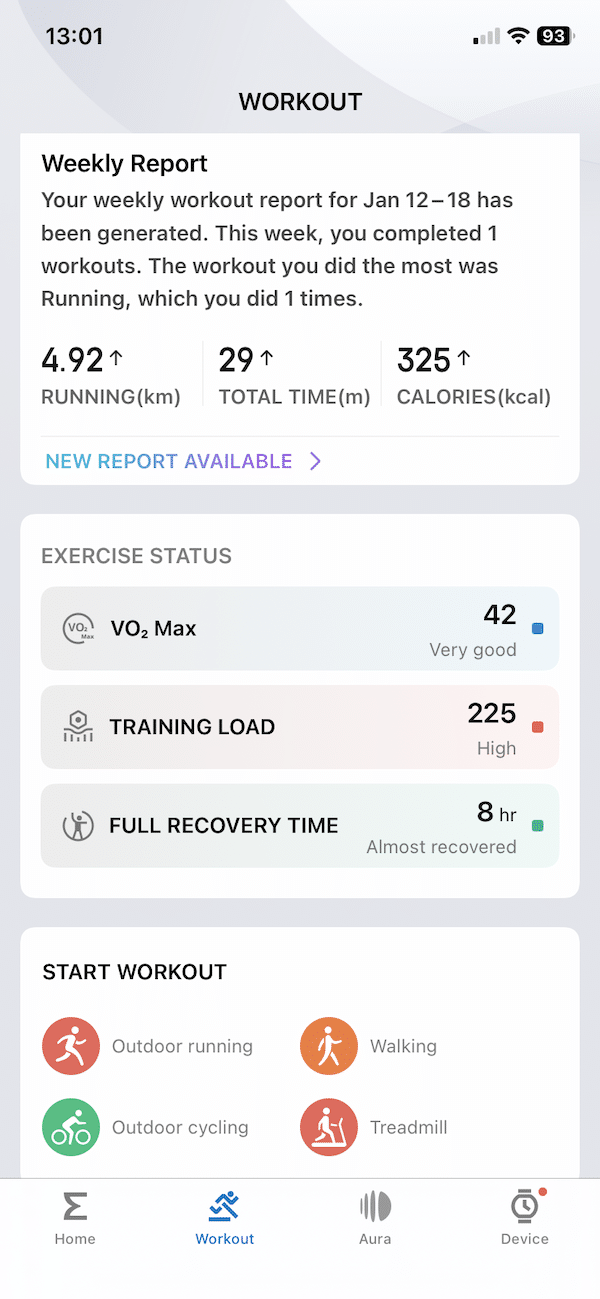
As far as Vo2Max, Amazfit estimated it at 42 ml per kg per minute and rated it as very good. That is 3 points below what my Garmin tells me. But again, the Garmin has had a longer amount of time establishing my baseline. On the very next run the Amazfit pushed me up to 43 ml per kg.
Final thoughts
The Amazfit Active Max captures the fundamentals well, especially when you factor in the price difference. Distance, heart rate and core running dynamics are solid and consistent, even in a messy urban environment. Where it still trails Garmin somewhat is in the depth of stats. You get more of them with Garmin.
Garmin’s Forerunner line is purpose built for sports tracking, with years of refinement around how sessions are classified and how stress is contextualised. Amazfit takes a more generic approach. But it’s not a huge difference.

Amazfit Active Max*
Order nowI would say – Amazfit does the job well and offers strong value for money. For runners who rely on training load, recovery guidance and long term planning, Garmin still has the edge, even if that edge comes at a much higher cost. The gap is narrowing, but it has not totally disappeared yet.
One thing that genuinely stands out on the Amazfit side is the beautiful design and excellent display. The large screen is clear, bright and easy to read at a glance. It makes a real difference during training and is one area where Amazfit arguably outshines many more expensive sports watches.
Subscribe to our monthly newsletter! Check out our YouTube channel.
And of course, you can follow Gadgets & Wearables on Google News and add us as your preferred source to get our expert news, reviews, and opinion in your feeds.
