

The real differences between Amazfit Active Max vs Active 2
Two watches from Zepp Health’s Active line, launched exactly a year apart, bring similar software but very different hardware priorities. I reviewed the Amazfit Active 2 in January 2025 and the larger Amazfit Active Max in January 2026. On paper they overlap in features, but in real-world use they offer two very different experiences.
View on Zepp Health, Amazon.
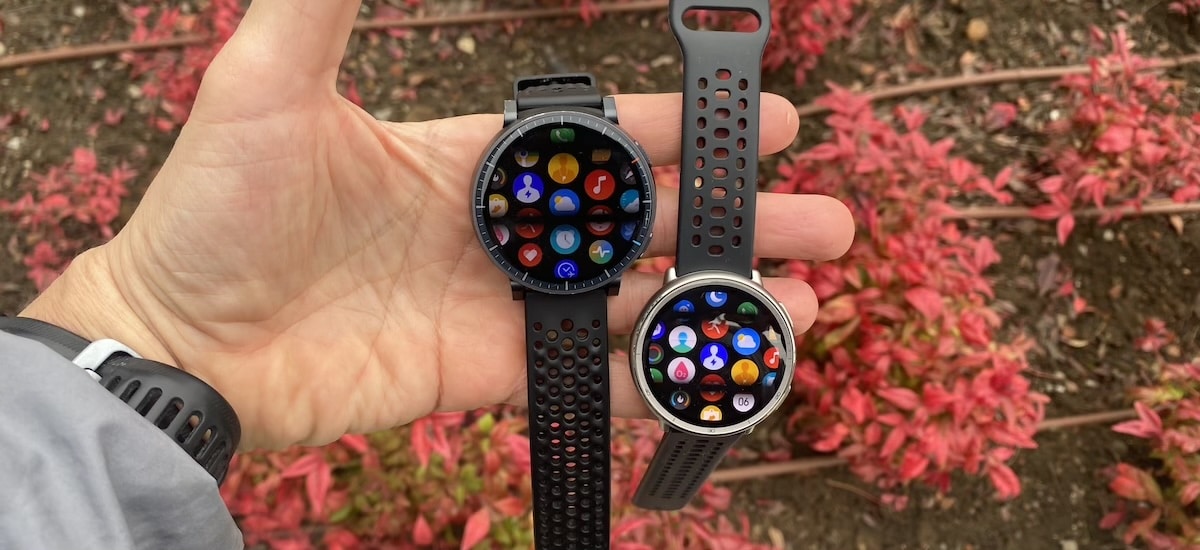
Display size and brightness shape how you use them
Let’s start with the obvious. The Max is noticeably larger. It comes with a 1.5-inch AMOLED display in a 48.5 mm case, with a 480 by 480 resolution. Brightness reaches over 3000 nits, which is a major benefit for outdoor use. The screen stays legible in full sun, which matters.
The Active 2 uses 1.32-inch AMOLED screen in a 43.9 mm case. It’s smaller, but the pixel density is good. Brightness peaks around 2000 nits, which is decent, but not quite at the level of the Max. Both models support Always-on Display and deliver crisp visuals.
The Premium version of Active 2 uses a scratch-resistant sapphire glass and replaces the aluminium body with stainless steel. That adds a touch more weight and a slightly dressier look, but the core display experience is unchanged.
Battery life makes the Max a better travel companion
Battery life is one of the biggest real-world differences. The Max includes a 658 mAh battery that can stretch to 25 days of typical use. GPS use goes up to 64 hours, which gives it serious endurance for long outdoor sessions or travel.
Active 2 runs on a 270 mAh battery and tops out around 10 days for standard use. GPS tracking sits closer to 21 to 24 hours. That’s respectable, but you’ll be charging it far more frequently than the Max.
Both use magnetic charging. The actual time to full charge is similar, but the intervals between charging sessions aren’t.

Storage capacity changes how you use offline features
The Max includes around 4 GB of usable storage. That’s enough for offline songs, podcasts and map files. It makes the offline features feel complete and functional, even without a phone nearby.
The Active 2 offers only about 0.5 GB of usable space. That works for a few tracks or a small region of offline maps, but it fills up quickly. The offline experience is more limited as a result.
Bluetooth 5.3 on the Max helps with faster transfers of media files and firmware updates. Active 2 runs on Bluetooth 5.2, which is still reliable but slightly slower when syncing large files.
Maps and route tools are better on Max
Both devices support offline maps and multi-GNSS satellite tracking. But the Max takes it further. You can import routes from platforms like Komoot and benefit from turn-by-turn prompts. The watch also supports contour and terrain layers, offering better visual context when out on a route.
The Active 2 does offer offline maps, but the implementation is more basic. You don’t get the same terrain layering or turn-by-turn route instructions. The smaller display also makes it harder to view map details while moving.
Neither device has dual-band GPS, but both are solid performers for basic route tracking.
Workout modes and training tools
Sport mode count is slightly higher on the Max, with more than 170 compared to around 160 on Active 2. The difference is not just quantity. The Max includes more niche options like ski mountaineering, stair climbing, and hybrid workouts like HYROX-style sessions. These modes give it broader training flexibility for specific types of athletes.
You also get a more comfortable view of live metrics during workouts on the Max. The larger screen simply makes data easier to see at a glance. That helps when switching between pace, heart rate zones, and map views mid-activity.
As far as health and fitness sensors – the list is pretty much the same. Not not much of a difference there.
Hardware, water resistance and extras
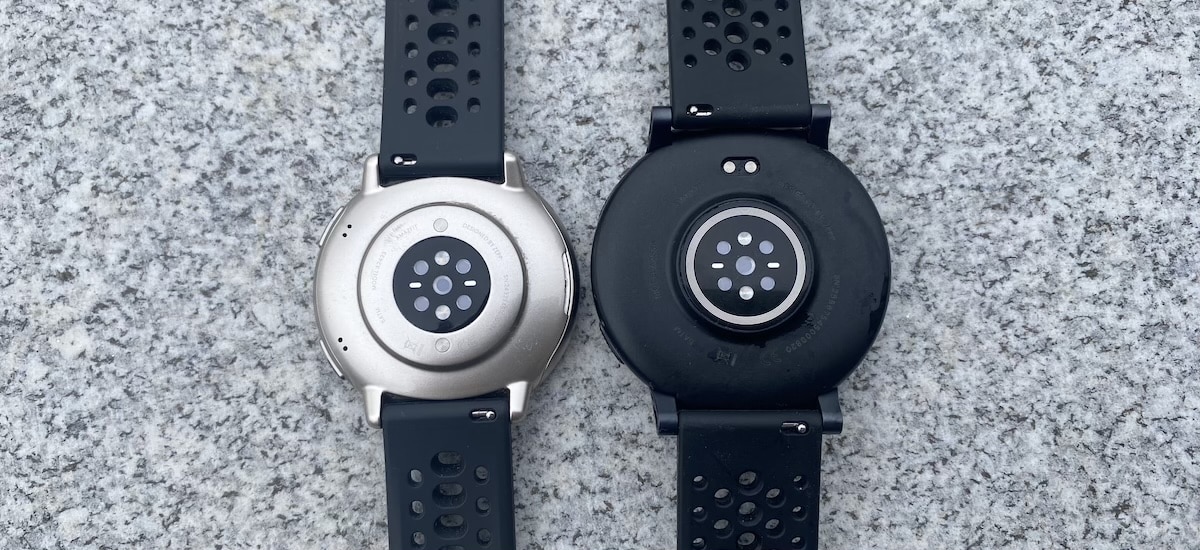
The similarities extend to the 5 ATM water resistance and use of magnetic charging. You get two physical buttons on each for navigation. Neither model includes LTE or Wi-Fi, and both rely on Bluetooth for syncing and calls.
All variants support region-dependent NFC payments through Zepp Pay. Availability depends on country and bank support.
Which one is the better fit?
If I had to choose, I’d go with the Active Max if battery life, storage, and a big screen matter to you. At around $169, it feels like good value for what you get, especially if you train outdoors, rely on maps or music, or just don’t want to think about charging every few days.
The Active 2 still makes a lot of sense for everyday wear. At roughly $99, it’s lighter, more compact, and easier to live with day to day. The Premium version sits closer to $129 and mainly buys you the stainless steel case and a slightly smarter look. But if you actually plan to use offline maps and media properly, the Max justifies the extra cost by being the more capable watch overall.
View on Zepp Health, Amazon.
Amazfit Active Max vs Active 2: Tech specs comparison
Specification | Amazfit Active Max | Amazfit Active 2 | Amazfit Active 2 Premium |
|---|---|---|---|
Case size | 48.5 × 48.5 × 12.2 mm | 43.9 × 43.9 × 9.9 mm | 43.9 × 43.9 × 9.9 mm |
Weight (without strap) | 39.5 g | 29.5 g | 31.6 g |
Case material | Aluminium alloy | Aluminium alloy | Stainless steel |
Display type | AMOLED | AMOLED | AMOLED |
Display size | 1.5 inch | 1.32 inch | 1.32 inch |
Resolution | 480 × 480 | 466 × 466 | 466 × 466 |
Always on display | Yes | Yes | Yes |
Battery capacity | ~658 mAh | ~270 mAh | ~270 mAh |
Typical battery life | Up to 25 days | Up to 10 days | Up to 10 days |
GPS battery life | Up to ~64 hours | Up to ~21–24 hours | Up to ~21–24 hours |
Charging | Magnetic | Magnetic | Magnetic |
Water resistance | 5 ATM | 5 ATM | 5 ATM |
Buttons | 2 | 2 | 2 |
Operating system | Zepp OS | Zepp OS | Zepp OS |
Onboard storage | ~4 GB | ~0.5 GB | ~0.5 GB |
Speaker and microphone | Yes | Yes | Yes |
Bluetooth | BLE 5.3 | BLE 5.2 | BLE 5.2 |
GNSS | Multi-system GPS | Multi-system GPS | Multi-system GPS |
Dual-band GPS | No | No | No |
Offline maps | Yes | Yes | Yes |
Sensors | Optical heart rate, SpO2, temperature, accelerometer, gyroscope, barometric altimeter, compass, ambient light | Optical heart rate (BioTracker 6.0), SpO2, temperature, accelerometer, gyroscope, barometric altimeter, compass | Optical heart rate (BioTracker 6.0), SpO2, temperature, accelerometer, gyroscope, barometric altimeter, compass |
NFC payments | Region dependent | Region dependent | Region dependent |
Sports modes | 170+ | 160+ | 160+ |
Subscribe to our monthly newsletter! Check out our YouTube channel.
And of course, you can follow Gadgets & Wearables on Google News and add us as a preferred source to get our expert news, reviews, and opinion in your feeds.
