

New open-source tool Heda helps explore Withings health trends
Heda is a new open-source dashboard gaining attention on Reddit for how it handles health data from the Withings ecosystem. Built by a user frustrated with the limitations of the official app, it turns ZIP file exports into a offline dashboard focused on long-term trends.
Just yesterday we wrote about an open-source app for users of the Oura Ring. Today another similar app has popped up. This time for Withings.
The developer shared a demo and invited feedback. Many users were quick to test it with their own data and post screenshots showing steep improvements in readability compared to the native Withings app.
The difference is clear. Where Withings focuses on short-term summaries and calendar views, Heda stretches the timeline. You can scroll back months or even a full year to see how sleep, weight and activity evolved across different life phases. The interface adds support for event markers, so you can label periods like injury, vacation or new routines to give context to what changed and when.

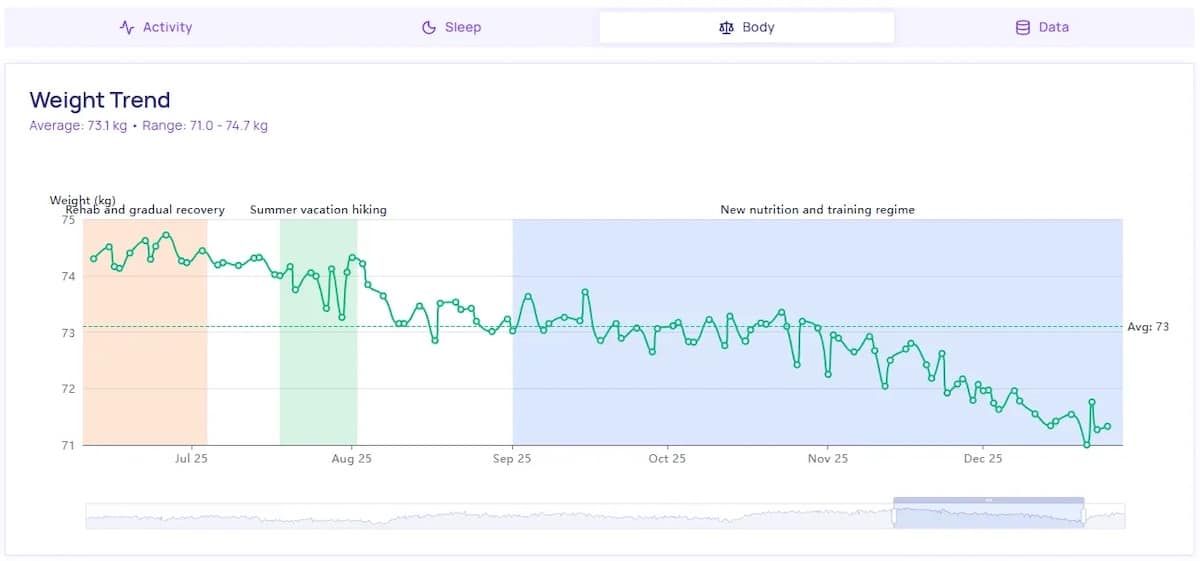
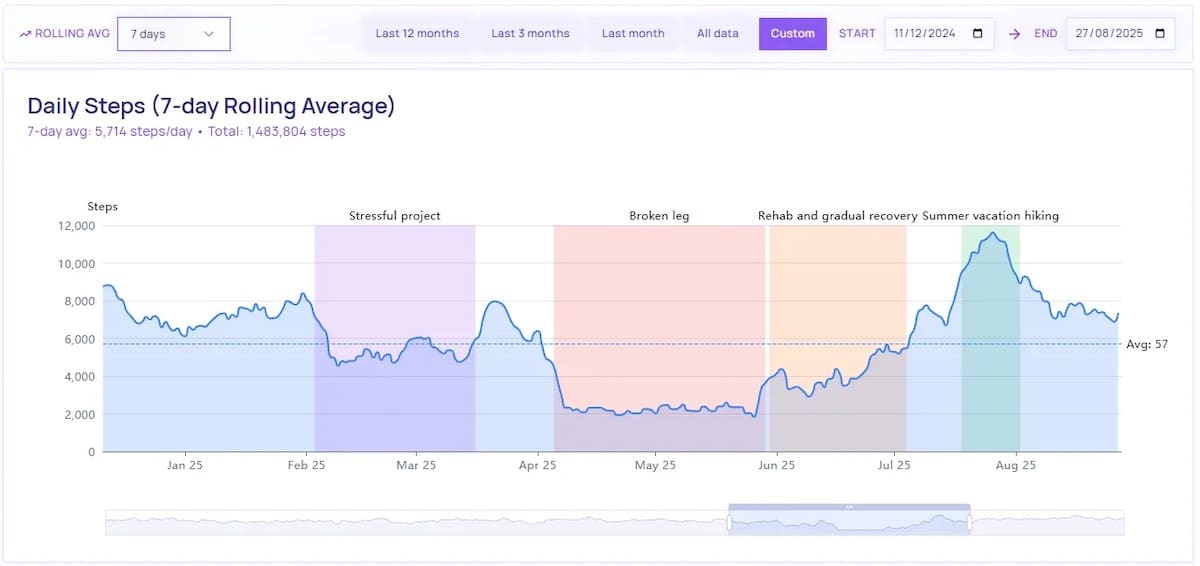
ZIP in, charts out
There’s no account to create and no syncing involved. The tool runs entirely inside the browser using IndexedDB, meaning the ZIP archive you upload from Withings stays local. That approach keeps the process simple and private. Just download your archive from Withings, upload it into Heda, and explore the visualisations.
It handles steps, weight and sleep data, smoothing the results with rolling averages. The dashboard also highlights your averages and allows period comparison. You can use it to see what impact a stressful project had on your steps, how weight responded to a rehab period, or whether sleep improved after a shift in bedtime.
Designed for long-term interpretation
Heda’s charts don’t just mirror what you already get in the Withings app. They extend it. The step graph includes a 7-day average with event overlays, which makes it easier to spot true drops or gains. Weight is presented with smoothing and comparison ranges. Sleep is displayed by duration and time of night, exposing patterns that might otherwise be missed.
Everything is built using Apache ECharts and renders quickly, even with large datasets. For many users the key appeal is that Heda shows trends rather than isolated numbers. It helps connect the dots between behavior and outcomes over time.
Still a work in progress
The project is open source and already has a GitHub repository. The developer has flagged that parts of the code were written or refined using generative AI, though all outputs are manually reviewed. There’s also a fake ZIP file if you want to try it before uploading your own.
At this stage, it only supports Withings exports, but the structure leaves room for future expansion. Whether or not that happens remains to be seen. While Heda processes everything locally in your browser and no data is uploaded to a server, users should always be cautious when handling personal health records, even with open-source tools.
Subscribe to our monthly newsletter! Check out our YouTube channel.
And of course, you can follow Gadgets & Wearables on Google News and add us as your preferred source to get our expert news, reviews, and opinion in your feeds.
