

Huawei finally lifts the curtain on Band 11 Pro and Band 11
Huawei finally pulled the curtain back on the Band 11 and its more capable sibling, the Band 11 Pro. These trackers refine the formula we have seen in previous years, focusing on better screens and smarter internal sensors.
A familiar look with better materials
The new series keeps the tall and narrow look that defines modern fitness trackers, but the Pro model feels a bit more substantial. It uses an aluminium alloy case that gives it a more refined touch compared to the standard model. You can get the Pro in green, blue, or black. Also noticeable is that the Pro version adapts a new look with curved edges. The basic version continues the design language of the previous model.
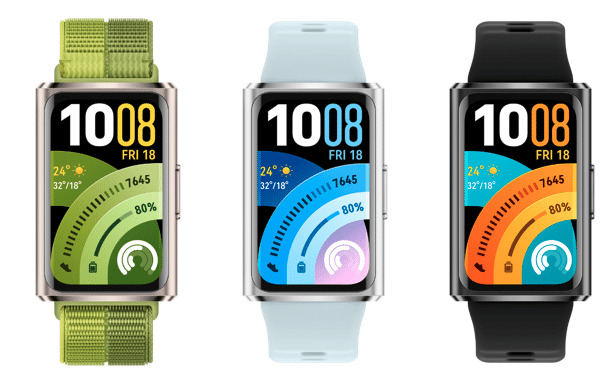
The standard Band 11 offers a few more options, including beige, white, and purple, though some of those versions swap the metal for a durable polymer.
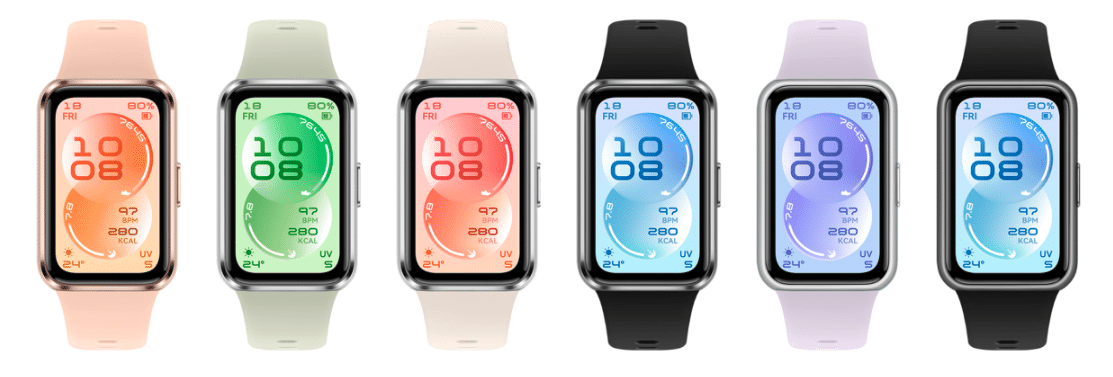
Both devices feature a 1.62 inch AMOLED screen. So no difference there. The resolution is sharp at 286 by 482 pixels, which results in a pixel density of 347 PPI. This is high enough that you will not see individual pixels while checking your heart rate or reading a text notification. Huawei says it has also improved the brightness for outdoor use.
Huawei has managed to keep these devices very light, with the Pro weighing 18 grams and the standard version coming in at 16 or 17 grams depending on the materials.
The big difference is inside
While they look nearly identical on your wrist, the internals set them apart. The Band 11 Pro includes built in GPS. This is the main reason to spend the extra money if you run or cycle outdoors. You can leave your phone at home and still get an accurate map of your route and pace. The standard Band 11 lacks this hardware, so it has to piggyback off your phone’s GPS to track your location.
Beyond the GPS, both trackers share a deep set of sensors. They use a 9 axis IMU that combines an accelerometer, gyroscope, along with a magnetometer. They also feature the usual optical heart rate sensor and an ambient light sensor. You get the full suite of Huawei health tracking, including blood oxygen levels, sleep monitoring, and stress tracking. They even include emotion tracking now, which tries to gauge your mood based on physiological data throughout the day.
Living with the battery life
Battery performance of the 300mAh is identical across both models. On a light usage profile, you can stretch these out to 14 days. If you use them like a normal person, with notifications on and occasional workouts, expect about eight days. If you love the always on display and want every sensor running constantly, that number drops to about three days. Switch on the GPS on the Pro and it will come down further.
Charging is still handled by a magnetic cable that snaps onto the back. It is a quick and reliable system that has worked well for Huawei in the past. Both bands are rated at 5 ATM for water resistance. Pretty much the standard these days.
Our takeaway
If you are a runner or someone who spends a lot of time tracking outdoor movements without a phone, the Pro is the obvious choice. The aluminium build also makes it feel more like a piece of jewelry than a plastic toy. For everyone else who just wants a reliable step counter and notification hub, the standard Band 11 does the exact same job for a more accessible price.
Right now the devices are only available in certain regions. The standard Band 11 is entering the market at approximately €50. If you want the Pro model with its GPS and metal housing, you are looking at roughly €70. These prices place the Band 11 series right in the middle of the budget wearable market, offering high end display technology without the high end smartwatch price tag.
View Band 11 and 11 Pro on Huawei.com.
Tech specs comparison: Band 11 pro vs Band 11
Feature | Huawei Band 11 Pro | Huawei Band 11 |
|---|---|---|
Dimensions | 43.5 × 28.2 × 8.99 mm | 42.6 × 28.2 × 8.99 mm |
Weight (without strap) | Approx. 18 g | Approx. 17 g (aluminium) / 16 g (polymer) |
Display size | 1.62 inch | 1.62 inch |
Display type | AMOLED | AMOLED |
Resolution | 286 × 482 pixels | 286 × 482 pixels |
Pixel density | 347 PPI | 347 PPI |
Touch and controls | Full touchscreen + side button | Full touchscreen + side button |
Case material | Aluminium alloy | Aluminium alloy or durable polymer |
Strap material | Fluoroelastomer | Fluoroelastomer |
Available colours | Green, Blue, Black | Beige, Green, White, Black, Purple, Black (polymer) |
Sensors | Accelerometer, gyroscope, magnetometer, optical heart rate, ambient light | Accelerometer, gyroscope, magnetometer, optical heart rate, ambient light |
Built in GPS | Yes | No |
Water resistance | 5 ATM | 5 ATM |
Connectivity | Bluetooth 6.0, BLE, 2.4 GHz | Bluetooth 6.0, BLE, 2.4 GHz |
Battery life (max) | Up to 14 days | Up to 14 days |
Battery life (typical use) | Up to 8 days | Up to 8 days |
Battery life (AOD on) | Up to 3 days | Up to 3 days |
Subscribe to our monthly newsletter! Check out our YouTube channel.
And of course, you can follow Gadgets & Wearables on Google News and add us as a preferred source to get our expert news, reviews, and opinion in your feeds.
