

This new tool lets Claude analyse your Withings metrics
Withings users now have a new way to access their health data, one that skips the app entirely and routes everything through AI. A new open source MCP server connects Withings devices to Claude, allowing users to query their metrics in plain English.
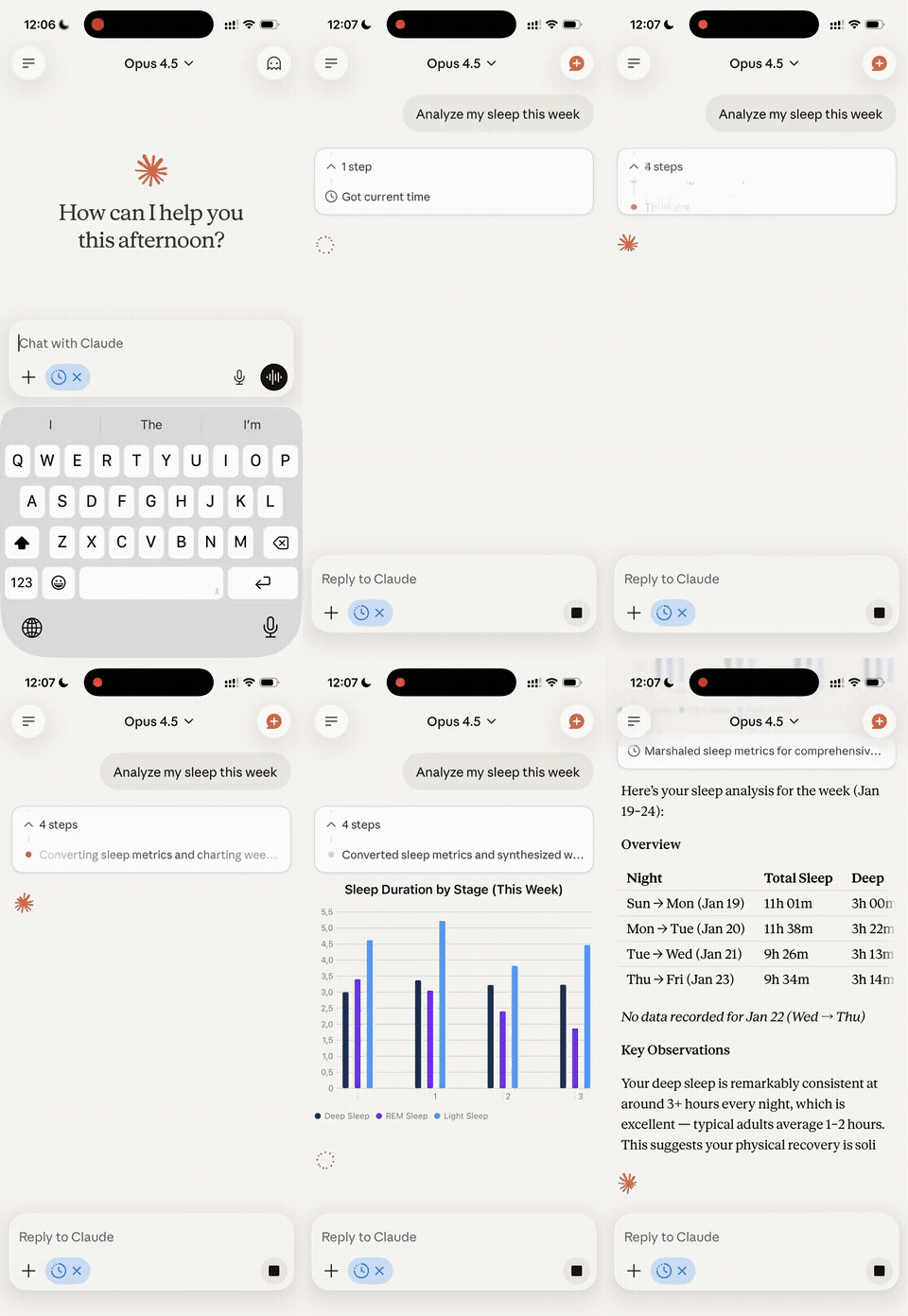
The idea is simple on the surface. Instead of scrolling through charts in the Withings app, you just ask questions. The AI pulls in your data and responds with analysis. That includes sleep stages, weight trends, ECG readings, blood pressure, activity levels and more.
What the MCP server actually does
The MCP server basically sits between your Withings account and Claude and links the two together. Once you connect it, the AI gets read only access to your data through a secure login. Your login details are not shared with the AI itself, the server handles that part and only passes along the data when you actually ask for it.
Behind the scenes, it runs on something called the Model Context Protocol. That is just a standard for letting AI plug into external data sources in a clean way. In simple terms, it turns your health data into something you can chat with.
That changes the whole experience a bit. You are not digging through charts anymore. You just ask questions. How has my sleep been this month, is my resting heart rate going up, am I actually making progress with my weight. The AI pulls everything together and gives you a straight answer. At least, that’s the idea.
A wide range of data in one place
The breadth of supported data is wide. Pretty much anything that syncs to your Withings account is accessible. That includes smart scales, hybrid watches, sleep tracking mats and blood pressure monitors.
Sleep data goes beyond simple duration. You can dig into light, deep and REM stages, heart rate during the night, breathing disturbances and snoring detection. On the body composition side, it pulls in weight, fat percentage, muscle mass and other metrics tied to connected scales.
Heart health data is also part of the mix. ECG readings, atrial fibrillation detection results, pulse wave velocity and blood pressure measurements are all available for analysis. Activity data rounds things out with steps, calories, elevation and workout summaries.
It is not that this data was hidden before. The difference is how it is accessed. The AI layer brings everything together and makes it easier to explore without jumping between screens.
Privacy, control and the open source angle
Now let’s not forget, Withings already has its own AI layer called “Withings Intelligence,” built into the Withings app. But this is part of their subscription tier and still in beta. So if you are not on the pair tier, this gives you an alternative.
The project is open source. Which means the more tech savvy can inspect the code and even run the server if they want full control over how your data is handled.
For the rest of us, the hosted version is more convenient. It uses encrypted tokens and avoids storing personal health data beyond what is needed for an active session. Access can be revoked at any time through your Withings account.
Still, it introduces a third party into a sensitive data flow. Even with safeguards in place, this is not the same as staying entirely within the official ecosystem. So that’s something to keep in mind.
Subscribe to our monthly newsletter! Check out our YouTube channel.
And of course, you can follow Gadgets & Wearables on Google News and add us as a preferred source to get our expert news, reviews, and opinion in your feeds.
