

Prungo FluxGo vs Kineon MOVE Plus Pro: What really separates them
This comparison builds on our in depth reviews of the Prungo FluxGo and the Kineon MOVE Plus Pro. These are two modular light therapy systems that take slightly different paths to the same goal.
Both use three pods that are connected with straps. Both rely on red and infrared light for deep tissue treatment and focus on pain relief and recovery. The wavelengths are fairly similar. But their design choices, power delivery and day to day usability set them apart in some important ways.
You can check out the devices on Prongo’s website (use code INY15 at checkout for 15% off). and the Kineon website (use code GADGET10 for $50 off). Let’s get into it.
Form factor and flexibility
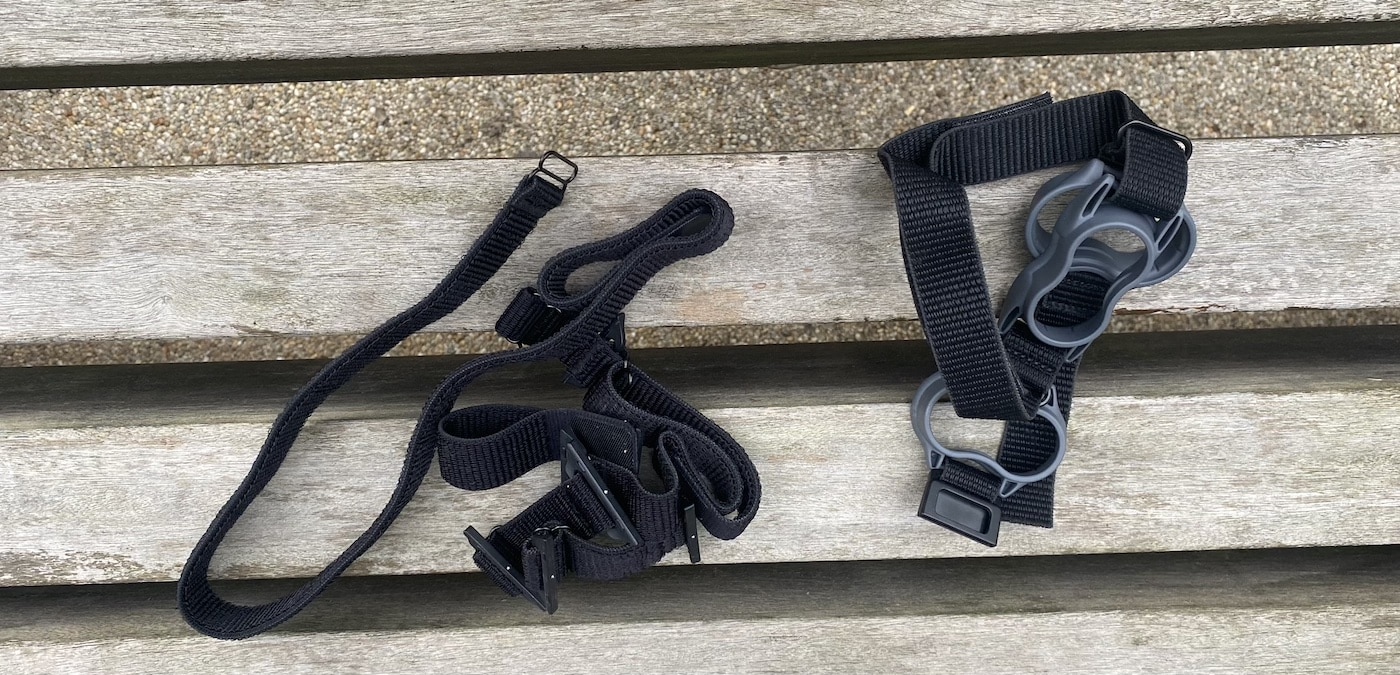
At a glance the two systems look similar. Each uses three modular pods and a strap system. The similarity ends once you start using them. FluxGo allows the three modules to work together or be split up so you can treat different areas at the same time. That gives it a lot of flexibility if you want to target more than one joint or muscle group in a single session. The strap mechanism, although not perfect, is also easier to understand.
MOVE Plus Pro takes a more fixed approach. Its three modules are designed to sit in a specific configuration. This suits knee focused use very well, but it limits how freely you can spread the modules around the body. The design choice makes setup more predictable, but also less adaptable.
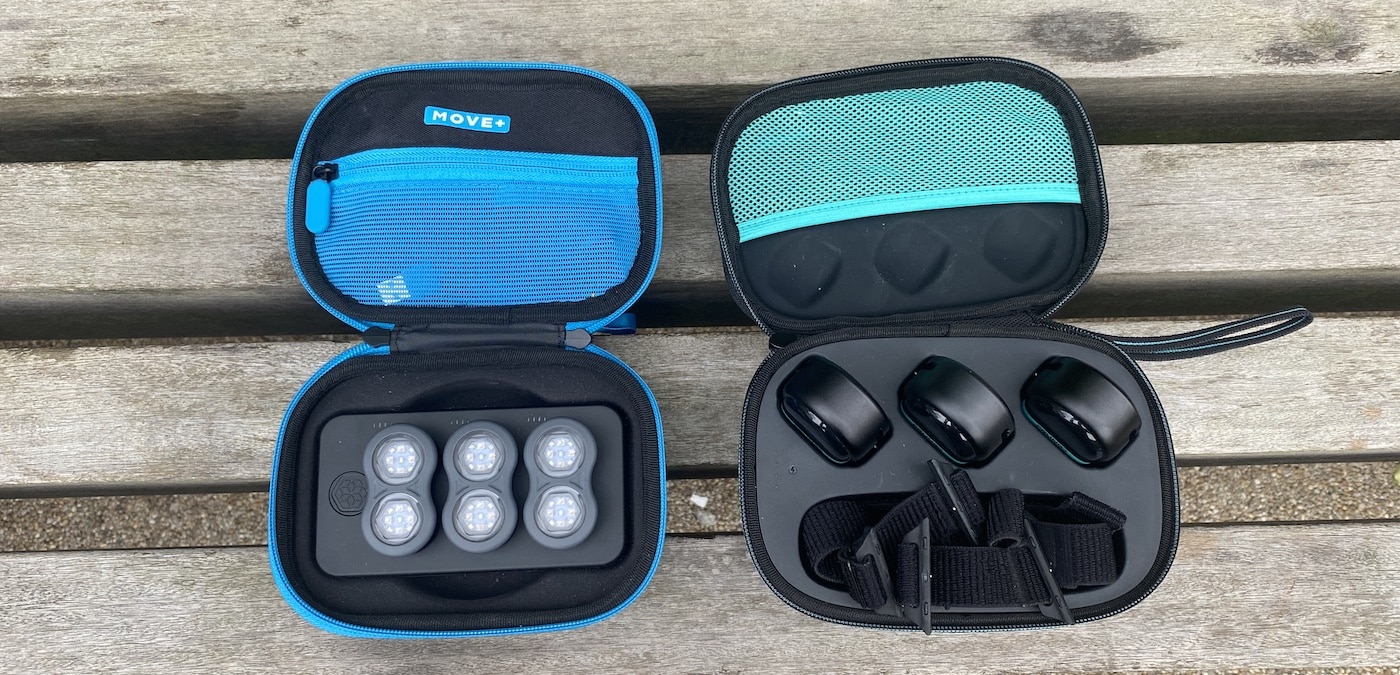
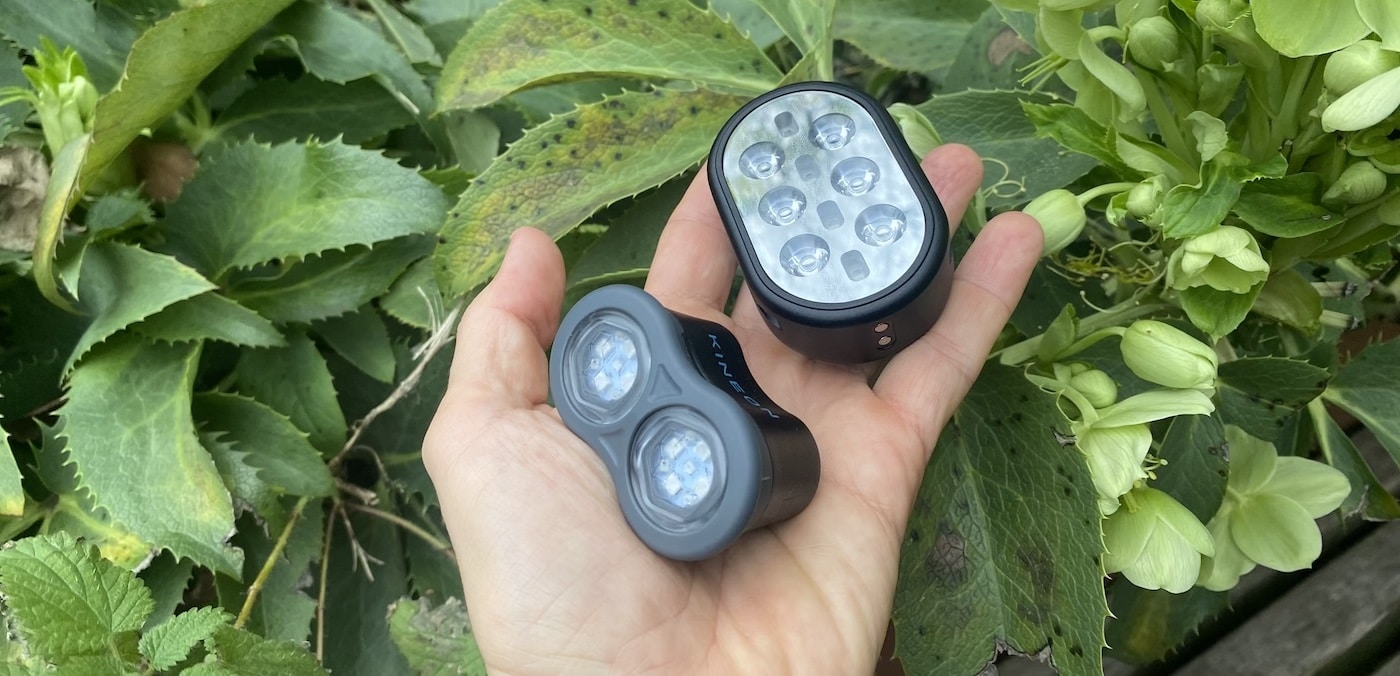
FluxGo’s modules measure 72 x 48 x 29 millimetres, with a total system weight of 970 grams including the case. MOVE Plus Pro modules are smaller at 59 x 37 x 37 millimetres, and the total weight comes in at 790 grams.
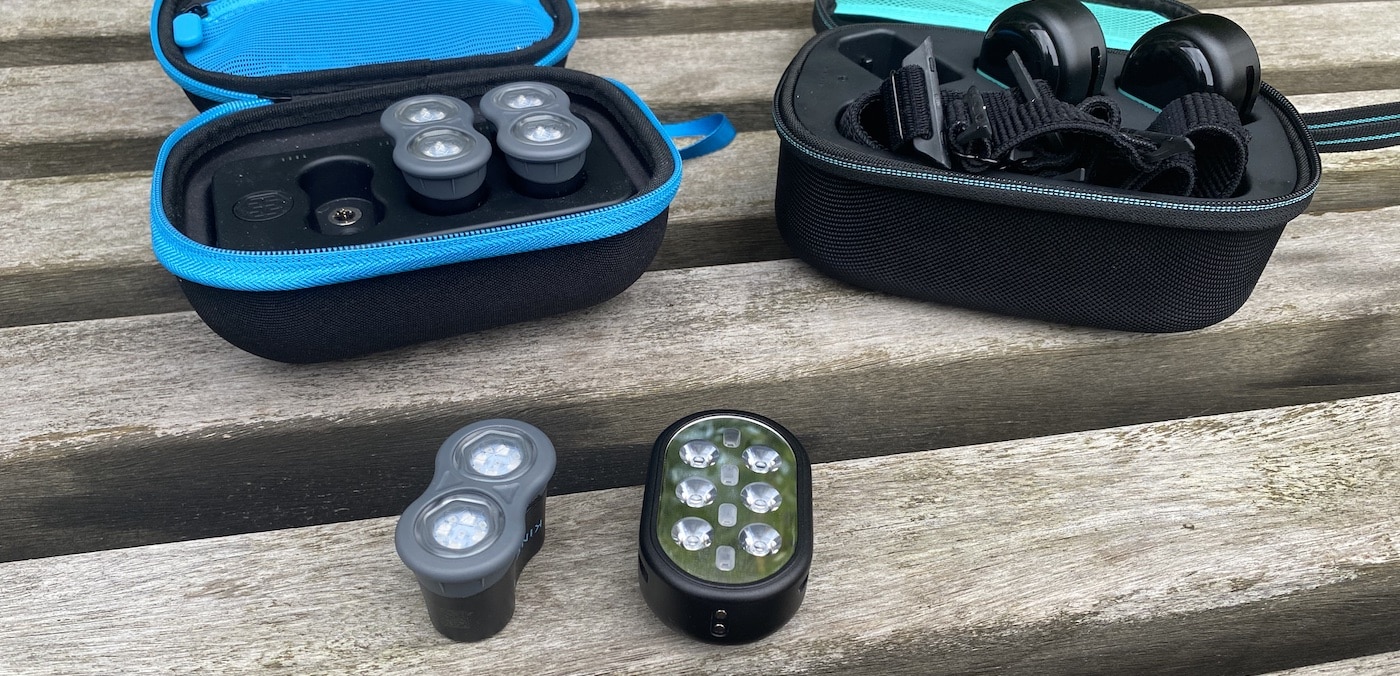
But hidden in these specs is an important difference which because evident during real-world use. The three FluxGo models have a much larger surface area than Move Plus. Which is actually our preference. Perhaps not as easy to use to treat very small or hard-to-reach areas, but for the majority of problems people experience – the larger modules work better.
Wavelengths and output levels
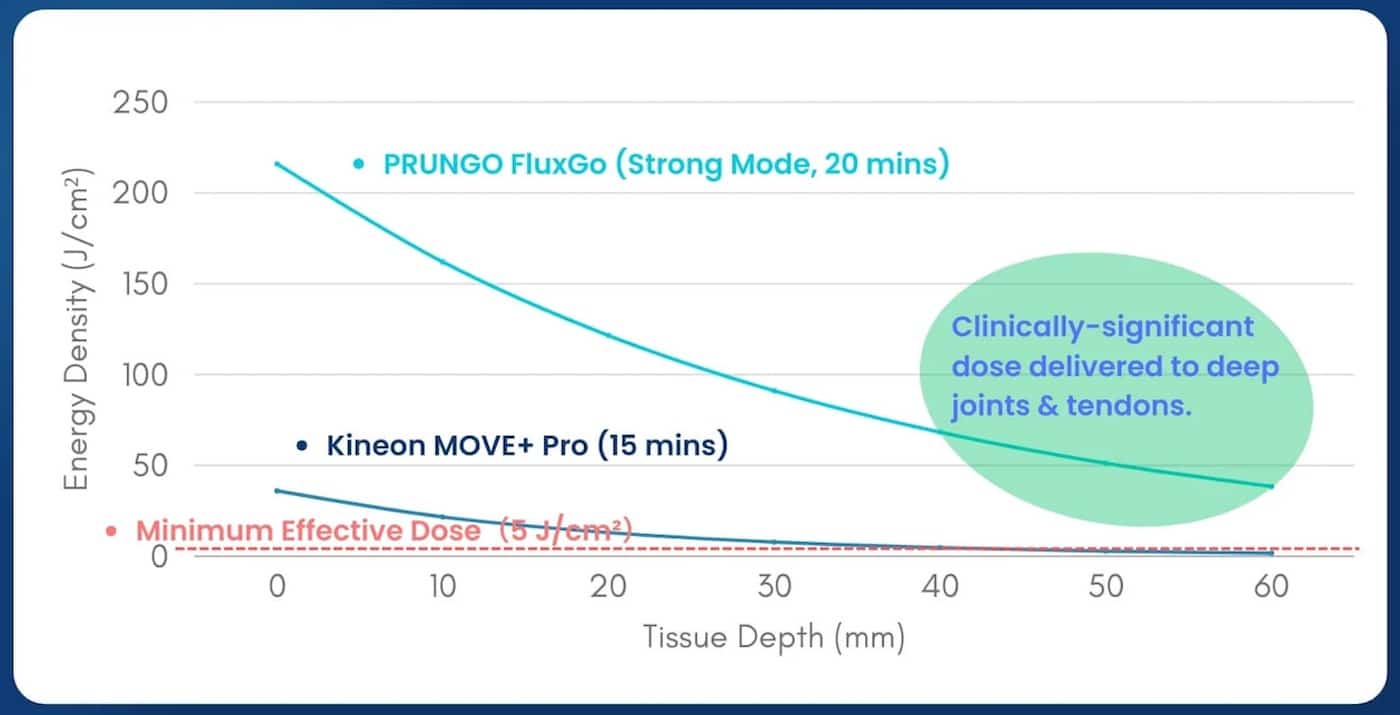
Both devices rely on red and infrared light, but the specifics differ. FluxGo uses 650nm red LEDs and 850nm infrared lasers, delivering between 50 and 100mW per square centimetre with a total output of 540mW per module. MOVE Plus Pro uses 660nm red LEDs and 808nm infrared lasers, with irradiance between 5 and 25mW per square centimetre and 210mW per module.
This difference in output shapes how sessions feel. FluxGo delivers a up to 6x stronger dose per session, which pairs with its shorter overall battery life. MOVE Plus Pro spreads its energy over longer runtimes, which aligns with its longer per module battery endurance.
Light sources and optics
FluxGo packs more emitters into each pod. Every module includes 18 LEDs and 12 VCSEL laser diodes, combined with a focusing lens for LEDs and a polarising filter for lasers. This setup aims to concentrate light where it is needed.
MOVE Plus Pro uses 8 LEDs and 10 VCSEL laser diodes per module, split across two emission areas. The design spreads light more evenly across the treated area, rather than concentrating it as tightly. Both approaches support deep tissue penetration, but they reflect different philosophies in how light should be delivered.
Treatment modes and session control
FluxGo gives you three treatment modes called Mild, Mid and Strong. These map to session lengths of 8, 15 and 20 minutes. You choose the intensity and the device handles the rest. This makes it easy to adjust based on how you feel that day.
MOVE Plus Pro sticks to preset session times of 5, 10 or 15 minutes. The simplicity helps if you want a quick routine, but it offers less flexibility. You either run another session or stop early, there is no middle ground.
FluxGo uses two buttons per pod and includes a small display on each module. This gives direct feedback and control without guesswork. MOVE Plus Pro relies on a single button per pod, also paired with a display. It feels simpler, but both solutions work well.
Battery life and charging
Battery strategy is another big difference. FluxGo offers up to 75 minutes of runtime per module and relies on a rechargeable storage case to top everything up. The case becomes part of the system and keeps charging simple.
MOVE Plus Pro delivers up to four hours of battery life per module, which is significantly longer. It also comes with a rechargeable storage case, but each module lasts much longer between charges. The tradeoff shows up in output levels.
Bottom line
Both Prungo FluxGo and Kineon MOVE Plus Pro do what they set out to do. They deliver focused red and infrared light therapy in a modular wearable format, backed by real science and noticeable effects over time. But the way they go about it is slightly different.
FluxGo hits harder per session, offers more flexibility in how you arrange the modules, and comes in at a much lower price. It’s less refined in some areas but makes up for it with simplicity and strong output. Plus you get a larger surface area of each pod which works better for the majority of use cases.
MOVE Plus Pro leans into comfort and longer battery life. It feels more polished and self-contained, especially for hard to reach knee-specific routines. But that refinement comes at a cost. You’re paying for the streamlined setup and extra runtime.
So it depends what you want. For use, the power, versatility and better value make FluxGo our favourite. If you prefer a more elegant design with fewer charging stops and a slightly smaller footprint, MOVE Plus Pro might suit you better.
Finally, don’t forget to check out our detailed hands-on reviews of the Prungo FluxGo and the Kineon MOVE Plus Pro. The first can be purchased on Prongo’s website (use code INY15 at checkout for 15% off), the second on the Kineon website (use code GADGET10 for $50 off).
Tech specs comparison
SPEC | PRUNGO FLUXGO | KINEON MOVE+ PRO |
|---|---|---|
Form factor | 3 modular pods + strap system | 3 modular pods + strap system |
Usage | 3 models can be used together or split up to treat different spots simultaneously | 3 models are fixed in a specific configuration |
Wavelengths | 650nm red LEDs + 850nm infrared lasers, 50–100mW/cm2 irradiance, 540mW power per module | 660nm red LEDs + 808nm infrared lasers, 5–25mW/cm2 irradiance, 210mW power per module |
Light sources per module | 18 LEDs + 12 VCSEL laser diodes | 8 LEDs + 10 VCSEL laser diodes |
Optics | Focusing lens for LEDs + polarising filter for lasers | 2 emission areas per module (standard LEDs + laser) |
Treatment modes | Mild, Mid, Strong (up to 216 J/cm2) | Preset session times (up to 36 J/cm2) |
Session lengths | 8 min, 15 min, 20 min | 5 min, 10 min, 15 min |
Deep tissue penetration | Yes | Yes |
Module battery life | Up to 75 mins | Up to 4 hours |
Rechargeable storage case | Yes | Yes |
Module dimensions | 72 x 48 x 29 mm | 59 x 37 x 37 mm |
Total weight (with case) | 970g | 790g |
Controls | Two buttons per pod | Single button per pod |
Display | On each pod | On each pod |
Price | $399 | $699 |
Subscribe to our monthly newsletter! Check out our YouTube channel.
And of course, you can follow Gadgets & Wearables on Google News and add us as a preferred source to get our expert news, reviews, and opinion in your feeds.
