

WHOOP explores automatic fit checks for future wearables
WHOOP has been granted a new patent for a system that checks whether a wearable is sitting too loose, too tight or just right on the body. The idea is simple but useful, because even the best sensor stack can struggle when the device is not making proper contact with the skin.
The patent, titled “Monitoring fit of wearable devices,” was granted on May 26, 2026. It shows that the company has been thinking about one of the more annoying problems in wearables: bad fit quietly ruining good data.
The problem is not very glamorous
Wearable fit is not the kind of thing that gets much attention in product launches. Companies talk about sensors, algorithms, coaching, battery life and app features, while strap tightness usually gets reduced to a line in the setup guide.
But the fit can make or break the readings. A wearable that shifts around during exercise can produce noisy heart-rate data. A device worn too loosely can lose optical contact. A strap that is too tight can become uncomfortable, especially overnight or during longer sessions.
I for one can remember more than one occasion where my Whoop was not sitting properly on my wrist. As a consequence, I would lose a night of sleep data – ruining my usually excellent sleep score.
WHOOP is not just talking about asking the user to adjust the strap manually and guess what feels right. The filing describes a way for the wearable to measure fit more directly, using vibration and sensor response to work out how well the device is coupled to the body.
In plain English, the wearable would send a small vibration through the device, the strap or the body. Sensors would then measure the response, and the system would decide whether the current fit looks loose, tight or in a more useful range.
This is about cleaner data
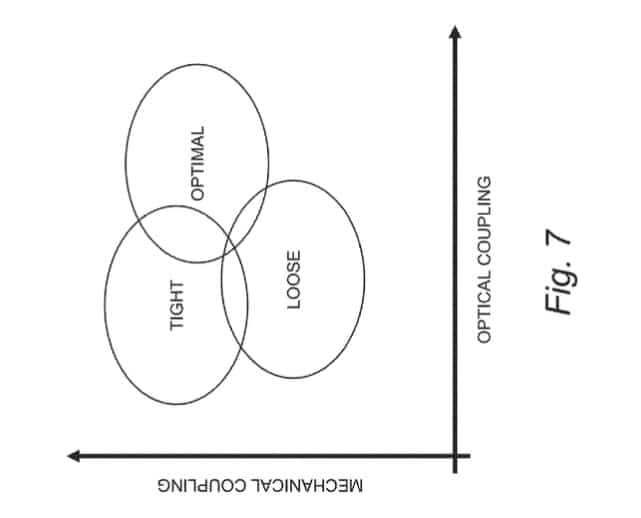
The patent spends quite a bit of time on the idea of “mechanical coupling” and “optical coupling.” That sounds dry, but it is exactly the kind of thing that affects real-world performance.
Mechanical coupling refers to how securely the wearable sits against the body. Optical coupling refers to the contact needed for optical sensors, such as the LEDs and photodiodes used in wrist-based heart-rate tracking. When that contact goes wrong, the wearable has to work harder to separate useful signals from noise.
WHOOP’s filing describes a system that can evaluate the fit of the device and then provide adjustment information to the user. That could mean telling someone to tighten the band, loosen it or try the fit test again.
One drawing in the patent makes the idea feel more product-like. It shows an interface with “Tightness detected” at the top, along with results such as “Loose” and “Normal.” The same screen gives the user options to use the current tightness, try the test again, cancel or save.

It could fit WHOOP’s wider design
WHOOP has always had a different relationship with hardware than most smartwatch brands. The device has no display and leans heavily on continuous data, recovery, strain and sleep analysis. If the system can detect poor contact before it affects a workout or overnight reading, that could remove some of the guesswork.
The patent also looks beyond the wrist. Its drawings and examples refer to different body locations, including the wrist, bicep, torso, calf and ankle. That lines up with WHOOP’s broader wear-location strategy, where the sensor can sit in bands, apparel or other accessories rather than only on the wrist.
As always with patents, there is a big caveat. A granted patent does not mean WHOOP is about to launch this feature. Companies patent ideas all the time, and many never appear in a shipping product.
This article originally appeared on Gadgets & Wearables, the first media outlet to report the story.
Source: USPTO
Don’t miss the latest from Gadgets & Wearables
Subscribe to our monthly newsletter and check out our YouTube channel.
You can also follow Gadgets & Wearables on Google News and add us as a preferred source in Google Search.

