

Garmin Forerunner 170 brings proper training tools vs 165
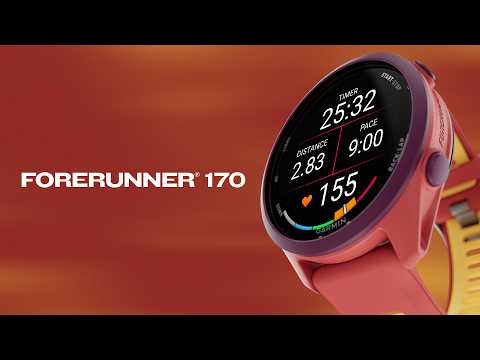
Garmin Forerunner 170 has arrived as the direct successor to the Forerunner 165, and the update is more about features than design. The watch keeps the same compact AMOLED running-watch formula, but adds Training Readiness, Training Status, a gyroscope and a much wider set of sport profiles.
Garmin has priced the Forerunner 170 at $299.99, with the Music version at $349.99. The new models are due to go on sale from May 15 on the company’s website, alongside the lower-cost Forerunner 70.
The design barely changes
At first glance, the Forerunner 170 does not look like a dramatic hardware reset. It is still a small, lightweight AMOLED running watch with a 1.2-inch display, touchscreen controls and Garmin’s familiar five-button layout.
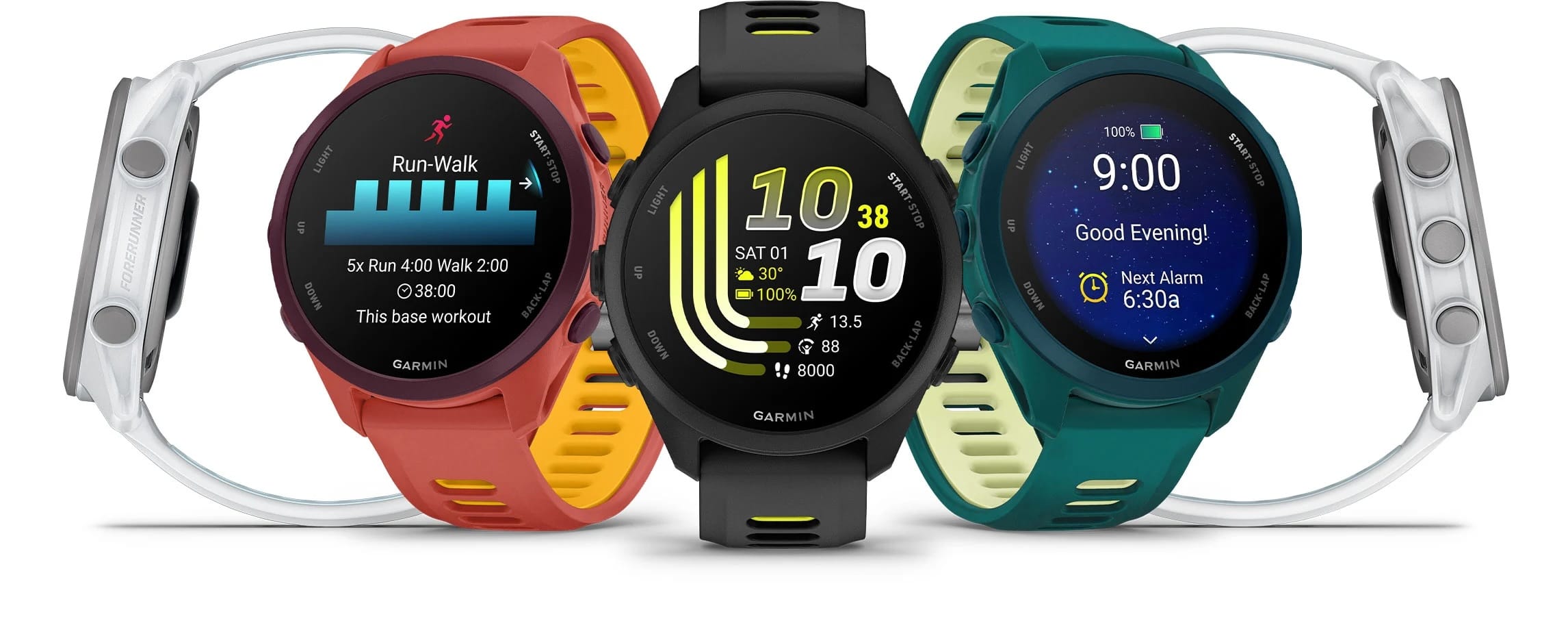
The dimensions have changed only slightly. The Forerunner 170 measures 42.6 x 42.6 x 11.9mm, compared with 43 x 43 x 11.6mm for the Forerunner 165. Which means the display bezels are smaller on the new device. But it is 2 grams heavier, coming in at 41g rather than 39g.
That means the upgrade story sits elsewhere. Garmin has not tried to make the Forerunner 170 look like a different kind of watch. It has made it act like a more capable one.

Training tools take the bigger step
One of the important upgrades is Garmin’s training analysis. The Forerunner 170 adds Training Readiness, Training Status, Load Ratio, Training Load, Training Load Focus, Improved Recovery Time and Unified Training Status.
The Forerunner 165 already covered the basics well, but it sat below Garmin’s more useful recovery and training-load tools. The 170 closes some of that gap.
This is noteworthy because the watch now gives runners more context around whether they should push, hold back or adjust training. It is not just recording runs. It is doing more of the interpretation Garmin usually reserves for pricier models.
Runners get more practical extras
Garmin has also added several running and workout features that were missing from the 165. These include Improved Intervals, Custom Alerts, Race an Activity, Grade-Adjusted Pace and Quick Workout.
Grade-Adjusted Pace is the one many runners will notice first. It helps make hilly runs easier to interpret by adjusting pace for terrain, rather than leaving users to guess whether a slower split was fitness, fatigue or gradient.
Quick Workout also fits the direction Garmin has been moving in recently. The watch becomes less of a passive tracker and more of a tool that helps you get started with structured training quickly.
Coaching becomes broader
The Forerunner 170 also expands Garmin Coach support. The Forerunner 165 includes Garmin Running Coach, but the 170 adds Cycling Coach, Strength Coach, Fitness Coach and on-screen workout muscle maps.
That makes the watch less narrowly focused. It still sits in the running range, but Garmin clearly expects users to do more than run.
This is probably the right move. Many buyers in this price tier run, cycle, lift, walk, travel and occasionally try other sports. The old entry-running-watch formula now looks a bit too narrow for that kind of use.
Battery life is not the reason to upgrade
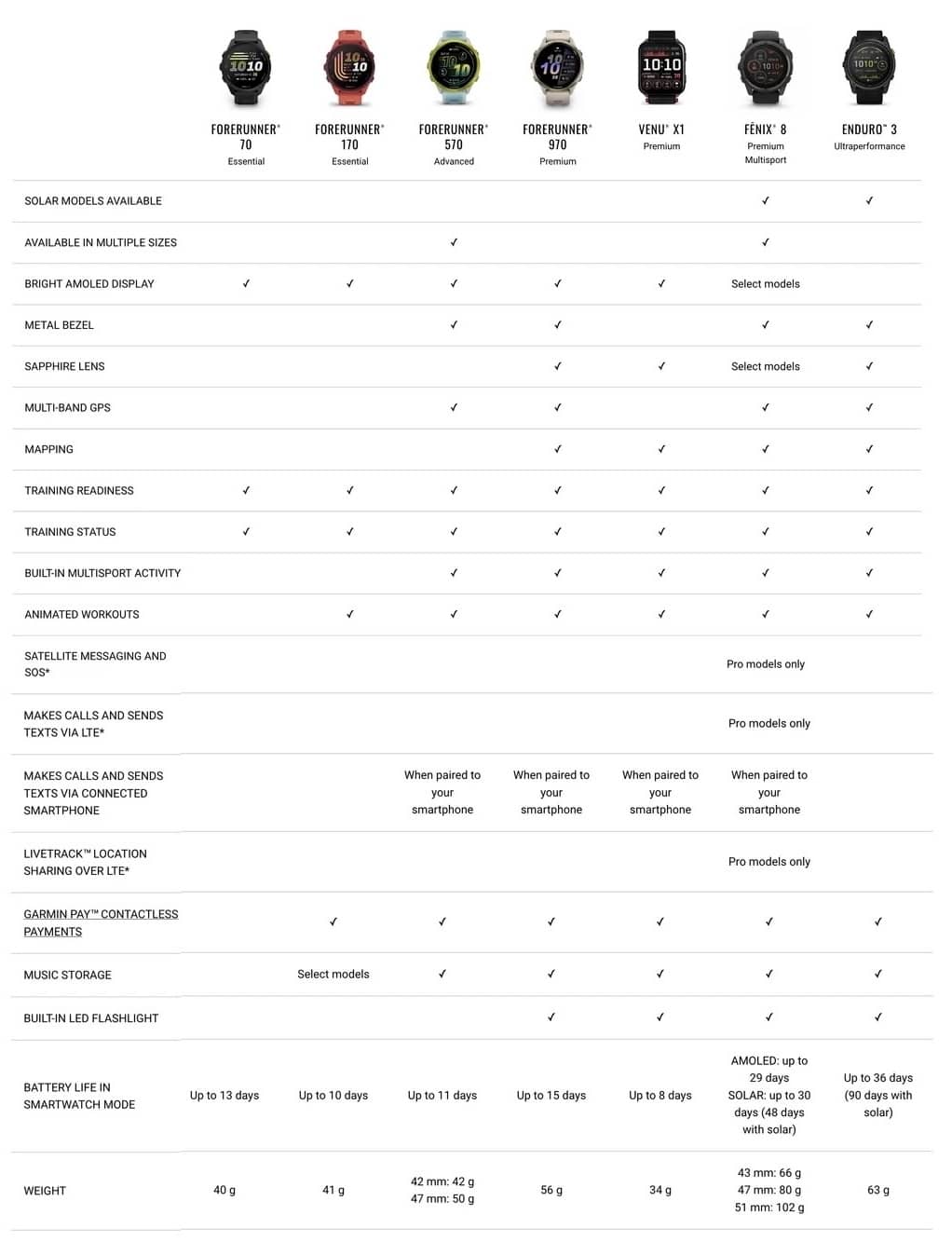
Battery life is more mixed. Garmin lists the Forerunner 170 at up to 10 days in smartwatch mode, or up to 4 days with always-on display enabled. The Forerunner 165 is rated at up to 11 days.
The 170 does edge ahead in GPS-only GNSS mode, with up to 20 hours compared with 19 hours on the 165. But the older watch still has the higher rating in Battery Saver mode and All-Systems GNSS mode.
So this is not a battery-led upgrade. Anyone moving from the 165 to the 170 would mainly be doing it for the software, sport and training additions.
The sensor story is modest
The heart rate sensor does not appear to have changed. Both watches use Garmin’s Elevate Gen 4 optical heart rate sensor, so this is not a sensor-generation jump.
The clearest hardware addition is the gyroscope. That should help Garmin support a broader set of motion-based features and activity tracking use cases, although the more visible changes are still mostly software-led.
That is worth spelling out. The Forerunner 170 is not a hidden Forerunner 570 in a cheaper body. It is a better-equipped successor to the 165, with Garmin filling in some of the gaps that made the older model feel deliberately held back.
The activity list is much larger
The sport profile expansion is also noteworthy. Garmin has added profiles across cycling, water sports, outdoor recreation, winter sports, team sports, racket sports and combat sports.
The new list includes rucking, obstacle racing, mountaineering, road biking, mountain biking, gravel biking, bike commuting, eBiking, kayaking, rowing, stand-up paddleboarding, skiing, snowboarding, basketball, football, soccer, rugby, boxing and mixed martial arts.
This does not automatically make the Forerunner 170 a full outdoor or multisport watch. But it does make it more flexible for people who do not want every activity squeezed into a generic cardio profile.
Initial thoughts
The Forerunner 170 looks like Garmin correcting the 165’s biggest omissions. Training Readiness, Training Status, broader coaching tools and a longer activity list make it feel like a more complete product.
The catch is that battery life has not clearly improved, the heart rate sensor appears unchanged and the design remains very close to the outgoing model. This is not a dramatic hardware upgrade.
Still, the overall direction makes sense. Garmin has taken its compact AMOLED running watch and given it more of the training intelligence people now expect at this level. Forerunner 165 owners probably do not need to rush out and upgrade, but anyone choosing between the two should see the 170 as the more future-proof option.
You can check it out now on Garmin’s website.
Don’t miss the latest from Gadgets & Wearables
Subscribe to our monthly newsletter and check out our YouTube channel.
You can also follow Gadgets & Wearables on Google News and add us as a preferred source in Google Search.

